- Die USA und China erreichen bei den Zollregelungen einen Konsens, und der Handelsrat wird gegründet15-06-2026Details anzeigen
- Was bestimmt die Entwicklungskosten eines B2C-Cross-Border-Onlineshops? Eine Analyse von Funktionen, Schnittstellen und Bereitstellungsmodellen17-06-2026Details anzeigen
- Grenzenloser Zollfreilagerstandort, Kostenoptimierung für marokkanische Warenexporte11-06-2026Details anzeigen
- Welches Signal zur vorübergehenden Aussetzung der japanischen Exportfreigabe?10-06-2026Details anzeigen
- China's LNG imports rebounded in May, with Russia and Canada increasing volumes to fill the Middle East supply gap10-06-2026Details anzeigen
- Wird GEO seine SEO-Strategie ändern?04-06-2026Details anzeigen
Wie macht man einen B2C-Cross-Border-Shop in mehreren Sprachen? Übersetzung, Währungen und lokale Zahlungsmethoden müssen gleichzeitig berücksichtigt werden
B2C-Cross-Border-Multilingual Online Store, it is not over after translating the page
How to build B2C cross-border e-commerce multilingual sites? It is definitely not just page translation. If you really want to improve overseas conversions, you must align language content, currency display, local payment and user experience, so that users in different markets can understand, buy smoothly, and be willing to place orders.
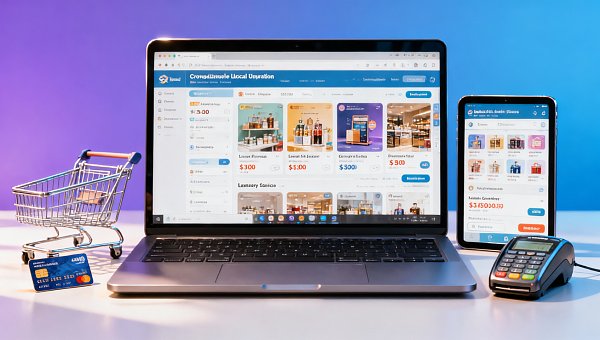
When many companies first launch an overseas independent site, the first thing they do is multilingual switching. On the surface, the problem seems solved, but actual order conversion has not improved significantly. The reason is often not the number of pages, but that the localization path has not been opened up.
Whether users can quickly understand the products, judge prices with familiar currency, and complete payment with common payment methods determines whether B2C cross-border e-commerce multilingual really works. This is also the key dividing line for cross-border e-commerce to move from “being able to display” to “being able to close deals”.
First, make clear that multilingual construction should solve conversion, not display
In actual business, after overseas users enter the store, they usually only look at a few signals to decide whether to continue browsing: whether the content reads smoothly, whether the price is understandable, whether checkout is reassuring, and whether the logistics rules are clear.
Therefore, B2C cross-border e-commerce multilingual needs to be designed around the purchase journey, not translated around page sections. The homepage, category pages, product pages, cart, checkout page, and after-sales page must maintain information consistency.
If the front end is written in local language, but the payment page suddenly jumps back to a stiff default language, users will immediately doubt the professionalism of the site. A more obvious signal is that many abandoned orders are not because the price is high, but because users are unsure how much they will ultimately pay.
Step one, translation should upgrade from “accuracy” to “local expression”
When doing B2C cross-border e-commerce multilingual, page translation is of course important, but accuracy alone is not enough. In e-commerce scenarios, what really affects clicks and orders is whether the expression matches local shopping habits.
For example, product titles: many sites like to directly translate parameters and functions, and the result reads like a product manual. What users care more about is usage scenarios, core benefits, and decision reasons. Once the copy is detached from the consumer context, the conversion rate will drop significantly.
A more stable approach is to first establish multilingual content priorities, and then make localized rewrites:
- Prioritize the homepage core selling points, product titles, detail selling points, and checkout prompts.
- Unify high-frequency terms such as size, material, shipping, and return policy.
- Adjust promotional wording by region instead of copying the same campaign copy verbatim.
- Synchronize customer service language, email notifications, and payment prompts with localization.
If a company wants to launch faster while also considering SEO and conversion, it can use a combination of AI website building and manual review. Platforms like Yiyingbao, which integrate websites and marketing services, have the advantage of deploying website building, multilingual support, SEO optimization, and store conversion strategy together instead of splitting them into multiple systems with repeated integration.
Step two, currency display must let users “understand the cost in seconds”
Many companies have done B2C cross-border e-commerce multilingual, but ignored the currency experience. When users see an unfamiliar currency, their first reaction is not to convert it, but to hesitate. The more hesitation there is, the higher the bounce rate will be.
Therefore, currency settings cannot just stop at “support switching”; they must make prices directly understandable. It is recommended to do at least three things.
- Automatically match the main currency based on the visitor region, while allowing manual switching.
- Keep the same currency logic across product pages, carts, shipping explanations, and tax prompts.
- Show the estimated total price clearly before checkout to avoid last-minute price surprises.
From recent changes, users are becoming more sensitive to price transparency. Especially in Europe, Southeast Asia, and the Middle East, if taxes, exchange rates, and shipping costs are not clearly explained in advance, the probability of later refunds and complaints will increase significantly.
This also means that in a B2C cross-border e-commerce multilingual solution, currency display cannot be treated as an accessory technical function, but should be part of conversion management.
Step three, local payment determines whether the last mile can close the deal
Even if translation and currency are done well, orders may still not come through, and the problem is most likely at payment. Many overseas consumers will not specifically switch to payment methods they do not usually use just for a new site.
Therefore, B2C cross-border e-commerce multilingual must be planned together with local payment. Payment habits vary greatly by region. Credit cards are not the only option; local wallets, installment payments, and bank transfers all have real demand.
More importantly, the language on the payment page, amount, currency, tax, and refund rules must be consistent before and after. If any one item changes suddenly, users will doubt the security of the transaction.
This is similar to many companies making business decisions: what is seen on the front end is display, while what actually works is the underlying mechanism. It is like when studying research on startup financing strategies for early-stage tech micro enterprises from the perspective of angel investment, the key is not only the financing name, but whether the structural design matches the development stage. Cross-border e-commerce payment is the same: only by choosing the right structure can it have sustained closing capability.
Step four, unify multilingual, SEO, and landing pages
Many companies understand B2C cross-border e-commerce multilingual as an internal site project, and as a result the site is completed, but external traffic cannot be captured. The reason is simple: search keywords, ad copy, and landing page language are not connected.
If the ad copy uses local high-frequency expressions, but the landing page that users click into is still a relatively literal translation, users will feel that the content is inconsistent. Search engines also have difficulty accurately judging the page topic, and long-term SEO performance is naturally affected.
A more efficient approach is to put multilingual stores, Google SEO optimization, ad placement, and social media traffic into the same growth logic. The value of Yiyingbao lies here: it not only helps enterprises build sites, but can also combine AI intelligent site building, SEO, and ad systems, allowing pages in different markets to form a closed loop from indexing to conversion.
When landing, first check these 5 high-frequency issues
- After language switching, whether product parameters, reviews, and shipping instructions are still missing.
- Whether currency symbols, exchange rate rules, and tax display are consistent across different pages.
- Whether local payment covers the mainstream habits of the target market.
- Whether the mobile checkout process is short enough, and whether the buttons and prompts are easy to understand.
- Whether multilingual pages have also been synchronized for search indexing and advertising adaptation.
These issues seem scattered, but they all point to the same goal: to let users generate as few doubts as possible from entering the page to completing payment. The fewer doubts there are, the more value B2C cross-border e-commerce multilingual can truly realize.
Conclusion: multilingual capability must ultimately lead to order growth
Back to the core question, how to build B2C cross-border e-commerce multilingual? The answer is not single-point optimization, but synchronously considering translation, currency, local payment, SEO, and user experience, and designing the whole system around the real purchase journey.
When the content expression is more local, the price perception is clearer, and the payment method is smoother, the store can truly have cross-market closing capability. For enterprises that hope to build overseas business for the long term, this is not icing on the cake, but infrastructure.
If you are preparing to upgrade an independent site next, it is better to first sort out the target market language, currency, and payment routes in one complete pass, and then decide on the system and marketing plan. Doing this step right will make subsequent traffic investment and brand building more likely to convert into real orders.
- Yiyingbao
- SEO
- Unabhängige Website
- SEO-Optimierung
- Intelligente Website-Erstellung
- Google-Suchmaschinenoptimierung
- KI-gestützte Website-Erstellung
- KI-Website-Erstellung
- Anzeigenschaltung
- Grenzüberschreitender Online-Shop
- Google SEO-Optimierung
- B2C-Cross-Border-Store
- Mehrsprachiger B2C-Onlineshop für den grenzüberschreitenden Handel
Verwandte Artikel
Verwandte Produkte
 EasyCamp SaaS Intelligenter Website-Builder und Marketing-SystemE-Yingbao SaaS Intelligent Website Marketing System: KI-gesteuerte Website-Erstellung ohne Programmieraufwand. Erstellen Sie in nur 10 Minuten mehrsprachige, unabhängige Export-Websites. Globale Serverbeschleunigung und KI-gestützte SEO-Optimierung ermöglichen Unternehmen eine effiziente Anbindung an globale Märkte. Die nahtlose Verschmelzung von Technologie und benutzerfreundlicher Bedienung macht die Erstellung von Export-Websites bemerkenswert einfach.
 AI+SEO-Doppelantrieb-OptimierungsserviceEasypack AI+SEO-Doppelantrieb-Optimierungssystem nutzt KI zur intelligenten Keyword-Extraktion, Content-Generierung und umfassenden technischen Optimierung, um Exportunternehmen hochwertigen organischen Traffic zu verschaffen und die Suchmaschinenrankings sowie Conversion-Raten deutlich zu steigern.
 AI+SEM intelligente Werbemarketing-SystemAI+SEM-gesteuerte intelligente Kampagnenerstellung, ganzheitliche Unterstützung für präzises Werbemarketing. Das System generiert automatisch Wochen-/Monatsberichte, KI empfiehlt Keywords und Zielmärkte, überwacht Echtzeit-Kennzahlen und warnt intelligent, startet mit einem Klick hochkonvertierende Kampagnen, beschleunigt Lead-Generierung und steigert ROI.
 AI+SNS Social-Media-Marketing-SystemYingyingbao AI+SNS Social Media Intelligent Marketing System – Präzise Erfassung sozialer Daten für das Zeitalter der sozialen Medien. Unterstützt die Synchronisierung von Inhalten mit einem Klick auf allen wichtigen Plattformen, einschließlich Facebook und LinkedIn. KI-gestütztes Umschreiben von Beiträgen verbessert die Lokalisierung. Intelligenter Kundenservice rund um die Uhr und Analyse von Nutzerprofilen ermöglichen Unternehmen eine effiziente Expansion in globale Märkte.
 AI+SEM-Lösungen für WerbemarketingKI-gestützte SEM-Werbelösungen nutzen künstliche Intelligenz, um das SEM-Kampagnenmanagement erheblich zu verbessern. Mithilfe von KI werden wöchentliche und monatliche Berichte erstellt, die Kontodaten in mehreren Dimensionen darstellen und so einen umfassenden Überblick über die Werbeleistung und Trends ermöglichen. KI liefert präzise Empfehlungen zu Keywords und Zielländern, erstellt auf intelligente Weise Werbetexte mit hoher Konversionsrate und initiiert mit einem einzigen Klick eine effiziente Kampagnenumsetzung, wodurch die Kundenakquise für Unternehmen beschleunigt wird. Gleichzeitig überwacht das System die wichtigsten Kennzahlen in Echtzeit, identifiziert auf intelligente Weise ungewöhnliche Schwankungen und gibt rechtzeitig Warnmeldungen aus, um eine stabile Werbeleistung und hohe Renditen zu gewährleisten.
 AI+SEO营销解决方案易营宝AI+SEO营销解决方案,通过AI批量写作、智能生成TDK、精准关键词扩词等功能,全面优化网站SEO效果,提升流量与转化率。助力企业构建高效智能网站新生态。
 Domain-DienstleistungenEasyWin bietet professionelle Domain-Dienstleistungen an, einschließlich intelligenter Abfrage, One-Stop-Registrierung, Markenschutz und Rund-um-die-Uhr-Management, um Unternehmen bei der Gestaltung eines digitalen Markenimages zu unterstützen.
 EasySell B2C Cross-Border E-Commerce-Plattform und eigenständige WebsiteDer EasyStore B2C Cross-Border E-Commerce Independent Store ist eine intelligente Website-Erstellungs- und Cross-Border-E-Commerce-All-in-One-Lösung, die von der EasyStore Information Technology (Beijing) Co., Ltd. eigenständig entwickelt wurde. Das System wurde speziell für kleine, mittlere und große Exportunternehmen entwickelt und vereint „Website-Erstellung, Betrieb, Marketing, Werbung und Konversion“ in einem, um Unternehmen dabei zu unterstützen, schnell einen Cross-Border-E-Commerce-Independent-Store aufzubauen und so Markenexport und globalen Verkaufszuwachs zu realisieren.
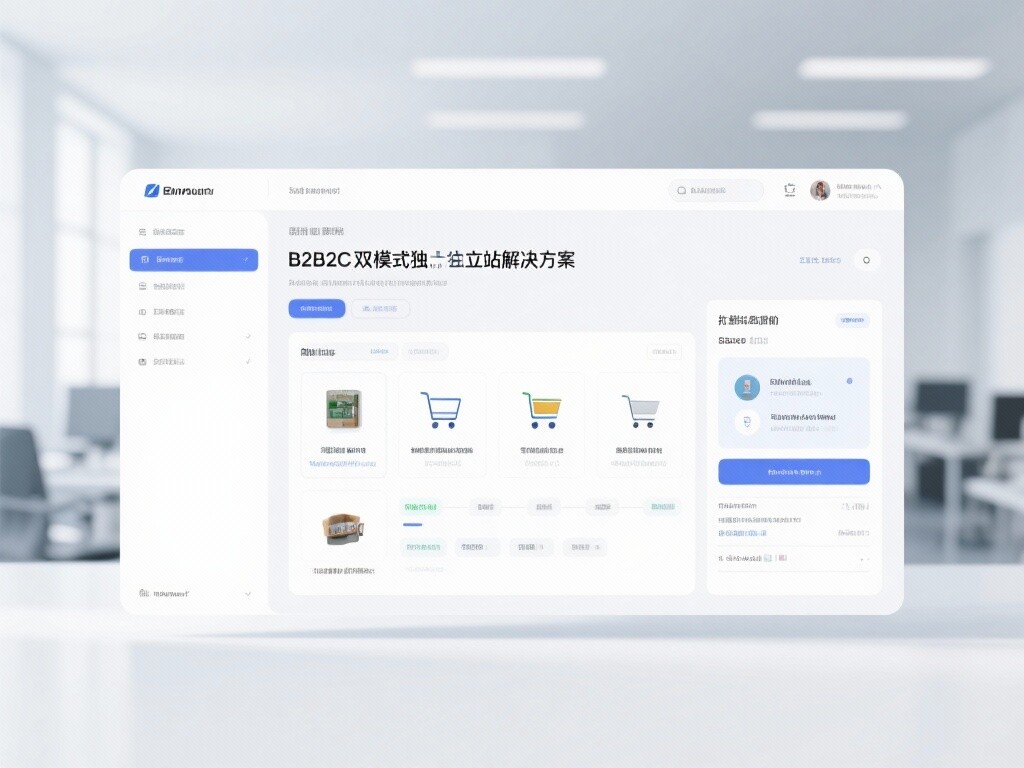
Die Plattform unterstützt Mehrsprachigkeit, Multi-Währungen und Multi-Kanal-Marketing, verfügt über integrierte KI-Übersetzungs- und SEO-Optimierungssysteme und ist für Hauptmärkte wie Südostasien, Europa/Amerika, Lateinamerika und den Nahen Osten geeignet, um chinesischen Herstellern bei der effizienten Erschließung internationaler E-Commerce-Märkte zu helfen. B2B2C双模式独立站解决方案易营宝推出的B2B2C双模式独立站解决方案,专为同时开展批发与零售业务的企业打造。平台支持商品价格展示、商品多规格管理、购物车与购物车弹窗、购物车总价计算,以及统一批量询价等功能,帮助企业以更高效、更直观的方式触达B端与C端客户。通过云建站、大数据分析与广告智能投放体系,助力企业打破渠道壁垒,实现国内外市场拓展与品牌价值提升。