









- 21st Century Business Herald: AI and CTV Become Core Growth Engines for Digital Marketing in Overseas MarketsNov 18, 2026View details
- China Presents 25 Cooperation Outcomes in Areas Including Cross-Border E-Commerce During APECNov 18, 2026View details
- AI Products Drive Hong Kong Exports Up 64.9% in September, Fastest Growth in Over 40 YearsNov 17, 2026View details
- National Bureau of Statistics: Foreign trade grew rapidly in October, providing stable support for global tradeNov 17, 2026View details
- The U.S. has ended the $800 de minimis exemption for non-postal shipments; express courier packages must be formally declared.Nov 16, 2026View details
- ASEAN Signs Digital Economy Framework Agreement, Moving Toward Harmonized Cross-Border E-Commerce RulesNov 15, 2026View details
Which conversion pages should be prioritized for an inquiry-focused export website?
When building an inquiry-focused foreign trade website, the easiest mistake is to start by discussing the homepage style, number of languages, or feature list without first determining “where customers will come from, what content they need to see, and why they would be willing to submit an inquiry.” For websites aimed at generating B2B leads, conversion pages are not a later addition; they should be defined before visual design and content population.
Page priorities should generally be: product pages, solution pages, trust-building pages, and inquiry landing pages. These four types of pages serve clear product needs, scenario-based needs, supplier selection needs, and immediate actions driven by advertising or social media, respectively. The homepage is intended to direct traffic and establish a first impression, but it can hardly replace these pages in completing specific conversions.
Start by working backward from traffic intent, rather than beginning with the company profile
Overseas buyers do not always enter a website by searching for a brand name. Visitors arriving through Google search may be looking for a certain type of product, process, or industry application, or comparing suppliers; visitors coming from Google Ads, LinkedIn, Facebook, and other channels often have a more specific campaign topic or purchasing issue in mind.
Therefore, page planning for inquiry-focused foreign trade website projects should first answer three questions: What need does the customer's search term correspond to? What information do they need to see after arriving in order to continue evaluating? What type of inquiry should they ultimately submit? If these three points are unclear, a website may still generate only low-quality “Please send price” inquiries even if it has a product catalog, company profile, and contact page.
When evaluating commercially, it is advisable not to look only at the “number of pages.” More importantly, confirm whether each key customer acquisition channel has a corresponding landing page and whether the page can guide visitors to the next step instead of leaving them to guess through the navigation menu.
First priority: Product detail pages that can be found and compared
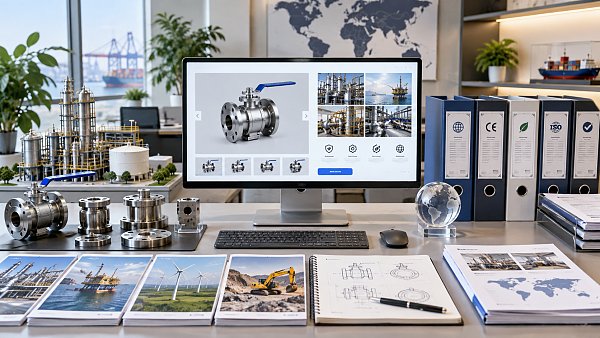
For manufacturing factories, trading companies, and B2B brands, product pages are usually the primary entry point for inquiries. When buyers search for terms such as “industrial valve manufacturer” or “custom packaging supplier,” what they expect to see is not a corporate slogan, but information directly relevant to purchasing decisions.
A product page designed for conversion should at least enable visitors to quickly understand: what the product is, what it is used for, what specifications or customization options are available, what supporting capabilities the company can provide, and how to obtain a quotation or technical confirmation. It is not necessary to disclose all internal information in the specifications, but enough information should be displayed to naturally filter out non-target customers and encourage visitors with purchasing intent to continue the conversation.
When there are many products, it is not advisable to mechanically duplicate the same content for every model. Products with high value or clear search demand should have dedicated detail pages; similar models can be grouped into series pages, with parameters, applications, accessories, or model selection guiding visitors further. Otherwise, a large number of similar pages will neither achieve effective search performance nor prevent buyers from questioning whether the product information is incomplete.
Inquiry buttons on product pages should not simply say “Contact Us”
A general contact button can be retained, but it is more appropriate to display it alongside action options that match the intent of the current page, such as “Request a Quote,” “Get Technical Support,” “Ask for Customization,” or “Download Specification.” Different buttons correspond to different stages of the purchasing process and also make it easier to identify lead sources and types of requirements later.
Form fields should be designed around sales follow-up needs. Fields such as product model, estimated purchase quantity, target market, technical requirements, and attachment uploads are often more valuable than requiring visitors to fully complete their company background. Too many fields reduce submission rates, while too few leave sales teams having to confirm needs from scratch. The balance depends on product complexity and average order value.
Second priority: Solution pages that translate “product capabilities” into purchasing scenarios
Product pages are suitable for users who know what they want to buy, but many B2B visitors search for application-related problems. For example, they may be looking for material solutions suitable for food processing environments, components suited to high-temperature operating conditions, or a complete customized packaging process. In such cases, merely presenting product categories is not enough to drive inquiries.
A solution page should focus on a clear industry, operating condition, application, or purchasing task. It is not simply another listing of products; rather, it explains the conditions of the problem, recommended product combinations or service approaches, technical boundaries that need to be confirmed, and why the company is capable of delivering such requirements.
Solution pages should not cover every industry simply for the sake of “rich content.” Prioritize scenarios for which the company already has mature product combinations, relatively clear delivery processes, and frequent sales inquiries. If a particular market does not yet have language support, supply capacity, or certification materials in place, directing traffic to that scenario too early will instead increase ineffective inquiries and sales friction.
Third priority: Trust pages that help buyers complete supplier screening
Inquiries are not determined by products alone. Especially when first engaging with an unfamiliar supplier, buyers will continue to assess production capacity, quality management, responsiveness to customization requests, export experience, and communication reliability. A company profile page can serve part of this purpose, but it should not be the only trust-building page.
A more effective approach is to organize content according to the buyer's validation path: factory or team capabilities, production and inspection processes, available documents or services, cooperation procedures, typical project types, and frequently asked questions. If qualifications, equipment, packaging processes, R&D, or after-sales support information can be publicly disclosed, it should be placed where it is relevant to purchasing decisions rather than all being piled onto the “About Us” page.
Case study pages should also avoid merely stating “pleasant cooperation” or displaying customer logos. Even when customer names cannot be disclosed, project background, customer constraints, the products or service approaches adopted, and the scope of delivery can still be described anonymously. The key is not to create a success story, but to enable potential customers to assess whether this supplier understands problems similar to theirs.
Fourth priority: Dedicated inquiry landing pages for advertising and social media
Advertising landing pages and website homepages serve different purposes. A homepage needs to serve various types of visitors, while an advertising landing page only needs to complete one clear action. Directing Google Ads, social media posts, or email links all to the homepage may seem convenient, but it actually forces visitors to search for content again and increases drop-off.
An effective landing page should keep the “source message, page promise, and form action” consistent. If an advertisement emphasizes customization capabilities, the landing page should first explain the scope of customization, how to submit materials, and the response process; if an advertisement promotes a certain product category, the page should focus on that product or series rather than jumping to a broad company profile.
Especially when targeting different countries or language markets, it is not enough to simply replace the text. Currency, units of measurement, common purchasing terminology, contact methods, delivery instructions, and form fields can all affect understanding and trust. The value of a multilingual website is not only in translating pages, but in enabling customers in different markets to make inquiries in familiar ways.
After determining the pages, check whether the conversion path is complete
Only after the four types of pages are defined is it appropriate to move on to website structure, content production, and visual design. At this point, map out the navigation relationships between pages: Can product pages lead to their corresponding solution pages? Do solution pages have related products and case studies to support them? Can case study pages lead back to specific inquiry entry points? After a visitor submits a form on any page, can the sales team identify the traffic source, product of interest, and market location?
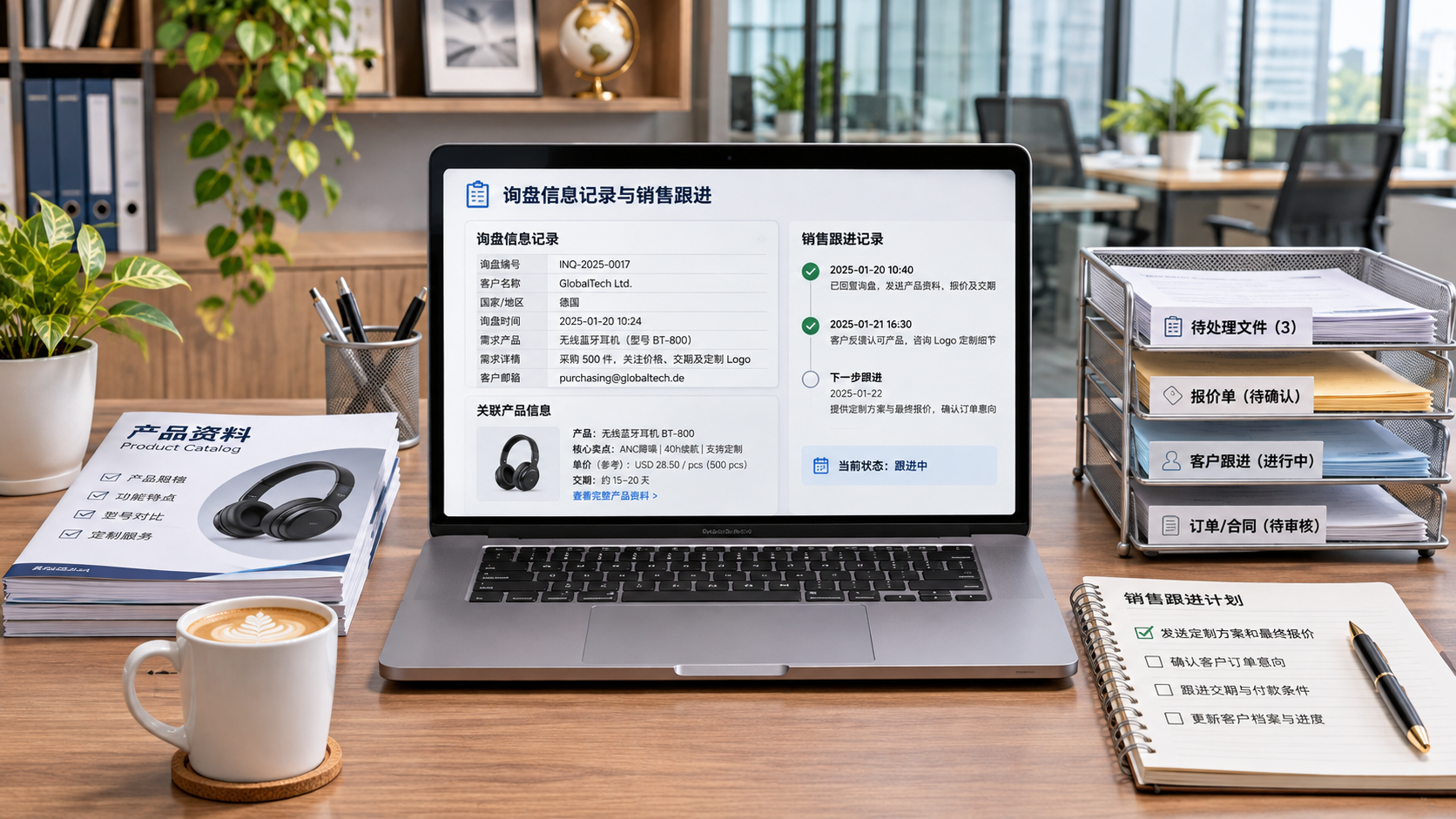
The issue with many projects is not the lack of forms, but the failure to turn form submissions into actionable leads. Email notifications, CRM or lead management, automatic replies, attachment receipt, assignment of responsible personnel, and source tagging all affect subsequent follow-up efficiency. When website development and marketing services are purchased separately, these integrations are particularly easy to overlook.
If a company needs to carry out website development, SEO, advertising, and social media customer acquisition simultaneously, it can prioritize a platform that manages pages, forms, and promotional landing pages within the same system. For example, Yiyingbao provides intelligent website building, multilingual websites, SEO, advertising, and social media marketing services for foreign trade companies, making it suitable for teams that need to coordinate official website content with multiple overseas customer acquisition channels. During evaluation, the focus should still return to the pages and lead flow themselves: whether the system can support target markets, whether content maintenance is convenient, and whether separate landing pages can be created for different campaigns while tracking lead sources.
Before launching a project, the most valuable preparation is not to collect the company profile first, but to list key products, target markets, primary customer acquisition channels, frequently asked customer questions, and information that sales must confirm. Using this list to define the first batch of conversion pages makes a foreign trade website more likely to become a business tool that consistently captures inquiries rather than merely a display window.
Related Articles
 How to Choose a Target Market for Your Cross-Border Ecommerce Store
 Fujian Releases White Paper on Talent Shortages in Cross-Border E-Commerce, Focusing on Industry Talent Challenges
 What Features Should an Inquiry Form on a B2B Export Website Support?


Related Products
 Yiyingbao SaaS Intelligent Website Building and Marketing SystemYiyingbao SaaS Intelligent Website Building and Marketing System, AI-powered no-code website building, rapid creation of multilingual B2B international websites in 10 minutes, global server acceleration, AI-powered SEO optimization, helping businesses connect efficiently with global markets. The perfect integration of technology and operation makes building an international trade website remarkably simple
 AI+SEM Intelligent Advertising Marketing SystemAI+SEM drives intelligent ad creation, empowering full-funnel precision advertising marketing. The system automatically generates weekly/monthly reports, AI recommends keywords and target countries, monitors core metrics in real-time with intelligent alerts, and enables one-click high-conversion ad solutions to help quickly acquire customers and improve ROI.
 AI+SEO Dual-Engine System Optimization ServicesYiyingbao’s AI+SEO dual-engine optimization system helps foreign trade enterprises acquire high-quality organic traffic through AI-powered keyword research, content generation, and comprehensive technical optimization, significantly improving search rankings and conversion rates.
 AI+SNS Social Media Marketing SystemYingbao AI+SNS Social Media Marketing System - Precision social capture for the social media era. Supports one-click content synchronization across major platforms like Facebook and LinkedIn. AI intelligently rewrites posts for enhanced relevance. 24/7 AI customer service and user profiling analysis empower businesses to efficiently expand into global markets.
 AI+SEO营销解决方案易营宝AI+SEO营销解决方案,通过AI批量写作、智能生成TDK、精准关键词扩词等功能,全面优化网站SEO效果,提升流量与转化率。助力企业构建高效智能网站新生态。
 AI+SEM Advertising Marketing SolutionsAI+SEM Advertising Marketing Solution leverages AI technology to deeply empower SEM ad campaigns. It automatically generates weekly/monthly reports using AI, presenting account data across multiple dimensions for comprehensive insights into campaign performance and trends. The system precisely recommends keywords and target countries, intelligently generates high-conversion ad copy, and enables one-click activation of efficient campaign plans to help businesses rapidly acquire customers. Simultaneously, it monitors core metrics in real time, intelligently identifies abnormal fluctuations, and issues timely alerts to ensure stable, high-return advertising results.
 Domain Name ServicesEasyWin provides professional domain name services, including intelligent queries, one-stop registration, brand protection, and full lifecycle management, helping businesses build a digital brand image.
 EasyOperate B2C Cross-Border E-Commerce Platform & Independent WebsiteEasyStore B2C Cross-border E-commerce Independent Store is an intelligent website building and cross-border e-commerce integrated solution independently developed by EasyStore Information Technology (Beijing) Co., Ltd. The system is specially designed for small and medium-sized as well as large export enterprises, integrating 'website building, operation, marketing, advertising, and conversion' into one, helping enterprises quickly establish cross-border e-commerce independent stores to achieve brand globalization and global sales growth.
The platform supports multiple languages, multiple currencies, and multi-channel marketing, with built-in AI intelligent translation and SEO optimization systems, suitable for mainstream markets such as Southeast Asia, Europe and America, Latin America, and the Middle East, assisting Chinese manufacturing enterprises in efficiently deploying international e-commerce strategies. SSL证书易营宝提供专业SSL安全证书服务,包括单域名和泛域名证书,确保网站数据传输加密、身份验证和完整性保护,助力企业建立安全可信的在线业务环境。









