How Should a Multilingual Website Content Synchronization Cycle Be Set?
A shorter multilingual website content synchronization cycle is not necessarily better. Companies should establish a coordinated mechanism that balances efficiency, quality, and conversion by considering market update frequency, translation workflows, and SEO indexing cycles.
For companies expanding into overseas markets, the multilingual website content synchronization cycle directly affects brand message consistency, search visibility, and the lead generation efficiency of sales teams. If updates are too slow, overseas pages will lag behind the Chinese website; if updates are too fast without review, mistranslations, pricing errors, or compliance risks can easily arise.
Readers searching for “multilingual website content synchronization cycle” are usually not simply looking to find out how often content should be updated. Rather, they want to establish an actionable content management standard: which content needs to be synchronized immediately, which content can be handled weekly, and how many localization resources should be invested in different language markets.
Overall, product pricing, inventory, campaign policies, and important compliance information should be synchronized in near real time; product details, case studies, and industry articles can follow a weekly or monthly schedule; while SEO long-tail content is better suited to continuous iteration based on keyword opportunities and market feedback, rather than mechanically pursuing synchronization speed.
In particular, export-oriented manufacturing companies, cross-border e-commerce brands, and B2B service providers often operate websites in English, German, French, Spanish, Japanese, and other languages simultaneously. If they still rely on manual copying, email confirmations, and spreadsheet records, omissions and version confusion become almost inevitable as the volume of content updates increases.
The core of setting a cycle is not to make all language pages go live at exactly the same time as the main website, but to categorize them based on the business impact of the content. Companies should first clarify content types, responsible personnel, review checkpoints, and technical synchronization methods before discussing specific update frequencies.
Determine Synchronization Priorities Based on Content Risk

When developing a multilingual website content synchronization cycle, the first step is to distinguish between content that “must be synchronized” and content that “can be delayed.” Different pages serve different business roles, and using the same update cadence for all of them often results in delayed critical content or wasted team resources.
The first category is high-risk, high-conversion content, including product prices, specifications, inventory status, payment terms, delivery times, after-sales policies, and promotional campaigns. This information directly affects inquiries, orders, and customer trust, so it is recommended to synchronize it in real time or within 24 hours through system interfaces or content platforms.
The second category is sales support content, such as product detail pages, solution pages, landing pages, customer case studies, and downloadable materials. These pages need to balance information accuracy with local expression and can generally follow a fixed weekly update window, while allowing time for review in each language market.
The third category is brand and SEO content, including blogs, industry trends, knowledge bases, trade show news, and thematic content. These are important for long-term traffic but generally do not require immediate, item-by-item translation. Companies can arrange biweekly or monthly synchronization based on keyword opportunities, search performance, and content value.
For content such as regulations, certifications, privacy policies, and product safety notices, a separate highest-priority mechanism should be established. Even if regular content is updated weekly, these pages need to trigger notifications immediately after changes are made on the source website and be confirmed by the person responsible for the relevant market.
Synchronization Frequency Should Match the Business Pace, Not Simply Copy Competitors
A reasonable cycle should be based on the company’s actual content production pace. If the main website publishes only one or two articles per week but requires daily synchronization across five languages, the likely outcome will be low-quality machine translation, missing pages, or a lack of post-publication review.
For B2B manufacturing companies, updates to product models, technical parameters, and project case studies are relatively stable. A common approach is to synchronize product data daily or weekly, update marketing pages weekly, and plan SEO articles monthly, giving the content team sufficient time to verify terminology and optimize for search.
For B2C cross-border online stores, inventory, pricing, coupons, and logistics policies change more frequently. Such websites should prioritize automated synchronization of product data and set up exception alerts. The content translation workflow should serve the pace of new product launches to prevent overseas markets from seeing expired campaign pages.
For brands testing new markets, there is no need to cover all content from the start. They can first synchronize core product pages, brand pages, payment and delivery pages, and high-intent landing pages. Once traffic and inquiries meet expectations, they can expand to blogs, case studies, and localized thematic content to control initial investment.
From an SEO perspective, search engines do not require all language versions to go live on the same day. More importantly, pages should have correct language tags, accessible links, independent and valuable localized content, and should avoid the mass publication of duplicate or low-quality machine-translated pages.
Translation and Review Capabilities Determine the Minimum Cycle
The bottleneck in multilingual content synchronization usually lies not in publishing tools, but in translation, proofreading, and business confirmation. Particularly in sectors such as industrial equipment, medical devices, chemical raw materials, and software services, a deviation in a professional term may cause overseas buyers to misunderstand product capabilities or application scope.
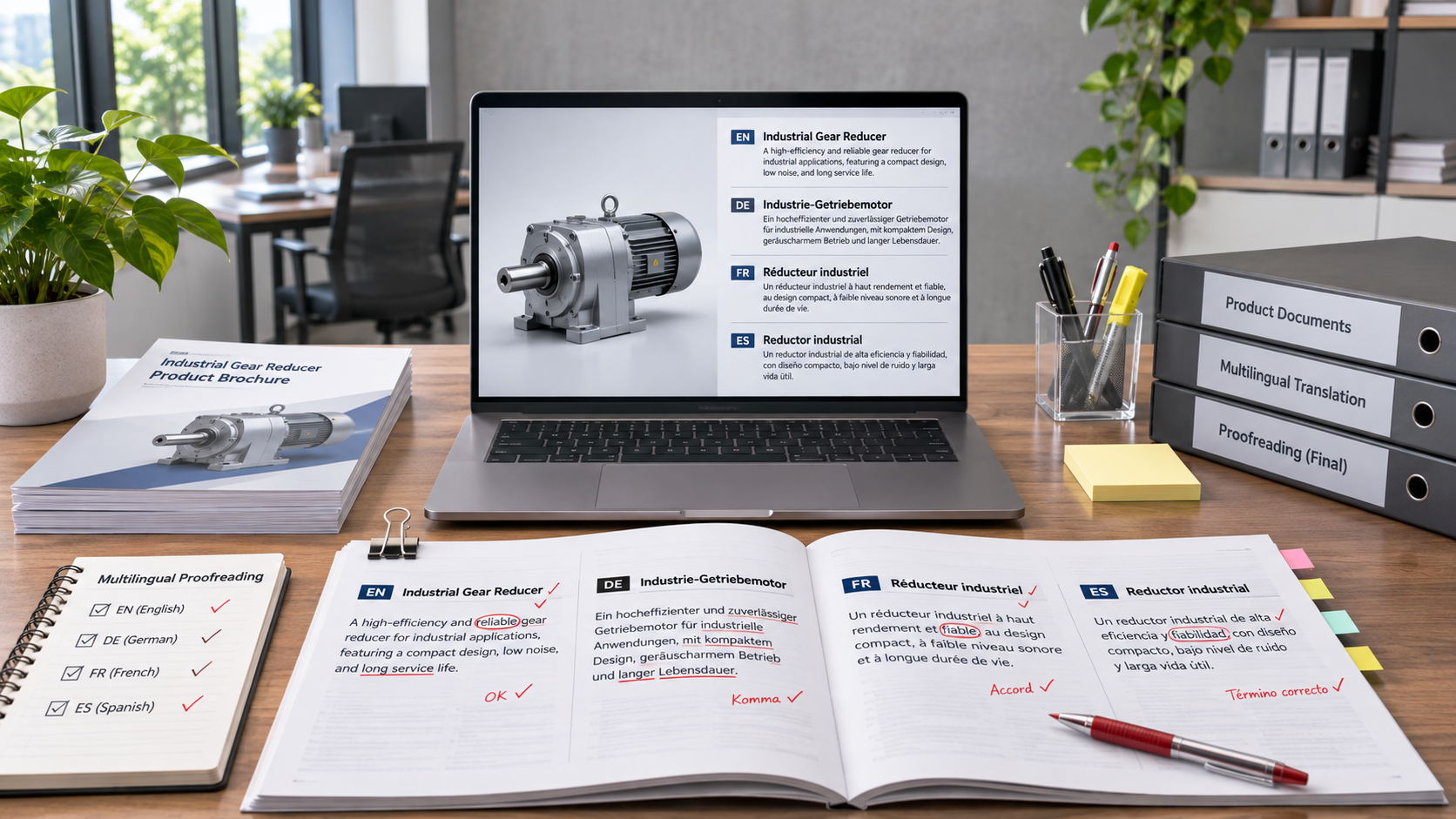
Companies can divide the workflow into six stages: content extraction, initial machine translation, terminology verification, market-focused editing, business review, and publication checks. AI can significantly improve the efficiency of initial translation and content organization, but product selling points, technical parameters, and cultural expression still require humans to take final responsibility.
It is recommended to establish a unified terminology database covering at least product names, core specifications, industry abbreviations, brand names, certification names, and terms that must not be translated. The terminology database should be jointly maintained by the marketing, sales, and technical departments to avoid multiple inconsistent expressions for the same product across pages in different languages.
Reviews should also check currencies, units of measurement, date formats, telephone numbers, form fields, and call-to-action buttons. Many companies proofread only the body text while overlooking conversion entry points such as “Request a Quote Now” and “Get a Quote,” preventing overseas users from smoothly completing an inquiry after entering the page.
Use Data to Determine Whether the Cycle Needs to Be Shortened or Adjusted
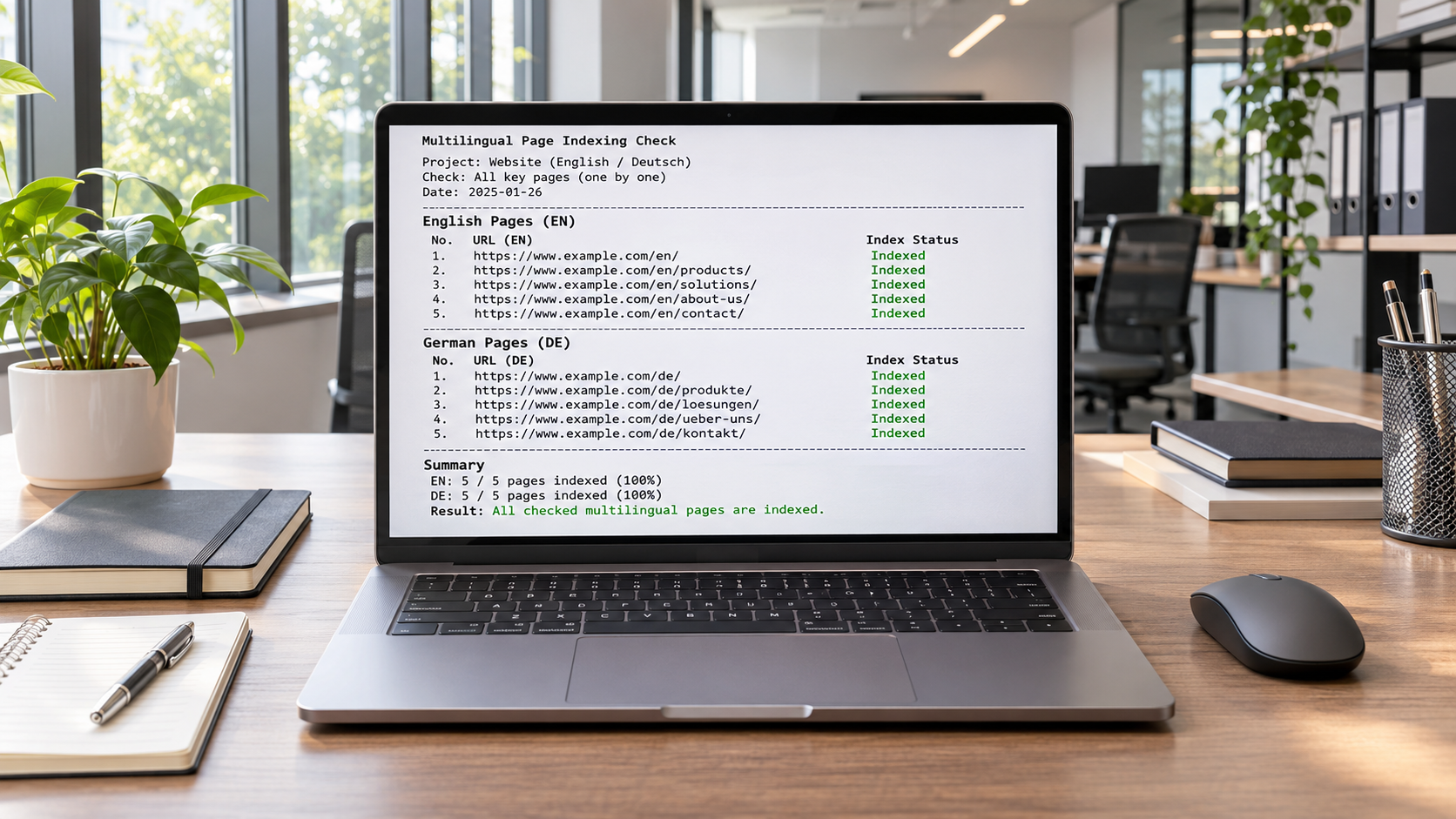
A synchronization cycle should not remain permanently unchanged once set. Companies should review the number of indexed pages, organic traffic, inquiry conversion rates, page dwell time, and rankings for priority keywords across language websites each month to determine whether content updates have truly driven growth rather than merely increased the number of pages.
If new product pages for a particular market consistently go live more than two weeks later than on the main website, and the sales team frequently receives feedback that “website information does not match the quotation,” this indicates that the synchronization cycle for that language is too long and that automation or review resources need to be increased.
Conversely, if a language website is updated frequently but does not gain new indexed pages, traffic, or inquiries, the issue may not be the cycle but rather the topic selection, keyword relevance, or localization quality. Further compressing publication timelines at this point will only increase the production cost of inefficient content.
It is recommended to create a content dashboard for each market to record the source content publication time, translation completion time, review time, official launch time, and subsequent SEO performance. This can identify workflow bottlenecks and help managers determine which language markets deserve priority investment.
Establish a Coordinated Mechanism of “Automated Synchronization Plus Human Review”
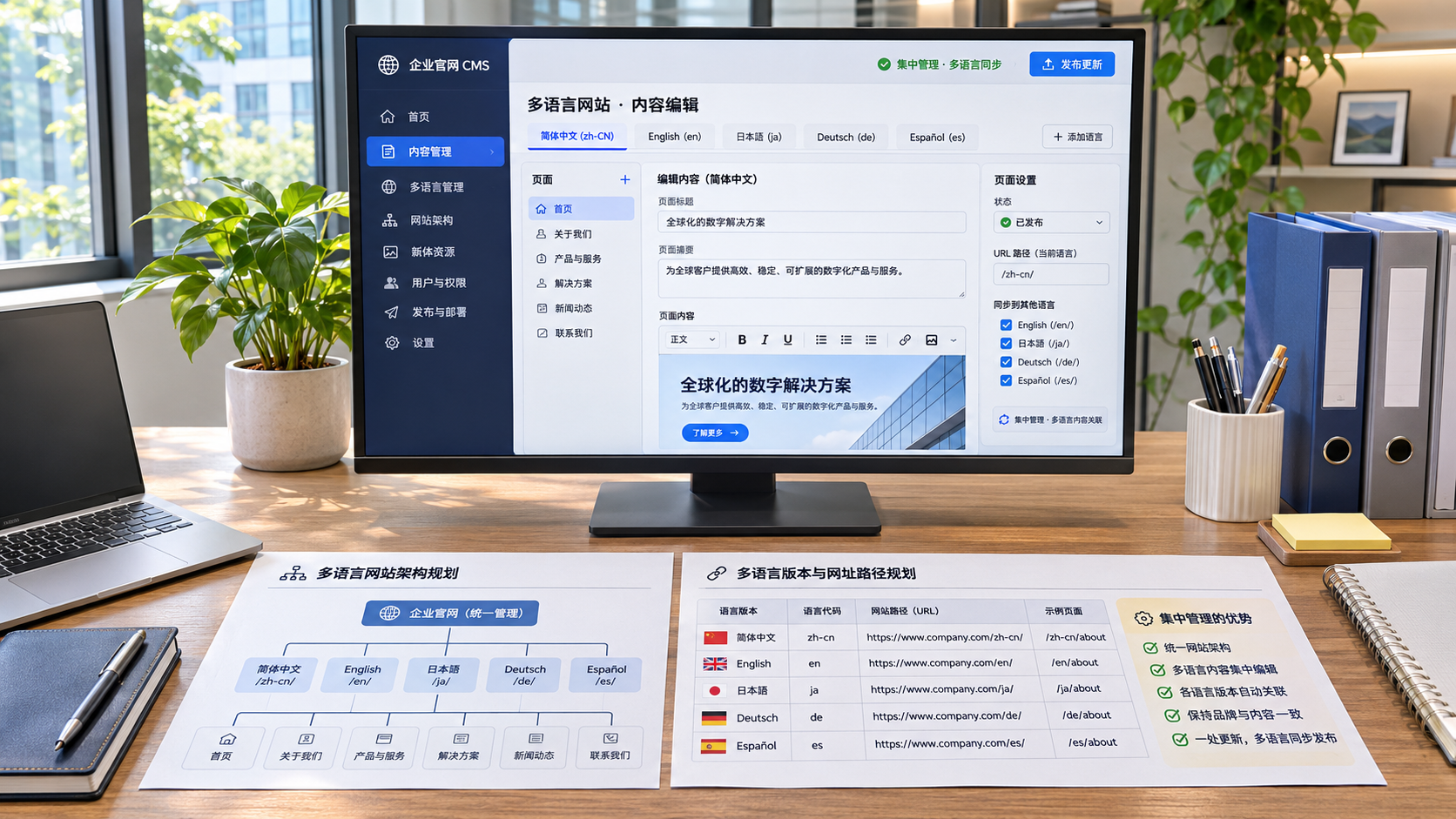
The ideal multilingual website management model is for website-building systems to handle repetitive work while localization personnel handle the parts that require judgment. Product fields, images, page structures, internal links, and basic metadata can be synchronized automatically, reducing omissions caused by manual duplication.
Titles, descriptions, core selling points, keyword placement, case study backgrounds, and calls to action, however, should be adapted for different markets. The English-speaking market emphasizes efficiency and results, the German market values technical details and standards, while Middle Eastern and Latin American markets may also require adjustments to trust signals and communication methods.
When adopting a platform with multilingual content management capabilities, companies should confirm whether it supports version tracking, pending translation alerts, field-level synchronization, independent language editing, batch publishing, and rollback. Without these capabilities, content management costs will rise rapidly as the website scales.
Yiyingbao provides intelligent website building, multilingual website development, and SEO optimization capabilities for overseas marketing scenarios, helping companies centrally manage website content, page structures, and promotional materials across different markets while retaining room for localized optimization on pages in each language.
Conclusion: Determine the Multilingual Website Content Synchronization Cycle Based on Business Impact
The multilingual website content synchronization cycle should serve the business rather than become a fixed burden on the operations team. High-conversion and high-risk information should prioritize timeliness and accuracy, routine marketing content should follow a stable cadence, and SEO content should continuously iterate based on keyword opportunities and market feedback.
What companies truly need to establish is a closed loop consisting of content categorization, automated synchronization, human review, and data analysis. Only by balancing update speed, language quality, and market conversion can a multilingual website evolve from a display tool into a growth asset that continuously acquires overseas customers.