









- AI Products Drive Hong Kong Exports Up 64.9% in September, Fastest Growth in Over 40 YearsNov 17, 2026View details
- National Bureau of Statistics: Foreign trade grew rapidly in October, providing stable support for global tradeNov 17, 2026View details
- The U.S. has ended the $800 de minimis exemption for non-postal shipments; express courier packages must be formally declared.Nov 16, 2026View details
- ASEAN Signs Digital Economy Framework Agreement, Moving Toward Harmonized Cross-Border E-Commerce RulesNov 15, 2026View details
- Shenzhen Becomes the First City in Mainland China to Exceed RMB 5 Trillion in Foreign TradeNov 15, 2026View details
- Fujian Announces the First Batch of Provincial-Level Cross-Border E-Commerce Industrial Parks and Key Brands for CultivationNov 14, 2026View details
How Often Should a Multilingual Website Be Redesigned After Launch?
In the first year after launching a multilingual website, many companies often feel a sense of relief that they have finally completed it: the English, German, and French sites are all live, and product materials have been synchronized. It may then seem that all that remains is to wait for inquiries. However, as traffic, rankings, and conversions begin to diverge across different markets, a new question arises: How often should a multilingual website be redesigned after it is launched?
The answer is not a simple schedule such as “once every two years” or “once every three years.” For websites targeting overseas markets, a redesign is more like a systematic adjustment based on business changes: markets change, search rules change, and buyers’ decision-making habits also change. What truly matters is whether the website can still effectively communicate value to target markets, acquire traffic, and support conversions.
Do Not Rush to Redesign Based on Years—First Check Whether Your Website Shows These “Signs of Ineffectiveness”
Even if a multilingual website does not look outdated visually, it may no longer be suited to the current customer acquisition environment. This is especially true for export manufacturers, cross-border brands, and B2B service providers. Overseas customers usually decide whether a company is trustworthy within a short period of time; slow page loading, awkward language, and complex inquiry paths can all cause potential customers to leave quietly.
If two or more of the following situations occur, you should no longer rely solely on scattered fixes, but instead evaluate an overall redesign or structural upgrade:
- The website has been live for more than 2–3 years, while the mobile experience remains mediocre. The share of mobile traffic in overseas markets continues to grow. If navigation, forms, and product filtering are difficult to use on mobile phones, a large amount of traffic generated through advertising and SEO will be wasted.
- New markets or languages have been added, but the website architecture has not been adjusted accordingly. For example, a business may have originally focused only on the English-speaking market, then expanded into the Middle East, Latin America, Japan, or South Korea, but merely added translated pages without considering local currencies, units of measurement, contact methods, content preferences, and search habits.
- Organic traffic has stagnated, and old pages struggle to cover new search demands. Product keywords, industry terminology, and the issues buyers care about all change. If a website contains only product specification pages, without application scenarios, solutions, technical content, and trust-building information, SEO growth will often reach a bottleneck.
- The number of inquiries is not low, but the proportion of qualified prospects is declining. This is often not entirely a sales issue. It may also result from unclear landing page information, insufficient filtering mechanisms, or a website that does not provide content for visitors at different stages.
- Back-end maintenance is becoming increasingly difficult. If every product update requires repeated actions across individual language sites, page styles are inconsistent, and content review is difficult, the existing system is already slowing operational efficiency.
- Brand positioning or product structure has changed. When a business shifts from OEM production to its own brand, from a single product to solutions, or from regional sales to global expansion, the narrative logic of the old website often no longer matches the new business.
In other words, the trigger for redesigning a multilingual website is not that you are “tired of looking at it,” but that it has begun to affect visibility, trust, management, or sales.
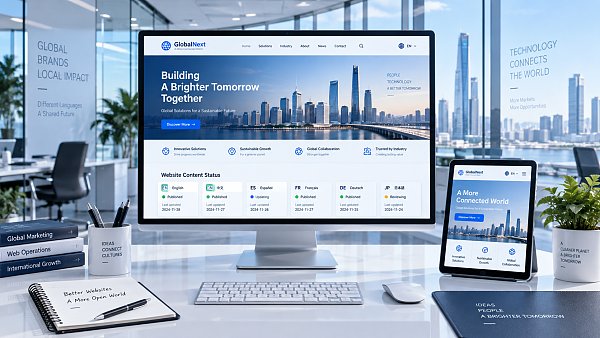
Different Companies Have Different Redesign Cycles
If a reference cycle must be provided, most companies can treat 2–3 years as a point for a comprehensive evaluation, rather than a mandatory point for rebuilding. During this period, content, page modules, conversion paths, and technical configurations should be continuously optimized. For companies running Google Ads, social media advertising, or ongoing SEO, website iterations are usually more frequent because data reveals problems more quickly.
For example, B2B manufacturers may have relatively stable product processes, certification materials, and application industries, so they may not need to frequently change their visual style. However, they should review key landing pages, inquiry forms, and multilingual keyword layouts every 6–12 months. B2C cross-border online stores, which are more heavily affected by seasons, promotions, payment methods, and product updates, are better suited to quarterly checks of their homepage, category pages, checkout process, and localized campaign pages.
Brands in the rapid global expansion stage may need to make adjustments as soon as they enter a new market. Only after going live will they learn whether local users care more about delivery times or environmental certifications, and whether they prefer to communicate through WhatsApp or schedule a demo directly. This real-world feedback is far more valuable than subjective assumptions made before launch.
Redesigning a Multilingual Website Does Not Mean “Changing the Skin”
Many companies understand redesign as replacing banners, adjusting colors, and making pages look more “international.” Visual updates certainly have value, but if the underlying structure is not improved, a redesign is likely to become merely an expensive decoration.
A more valuable redesign usually reviews four areas at the same time.
1. Whether Markets and Languages Are Truly Localized
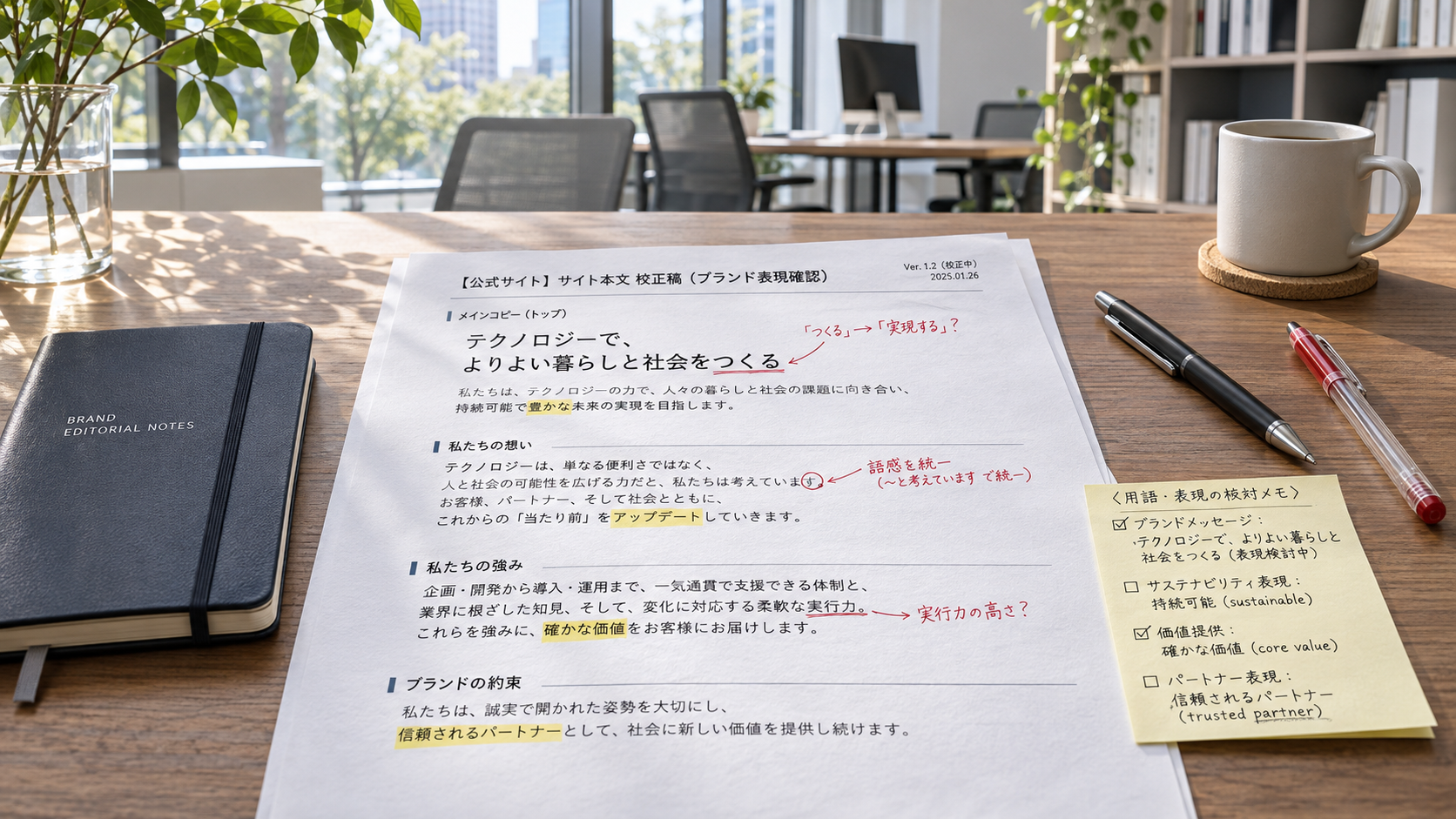
Multilingual content does not mean multiple pages produced through machine translation. Customers in different regions focus on different aspects when reading product information: European and American buyers may value specifications, compliance, and case studies; Middle Eastern customers may be more sensitive to service responsiveness and trade terms; the Japanese market often has higher requirements for details, communication etiquette, and page organization.
During a redesign, what should be reviewed is not only language accuracy, but also whether keywords match local search behavior, whether images fit the cultural context, whether telephone and form fields align with communication habits, and whether important pages offer independent localized content value. Simply copying the structure of an English website and replacing the text often makes it difficult to achieve ideal search performance.
2. Whether SEO and AI Search Visibility Can Be Maintained
The most easily overlooked risk of a redesign is the accidental loss of existing rankings and historical links. Arbitrary URL changes, confused relationships between language versions, failure to apply 301 redirects to old pages, and completely rewriting titles and descriptions can all cause search engines to reassess the website, resulting in traffic fluctuations.
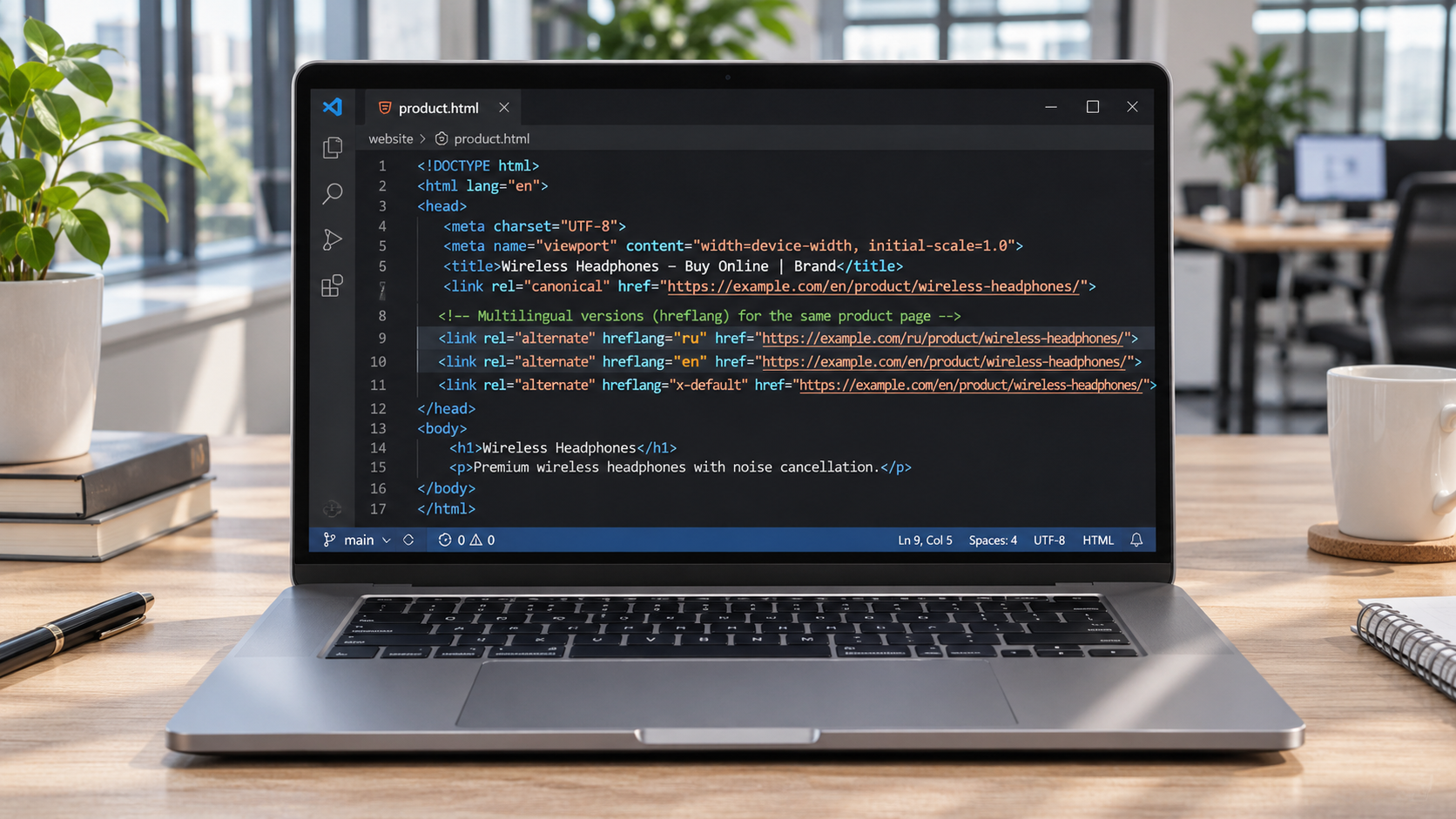
Therefore, before deciding how often a multilingual website should be redesigned after launch, companies should also confirm whether their team has redesign capabilities that support migration. Before the redesign, high-traffic pages, core keywords, backlink pages, and indexed content should be identified; after the redesign, crawling, indexing, redirects, and canonical tags for each language version should be continuously monitored. In response to AI search and generative Q&A scenarios, companies should also add clearly structured product facts, application descriptions, FAQs, and verifiable company information to make content easier to understand and cite.
3. Whether the Conversion Path Can Shorten Customer Hesitation
Overseas visitors will not patiently study every page. After entering a website, they usually want to quickly confirm three things: Do you provide the products or services they need? Are you trustworthy? How can they contact you next? If these answers are buried too deeply, even excellent traffic will be difficult to convert.
A redesign can focus on actual conversion actions: display appropriate contact methods for different countries; provide sample requests, catalog downloads, or quotation request options on product pages; add specification comparisons, videos, and FAQs for complex equipment; and create more focused landing pages for advertising traffic. For B2B business, forms do not necessarily need to include as many fields as possible. Moderately lowering the threshold for an initial inquiry and then qualifying leads through follow-up communication often better fits the purchasing decision cycle.
4. Whether the Technical Foundation Supports Long-Term Operations
Website speed, security, mobile responsiveness, content management permissions, and multilingual synchronization efficiency determine whether a team can continue to make effective use of the website. A website that is “finished once launched” will quickly lose its vitality as materials become outdated.
Taking an AI-driven enterprise SaaS website-building and overseas marketing platform such as Yiyingbao as an example, when planning a redesign, companies can consider website development, SEO content maintenance, advertising landing pages, and social media traffic acquisition as part of the same operational workflow. The focus is not on pursuing an accumulation of features, but on enabling product updates, language version management, promotional page development, and data monitoring to work together more smoothly, reducing the impact of technical limitations on marketing pace.
Before Redesigning, It Is Recommended to Conduct a “Lightweight Checkup” First
Not all problems require starting from scratch. Companies can first spend around 30 days collecting data and feedback: review traffic sources, pages visited, bounce behavior, and conversion rates for each language site; organize the questions most frequently asked of the sales team; test the mobile inquiry process; check loading speeds of key pages in target countries; and compare these findings with the current business map to confirm which languages and markets are still worth prioritizing.
If the issues are concentrated in outdated content, low conversion on individual pages, or inaccurate translations, localized optimization is more economical. If navigation logic is confusing, the system is difficult to maintain, the mobile experience is poor, or SEO foundations are missing, a phased redesign plan should be developed. For websites that already have stable traffic, it is recommended to use an approach of “migrating core pages first, then expanding gradually” to avoid uncontrollable fluctuations caused by major one-time changes.
The Ideal State: Continuous Website Evolution Rather Than Periodic Rebuilding
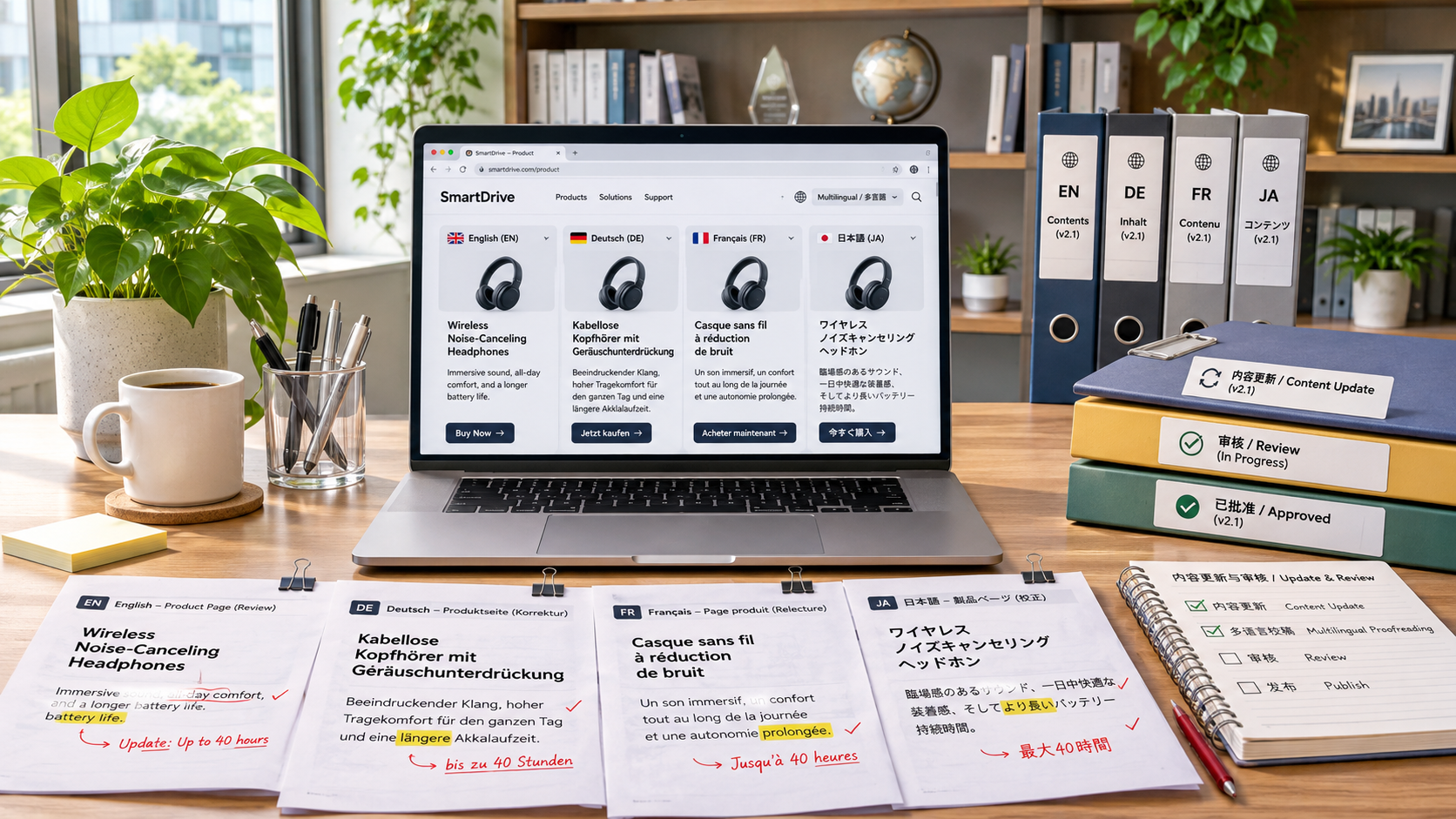
A multilingual website is not an electronic brochure that is archived after delivery, but a digital presence that a company continuously adjusts as it enters different markets. Rather than dwelling on a fixed number of years, it is better to establish an ongoing review mechanism: monitor traffic and inquiry quality every month, update key pages every quarter, assess market and technology changes every year, and reevaluate at the 2–3-year point whether a systematic upgrade is needed.
When a website can grow alongside products, markets, and customer needs, “how often should a multilingual website be redesigned after it is launched” will no longer be a reactive remedial question, but a choice for companies to proactively improve the efficiency of global customer acquisition.
Related Articles
 How Do You Set Up Multilingual SEO Tags for a Russian-Language Website?
 How Can You Avoid Localization Mistakes When Building a Japanese-Language Brand Website?
 How Does a Website Localization System Manage Multilingual Content Updates?
Related Products
 Yiyingbao SaaS Intelligent Website Building and Marketing SystemYiyingbao SaaS Intelligent Website Building and Marketing System, AI-powered no-code website building, rapid creation of multilingual B2B international websites in 10 minutes, global server acceleration, AI-powered SEO optimization, helping businesses connect efficiently with global markets. The perfect integration of technology and operation makes building an international trade website remarkably simple
 AI+SEM Intelligent Advertising Marketing SystemAI+SEM drives intelligent ad creation, empowering full-funnel precision advertising marketing. The system automatically generates weekly/monthly reports, AI recommends keywords and target countries, monitors core metrics in real-time with intelligent alerts, and enables one-click high-conversion ad solutions to help quickly acquire customers and improve ROI.
 AI+SEO Dual-Engine System Optimization ServicesYiyingbao’s AI+SEO dual-engine optimization system helps foreign trade enterprises acquire high-quality organic traffic through AI-powered keyword research, content generation, and comprehensive technical optimization, significantly improving search rankings and conversion rates.
 AI+SNS Social Media Marketing SystemYingbao AI+SNS Social Media Marketing System - Precision social capture for the social media era. Supports one-click content synchronization across major platforms like Facebook and LinkedIn. AI intelligently rewrites posts for enhanced relevance. 24/7 AI customer service and user profiling analysis empower businesses to efficiently expand into global markets.
 AI+SEO营销解决方案易营宝AI+SEO营销解决方案,通过AI批量写作、智能生成TDK、精准关键词扩词等功能,全面优化网站SEO效果,提升流量与转化率。助力企业构建高效智能网站新生态。
 AI+SEM Advertising Marketing SolutionsAI+SEM Advertising Marketing Solution leverages AI technology to deeply empower SEM ad campaigns. It automatically generates weekly/monthly reports using AI, presenting account data across multiple dimensions for comprehensive insights into campaign performance and trends. The system precisely recommends keywords and target countries, intelligently generates high-conversion ad copy, and enables one-click activation of efficient campaign plans to help businesses rapidly acquire customers. Simultaneously, it monitors core metrics in real time, intelligently identifies abnormal fluctuations, and issues timely alerts to ensure stable, high-return advertising results.
 Domain Name ServicesEasyWin provides professional domain name services, including intelligent queries, one-stop registration, brand protection, and full lifecycle management, helping businesses build a digital brand image.
 EasyOperate B2C Cross-Border E-Commerce Platform & Independent WebsiteEasyStore B2C Cross-border E-commerce Independent Store is an intelligent website building and cross-border e-commerce integrated solution independently developed by EasyStore Information Technology (Beijing) Co., Ltd. The system is specially designed for small and medium-sized as well as large export enterprises, integrating 'website building, operation, marketing, advertising, and conversion' into one, helping enterprises quickly establish cross-border e-commerce independent stores to achieve brand globalization and global sales growth.
The platform supports multiple languages, multiple currencies, and multi-channel marketing, with built-in AI intelligent translation and SEO optimization systems, suitable for mainstream markets such as Southeast Asia, Europe and America, Latin America, and the Middle East, assisting Chinese manufacturing enterprises in efficiently deploying international e-commerce strategies. SSL证书易营宝提供专业SSL安全证书服务,包括单域名和泛域名证书,确保网站数据传输加密、身份验证和完整性保护,助力企业建立安全可信的在线业务环境。









