









- AliExpress Global Double 11: Brand Sales Grow Nearly 50% in the First Week, U.S. GMV Rises 70%Nov 21, 2026View details
- Ministry of Commerce Reports E-commerce Development from January to October 2026, with Cross-Border Imports Performing StronglyNov 21, 2026View details
- Amazon Black Friday Orders Sluggish on Day One; NRF Forecasts 4.2 Million Fewer ParticipantsNov 21, 2026View details
- 21st Century Business Herald: AI and CTV Become Core Growth Engines for Digital Marketing in Overseas MarketsNov 18, 2026View details
- China Presents 25 Cooperation Outcomes in Areas Including Cross-Border E-Commerce During APECNov 18, 2026View details
- AI Products Drive Hong Kong Exports Up 64.9% in September, Fastest Growth in Over 40 YearsNov 17, 2026View details
How Can an ODM Company Showcase Its R&D Capabilities on an International Trade Website?
An ODM company's export website should present its R&D capabilities by helping overseas customers understand what happens from the initial requirements through sample validation, what design work the company undertakes, and whether these capabilities can be applied to new projects. The page should connect processes, team responsibilities, and project evidence so that claims of R&D capability can be assessed.
Present the R&D Process as a Clear Project Path
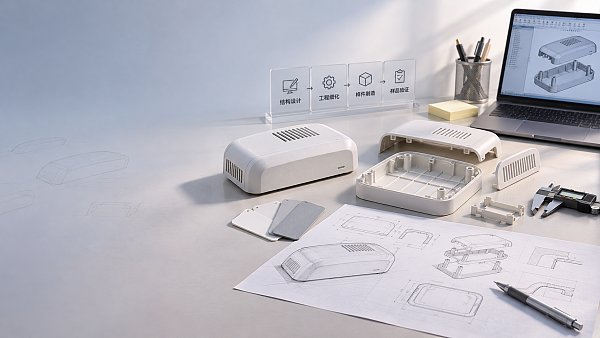
An R&D capabilities page can start with the work that begins after customer requirements are received, covering requirement confirmation, solution design, sample production, testing and adjustments, and handover to mass production. For each stage, specify the inputs, key activities, and resulting deliverables. For example, requirement confirmation may cover the intended application, dimensional constraints, material preferences, and expected operating environment. The solution stage can explain the trade-offs between structural design, material selection, and manufacturing processes.
Each node in a process diagram should correspond to a specific deliverable. When presenting “sample validation,” explain what the sample is used to check: whether appearance parts fit, whether there is sufficient assembly clearance, and whether connections remain stable under the intended operating conditions. If validation leads to changes to a snap-fit feature or wall thickness, a simplified diagram can show the differences before and after the adjustment.
R&D responsibilities vary across ODM projects. Some start with a product concept, while others begin with customer-supplied appearance drawings or functional requirements. The page should specify the scope handled by the company and identify the inputs provided by the customer. This clarifies how the project will proceed and avoids presenting jointly developed work as independent R&D.
Use Project Cases to Demonstrate Design Decisions
Case studies do not need to consist of a collection of finished-product images. A persuasive project page can focus on the problem the product needed to solve: the original requirements, constraints related to space, materials, or processing, how the team adjusted the solution, and how it was ultimately validated. Where information is confidential, customer names, appearance details, and precise specifications can be omitted while retaining the technical rationale, subject to authorization.
For example, a plastic housing may need to balance interior space with ease of assembly. A case study could show a structural sketch and how the prototype relates to its assembly position, and explain whether moving a snap-fit feature addressed interference or made disassembly easier. If only the finished housing is shown, readers may find it difficult to determine whether the company contributed to structural design, mold coordination, or subsequent processing.
Test results should also include their limitations. When presenting drop, temperature-resistance, or service-life tests, specify the test subject, conditions, and evaluation method. A result for one test should not be generalized to imply that the entire product range has the same performance. For projects still at the sample stage, state their current status to avoid giving the impression that mass-production validation has been completed.
Turning Team and Equipment Information into Effective Evidence
Team introductions are most useful when organized around project responsibilities rather than simply listing department names. Explaining which components structural designers handle, which functions electronic engineers work on, and how testers feed issues back to the design team helps visitors understand cross-functional collaboration. If a project involves software or firmware, the page can also describe its integration interfaces with the hardware and the scope of deliverables.
Headcount reflects team size but cannot, by itself, demonstrate the depth of development for a particular product. The website can draw on actual experience to describe familiar product types, design tasks, and collaboration methods. Obtain authorization before including individuals' names, photos, or résumés. Work involving external partner laboratories or design firms should also be clearly identified, rather than presented as an in-house capability.
Equipment descriptions should likewise explain the purpose of each item. Screenshots from 3D design software, sample-making equipment, or testing instruments should be tied to specific work, such as checking assembly interference, making validation samples, or recording performance data. An instrument's model alone does not indicate the scope of testing. If a test is conducted by an external organization, state this accurately.
Make Capability Pages and Product Pages Reinforce Each Other
A dedicated R&D center page is suited to introducing the overall process, while each product page should explain what development changes the product can support. For a housing product, for example, specify the materials, surface treatments, dimensional ranges, or structural adjustments that can be discussed. For changes involving molds, electronic components, or packaging, explain whether reassessment is required. For projects whose scope has not been confirmed, use wording such as “can be evaluated based on the drawings and intended application” rather than promising unlimited customization.
The two types of pages can link to each other through related case studies or technical topics. For example, a structural design description on a product page can link to a relevant case study, which can then link back to the relevant product category. This lets visitors explore technical details from a product page and find applicable use cases from the R&D capabilities page. Specifications, images, and project status should remain consistent across pages. If photos of an older prototype are still in use, label the version to avoid confusion with current specifications.
When discussing material use or design improvements in the R&D process, you can also provide relevant background reading, such as An Exploration of Implementation Pathways for ESG to Support the Development of New Quality Productive Forces in Enterprises. Material or process changes in a specific project should still be supported by verifiable records; environmental performance cannot be inferred from design intent alone.
Address Language, Confidentiality, and Updates Before Publishing
English and other language versions should use consistent technical names, units of measurement, and drawing terminology. For example, the same component should have the same name on the product page, in test descriptions, and on inquiry forms. Retain units for tolerances or temperatures, and verify decimal places and ranges. After translation, cross-check against the original drawings to avoid presenting a design objective as a validated result.
Public materials should be reviewed and approved by the project, technical, and customer stakeholders. Customer identifiers, unreleased structures, document numbers, and details visible in photo backgrounds may all reveal project information. Use redrawn illustrations where necessary. Confirm what may be disclosed in screenshots of test reports, and retain the conditions needed to interpret the results rather than showing only favorable conclusions.
An inquiry form can be placed next to a case study or capability description and collect information on the product's intended use, approximate dimensions, material requirements, available drawings, and project stage. For requirements with parameters that have not yet been determined, provide space for a written description and file uploads to help assess the R&D scope. Both the form and public pages should avoid asking visitors to submit confidential information they do not wish to disclose.
Related Articles
 What Processing Examples Should a Laser Engraving Machine Export Website Showcase?
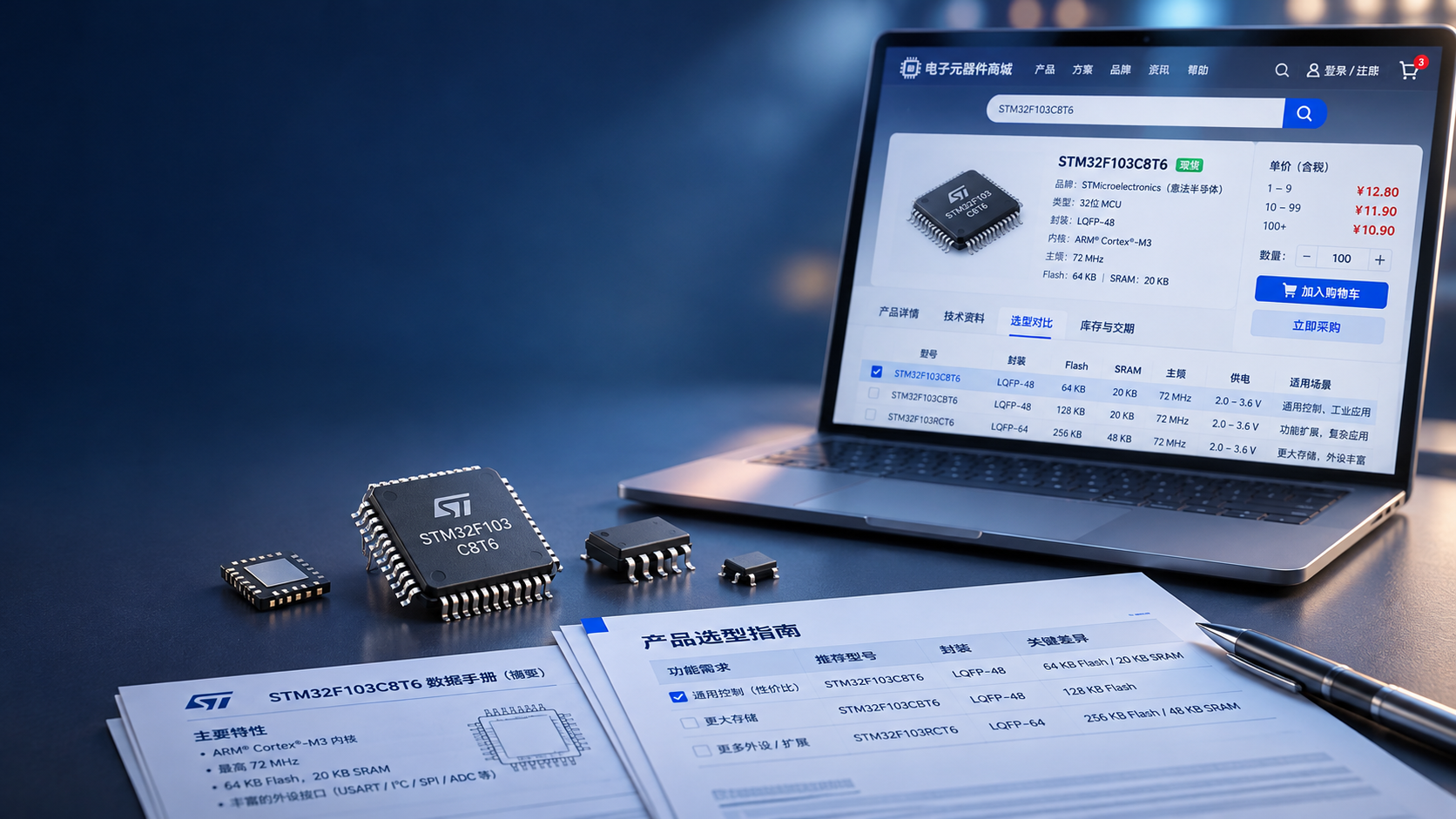
 How Can Digital Marketing Reach Buyers Searching for Electronic Component Part Numbers?
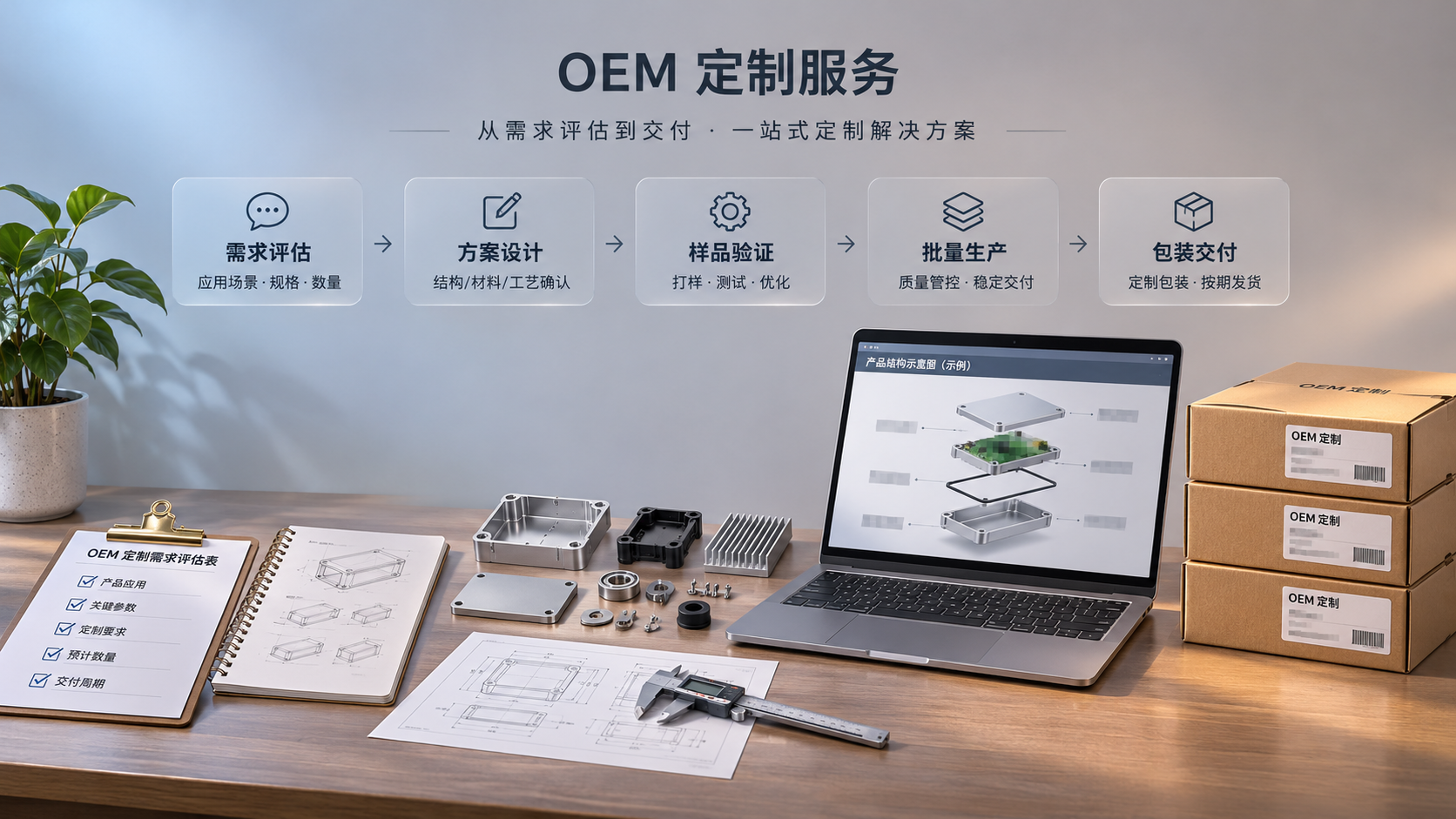
 How Can an OEM Export Website Showcase the Customization Process?

Related Products
 Yiyingbao SaaS Intelligent Website Building and Marketing SystemYiyingbao SaaS Intelligent Website Building and Marketing System, AI-powered no-code website building, rapid creation of multilingual B2B international websites in 10 minutes, global server acceleration, AI-powered SEO optimization, helping businesses connect efficiently with global markets. The perfect integration of technology and operation makes building an international trade website remarkably simple
 AI+SEM Intelligent Advertising Marketing SystemAI+SEM drives intelligent ad creation, empowering full-funnel precision advertising marketing. The system automatically generates weekly/monthly reports, AI recommends keywords and target countries, monitors core metrics in real-time with intelligent alerts, and enables one-click high-conversion ad solutions to help quickly acquire customers and improve ROI.
 AI+SEO Dual-Engine System Optimization ServicesYiyingbao’s AI+SEO dual-engine optimization system helps foreign trade enterprises acquire high-quality organic traffic through AI-powered keyword research, content generation, and comprehensive technical optimization, significantly improving search rankings and conversion rates.
 AI+SNS Social Media Marketing SystemYingbao AI+SNS Social Media Marketing System - Precision social capture for the social media era. Supports one-click content synchronization across major platforms like Facebook and LinkedIn. AI intelligently rewrites posts for enhanced relevance. 24/7 AI customer service and user profiling analysis empower businesses to efficiently expand into global markets.
 AI+SEO营销解决方案易营宝AI+SEO营销解决方案,通过AI批量写作、智能生成TDK、精准关键词扩词等功能,全面优化网站SEO效果,提升流量与转化率。助力企业构建高效智能网站新生态。
 AI+SEM Advertising Marketing SolutionsAI+SEM Advertising Marketing Solution leverages AI technology to deeply empower SEM ad campaigns. It automatically generates weekly/monthly reports using AI, presenting account data across multiple dimensions for comprehensive insights into campaign performance and trends. The system precisely recommends keywords and target countries, intelligently generates high-conversion ad copy, and enables one-click activation of efficient campaign plans to help businesses rapidly acquire customers. Simultaneously, it monitors core metrics in real time, intelligently identifies abnormal fluctuations, and issues timely alerts to ensure stable, high-return advertising results.
 Domain Name ServicesEasyWin provides professional domain name services, including intelligent queries, one-stop registration, brand protection, and full lifecycle management, helping businesses build a digital brand image.
 EasyOperate B2C Cross-Border E-Commerce Platform & Independent WebsiteEasyStore B2C Cross-border E-commerce Independent Store is an intelligent website building and cross-border e-commerce integrated solution independently developed by EasyStore Information Technology (Beijing) Co., Ltd. The system is specially designed for small and medium-sized as well as large export enterprises, integrating 'website building, operation, marketing, advertising, and conversion' into one, helping enterprises quickly establish cross-border e-commerce independent stores to achieve brand globalization and global sales growth.
The platform supports multiple languages, multiple currencies, and multi-channel marketing, with built-in AI intelligent translation and SEO optimization systems, suitable for mainstream markets such as Southeast Asia, Europe and America, Latin America, and the Middle East, assisting Chinese manufacturing enterprises in efficiently deploying international e-commerce strategies. SSL证书易营宝提供专业SSL安全证书服务,包括单域名和泛域名证书,确保网站数据传输加密、身份验证和完整性保护,助力企业建立安全可信的在线业务环境。









