









- Levanta’s Inaugural China Summit Held in Shenzhen, Focusing on AI and Cross-Border Brand GrowthOct 20, 2026View details
- The October Edition of the 2026 GGE Shenzhen Cross-Border E-Commerce Expo OpensOct 20, 2026View details
- Dongguan’s foreign trade imports and exports reached RMB 1.29 trillion in the first three quarters, a record high for the same periodOct 20, 2026View details
- Liaoning Holds Province-Wide Meeting to Advance Cross-Border E-Commerce, Emphasizing the Need to Explore Differentiated Development PathsOct 20, 2026View details
- Advanced Manufacturing Seizes Global Opportunities as Guangdong’s Q3 Foreign Trade Surpasses RMB 3 Trillion for the First TimeOct 20, 2026View details
- Can the average annual growth rate reflect real opportunities in overseas markets?Oct 07, 2026View details
How Can a Photovoltaic New Energy Export Website Optimize Conversions?
How Can Foreign Trade Websites for the Photovoltaic and New Energy Industry Improve Conversion Rates?
When photovoltaic and new energy companies expand into overseas markets, their websites often do not lack product pages or company introductions. What they truly lack is a path that enables buyers to smoothly complete their evaluation and submit inquiries. After entering a website, overseas visitors typically confirm several things within a very short time: whether the company is genuine and reliable, whether its products meet project requirements, whether it can support local delivery, and whether it is worth further communication. The core of conversion optimization for photovoltaic and new energy foreign trade websites is not making pages more “lively,” but reducing the barriers for customers to obtain key information and initiate contact.
This is particularly evident for product categories such as modules, inverters, energy storage systems, mounting structures, cables, and supporting equipment. Procurement decisions typically involve technical, purchasing, project management, and even compliance teams, with different roles focusing on different content. A website that only emphasizes “high quality” and “professional manufacturing” can hardly capture genuine project-based inquiries. In contrast, a website that presents specifications, applications, delivery capabilities, and contact channels has the opportunity to convert search traffic, ad clicks, and social media visits into business opportunities that can be followed up on.
First, Distinguish Between Browsing Traffic and Purchase Intent
When optimizing websites, many companies tend to treat the homepage as the landing page for all traffic. However, overseas customers enter through highly diverse paths: some search for the power range of a certain type of module, some look for technical documentation on energy storage cabinets, and others arrive at a specific application page through advertisements or social media content. Different entry points reflect different intentions, and pages should not serve only as brand showcases.
For example, users searching for product models, system configurations, or application solutions are often already at the comparison stage and need clear specifications, compatibility requirements, document downloads, and inquiry options. Users searching for a company name or factory capabilities, on the other hand, pay more attention to manufacturing, quality control, supply scope, and service boundaries. If all entry points are directed to a broad homepage, visitors have to repeatedly search for information, so leaving becomes natural.
Therefore, before planning a website, companies should first identify their main customer acquisition scenarios: Are they targeting distributors, engineering contractors, installers, or large project buyers? Is the target market primarily English-speaking, or does it require entry into Spanish-, French-, Arabic-, Japanese-, or Russian-speaking environments? Are the products standardized for export, or do they require configuration based on each project? These questions determine the page structure, content depth, and form fields, and cannot be handled with a single template.
Technical Information Should Support Evaluation, Not Be Buried in Promotional Copy
Photovoltaic products have strong technical procurement characteristics. Customers may not require all quotations to be publicly displayed on the website, but they do want to quickly determine whether a product falls within their shortlist. At a minimum, product pages should help visitors understand: what scenarios the product is used for, what the key specifications are, what documentation is available, and which configurations require project confirmation. For modules, inverters, energy storage, or mounting products, the value of specification tables, dimensional drawings, installation instructions, compatibility notes, and document download options is generally greater than that of lengthy generic brand descriptions.
However, more parameters do not necessarily result in higher conversion rates. Simply piling up unexplained terminology may leave non-technical purchasing personnel without a basis for evaluation. A more reasonable approach is to organize content in layers: first, use concise text to explain application scenarios and key selection considerations, then provide expandable technical information. For matters that require project-specific confirmation, clearly indicate that further verification is needed based on local grid conditions, installation environments, certification requirements, or system design.
This is also an often-overlooked aspect of conversion optimization for photovoltaic and new energy foreign trade websites: do not avoid complexity, but organize complex information clearly enough. Customers are not afraid of professionalism; they are afraid of not understanding, not being able to ask questions, or being unable to confirm the next step.
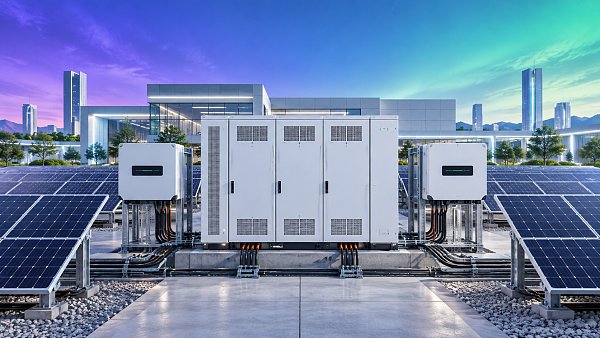
Trust Building Cannot Rely Solely on an “About Us” Page
The procurement cycle for new energy projects is often long. Visitors may not submit an inquiry immediately on their first visit, but they will assess whether a supplier is worth retaining based on details. Corporate information, production and testing capabilities, quality management processes, market service coverage, product documentation, and team response methods should all be distributed across the pages customers are likely to view, rather than being concentrated entirely on the company introduction page.
Certifications, test reports, and compliance information also need to be presented carefully. Companies should display only materials that can be verified and that correspond to the relevant products and markets, avoiding the use of inapplicable documents as universal selling points. Especially when serving different markets such as Europe, North America, and the Middle East, customers may focus on different aspects of grid connection, fire safety, transportation, installation standards, or product market access. A website may state that the company can support the confirmation of project documentation, but specific requirements should still be based on local regulations in the target country, project documents, and the actual status of the product.
Multilingual Content Is Not Complete Once Translated, and Longer Inquiry Forms Are Not Necessarily Better
Many photovoltaic companies have already built multilingual pages, but their conversion performance remains unstable. A common reason is that the content has only been translated literally. Customers in different regions vary in their communication habits, unit preferences, procurement priorities, and commonly used communication methods. Pages targeting the Latin American market may need to explain supply and project support methods in greater detail. For European customers, product documentation and technical traceability information are generally more important. When entering Middle Eastern or Southeast Asian markets, mobile access experience and local language reading habits must also be considered.
The same applies to inquiry forms. If there are too few fields, the sales team may receive insufficient information; if there are too many, customers with early-stage interest may abandon the form. A practical design is to retain basic information such as name, email, company, and requirement description for the initial submission, while allowing customers to select product type, target market, or estimated purchasing timeframe. Details such as project capacity, installation location, and technical requirements can be completed through subsequent communication. Button text does not need to be exaggerated; clearly stating “Get Documentation,” “Submit Project Requirements,” or “Request a Product Solution” is sufficient.
Connect Promotion Channels with Landing Pages
Website conversion is not determined by pages alone. Visitors brought in through Google organic search, advertising, LinkedIn, Facebook, short-form video content, and industry emails have different expectations when they enter a website. If an advertisement discusses commercial and industrial energy storage solutions but its landing page displays only the full product catalog, or if social media content discusses rooftop installation scenarios but visitors cannot find the corresponding solution after clicking through, such disconnects will directly consume budget.
A more effective approach is to build corresponding landing pages around priority products, application industries, and target regions, while continuously monitoring traffic sources, time spent on pages, document downloads, form submissions, and the quality of valid inquiries. Inquiry volume alone should not be the only metric. If a large number of leads with incomplete information, mismatched needs, or no contactability come in, the problem may lie in campaign targeting, page promises, or form design rather than the speed of sales follow-up.
The Focus of Integrated Website and Marketing Services Is Continuous Adjustment
For companies operating across multiple overseas markets, when website development, content, multilingual maintenance, search optimization, and promotional data are handled separately by different teams, problems often arise: pages are changed without synchronizing campaigns, keywords generate traffic without corresponding content, or sales feedback cannot be returned to the marketing team. The value of integrated website and marketing services is not to place more functions in one backend, but to create a closed loop between website development logic, customer acquisition channels, and sales feedback.
Yiyingbao Information Technology (Beijing) Co., Ltd. was established in 2013 and is headquartered in Beijing. It has long served foreign trade companies, manufacturing plants, cross-border sellers, and businesses expanding overseas. Driven by artificial intelligence and big data technologies, it provides services including intelligent website development, multilingual website construction, search optimization, advertising, social media operations, and generative engine optimization. For photovoltaic and new energy companies, the practical significance of such capabilities is that subsequent promotion and content expansion are considered during the website development stage, rather than requiring repeated page restructuring after launch.
Yiyingbao has independently developed a cloud-based intelligent website development system, a cross-border e-commerce system, and AI marketing-related tools, covering scenarios such as B2B inquiry websites, advertising landing pages, and multilingual corporate websites. When evaluating service solutions, companies should still focus on confirming the delivery boundaries: who reviews multilingual content, how product documentation is updated, how advertising and organic traffic are attributed, how leads enter the sales process, and whether the website can continue to evolve as markets and product lines change.
Start by Reviewing One Specific Page
Optimization does not require rebuilding the entire website from the outset. Companies can first select a product page or advertising landing page with relatively high traffic but few valid inquiries, and review four questions: Can customers understand the product’s purpose within seconds? Is key documentation easy to find? Is there sufficient credible company information? Is the contact action natural and frictionless? Then, make adjustments item by item based on visitor data from different countries and sales feedback. This is often closer to the real issue than redesigning the visual interface all at once.
There is no universal page for conversion optimization of photovoltaic and new energy foreign trade websites. Product complexity, target markets, customer types, and sales models differ, so the most effective approach will also differ. First clearly explain the information customers must confirm during their decision-making process, then keep promotional content, website pages, and subsequent follow-up consistent. Only then can a website gradually evolve from an online brochure into a stable channel for acquiring overseas customers.
Related Articles

Related Products
 Yiyingbao SaaS Intelligent Website Building and Marketing SystemYiyingbao SaaS Intelligent Website Building and Marketing System, AI-powered no-code website building, rapid creation of multilingual B2B international websites in 10 minutes, global server acceleration, AI-powered SEO optimization, helping businesses connect efficiently with global markets. The perfect integration of technology and operation makes building an international trade website remarkably simple
 AI+SEM Intelligent Advertising Marketing SystemAI+SEM drives intelligent ad creation, empowering full-funnel precision advertising marketing. The system automatically generates weekly/monthly reports, AI recommends keywords and target countries, monitors core metrics in real-time with intelligent alerts, and enables one-click high-conversion ad solutions to help quickly acquire customers and improve ROI.
 AI+SEO Dual-Engine System Optimization ServicesYiyingbao’s AI+SEO dual-engine optimization system helps foreign trade enterprises acquire high-quality organic traffic through AI-powered keyword research, content generation, and comprehensive technical optimization, significantly improving search rankings and conversion rates.
 AI+SNS Social Media Marketing SystemYingbao AI+SNS Social Media Marketing System - Precision social capture for the social media era. Supports one-click content synchronization across major platforms like Facebook and LinkedIn. AI intelligently rewrites posts for enhanced relevance. 24/7 AI customer service and user profiling analysis empower businesses to efficiently expand into global markets.
 AI+SEO营销解决方案易营宝AI+SEO营销解决方案,通过AI批量写作、智能生成TDK、精准关键词扩词等功能,全面优化网站SEO效果,提升流量与转化率。助力企业构建高效智能网站新生态。
 AI+SEM Advertising Marketing SolutionsAI+SEM Advertising Marketing Solution leverages AI technology to deeply empower SEM ad campaigns. It automatically generates weekly/monthly reports using AI, presenting account data across multiple dimensions for comprehensive insights into campaign performance and trends. The system precisely recommends keywords and target countries, intelligently generates high-conversion ad copy, and enables one-click activation of efficient campaign plans to help businesses rapidly acquire customers. Simultaneously, it monitors core metrics in real time, intelligently identifies abnormal fluctuations, and issues timely alerts to ensure stable, high-return advertising results.
 Domain Name ServicesEasyWin provides professional domain name services, including intelligent queries, one-stop registration, brand protection, and full lifecycle management, helping businesses build a digital brand image.
 EasyOperate B2C Cross-Border E-Commerce Platform & Independent WebsiteEasyStore B2C Cross-border E-commerce Independent Store is an intelligent website building and cross-border e-commerce integrated solution independently developed by EasyStore Information Technology (Beijing) Co., Ltd. The system is specially designed for small and medium-sized as well as large export enterprises, integrating 'website building, operation, marketing, advertising, and conversion' into one, helping enterprises quickly establish cross-border e-commerce independent stores to achieve brand globalization and global sales growth.
The platform supports multiple languages, multiple currencies, and multi-channel marketing, with built-in AI intelligent translation and SEO optimization systems, suitable for mainstream markets such as Southeast Asia, Europe and America, Latin America, and the Middle East, assisting Chinese manufacturing enterprises in efficiently deploying international e-commerce strategies. SSL证书易营宝提供专业SSL安全证书服务,包括单域名和泛域名证书,确保网站数据传输加密、身份验证和完整性保护,助力企业建立安全可信的在线业务环境。









