









- Which customer acquisition channels will be affected by cross-border marketing trends in 2026?Sep 06, 2026View details
- Which homogenization risks should be considered in an analysis of the AI-powered website building industry?Aug 30, 2026View details
- How Will AI Marketing Trends 2026 Change Advertising Budget AllocationAug 28, 2026View details
- Is the EV SSL certificate market shrinking or upgrading? How should companies assess certificate procurement?Aug 11, 2026View details
- Why the old AMP SEO 2020 practices no longer work and what has changed in current optimization prioritiesAug 02, 2026View details
- How to Choose Topics for an Industry News Section to Attract More Organic Search TrafficJul 29, 2026View details
Where Should SaaS Customer Acquisition Conversion Optimization Start? Analysis of Lead Scoring, Page Paths, and Automation Strategies
SaaS customer acquisition conversion optimization often gets stuck first “after the traffic”
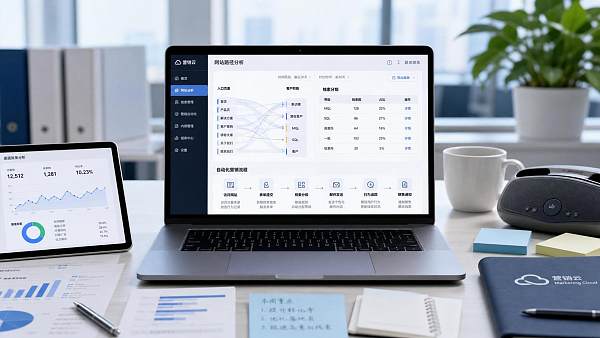
The real difficulty in SaaS customer acquisition conversion optimization is usually not getting clicks, but making a series of judgments after the click. Whether the page matches search intent, whether the lead is worth following up, and whether the automation workflow moves the user to the right stage often determine the outcome together.
For an integrated website and marketing services business, this issue is even more obvious. Customer acquisition entry points may come from SEO, advertising, social media, AI search, multilingual official websites, independent sites, or landing pages. Different entry points mean different visitor motivations, so SaaS customer acquisition conversion optimization naturally cannot rely on one single logic to cover everything.
In real-world applications, the more cross-regional and multi-channel the business is, the more necessary it becomes to evaluate lead scoring, page path analysis, and automation strategies together. 易营宝 has long served scenarios such as foreign trade, manufacturing, cross-border e-commerce, and global brand expansion. Its core experience also illustrates one point clearly: a website capable of sustained growth is not only one that can go live, but one that can identify traffic differences and complete conversion segmentation.
Clarify the scenario first, then you will know what to evaluate in SaaS customer acquisition conversion optimization
When many teams work on SaaS customer acquisition conversion optimization, they often start by changing button colors, form fields, or advertising budgets. But whether these actions are effective depends first on the business scenario. This is because visitors are sensitive to different information points in different scenarios.
For a B2B inquiry-oriented website, the page needs more emphasis on building trust, explaining capabilities, and lowering communication barriers. For a B2C cross-border mall, the focus shifts to product comparison, payment confidence, and repeat-visit conversion. For an advertising landing page, the primary task is not to explain everything, but to drive one specific action quickly.
A more common way to judge is to first check whether the traffic source is aligned with the page goal, then check whether lead quality matches back-end processing capacity, and only then decide how far automation should be triggered. In this way, SaaS customer acquisition conversion optimization will not remain at the level of surface metrics.
For high-intent search traffic, the focus is not on volume, but on precision
Visitors from search engines usually enter a page with clearer questions. At this point, page path analysis should first examine whether the landing page directly answers the need, rather than directing visitors to an overly long brand introduction. The more circuitous the content, the faster the lead quality declines.
For this type of SaaS customer acquisition conversion optimization, it is suitable to place cases, capability boundaries, industry solutions, and form entry points within the same decision-making chain. If AI website building, multilingual SEO, and GEO visibility improvement solutions are used, it is also necessary to consider whether the page depth corresponding to keywords in different regions is sufficient.
In advertising scenarios, path breaks are more costly
Advertising traffic often arrives quickly, but it is also easier to waste. The problem is usually not that the campaign gets no clicks, but that users enter an unmatched page after clicking, or fail to take a continuous action after entering. For example, if the ad says “rapid website building” but the landing page focuses on long-term brand strategy, conversions will drop significantly.
At this stage, SaaS customer acquisition conversion optimization should prioritize checking path drop-off points, including above-the-fold information, form length, consultation entry placement, mobile loading, and the continuity of secondary pages. Page analysis should not only look at time on page, but also whether there are unnecessary steps between the click and the submission.
For social media and content-driven traffic, lead scoring is more critical than immediate conversion
Many visits brought by social media are not yet at the immediate transaction stage. If the same sales-oriented form is still used to receive them, the result is often a considerable number of leads with relatively weak quality. In this scenario, SaaS customer acquisition conversion optimization is better suited to content segmentation and lead nurturing first.
Lead scoring should include source channel, number of pages visited, content consumed, repeat-visit frequency, and interaction actions in the rules. Only then can automation strategies distinguish between “just browsing” and “starting to compare solutions,” making subsequent outreach more precise.
In different scenarios, demand differences mainly fall on these key judgment points
To make SaaS customer acquisition conversion optimization easier to implement, common scenarios can first be placed in one comparison table. The focus is not the classification itself, but understanding what kind of receiving logic each type of traffic actually needs.
Lead scoring is not a scoring game, but a resource allocation mechanism
Many systems can set up lead scoring, but truly effective SaaS customer acquisition conversion optimization does not only look at job title, region, or number of submissions. More importantly, it incorporates both behavioral signals and business value.
For example, visiting a product page and visiting a blog page do not carry the same value; downloading solution materials and merely browsing the homepage also indicate different stages. If the business covers website building, SEO, advertising, social media, and AI search optimization, the scoring rules need even more to distinguish between “awareness-stage leads” and “pre-purchase leads.”
- Include channel source in the weighting to assess the quality of customer acquisition entry points.
- Include visit depth in the weighting to identify genuine comparison behavior.
- Connect region, language, and page topic to avoid misjudgment.
- Separately exclude invalid submissions, duplicate leads, and abnormal clicks.
After this processing, automation strategies can know which leads should enter immediate follow-up and which are more suitable for a nurturing sequence. The value of SaaS customer acquisition conversion optimization then shifts from “collecting data” to “assigning actions.”
Page path analysis often reveals why conversion stops
Many conversion problems are not caused by poor page content, but by a mismatch between path design and the visitor’s cognitive rhythm. Especially in integrated website and marketing service scenarios, pages often carry multiple goals such as website building, promotion, cases, quotation, and consultation. Even slight stacking can create decision burden.
Before implementation, it is necessary to confirm whether key pages are taking on too many tasks. The homepage is suitable for traffic distribution, topic pages are suitable for explanation, and landing pages are suitable for conversion. If all content is packed into one page, SaaS customer acquisition conversion optimization can easily be slowed down by “information completeness.”
For a service system like 易营宝 that covers multilingual website building, cross-border malls, SEO, advertising, and social media operations, it is usually more suitable to split paths by target scenario. Search traffic enters solution pages, advertising traffic enters single-topic landing pages, and social media traffic first enters content pages before converting gradually. This is more aligned with the real decision-making process.
Automation strategies should follow the business rhythm, not become one-click mass messaging
Automation is the part of SaaS customer acquisition conversion optimization that is most easily overestimated. Tools can automatically send emails, assign leads, and send reminders, but if the earlier lead judgment is inaccurate, automation will only amplify mistakes faster.
A safer approach is to first design trigger conditions by scenario. High-score leads trigger rapid response, medium-score leads enter content nurturing, and low-score leads remain under observation. For multi-regional businesses, language version, visitor time zone, and source platform should also be included together.
This is also why AI-driven platforms are better suited to handling complex scenarios. If the website building system, advertising system, SEO/GEO optimization system, and lead data can be connected, automation strategies will no longer be isolated actions, but continuous operations built around page behavior and conversion stages.
Common misjudgments during implementation are often more fatal than technical issues
One common misjudgment is looking only at the number of forms, rather than their relevance to transactions. More leads do not equal successful SaaS customer acquisition conversion optimization. If a large number of leads cannot enter subsequent communication, front-end efforts will still be negated by the back end.
Another misjudgment is treating similar traffic as the same demand. Visits from Google search and visits from Facebook ads may appear to access the same page, but their judgment logic is completely different. The former needs problem solving more, while the latter needs to understand value quickly.
There is also the case of overreliance on one-time optimization. Buttons, titles, and color schemes are of course important, but if the website structure, content matching, and lead scoring rules are not properly aligned, local tests will struggle to support long-term results. SaaS customer acquisition conversion optimization is more like a full-funnel correction system than a single page technique.
The more worthwhile next step is to build your own conversion judgment framework
When a business depends simultaneously on website building, SEO, advertising, social media, and AI search, SaaS customer acquisition conversion optimization cannot be left to one channel owner to handle alone. A more effective approach is to first sort out the core scenarios, then check one by one whether page paths, lead scoring, and automation actions are aligned.
- First distinguish the real intent behind different traffic sources to avoid receiving all traffic in the same way.
- Then review drop-off points and conversion barriers on key pages.
- Adjust lead scoring rules at the same time to reduce ineffective follow-up.
- Finally, align the automation rhythm with sales processing capacity.
By connecting these actions, SaaS customer acquisition conversion optimization can move from scattered adjustments toward stable growth. For businesses that operate across markets, multiple languages, and content-heavy operations, this scenario-based optimization approach is usually more worth prioritizing than isolated redesigns.
Related Articles


Related Products
 Yiyingbao SaaS Intelligent Website Building and Marketing SystemYiyingbao SaaS Intelligent Website Building and Marketing System, AI-powered no-code website building, rapid creation of multilingual B2B international websites in 10 minutes, global server acceleration, AI-powered SEO optimization, helping businesses connect efficiently with global markets. The perfect integration of technology and operation makes building an international trade website remarkably simple
 AI+SEM Intelligent Advertising Marketing SystemAI+SEM drives intelligent ad creation, empowering full-funnel precision advertising marketing. The system automatically generates weekly/monthly reports, AI recommends keywords and target countries, monitors core metrics in real-time with intelligent alerts, and enables one-click high-conversion ad solutions to help quickly acquire customers and improve ROI.
 AI+SEO Dual-Engine System Optimization ServicesYiyingbao’s AI+SEO dual-engine optimization system helps foreign trade enterprises acquire high-quality organic traffic through AI-powered keyword research, content generation, and comprehensive technical optimization, significantly improving search rankings and conversion rates.
 AI+SNS Social Media Marketing SystemYingbao AI+SNS Social Media Marketing System - Precision social capture for the social media era. Supports one-click content synchronization across major platforms like Facebook and LinkedIn. AI intelligently rewrites posts for enhanced relevance. 24/7 AI customer service and user profiling analysis empower businesses to efficiently expand into global markets.
 AI+SEO营销解决方案易营宝AI+SEO营销解决方案,通过AI批量写作、智能生成TDK、精准关键词扩词等功能,全面优化网站SEO效果,提升流量与转化率。助力企业构建高效智能网站新生态。
 AI+SEM Advertising Marketing SolutionsAI+SEM Advertising Marketing Solution leverages AI technology to deeply empower SEM ad campaigns. It automatically generates weekly/monthly reports using AI, presenting account data across multiple dimensions for comprehensive insights into campaign performance and trends. The system precisely recommends keywords and target countries, intelligently generates high-conversion ad copy, and enables one-click activation of efficient campaign plans to help businesses rapidly acquire customers. Simultaneously, it monitors core metrics in real time, intelligently identifies abnormal fluctuations, and issues timely alerts to ensure stable, high-return advertising results.
 Domain Name ServicesEasyWin provides professional domain name services, including intelligent queries, one-stop registration, brand protection, and full lifecycle management, helping businesses build a digital brand image.
 EasyOperate B2C Cross-Border E-Commerce Platform & Independent WebsiteEasyStore B2C Cross-border E-commerce Independent Store is an intelligent website building and cross-border e-commerce integrated solution independently developed by EasyStore Information Technology (Beijing) Co., Ltd. The system is specially designed for small and medium-sized as well as large export enterprises, integrating 'website building, operation, marketing, advertising, and conversion' into one, helping enterprises quickly establish cross-border e-commerce independent stores to achieve brand globalization and global sales growth.
The platform supports multiple languages, multiple currencies, and multi-channel marketing, with built-in AI intelligent translation and SEO optimization systems, suitable for mainstream markets such as Southeast Asia, Europe and America, Latin America, and the Middle East, assisting Chinese manufacturing enterprises in efficiently deploying international e-commerce strategies. SSL证书易营宝提供专业SSL安全证书服务,包括单域名和泛域名证书,确保网站数据传输加密、身份验证和完整性保护,助力企业建立安全可信的在线业务环境。









