









- AI Products Drive Hong Kong Exports Up 64.9% in September, Fastest Growth in Over 40 YearsNov 17, 2026View details
- National Bureau of Statistics: Foreign trade grew rapidly in October, providing stable support for global tradeNov 17, 2026View details
- The U.S. has ended the $800 de minimis exemption for non-postal shipments; express courier packages must be formally declared.Nov 16, 2026View details
- ASEAN Signs Digital Economy Framework Agreement, Moving Toward Harmonized Cross-Border E-Commerce RulesNov 15, 2026View details
- Shenzhen Becomes the First City in Mainland China to Exceed RMB 5 Trillion in Foreign TradeNov 15, 2026View details
- Fujian Announces the First Batch of Provincial-Level Cross-Border E-Commerce Industrial Parks and Key Brands for CultivationNov 14, 2026View details
How to Develop an AI+SEM Advertising Strategy? Optimization Thinking from Keyword Sets to Landing Pages
For an AI+SEM advertising strategy, look at the advertising scenario first instead of changing bids first

How should an AI+SEM advertising strategy be developed? What truly determines efficiency is often not the bid button, but whether the front-end keyword set, mid-funnel intent layering, and back-end page reception are consistent. For an integrated website and marketing service business, advertising is not an isolated action. It needs to be designed together with website building, content, and data feedback.
In practical applications, even when running Google Ads, the key judgment points differ across business stages. Some businesses need to obtain inquiries as quickly as possible, some care more about the transaction efficiency of an independent website, and some are in the expansion stage of multilingual markets, where the focus is first to verify search demand in different regions. This is also why an AI+SEM advertising strategy must be developed by scenario.
Yiyingbao has long served overseas customer acquisition scenarios and views advertising strategy within the complete chain: whether the keyword set corresponds to real search intent, whether the landing page supports conversion, and whether the on-site structure is conducive to subsequent SEO and continuous optimization. The value of doing this is that the advertising budget does not only buy clicks, but can also accumulate reusable data assets.
At different business stages, the demand differences for AI+SEM advertising strategies are very obvious
Many accounts perform unstably not because optimization actions are slow, but because different goals are placed into the same structure. Cold start, scale-up, and efficiency improvement all appear to be advertising, but in reality the keyword set logic, creative strategy, and page requirements are all different.
A more common judgment method is to first confirm whether this campaign is looking for “keywords,” “volume,” or “higher-quality conversions.” When the goals are different, the structure of the AI+SEM advertising strategy cannot be copied directly.
The step of keyword set screening determines half of the optimization space that follows
Many accounts put a large number of broad keywords in place from the beginning. It seems to provide wide coverage, but in reality it can easily consume the budget on low-intent traffic. In an AI+SEM advertising strategy, a keyword set is not better simply because it is larger. It is necessary to first distinguish transaction keywords, comparison keywords, informational keywords, and brand-related peripheral keywords.
If it is a B2B inquiry-based website, the priority is usually product keywords, application keywords, problem keywords, and regional combination keywords. This is because searchers are often already close to the demand confirmation stage and care more about whether the solution matches, rather than broadly learning about industry concepts.
If it is a B2C cross-border mall, the keyword set will rely more on purchase scenarios, style attributes, price-sensitive keywords, and brand alternative keywords. At this time, the landing page needs to directly receive the purchase action, and comparison keywords and promotion-related keywords in the keyword set will be more valuable.
- First use AI to cluster keywords and separate high-intent keyword sets from test keyword sets.
- Recycle negative keywords based on search term reports to prevent the keyword set from continuously becoming distorted.
- Include region, language, and end devices in keyword set judgment, rather than only looking at the literal keyword.
- Do not keep only one expression for the same product; it is necessary to cover localized search habits.
What truly creates performance gaps is often intent layering
If an AI+SEM advertising strategy only builds groups by product category, it is very easy in the later stage to see a situation where the click-through rate is acceptable but the conversion rate cannot improve. The reason is usually not that there are not enough creatives, but that completely different search intents are mixed into the same ad group.
High-intent keywords need to directly enter pages for quotations, consultations, ordering, or obtaining solutions. Comparison-type keywords are more suitable for receiving parameters, cases, delivery capabilities, and certification information. Informational keywords may not convert immediately, but they can provide data references for subsequent remarketing and SEO content layout.
For multilingual overseas websites, this step is especially critical. The North American market may pay more attention to delivery efficiency and review proof, while the Middle East and Latin American markets may be more sensitive to communication entry points and mobile experience. For the same product, the search intent levels in different regions are not exactly the same.
A landing page is not a display page, but an intent-matching page
Quite a few advertising problems ultimately fall on page reception. The keyword set is accurate and clicks are not low, but the page is still laid out according to the logic of a corporate official website, so conversions are naturally affected. If an AI+SEM advertising strategy is to run steadily, the landing page cannot only pursue an attractive appearance; it must also respond to the decision-making needs behind the search terms.
High-intent pages should shorten the decision-making path as much as possible and place core selling points, application scope, trust proof, and form entrances up front. For inquiry-based businesses, it is best to reduce interference from irrelevant navigation. For mall-based businesses, price, inventory, logistics, and payment information should be placed closer to the front.
This is where platforms like Yiyingbao, which have both website building and advertising capabilities, have an advantage. Advertising data can directly reverse-drive adjustments to page structure, and after page updates, the page can continue to serve SEO and subsequent advertising, avoiding channel fragmentation.
Several misjudgment points that are easily overlooked before implementation
The first type of misjudgment is equating automation with eliminating judgment. AI can indeed improve the efficiency of keyword generation, bidding, and audience identification, but the premise is that the account structure, conversion feedback, and page tags are clear enough. If the basic data is chaotic, automation will only amplify deviations.
The second type of misjudgment is only looking at the surface number of conversions without looking at lead quality. Some keywords bring many submissions but cannot enter the subsequent transaction process. In this case, the AI+SEM advertising strategy needs to return to whether the search terms and page promises are consistent, rather than continuing to blindly increase the budget.
Another situation is putting all regions into the same set of page templates. Overseas businesses face large differences in language, payment habits, device environments, and communication methods. Multilingual websites, cross-border malls, and advertising landing pages are best lightly differentiated by region instead of being uniformly copied.
Turn the AI+SEM advertising strategy into executable actions
If an AI+SEM advertising strategy is to truly produce results, it is recommended to start with the shortest validation chain: test a keyword set on a small scale, receive traffic with a single-goal page, fully feed back conversion data, and then make secondary adjustments based on search term reports and page behavior data.
- First sort out whether the existing business prioritizes inquiries, transactions, or market validation.
- Rebuild keyword sets by intent, and do not mix informational keywords and transaction keywords in the same campaign.
- Configure corresponding landing pages for core keyword sets to avoid using one page to receive all needs.
- Check website speed, form paths, event tracking, and multilingual redirect logic.
- Review ineffective search terms, low-quality lead sources, and page drop-off points every week.
Ultimately, an AI+SEM advertising strategy is not single-point optimization, but a coordinated design from keyword sets to the website, and from pages to data. First distinguish the scenarios clearly, then talk about bidding and automation; the quality of advertising is usually more stable. The next step that is more worth doing is to sort out the adaptation standards for different markets, different pages, and different keyword sets, forming a reusable optimization baseline.
Related Articles
 How Can AI Drive Website Content Updates as an Engine of Innovation?
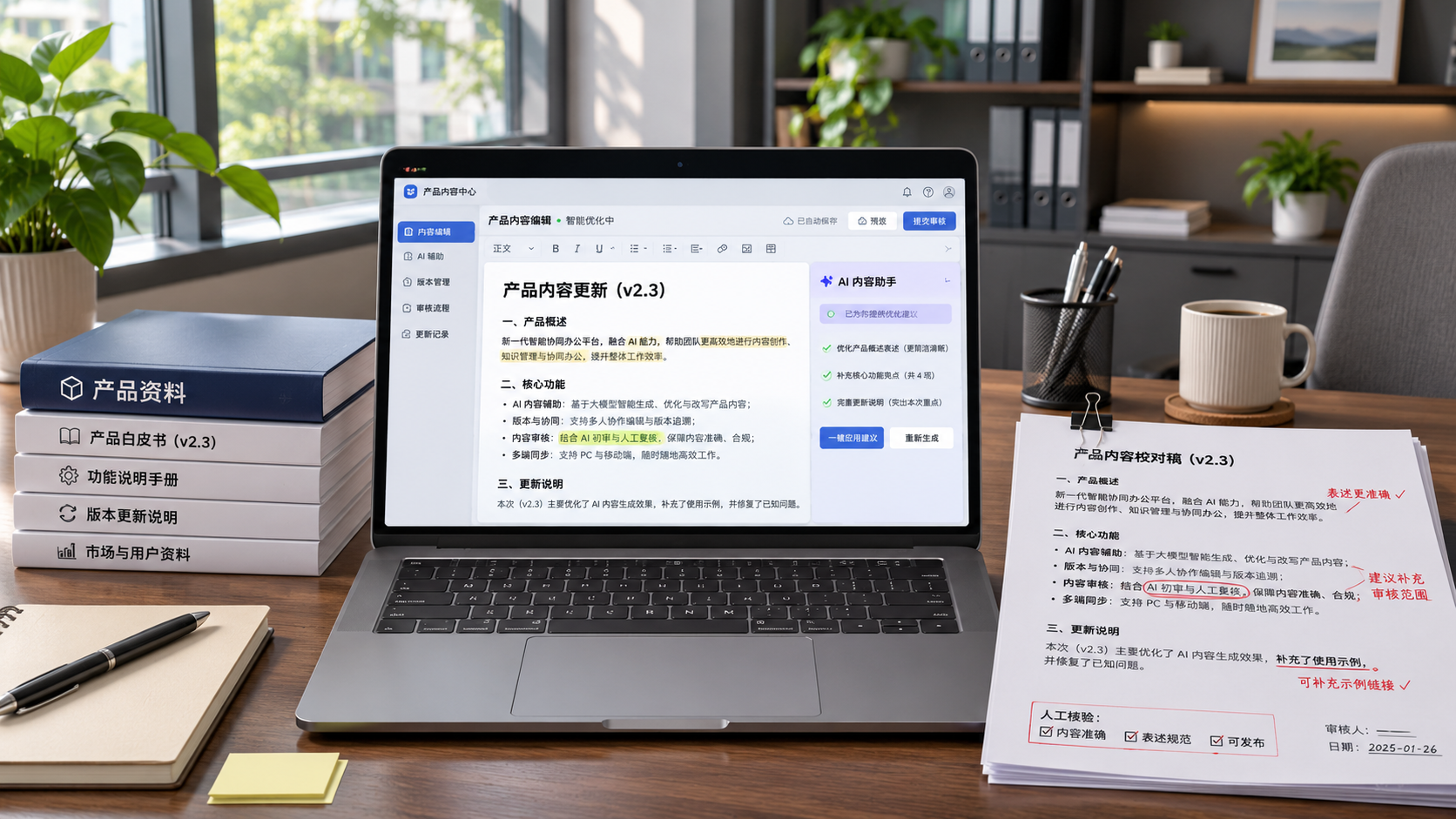
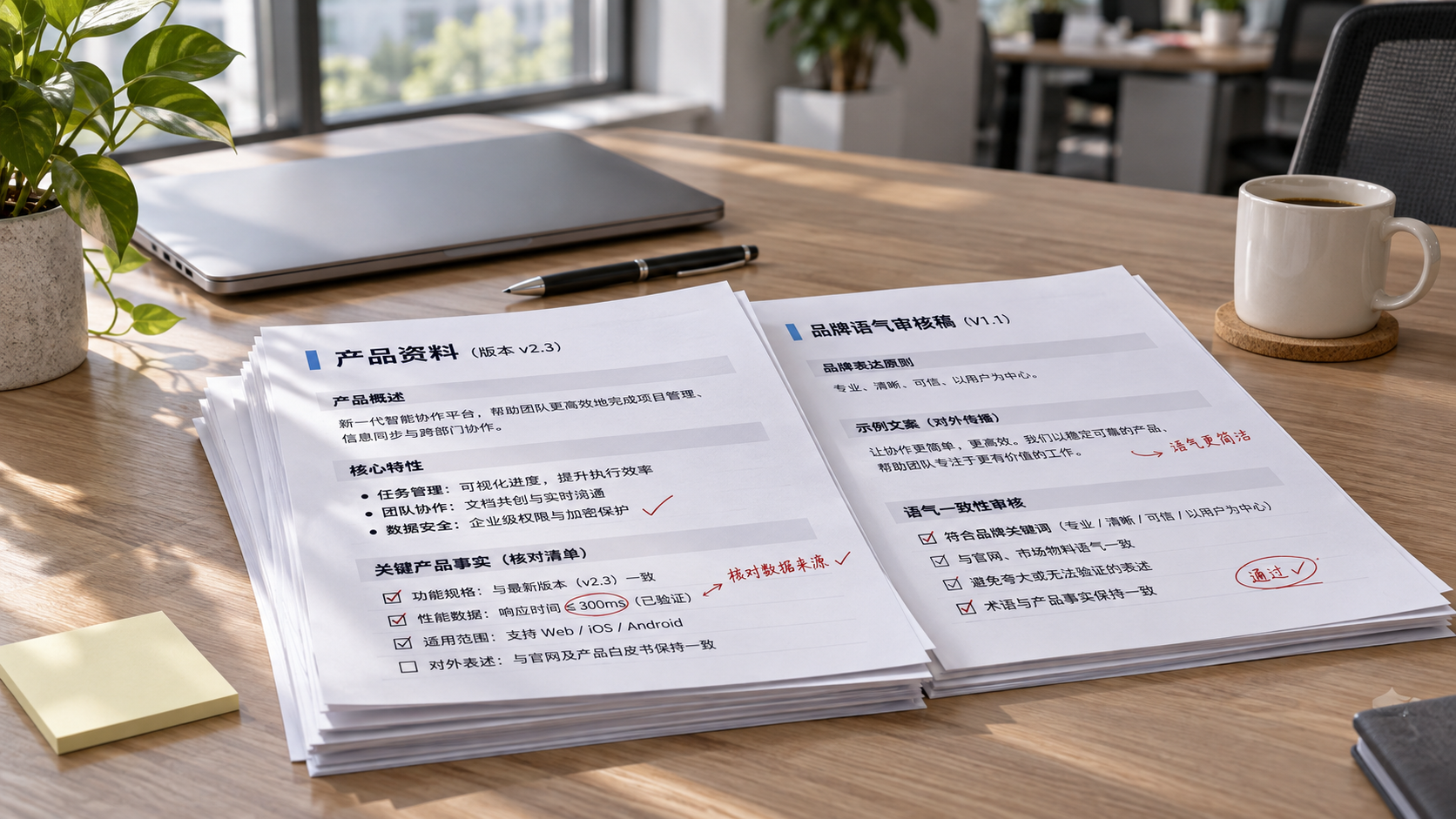
 How can you prevent an inconsistent brand voice in AI-generated product descriptions?
 Report: U.S. E-commerce Companies Adopt AI but Remain Cautious About Marketing Spend Decisions

Related Products
 Yiyingbao SaaS Intelligent Website Building and Marketing SystemYiyingbao SaaS Intelligent Website Building and Marketing System, AI-powered no-code website building, rapid creation of multilingual B2B international websites in 10 minutes, global server acceleration, AI-powered SEO optimization, helping businesses connect efficiently with global markets. The perfect integration of technology and operation makes building an international trade website remarkably simple
 AI+SEM Intelligent Advertising Marketing SystemAI+SEM drives intelligent ad creation, empowering full-funnel precision advertising marketing. The system automatically generates weekly/monthly reports, AI recommends keywords and target countries, monitors core metrics in real-time with intelligent alerts, and enables one-click high-conversion ad solutions to help quickly acquire customers and improve ROI.
 AI+SEO Dual-Engine System Optimization ServicesYiyingbao’s AI+SEO dual-engine optimization system helps foreign trade enterprises acquire high-quality organic traffic through AI-powered keyword research, content generation, and comprehensive technical optimization, significantly improving search rankings and conversion rates.
 AI+SNS Social Media Marketing SystemYingbao AI+SNS Social Media Marketing System - Precision social capture for the social media era. Supports one-click content synchronization across major platforms like Facebook and LinkedIn. AI intelligently rewrites posts for enhanced relevance. 24/7 AI customer service and user profiling analysis empower businesses to efficiently expand into global markets.
 AI+SEO营销解决方案易营宝AI+SEO营销解决方案,通过AI批量写作、智能生成TDK、精准关键词扩词等功能,全面优化网站SEO效果,提升流量与转化率。助力企业构建高效智能网站新生态。
 AI+SEM Advertising Marketing SolutionsAI+SEM Advertising Marketing Solution leverages AI technology to deeply empower SEM ad campaigns. It automatically generates weekly/monthly reports using AI, presenting account data across multiple dimensions for comprehensive insights into campaign performance and trends. The system precisely recommends keywords and target countries, intelligently generates high-conversion ad copy, and enables one-click activation of efficient campaign plans to help businesses rapidly acquire customers. Simultaneously, it monitors core metrics in real time, intelligently identifies abnormal fluctuations, and issues timely alerts to ensure stable, high-return advertising results.
 Domain Name ServicesEasyWin provides professional domain name services, including intelligent queries, one-stop registration, brand protection, and full lifecycle management, helping businesses build a digital brand image.
 EasyOperate B2C Cross-Border E-Commerce Platform & Independent WebsiteEasyStore B2C Cross-border E-commerce Independent Store is an intelligent website building and cross-border e-commerce integrated solution independently developed by EasyStore Information Technology (Beijing) Co., Ltd. The system is specially designed for small and medium-sized as well as large export enterprises, integrating 'website building, operation, marketing, advertising, and conversion' into one, helping enterprises quickly establish cross-border e-commerce independent stores to achieve brand globalization and global sales growth.
The platform supports multiple languages, multiple currencies, and multi-channel marketing, with built-in AI intelligent translation and SEO optimization systems, suitable for mainstream markets such as Southeast Asia, Europe and America, Latin America, and the Middle East, assisting Chinese manufacturing enterprises in efficiently deploying international e-commerce strategies. SSL证书易营宝提供专业SSL安全证书服务,包括单域名和泛域名证书,确保网站数据传输加密、身份验证和完整性保护,助力企业建立安全可信的在线业务环境。









