









- General Administration of Customs Issues New Rules on Import and Export Cosmetic Labeling, Effective December 1Nov 26, 2026View details
- U.S. to Announce Section 301 Investigation Findings on 16 Economies, Potentially Proposing New TariffsNov 26, 2026View details
- Hapag-Lloyd’s $4.2 billion acquisition of ZIM faces a closing delay; ZIM reports third-quarter net profit of $830 millionNov 24, 2026View details
- SCFI falls for a third straight week to 3,503.78 points, with blank sailings on trans-Pacific routes rising to 10Nov 24, 2026View details
- Lazada 11.11 Mega Sale: LazMall Contributes Nearly Two-Thirds of GMVNov 23, 2026View details
- Shein’s European Revenue Falls 16% as Tighter Rules on Low-Value Direct Shipments Take EffectNov 23, 2026View details
How AI Is Transforming SEO Workflows: From Keyword Research to Content Quality Assurance

How AI Is Transforming SEO Workflows: From Keyword Research to Content Quality Control
In the past, the workflow most familiar to many SEO practitioners was: exporting keywords, filtering by search volume, manually reviewing search results, assigning writing tasks, and then checking page titles, descriptions, links, and indexing status one by one. The process is not particularly complex, but it is highly time-consuming. Especially when dealing with multilingual websites, hundreds of product pages, or multiple overseas markets, what is truly scarce is often not tools, but the capacity for judgment and execution.
The frequently discussed ai for seo today is not simply about “using AI to write articles.” More precisely, it is shifting SEO work away from extensive repetitive organization toward data synthesis, opportunity identification, content coordination, and ongoing quality control. AI can speed up processing, but search rankings, lead quality, and brand credibility still depend on website structure, business knowledge, market language, and effective human review.
Keyword Research Is No Longer Just About Finding High-Volume Terms
Traditional keyword lists can easily fall into a misconception: seeing search volume and immediately wanting to create a page. For foreign trade companies, “industrial valve supplier” and “valve price” may both appear product-related, but the former may indicate a buyer looking for a long-term supplier, while the latter may reflect retail price comparison or an information search. Without distinguishing intent, even a large volume of content may generate irrelevant traffic.
AI is better suited to handling this type of large-scale semantic organization. It can help cluster keywords by product, application, material, specification, region, purchasing stage, and question type. It can also summarize topics that users repeatedly care about based on search result titles, related questions, on-site search terms, and customer service records. Instead of reading thousands of terms one by one, practitioners should focus their efforts on confirming whether the classifications reflect the actual business.
For example, manufacturing companies often have three different sets of language: product models, process capabilities, and industry applications. AI can help identify the connections among them: users may not search for internal model numbers, but may search for “sealing solutions for high-temperature environments” or “customized components for a certain type of equipment.” This information is suitable for expanding into application pages, technical Q&A pages, or purchasing guides, rather than being placed entirely on product detail pages.
However, keyword clustering results can only serve as a first draft. Companies need to verify whether products can actually be delivered, whether terminology aligns with target-market conventions, and whether page promises are consistent with quotation and after-sales capabilities. Expanding every related term suggested by AI can easily create overlapping content and make the website’s themes fragmented.
Shifting From Content Production to “Content Orchestration”
The value of AI-generated first drafts lies in quickly building a content framework: clarifying what questions a page should answer, what evidence is needed, which parameters should be added, and which sections are suitable for internal links. For multilingual websites, it can also help establish glossaries, standardize heading hierarchies, and identify signs of literal translation, reducing information discrepancies across pages in different languages.
However, the areas where B2B content is most likely to become inaccurate are precisely those that AI cannot confirm out of thin air: material grades, delivery lead times, compatibility ranges, test conditions, certification status, and purchasing practices in different countries. Professional content does not mean writing in a complicated way; it means enabling readers to determine whether “this company understands my application scenario.” Therefore, a more reliable approach is to let AI handle information synthesis, structural suggestions, and expression optimization, while product, sales, or technical personnel provide first-hand information and complete key reviews.
This collaboration also applies to non-marketing knowledge content. For example, when organizing topics such as information system development and process management, AI can help extract a framework from complex materials, but judgments involving organizational authority, data definitions, and implementation boundaries must still return to actual scenarios. For related ideas, refer to Optimization Paths for Financial Management Information Systems in State-Owned Enterprises Amid Digital Transformation: tools can improve information-processing efficiency, while decision quality still depends on an understanding of business processes.

Content Quality Control Is the Most Easily Underestimated Application of AI
Many teams use AI for writing but still rely on manual spot checks to identify content issues. In fact, as the number of website pages grows, quality control is often more worthy of being automated first. AI can help identify issues such as overly similar titles, conflicting page intent, duplicate paragraphs, missing internal links, inconsistencies between descriptions and body text, and abnormal language switching, then organize them into a remediation list according to scope of impact.
For multilingual websites, quality control must also focus on “localization” rather than simple translation. Measurement units, lead-time wording, and inquiry button copy that sound natural on English pages may not suit local reading habits when directly transferred to Japanese, German, or Arabic pages. AI can identify inconsistent formats and terminology, but it cannot replace native-language review, nor can it automatically determine whether a market requires separate product selling points or compliance statements.
Another common risk is “appearing complete while lacking sources.” Technical descriptions, industry trends, or comparative conclusions written by AI should not be published directly unless they are supported by company materials, public standards, or reliable data. Content quality control should include one simple but critical action: all verifiable parameters, certifications, performance conclusions, and market statements should be marked with their sources; content that cannot be confirmed should preferably be removed or changed into conditional wording.
Websites, Advertising, and SEO Need to Share the Same Information Set
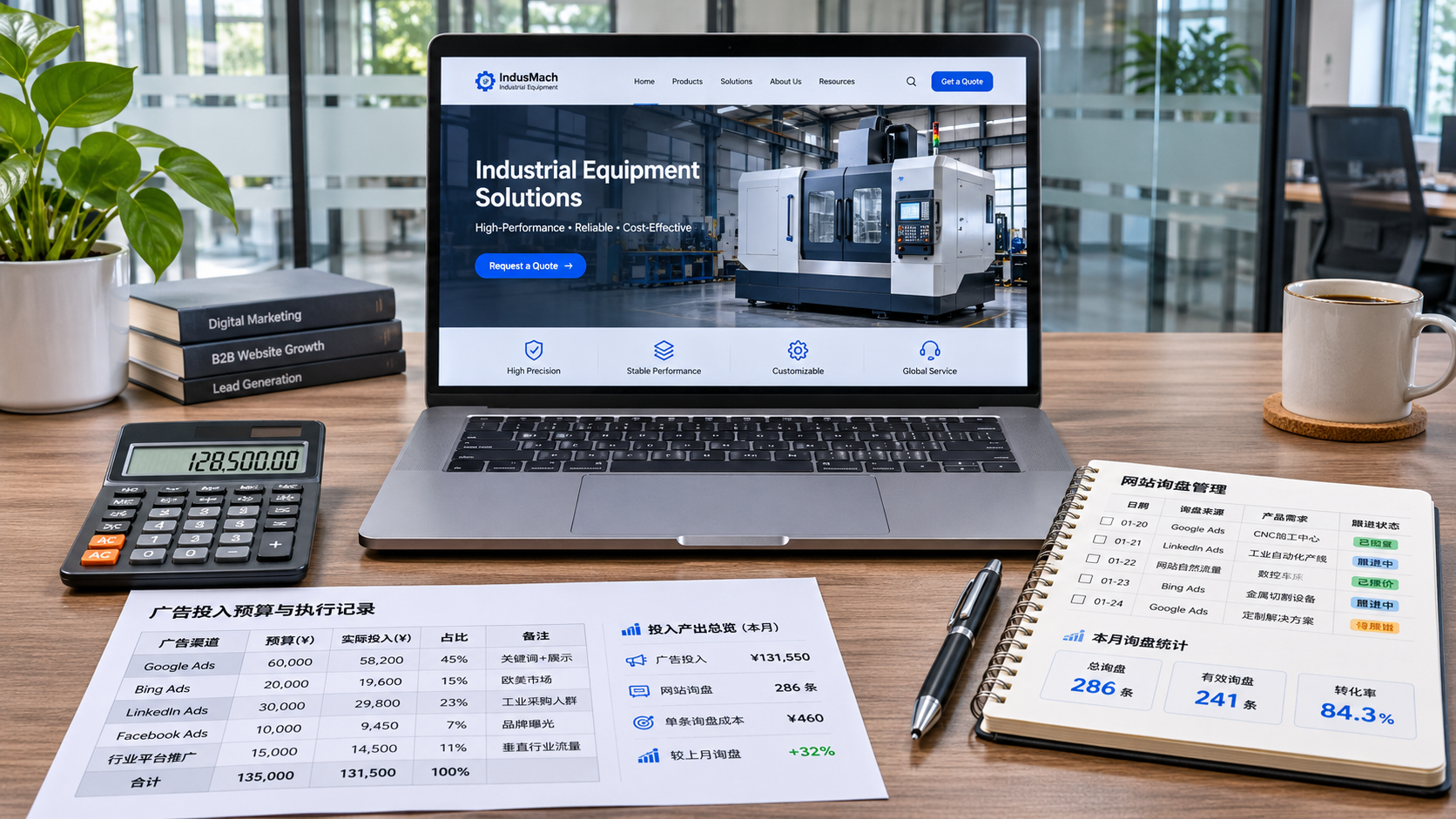
The value of AI for SEO becomes clearer only when it is placed within a complete customer acquisition chain. Advertising search terms can indicate high-conversion demand, social media interactions can reflect application scenarios users care about, and website inquiries can help determine which topics are genuinely close to conversion. If this data remains isolated, SEO personnel receive only keyword reports; if it can be integrated into a unified feedback loop, content planning has a chance to move closer to real business opportunities.
Yiyingbao Information Technology (Beijing) Co., Ltd. has provided services for global digital marketing scenarios since 2013. With artificial intelligence and big data at its core, it considers intelligent website building, SEO optimization, social media operations, and advertising placement as part of the same growth chain. For teams that need to build multilingual corporate websites, B2B marketing websites, or cross-border online stores, the value of this integrated approach does not lie in stacking functions, but in connecting page structure during website development with data collection for subsequent promotion and content iteration.
Its self-developed cloud intelligent website-building, cross-border e-commerce, AI advertising marketing, and AI+SEO/GEO optimization systems cover overseas markets including North America, Europe, Southeast Asia, Japan and South Korea, the Middle East, Russian-speaking regions, Latin America, and Africa. Languages, search behavior, and purchasing paths vary significantly across regions. In actual implementation, target countries, core product lines, conversion actions, and existing content assets should still be confirmed first before determining the extent of AI involvement.
Improve the Workflow Before Discussing Efficiency
For SEO teams just beginning to use AI, there is no need to overhaul all content at once. A more practical starting point is to select one product catalog or one target market, first establish keyword classification rules, page templates, and review checklists, then use AI to audit existing content, expand topic ideas, and identify duplication issues. After one round of validation, advertising, social media, and inquiry data can gradually be connected.
What should truly remain in human hands is priority judgment, fact verification, and brand expression. AI can make SEO processes faster, but it cannot decide which types of customers a company should pursue, which commitments can be written on the website, or which content deserves long-term maintenance. Viewing it as a collaborative tool that amplifies professional capabilities rather than an automatic ranking machine is often closer to sustainable results.
Related Articles
 How Can an AI+SEM Advertising Platform Control Ad Spend?
 OpenAI Launches the OpenWorks Program to Help U.S. Small Businesses Adopt AI
 Brandwatch Unveils 2027 Digital Marketing Trends: Human-Centered Content Takes the Lead


Related Products
 Yiyingbao SaaS Intelligent Website Building and Marketing SystemYiyingbao SaaS Intelligent Website Building and Marketing System, AI-powered no-code website building, rapid creation of multilingual B2B international websites in 10 minutes, global server acceleration, AI-powered SEO optimization, helping businesses connect efficiently with global markets. The perfect integration of technology and operation makes building an international trade website remarkably simple
 AI+SEM Intelligent Advertising Marketing SystemAI+SEM drives intelligent ad creation, empowering full-funnel precision advertising marketing. The system automatically generates weekly/monthly reports, AI recommends keywords and target countries, monitors core metrics in real-time with intelligent alerts, and enables one-click high-conversion ad solutions to help quickly acquire customers and improve ROI.
 AI+SEO Dual-Engine System Optimization ServicesYiyingbao’s AI+SEO dual-engine optimization system helps foreign trade enterprises acquire high-quality organic traffic through AI-powered keyword research, content generation, and comprehensive technical optimization, significantly improving search rankings and conversion rates.
 AI+SNS Social Media Marketing SystemYingbao AI+SNS Social Media Marketing System - Precision social capture for the social media era. Supports one-click content synchronization across major platforms like Facebook and LinkedIn. AI intelligently rewrites posts for enhanced relevance. 24/7 AI customer service and user profiling analysis empower businesses to efficiently expand into global markets.
 AI+SEO营销解决方案易营宝AI+SEO营销解决方案,通过AI批量写作、智能生成TDK、精准关键词扩词等功能,全面优化网站SEO效果,提升流量与转化率。助力企业构建高效智能网站新生态。
 AI+SEM Advertising Marketing SolutionsAI+SEM Advertising Marketing Solution leverages AI technology to deeply empower SEM ad campaigns. It automatically generates weekly/monthly reports using AI, presenting account data across multiple dimensions for comprehensive insights into campaign performance and trends. The system precisely recommends keywords and target countries, intelligently generates high-conversion ad copy, and enables one-click activation of efficient campaign plans to help businesses rapidly acquire customers. Simultaneously, it monitors core metrics in real time, intelligently identifies abnormal fluctuations, and issues timely alerts to ensure stable, high-return advertising results.
 Domain Name ServicesEasyWin provides professional domain name services, including intelligent queries, one-stop registration, brand protection, and full lifecycle management, helping businesses build a digital brand image.
 EasyOperate B2C Cross-Border E-Commerce Platform & Independent WebsiteEasyStore B2C Cross-border E-commerce Independent Store is an intelligent website building and cross-border e-commerce integrated solution independently developed by EasyStore Information Technology (Beijing) Co., Ltd. The system is specially designed for small and medium-sized as well as large export enterprises, integrating 'website building, operation, marketing, advertising, and conversion' into one, helping enterprises quickly establish cross-border e-commerce independent stores to achieve brand globalization and global sales growth.
The platform supports multiple languages, multiple currencies, and multi-channel marketing, with built-in AI intelligent translation and SEO optimization systems, suitable for mainstream markets such as Southeast Asia, Europe and America, Latin America, and the Middle East, assisting Chinese manufacturing enterprises in efficiently deploying international e-commerce strategies. SSL证书易营宝提供专业SSL安全证书服务,包括单域名和泛域名证书,确保网站数据传输加密、身份验证和完整性保护,助力企业建立安全可信的在线业务环境。









