

I. Definition and Industry Scope of Foreign Trade Marketing Websites
A foreign trade marketing website is not an online replica of a corporate brochure, but an independent digital asset designed around overseas buyers' search, evaluation, communication, and inquiry processes. Its core task is to enable target customers to quickly understand supply capabilities, product application scope, cooperation terms, and the next contact path.
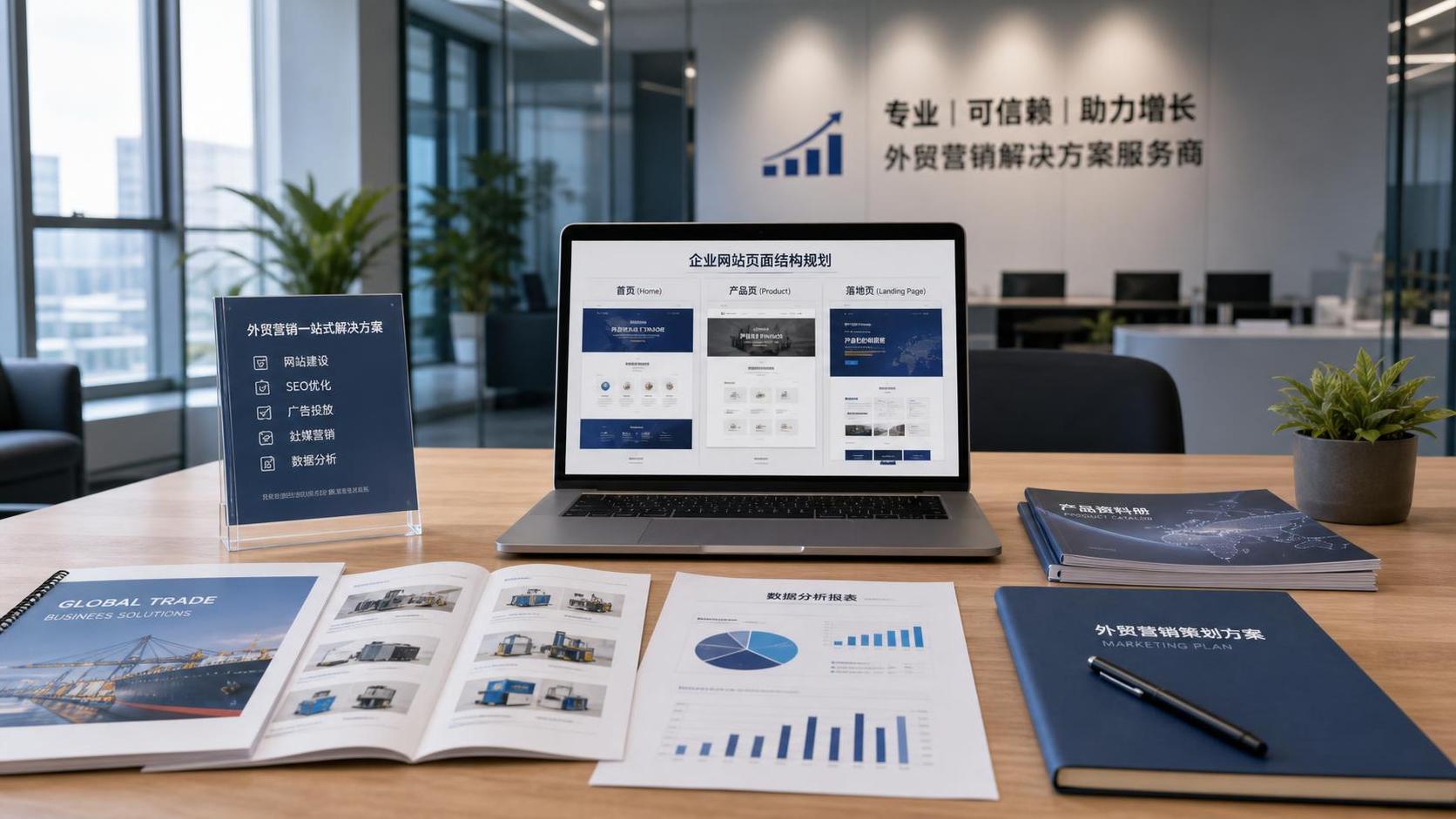
In B2B scenarios, a complete website typically includes company strengths, product catalogs, product details, industry solutions, manufacturing and quality control, case studies, FAQs, and contact information. Pages need to serve both first-time visitors and procurement decision-makers who have entered the price-comparison stage.
Compared with standard showcase websites, foreign trade marketing websites place greater emphasis on multilingual paths, mobile usability, access speed, form lead attribution, and the verifiability of trust-related information. For B2C brands, they should also extend to transaction processes such as product specifications, shopping carts, orders, or quotation requests.
II. Technical Principles: From Visitor Engagement to a Closed-Loop Inquiry Data Process
The technical foundation begins with a responsive architecture, ensuring that product specification tables, images, videos, and inquiry entry points are presented clearly and remain clickable on both desktop and mobile devices. Page performance also depends on image compression, caching strategies, code optimization, content delivery, and server node configuration.
The internationalization structure should establish clear page paths and language mappings for each language, rather than simply replacing body text with machine translation. Titles, descriptions, units, delivery wording, and application cases need to align with the context of the target market, enabling search systems and buyers to accurately understand the page topic.
The conversion loop consists of forms, corporate email, WhatsApp, online customer service, and data monitoring. Traffic sources, landing pages, key clicks, and submission events should be recorded, while unnecessary fields should be reduced to the essential minimum, helping sales teams assess lead quality and prioritize follow-up actions.
III. Main Types and Suitable Businesses
Manufacturing plants and industrial product suppliers are suited to inquiry-focused foreign trade marketing websites, with emphasis on materials, processes, production capacity, certification documents, customization capabilities, and project experience. Companies in machinery, hardware, building materials, automotive parts, chemicals, new energy, and packaging particularly need parameterized product pages to capture long-tail procurement demand.
Trading companies and supply chain service providers need to clearly explain their product selection capabilities, supplier management, delivery regions, and response mechanisms, rather than merely listing products on their pages. OEM and ODM companies can present their development process, sample confirmation, quality inspection, and packaging solutions separately to reduce the cost of initial communication.
Cross-border sellers and brand companies can choose e-commerce independent websites, using brand stories, user reviews, specification comparisons, and payment or inquiry processes to drive orders. Yiyingbao provides AI-powered website building, multilingual websites, and e-commerce capabilities, and can configure display, inquiry, or transaction paths according to a company's customer acquisition model.
IV. Selection Criteria: Functional Configuration and User Experience Review
Before purchasing, businesses should first identify their markets, languages, number of products, content update frequency, and traffic sources, rather than comparing only the visual appearance of the homepage. If search ads or social media ads are planned, dedicated landing pages, form fields, thank-you pages, and source tracking should be planned in advance to avoid repeated redesigns after launch.
Product detail pages should first address buyers' key questions, including applications, core specifications, optional configurations, minimum order quantity, lead time, packaging, after-sales service, and customization options. Industrial product pages should include downloadable materials, related models, and clear quotation request buttons, but should not hinder reading with complicated pop-ups.
At the platform level, businesses need to verify content management permissions, backups, security certificates, domain ownership, migration feasibility, and data export capabilities. Yiyingbao materials indicate that it uses a responsive architecture and provides global node deployment; businesses should still test speed, availability, and subsequent maintenance response in their target countries.
V. Development and Operations: Content, Promotion, and Quality Control
The development process should begin with keyword and buyer-demand research, followed by the completion of the sitemap, site structure, product material compilation, multilingual localization, page production, testing, and launch. Information sources should return as much as possible to factory, engineering, quality control, and sales departments to ensure consistency in specifications, lead times, and capability descriptions.
Before launch, navigation, images, forms, email notifications, language switching, and privacy notices should be checked across different devices, browsers, and network environments in key markets. For multilingual websites, duplicate pages, incorrect redirects, and missing translations should also be reviewed to avoid affecting visitor experience and page comprehension.
Website operations should review indexing, organic traffic, advertising costs, popular pages, form submissions, and qualified inquiries on a monthly basis. Yiyingbao can combine AI content generation, Google optimization, advertising, social media operations, and GEO content development to help businesses without overseas marketing teams establish a continuous content update mechanism.
VI. Total Cost of Ownership, Return Assessment, and 2026 Trends
The total cost of ownership of a foreign trade marketing website includes not only design and development, but also domain names, servers or acceleration services, translation, content production, images and videos, feature integration, security maintenance, promotion, and personnel follow-up. Launching at a low cost without a budget for content and operations often makes it difficult to establish stable customer acquisition capabilities.
Return on investment should be evaluated comprehensively based on qualified inquiries, opportunity progression rate, customer acquisition cost, and gross profit from closed deals, rather than traffic alone. Businesses can first establish a pilot for one key country and core product category, track data for three to six months, and then expand languages, sections, and advertising scale to control trial-and-error costs.
In 2026, AI search summaries, question-and-answer search, and multi-channel content distribution will increase the importance of structured knowledge, brand entity information, and authentic case studies. Experience serving industries such as laser engraving machines, steel, chemicals, and heavy trucks shows that continuously building professional content, clearly presenting capabilities, and responding quickly to inquiries remain the foundation of website conversion.
 Is overseas access speed something to consider when building a website?Does website development need to take overseas access speed into account? If the website is intended for overseas customer acquisition, brand presentation, or advertising, the answer is yes. Access speed directly affects SEO rankings, ad conversions, bounce rates, and the number of inquiries. Only by planning the server, CDN, and page performance in advance can you truly improve overseas marketing results.
 How to evaluate B2B foreign trade marketing-oriented website development services? Review these 5 capabilities before looking at casesHow to evaluate B2B foreign trade marketing-oriented website development services? Do not just look at cases and quotations, first review 5 key capabilities: foreign trade market understanding、SEO foundation、conversion content、multi-channel collaboration and data optimization, to help you choose the right website + marketing service provider that can truly drive inquiry growth.
 How to solve multilingual field mapping for foreign trade marketing websites? Practical ideas for linking product catalogs and forms.How can multilingual field mapping be solved for foreign trade marketing websites? This article starts with the master data + language layer architecture, and explains in detail the product library design, form linkage and SEO field splitting ideas to help companies improve the efficiency of multilingual website maintenance, inquiry tracking capabilities and conversion results.
 How to design a B2B international trade marketing website? Page structure suggestions to enhance trust and increase inquiry rates.How to design a B2B international trade marketing website? This article focuses on building trust, product page structure, multilingual layout, and landing page conversion, providing page structure suggestions to improve inquiry rates and help companies build truly effective overseas marketing websites.
 What metrics should be reviewed for foreign trade SEO diagnostics? Traffic, indexing, and inquiry quality checklistWhat metrics should be reviewed for foreign trade SEO diagnostics? Don’t just look at traffic; focus on checking indexing status, keyword structure, core page support, and inquiry quality, and quickly identify ranking fluctuations, low-quality leads, and multilingual indexing issues.
 What functions does a B2B foreign trade marketing website system need? A breakdown of the lead-to-inquiry conversion pathWhat functions does a B2B foreign trade marketing website system need? This article breaks down the inquiry conversion path from multilingual support, SEO, landing pages, form design, to data tracking, helping businesses determine how their website should be upgraded to improve overseas customer acquisition and inquiry conversion efficiency.
 What Is the Difference Between a Responsive Website Building System and a Traditional Website? From Maintenance Efficiency to SEO ComparisonWhat Is the Difference Between a Responsive Website Building System and a Traditional Website? This article compares maintenance efficiency, launch cost, multi-device adaptation, and SEO lead generation capability to help businesses quickly determine which website solution is more suitable for long-term marketing and growth.
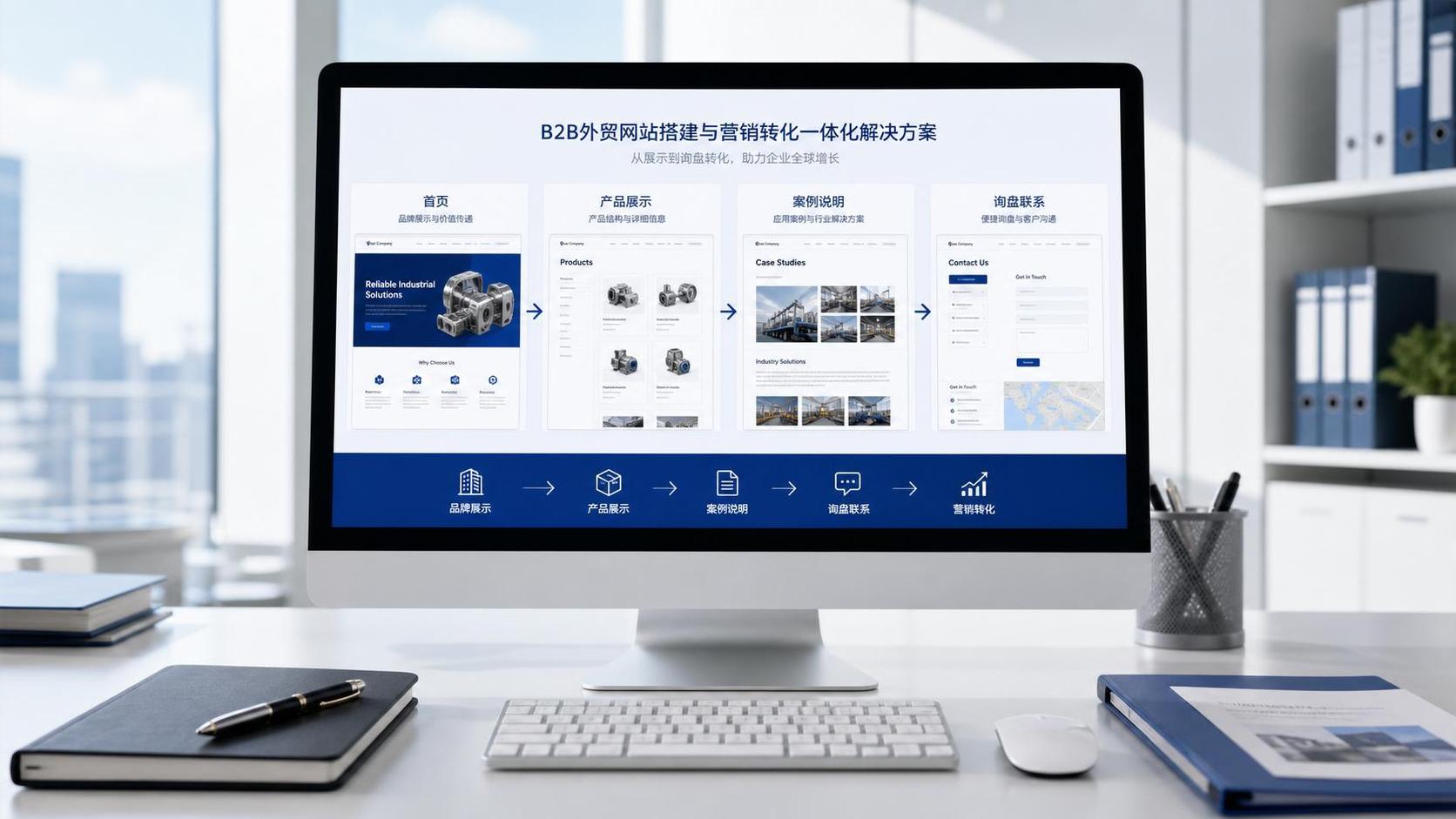
 What pages should be included in a B2B foreign trade marketing website?What pages should be included in a B2B foreign trade marketing website? This article clearly explains the conversion structure of the homepage, product pages, case pages, trust pages, and inquiry pages in one go, helping you streamline the inquiry path and improve overseas customer trust and lead generation efficiency.