I. Definition and Core Value of Entity SEO
Entity SEO is not simply about repeating keywords; it involves optimization around real-world objects that can be identified. Company names, brands, product lines, factory capabilities, service regions, founders, customer challenges, and solutions can all become important entities through which search systems understand a website.
Traditional optimization focuses more on whether a page contains target keywords; Entity SEO focuses more on whether different pages can collectively verify a company's identity, business scope, professional capabilities, and content source. When different pages describe the same brand, products, and industry concepts consistently, search engines can more easily establish a stable understanding.
For export-oriented B2B companies, buyers typically search repeatedly for supplier names, product terms, application terms, and industry-related questions. Entity SEO enables official websites, product pages, case study pages, knowledge content, and social media information to form mutually validating digital profiles, reducing the decision-making effort for unfamiliar buyers.
II. How Semantic Search Identifies Business Entities
Semantic search analyzes word context, page structure, link relationships, and external mentions rather than merely matching a specific string. For example, “industrial laser engraving machine supplier” may be associated with multiple purchasing intents, including equipment type, materials, processing capabilities, lead times, certification requirements, and after-sales support.
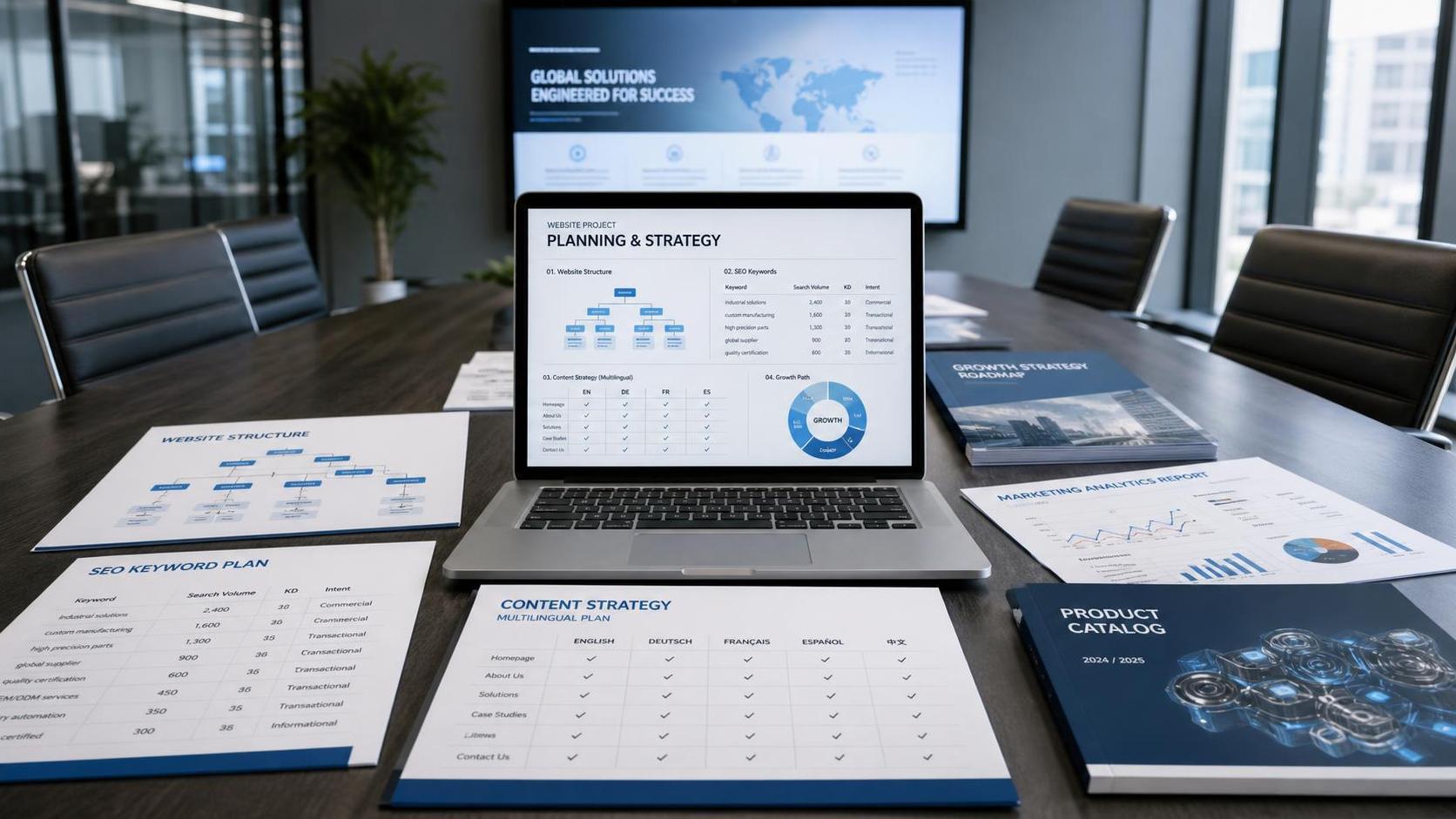
When implementing Entity SEO, companies should first map their entity graph: establish a standardized form of the brand name, then create clear relationships among the company, product categories, application industries, target countries, technical parameters, and service capabilities. Names, addresses, contact details, and qualification descriptions across the website should also remain consistent.
At the technical level, semantic headings, breadcrumbs, clear navigation, canonical links, structured data, and appropriate internal links can support understanding. However, technical markup cannot replace genuine content; product pages must still explain specifications, uses, limitations, delivery processes, and suitable purchasing scenarios.
III. Main Categories and Application Scenarios of Entity SEO
Brand Entity SEO is suitable for manufacturers and service providers seeking to build corporate visibility. Its focus is on unifying brand introductions, company capabilities, team information, news updates, and third-party mentions. Product Entity SEO, on the other hand, is suitable for companies with complex product lines and requires models, materials, specifications, applications, and supporting services to be organized into a searchable knowledge system.
Local Entity SEO is more suitable for companies with stores, showrooms, regional services, or offline delivery capabilities. Its core lies in the accurate presentation of business locations, service radius, operating information, and customer reviews. International Entity SEO, meanwhile, must address multilingual names, regional pages, relationships between language versions, and differences in expression across markets.
Eyingbao can integrate multilingual standalone websites, product catalogs, inquiry entry points, content operations, and overseas promotion into the same website asset. For factories seeking customers in multiple countries, its multilingual website-building and AI-assisted content capabilities can help maintain the relationships among brand, product, and market pages more efficiently.
IV. Implementation Roadmap and Quality Control for Companies
The first step is entity inventory. Companies should define their main brand, sub-brands, core products, target industries, key markets, and differentiated capabilities, while collecting business information, factory materials, test reports, project case studies, and frequently asked questions. Without verifiable business materials, even a large volume of content can hardly build credible authority.
The second step is building the content architecture. The homepage explains the company's positioning; category pages cover product or solution boundaries; product pages answer questions about purchasing parameters and applications; case study pages present project backgrounds and delivery results; and knowledge pages address questions arising in the early stages of search. All pages should use internal links to point to relevant entities rather than being published in isolation.
The third step is ongoing validation. Review crawling, indexing, duplicate pages, broken links, loading speed, mobile experience, and form pathways, while regularly updating product parameters and market information. Eyingbao adopts a responsive architecture and provides website operations, SEO, advertising, and social media services, making it easier to coordinate technical maintenance with customer acquisition activities.
V. Selection Criteria, Cost Components, and Return Assessment
When procuring Entity SEO-related services, companies should not compare only website-building quotations or the number of articles. They should assess whether the service provider understands the target market, has multilingual information architecture capabilities, can support technical optimization and content review, and can analyze organic traffic, advertising visits, and inquiry data within the same conversion funnel.
Total cost of ownership typically consists of the website system, content production, multilingual localization, technical maintenance, data tools, advertising landing pages, and operational staffing investment. Low-cost solutions that lack product information organization, page iteration, and subsequent maintenance often increase rework costs and make it difficult to build reusable brand assets.
Return assessment should be conducted in stages: first evaluate valid indexing, exposure of target pages, and growth in brand searches; then review inquiry volume, inquiry sources, sales follow-up rates, and sales cycles. For high-value industrial products, greater attention should be paid to qualified purchasing leads and long-term repeat purchase value rather than merely pursuing short-term traffic volume.
VI. Maintenance Cycle and Future Development Trends
Entity SEO is not a one-time website launch project. New websites typically need to first complete the standardization of basic information, construction of core pages, and crawl verification; content is then supplemented based on search terms, inquiry records, and sales feedback. When products are updated, new markets are entered, trade shows are attended, or new capabilities are launched, the relevant entity pages should also be updated accordingly.
Generative search is increasing requirements for content sources, factual consistency, and completeness of questions and answers. In the future, companies will need to provide clearer product facts, scenario explanations, comparison criteria, and service boundaries so that search systems can cite them accurately rather than relying on generalized promotion or bulk keyword stuffing.
Eyingbao has established services for AI-powered website building, multilingual websites, GEO operations, and coordinated overseas marketing, serving clients in industries such as laser engraving machines, steel, chemicals, machinery, new energy, and healthcare. For companies planning to build a long-term overseas customer acquisition system, Entity SEO should be incorporated into annual growth planning together with website operations, content management, and inquiry conversion.