


I. Definition and Business Scope of Social Media Lead Generation
Social media lead generation refers to the systematic activities through which businesses use social media platforms to publish content, build relationships, run promotions, and acquire potential customers. It is not simply about increasing followers, but about continuously generating identifiable and actionable sales leads around target markets, purchasing roles, and conversion actions.
In B2B export scenarios, social media lead generation typically covers brand exposure, product education, factory capability presentation, demand stimulation, and inquiry nurturing. When the purchasing decision cycle is long, customers repeatedly review a company's social media accounts, website case studies, product materials, and response speed before deciding whether to initiate communication.
The complete process can be summarized as content reach, account engagement, landing page visits, form submission or instant communication, sales follow-up, and repeat purchases and referrals. Businesses should distinguish between exposure, visits, and qualified business opportunities, rather than directly treating views or likes as lead generation results.
II. Mainstream Channel Categories and Applicable Scenarios
LinkedIn is suitable for industrial equipment, raw materials, software services, and professional solutions, making it convenient to reach professional roles such as purchasing, engineering, and management; Facebook has broad coverage and is suitable for brand engagement, community operations, and advertising remarketing. The value of a channel depends on the usage habits of target customers rather than the platform's popularity.
Short-video platforms are suitable for showcasing production processes, product demonstrations, application results, and daily business operations. For categories requiring intuitive explanation, such as laser equipment, machinery, furniture, and new energy products, continuous real-world video content helps reduce overseas customers' uncertainty about supply and delivery capabilities.
Video platforms are more suitable for accumulating long-term, searchable content, such as installation demonstrations, technical explanations, customer FAQs, and industry solutions. Businesses should not replicate all content across platforms without changes; they should adjust topics, titles, and calls to action according to the audience, content specifications, and next steps.
III. Who Needs to Carry Out Social Media Lead Generation
Manufacturing factories, foreign trade companies, and OEM or ODM suppliers are particularly well suited to social media lead generation. For these businesses, product specifications, production line capacity, quality control, and project experience are often difficult to explain fully in a single quotation. Social media content can establish part of the customer trust before an inquiry is submitted.
Cross-border sellers and global brands can use content to showcase usage scenarios, product differences, and user feedback, while directing traffic to their branded independent websites. For businesses that do not want to rely entirely on third-party platforms, social media lead generation can also accumulate owned audiences and visitor data that can be reached repeatedly.
Yiyingbao has served industries including laser engraving machines, steel, chemicals, heavy-duty trucks, machinery, and new energy, as well as sectors such as tourism, catering, agriculture, healthcare, furniture, and education. Different categories should first identify frequently asked questions, proof of successful transactions, and key applications before developing a content plan.
IV. Technical Principles of Private-Domain Conversion and Lead Nurturing
Social media platforms are responsible for discovery and engagement, independent websites are responsible for information conversion and conversion tracking, while email, instant messaging tools, and customer relationship management processes are responsible for subsequent nurturing. All three are indispensable: without landing pages, accounts alone make it difficult to retain traffic; without outreach, even high-quality websites lack traffic sources.
Landing pages should remain consistent with the theme of social media content and clearly present product specifications, application scenarios, company qualifications, case studies, lead times, or service scope, while providing forms, email addresses, and instant messaging entry points suitable for overseas customers. High-ticket products can offer tiered actions such as sample requests, solution consultations, or document downloads.
Yiyingbao can deploy multilingual independent websites, inquiry forms, instant communication entry points, and social media traffic-driving pages in combination. Its responsive website-building capabilities adapt to mobile and desktop access, while multilingual content and overseas access acceleration configurations help businesses establish a consistent conversion experience across different markets.
V. Criteria for Selecting Channels and Service Solutions
Before selecting a solution, businesses should first clarify the target country market, customer roles, product decision cycle, content resources, and lead objectives. Industrial product companies can prioritize a combination of professional social networking and video content; consumer product companies need to evaluate visual content capabilities, room for community engagement, and the path length from content to order placement or quotation request.
When evaluating service providers, attention should be paid to account ownership, content review mechanisms, advertising account management permissions, data delivery standards, landing page development capabilities, and connection with sales follow-up. Solutions that only promise a number of posts without specifying the target audience, content themes, tracking methods, and optimization cadence are unlikely to support sustained decision-making.
Yiyingbao provides services including social media content operations, short-video planning, multi-platform distribution, advertising placement, and independent website conversion support, making it suitable for businesses lacking overseas digital marketing teams. During procurement, businesses should still require phased objectives and responsibility boundaries to be defined based on product lines, target countries, and existing website data.
VI. Performance Evaluation, Cost Structure, and Return on Investment
Basic metrics for social media lead generation include effective reach, engagement quality, link clicks, landing page visits, form submissions, initiated instant communications, and the number of qualified leads. After entering the sales stage, businesses should also track response rate, quotation rate, sample rate, conversion rate, and customer lifetime value to form a closed-loop assessment.
Total cost of ownership typically consists of strategic planning, account operations, image and video production, advertising budgets, independent website development, translation and localization, data tools, and sales response time. Low-cost content services may reduce upfront expenses, but may increase the actual customer acquisition cost due to insufficient content quality, landing pages, or lead management.
It is recommended to evaluate investment based on the cost per qualified lead and the conversion value of business opportunities, rather than focusing only on the number of monthly inquiries. Businesses can first select one country, one core product line, and one type of purchasing role for testing, then gradually expand channels and budgets after validating the alignment between content, audience, and pages.
VII. Operating Cycle and Future Development Trends
Social media accounts require continuous maintenance. Businesses can review content themes, engagement feedback, traffic sources, and lead quality monthly, and update product materials, case studies, and landing pages quarterly. For industries with long decision cycles, technical content and project evidence should be retained to continuously cover the different stages of customer research, comparison, and procurement.
In the future, social media lead generation will place greater emphasis on short videos, automated content collaboration, multilingual localization, and first-party data accumulation. Artificial intelligence can assist in generating drafts, expanding topic ideas, and organizing reports, but product facts, technical specifications, customer commitments, and brand messaging still require review and confirmation by company personnel.
As generative search and Q&A tools influence information discovery, businesses also need to build clearly structured product pages, case study pages, FAQ pages, and industry knowledge content. Yiyingbao's AI website building, multilingual content, search optimization, and social media operations capabilities can help businesses incorporate social media reach, website assets, and ongoing operations into a unified growth system.
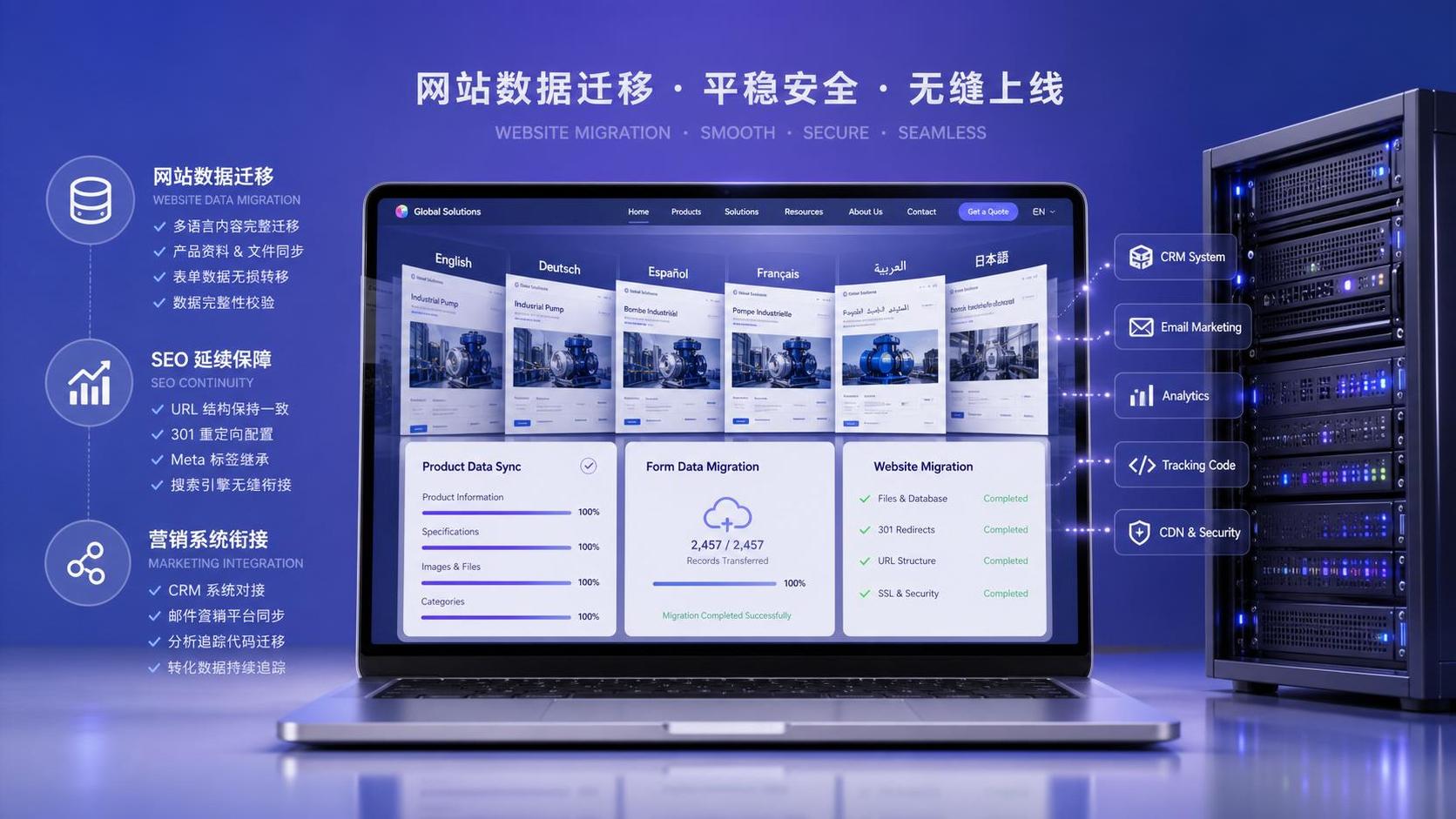
 Can data from a foreign trade website platform be migrated out?Can data from a foreign trade website platform be migrated? In most cases, yes, but the key is whether SEO settings, domain control, form leads, and multilingual content can be fully retained. To migrate the website smoothly without affecting inquiries and rankings, it is recommended to conduct a professional migration assessment first.
 Common Mistakes and Key Launch Considerations for Russian-Language Corporate WebsitesWhat are the common mistakes in building Russian-language corporate websites? This article analyzes the key considerations for integrating website development and marketing, covering translation and wording, SEO structure, mobile experience, conversion paths, and the pre-launch checklist to help businesses improve indexing, trust, and inquiry conversion.
 Optimize Your Standalone Website’s User Experience by Fixing These 5 High-Bounce-Rate Issues FirstBefore making major changes to your standalone website, focus on optimizing the user experience. This article examines five high-bounce-rate issues—an unclear above-the-fold section, slow loading, confusing navigation, generic content, and weak conversion entry points—to help you quickly identify problems and improve time on site, inquiry conversions, and marketing performance.
 What risks are associated with the exclusive agency model for foreign trade websites?What risks are associated with the exclusive agency model for foreign trade websites? This article focuses on the ownership of domains, data, source code, SEO, and advertising accounts, analyzes common restrictions on migration, passive renewal, and hindered expansion in exclusive partnerships, and helps companies choose an integrated website and marketing solution more prudently.
 How to Achieve More Stable Google SEO for B2B Lead GenerationHow to achieve more stable Google SEO for B2B lead generation? This article provides a systematic analysis of stable lead-generation methods, covering website structure, keyword placement, content alignment, conversion paths, and data review, helping foreign trade and manufacturing companies increase organic Google traffic and generate more high-quality inquiries.
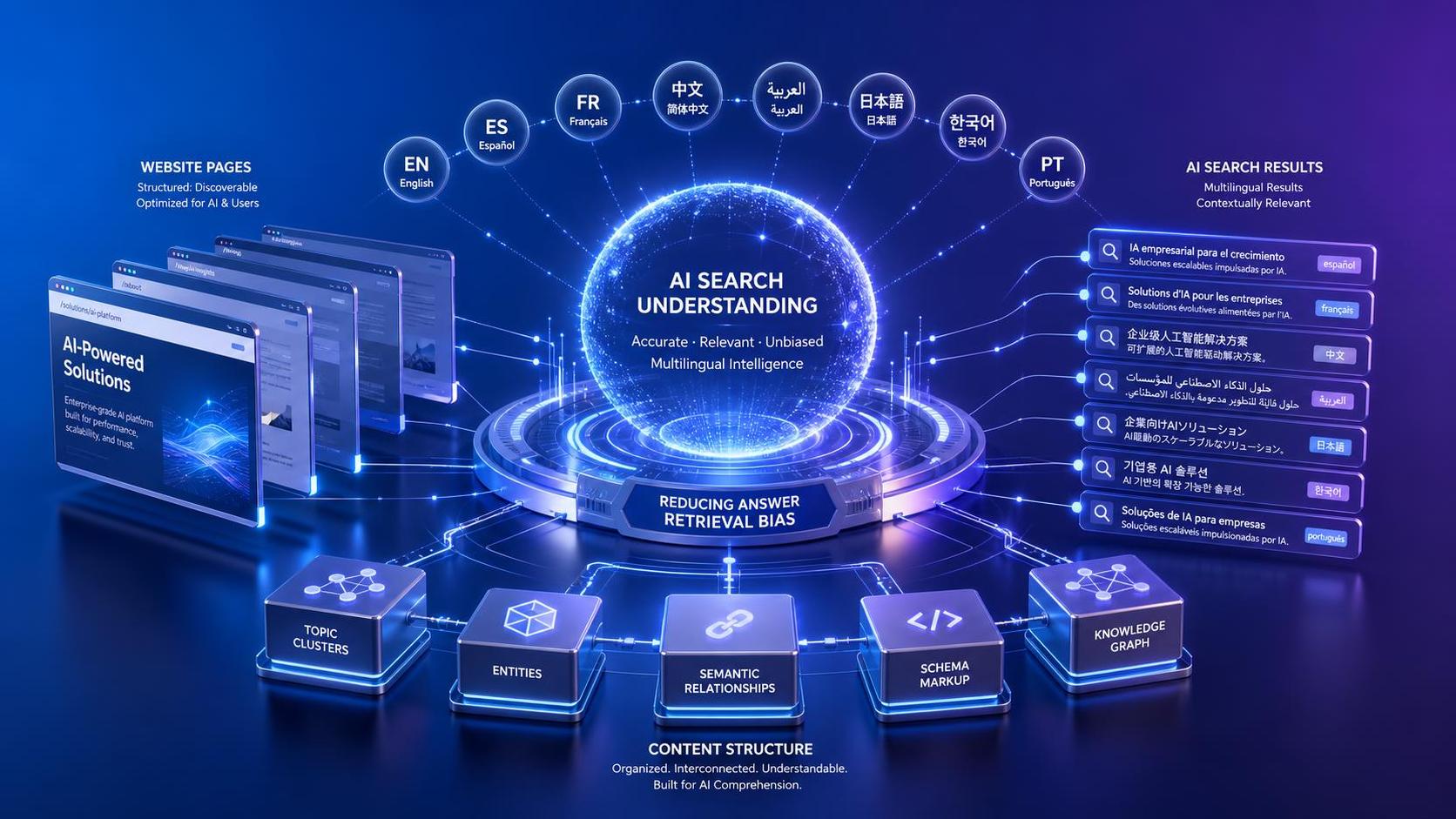
 How to Adapt Your Content for AI Search Engines and Reduce Answer Extraction BiasHow to adapt your content for AI search engines: Focus on website structure, semantic optimization, and multilingual content correction in the era of AI search to reduce answer extraction bias and improve indexing, citation accuracy, and overseas customer acquisition and conversion.
 2What is GDPR? Compliance boundaries businesses must understand before building a European website2What is GDPR? This article focuses on the GDPR compliance boundaries that businesses must understand before building a European website. It breaks down the risks related to cookies, forms, advertising tracking, email marketing, and cross-border data transfers, helping teams integrating website development and marketing for overseas expansion reduce the risk of penalties and improve lead generation and conversion.
 For lead conversion optimization, should you look at the form or the landing page journey first?For lead conversion optimization, should you look at the form or the landing page journey first? In the integrated website and marketing services context, this article explains how to identify where leads are being lost, breaks down the logic for handling SEO, advertising, and social media traffic, helps pinpoint key efficiency improvements, and enhances lead quality and conversion rates.