

I. Definition and Core Categories of PPC Advertising
PPC advertising is an online advertising model in which advertisers pay per click. Advertisers set triggering conditions based on keywords, audiences, locations, or content placements; costs are incurred when users click the ads. Its value lies not only in purchasing traffic, but also in using trackable data to validate demand, markets, and customer acquisition paths.
By channel, common types include search ads, display ads, shopping ads, video ads, and social media ads. B2B companies typically use search ads to capture clear purchasing demand, use remarketing to reach people who have visited the website but have not yet submitted an inquiry, and manage budgets separately by product line or country.
By objective, PPC advertising can be divided into brand exposure, website visits, form inquiries, phone consultations, online communication, and order conversions. Different objectives correspond to different metrics: the exposure stage focuses on reach and click-through rate, while the customer acquisition stage should place greater emphasis on qualified lead cost, opportunity rate, and the quality of sales payments received.
II. Account Setup and How Ads Work
Advertising platforms typically determine display opportunities through a combination of bidding and quality evaluation, rather than simply awarding them to the highest bidder. Keyword relevance, ad copy, landing page experience, expected click-through rate, and historical performance all affect actual cost per click and ad position; therefore, the account structure must align with the business structure.
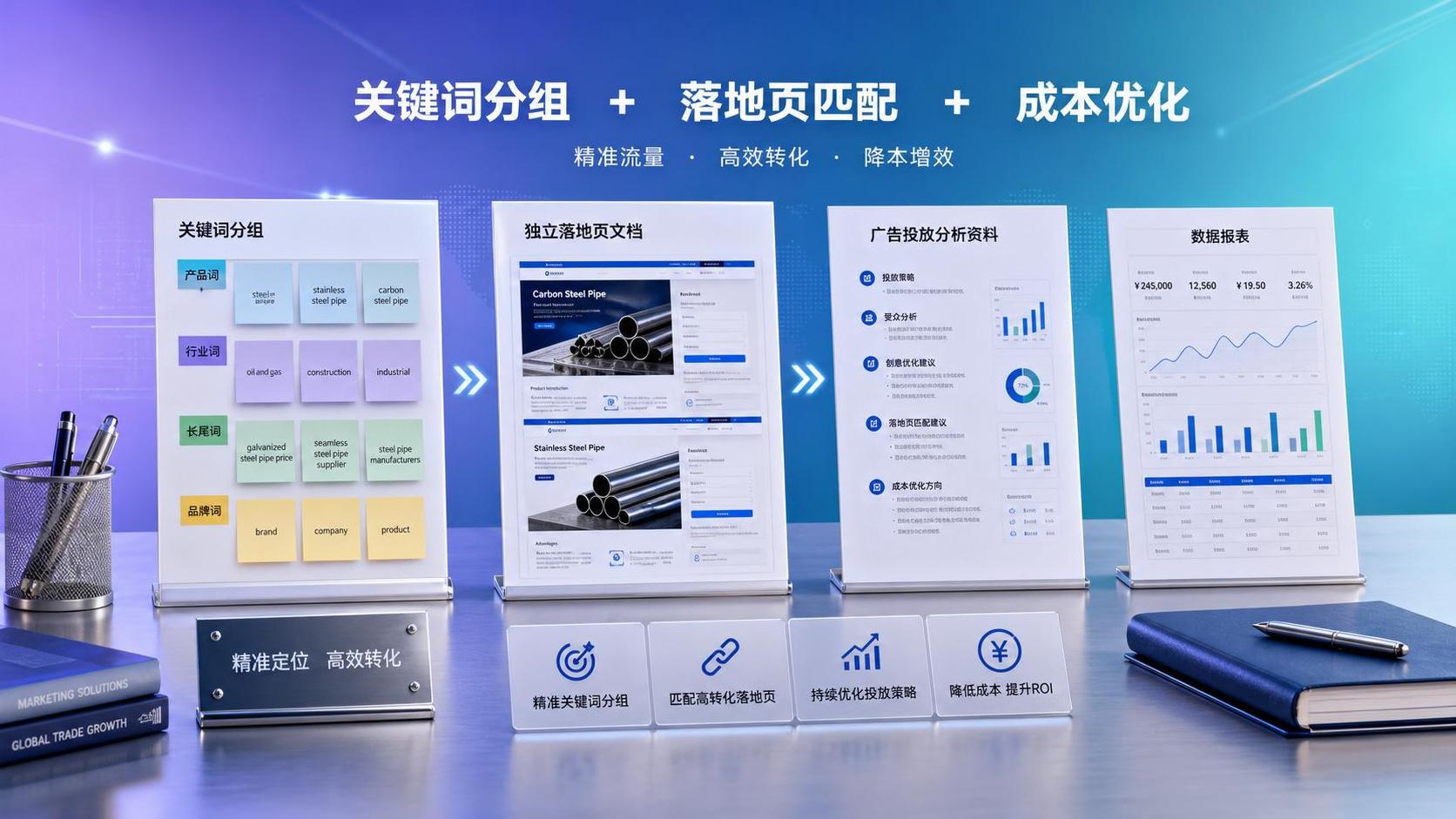
Accounts can be structured by market, language, product category, and marketing objective, with keywords of similar search intent grouped within each ad group. Industrial equipment companies can distinguish between brand keywords, core product keywords, application keywords, specification keywords, and competitor alternative keywords to avoid placing terms with overly different intent in the same ad group.
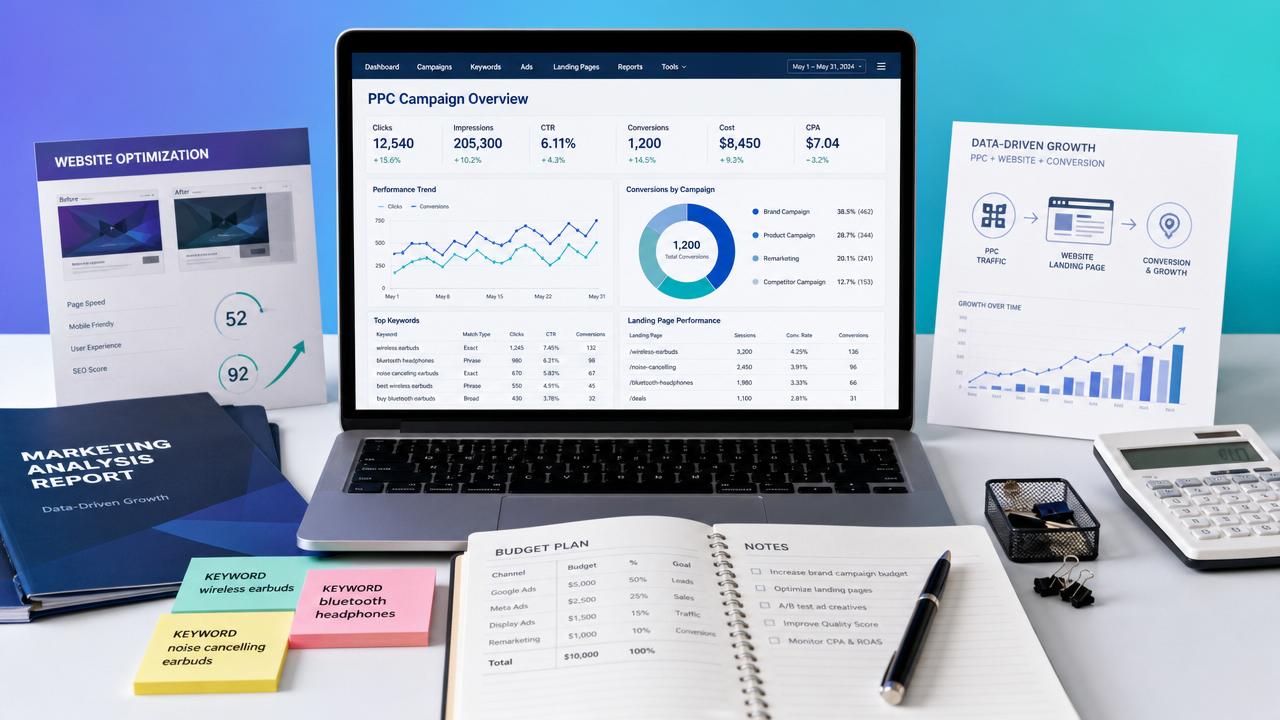
Conversion tracking is the infrastructure of PPC advertising. Key actions such as form submissions, phone clicks, WhatsApp or live chat conversations, document downloads, and orders should be recorded, while qualified inquiries and transaction results should be fed back through the customer relationship management system to reduce bias from evaluating performance based solely on click volume.
III. Keyword Strategy, Match Types, and Negative Keywords
Keyword research should start with buyer language rather than relying only on internal product names. It is recommended to build a keyword database based on product names, materials, specifications, application industries, certification requirements, purchasing methods, and regional expressions, while distinguishing intent levels such as information searches, supplier screening, quotation requests, and direct purchasing.
Broad match helps discover new search terms but requires strict negative keyword control; phrase match is suitable for expanding related demand; exact match is more suitable for high-intent, budget-sensitive, or conversion-data-stable terms. Once the account matures, match types and bids should be continuously adjusted based on actual search term reports.
Negative keywords are an important tool for controlling ineffective spending. Whether terms such as recruitment, training, repair, free, used, and personal consumption should be excluded depends on business boundaries. Export-oriented B2B companies also need to consider spelling habits, unit expressions, and multilingual semantic differences across countries to avoid mistakenly blocking genuine purchasing demand.
IV. Budget, Bidding, and Total Cost of Ownership Evaluation
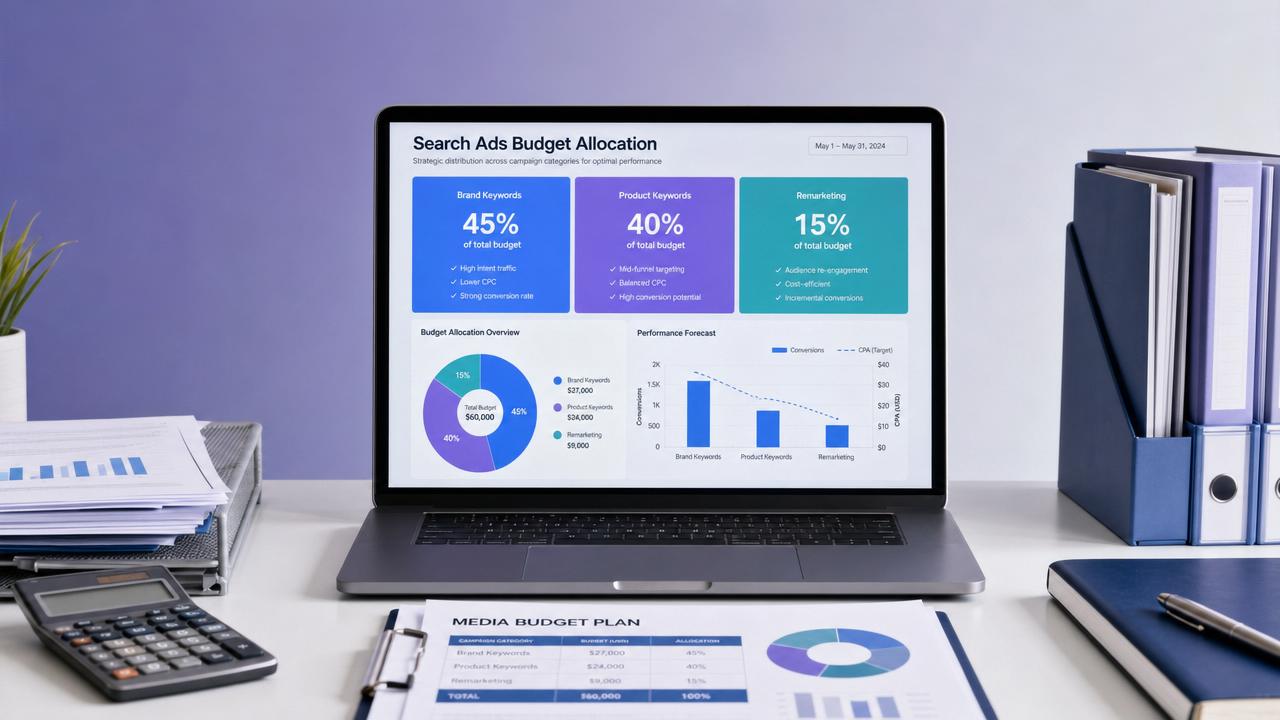
PPC advertising budgets should not be allocated evenly. Brand keywords typically serve defensive and high-conversion functions, core product keywords support stable customer acquisition, test keywords explore new demand, and remarketing improves the conversion probability of previous website visitors. Budget allocation should change dynamically with market maturity, lead quality, and sales follow-up capacity.
Bidding strategies should first meet the conditions for data accumulation before considering automated optimization. New accounts can initially maintain strong control over locations, time periods, devices, and keywords; once conversion data reaches a certain level of stability, automated bidding focused on conversion volume or target customer acquisition cost can be evaluated, avoiding handing over expansion to the system too early.
When evaluating total cost of ownership, buyers should include advertising spend, account operations, creative production, landing page development, data tracking, sales follow-up, and invalid lead processing. ROI should not only calculate form cost, but should further assess qualified lead rate, quotation rate, sales cycle, gross profit, and customer lifetime value.
V. Landing Pages and Conversion Optimization Methods
The page after an ad click must fulfill the promise of the keyword. When buyers search for specific equipment, components, or solutions, they should be directed straight to the relevant product page or industry landing page rather than a generic homepage. The first screen of the page should clearly present product capabilities, applicable scenarios, core specifications, and the next-step inquiry entry point.
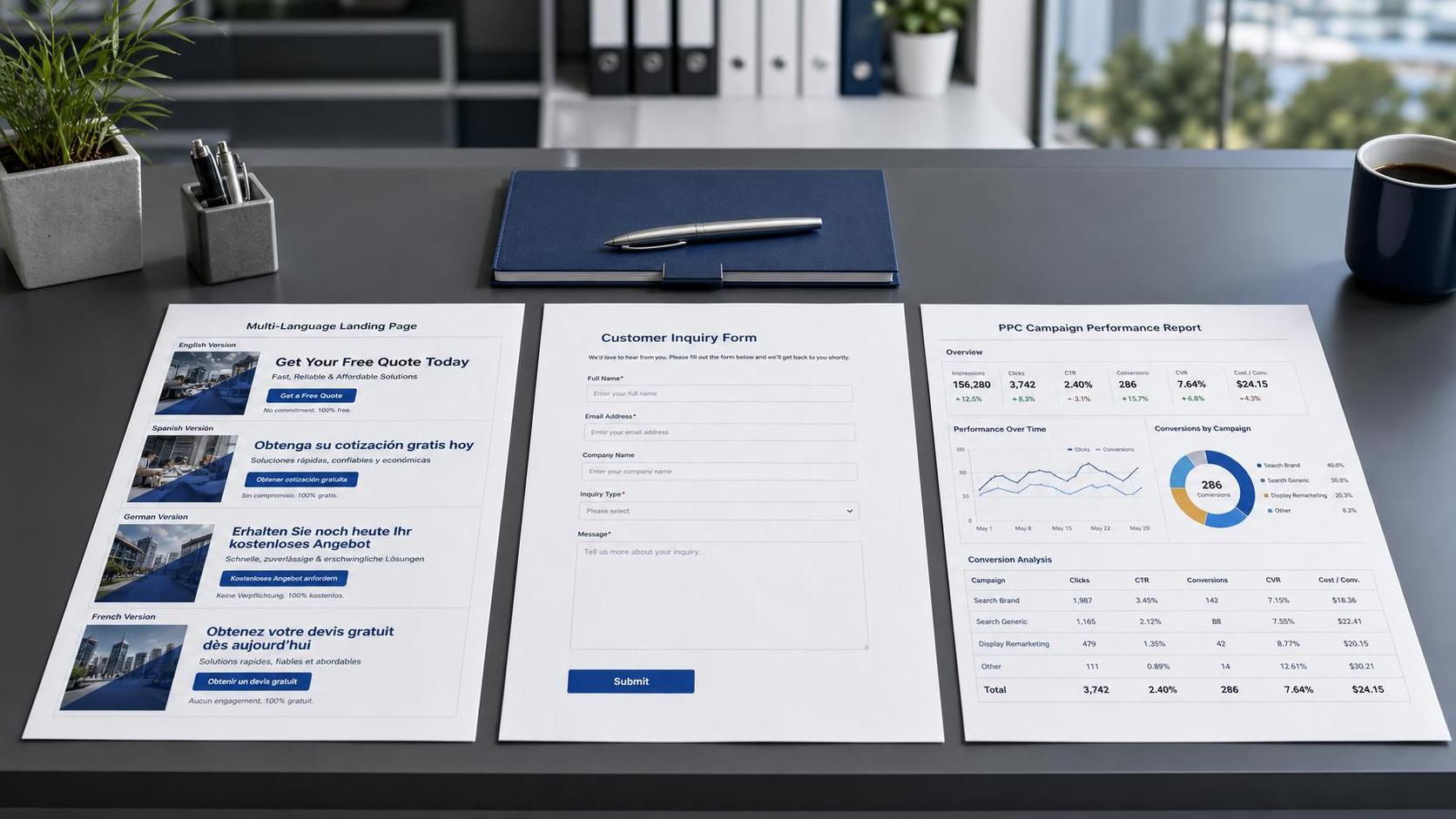
B2B landing pages need to address the decision-making chain: product specifications, production capacity, quality control, customization scope, delivery information, company qualifications, service cases, and frequently asked questions may all affect whether overseas buyers initiate communication. Form fields should be designed around the information needed for quotations and should not be excessively long, which may cause drop-off.
Yiyingbao provides export-oriented companies with marketing websites, multilingual pages, inquiry forms, and overseas communication entry point configurations, and can combine Google Ads, content, and data operations to form a conversion funnel. Its responsive website-building capabilities are suitable for covering both mobile and desktop access, although companies should continue to validate performance based on actual page speed and conversion data.
VI. Suitable Users, Application Scenarios, and Service Selection
PPC advertising is suitable for manufacturing factories, foreign trade companies, OEM/ODM companies, cross-border brands, and industrial product suppliers that have clearly defined products, can handle inquiries, and can follow up on sales leads promptly. For new product launches, entering new countries, re-engaging customers after trade shows, or supplementing leads during off-seasons, paid traffic offers relatively fast testing value.
Industries such as laser engraving machines, steel, chemicals, heavy-duty trucks, machinery, new energy, agriculture, and healthcare often feature complex products, long decision-making cycles, and significant regional differences. PPC advertising can segment ad messaging by industry application, model specifications, and purchasing stage, while website content builds trust and screens leads.
When selecting a service solution, companies should confirm whether the provider can cover account permissions, conversion tracking, keyword research, ad creative, landing page iteration, weekly and monthly reports, and lead quality reviews. Yiyingbao provides AI-assisted recommendations for advertising keywords, countries, and budgets, and covers website development and subsequent operations, making it suitable for companies evaluating an integrated website-building and overseas customer acquisition process.
VII. Optimization Cycles, Risk Control, and Future Trends
PPC advertising is not a one-time setup task. In the initial launch phase, tracking, search terms, locations, devices, and budget spending should be closely monitored; thereafter, negative keywords, bids, and creative should be optimized weekly, while channel contribution and lead quality should be reviewed monthly. High-ticket industries should be given a sufficient observation period to avoid replacing business judgment with short-term click fluctuations.
The main risks include failed conversion tracking codes, irrelevant traffic caused by broad match, insufficient landing page information, slow sales response, and inconsistent attribution standards. It is recommended to establish a shared data dashboard for advertising, website operations, and sales teams, tag the reasons for invalid inquiries, and feed the conclusions back into keyword and page strategies.
In the future, automated bidding, generative content, multilingual localization, and first-party data management in privacy-focused environments will continue to affect PPC advertising. Companies should retain independent assets such as accounts, creative materials, website content, and customer data, while coordinating advertising with SEO, social media, and GEO content operations to reduce reliance on a single traffic source.
 Is PPC advertising suitable for new product promotion? Budget and goals at different stagesIs PPC advertising suitable for new product promotion? First, understand the differences between the cold start, validation, and stable conversion stages. This article breaks down budget allocation, goal setting, and landing page alignment strategies at different stages to help you reduce trial-and-error costs more efficiently and improve advertising conversions.
 How should the PPC budget be allocated? Brand terms, product terms, and remarketing cost logicHow should the PPC budget be allocated? This article focuses on the cost logic of brand terms, product terms, and remarketing, breaking down budget allocation ratios, conversion paths, and optimization priorities at different stages to help businesses improve lead quality and control customer acquisition costs.
 Low conversion rates on multilingual landing pages for PPC advertising: Is the common problem translation or form design?Low conversion rates on multilingual landing pages for PPC advertising may not be caused by translation alone. This article focuses on three key areas—advertising promises, above-the-fold messaging, and form design—to help you quickly identify bottlenecks, improve inquiry quality, and increase page conversion rates.