


I. Definition and B2B Value of LinkedIn Advertising
LinkedIn advertising is a paid promotion method that displays content, collects form leads, or directs visits to a website through a professional social networking platform for specific business audiences. Its core feature is not pursuing broad exposure, but using professional profiles and company attributes to find audiences closer to procurement, technical evaluation, and management decision-making processes.
For foreign trade B2B companies, LinkedIn advertising can reach roles such as procurement managers, engineers, operations leaders, distributors, and founders. It is suitable for sales scenarios involving complex products, long decision cycles, and multiple participants. The value of advertising should be measured by valid leads, qualified opportunities, and sales opportunities rather than clicks alone.
A complete campaign workflow typically includes market positioning, ad creative, audience selection, landing pages or on-site forms, lead allocation, sales follow-up, and data review. If ad clicks lead to a website with insufficient information, slow loading, or no communication channel, the advantage of front-end targeting will be weakened during conversion.
II. Delivery Principles and Mainstream Ad Types
LinkedIn advertising builds audience combinations based on professional information publicly available or authorized by members, such as job titles, functions, seniority, company size, industry, region, skills, and company lists. The platform determines display opportunities through bidding, while actual costs are affected by target audience scarcity, competition intensity, creative relevance, and conversion objectives.
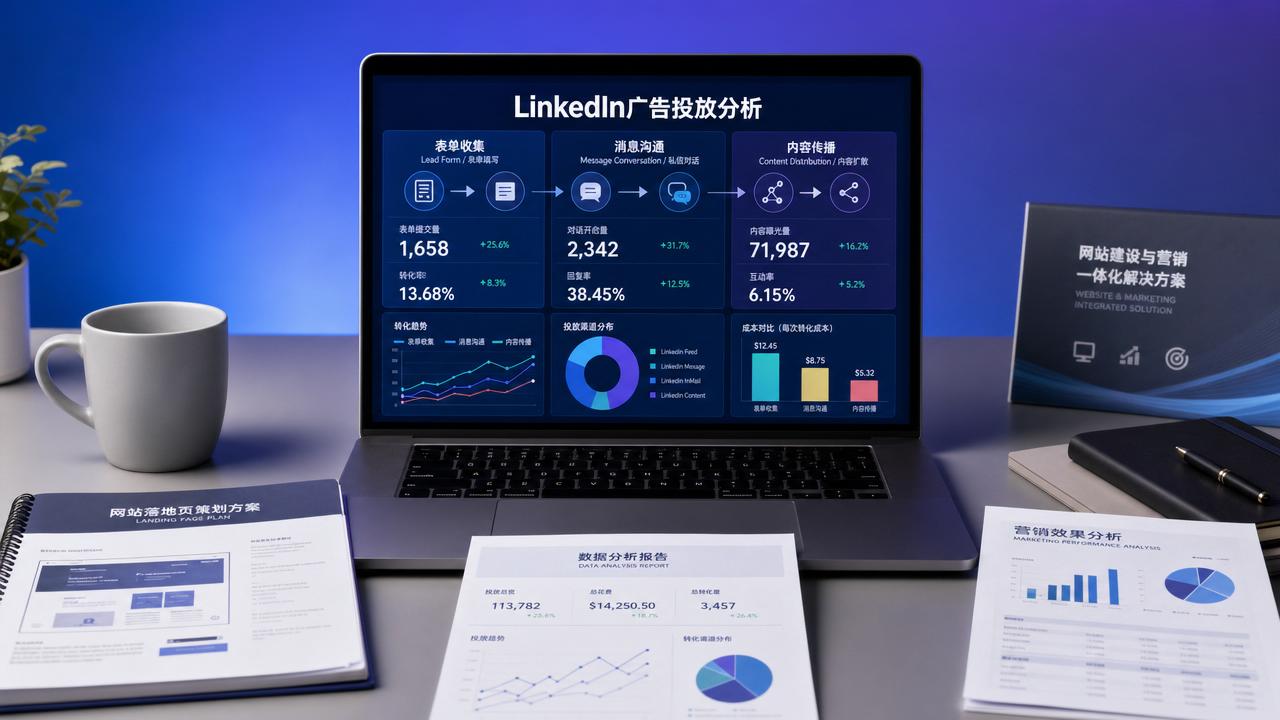
Common formats include single-image ads, carousel ads, video ads, document ads, message ads, and lead generation form ads. Single-image ads are suitable for conveying clear selling points; videos are suitable for demonstrating equipment operation or factory capabilities; documents are suitable for white papers and product selection materials; and lead generation forms help reduce the effort required for initial information submission.
Website remarketing and list targeting are important supplements. The former continuously engages people who have visited product pages, solution pages, or quotation pages; the latter can support account-based marketing around existing customers, target accounts, or trade show lists. Lists should be used with lawful authorization, and low-quality lists should not be directly regarded as business opportunities.
III. Audience Targeting and Account Selection Criteria
Audience design should first answer the question, “Who will drive the purchase?” Industrial equipment can be segmented by end-use industry, factory size, technical function, and procurement seniority; software services can be segmented by business department, digitalization responsibilities, and company growth stage. Job titles vary by region, so selection cannot rely on only one title.
At the campaign launch stage, it is advisable to set up one core audience and one or two comparable audience groups while controlling variables. For example, test procurement leaders and technical leaders separately using the same country and the same product materials; or split medium-sized and large enterprises into separate groups. An overly narrow audience raises bidding costs, while an overly broad audience can easily generate irrelevant clicks.
When selecting LinkedIn advertising services, buyers should confirm whether the service provider can handle account permission management, pixel and conversion event configuration, creative testing, landing page coordination, lead deduplication, and monthly attribution analysis. Solutions that only promise exposure or form volumes cannot answer whether leads have genuine purchasing potential.
IV. Implementation Process from Ad Creative to Inquiry Handling
Before implementation, first clarify the target country market, priority industries, product applications, target roles, and conversion actions. Conversion actions may include downloading catalogs, booking demonstrations, requesting quotations, submitting project requirements, or scheduling meetings. Different actions correspond to different decision stages, and first contact should not require customers to provide too many procurement details.
Creative content should focus on evidence that buyers care about, such as operating condition suitability, technical specifications, delivery capabilities, quality control, project cases, and after-sales response methods. Avoid displaying only corporate slogans. Ad copy, landing page headlines, product images, and call-to-action buttons should communicate the same promise to reduce the perception gap after clicking.
YiYingBao can integrate LinkedIn advertising with multilingual marketing websites: responsive pages handle mobile visits, while product details, company strengths, forms, email, and instant communication channels are configured together with content generation, basic search optimization, and data monitoring. Only when advertising teams and website operations teams share conversion data can they continuously adjust pages and audiences.
V. Typical Application Scenarios and Lead Quality Management
Manufacturing factories can use LinkedIn advertising to promote new product catalogs, industry solutions, or customization capabilities, building initial awareness among overseas distributors, engineering contractors, and procurement teams. Industries with high information barriers, such as machinery, chemicals, steel, new energy, and healthcare, particularly need professional materials to reduce customers’ evaluation costs.
YiYingBao serves industries including laser engraving machines, heavy trucks, machinery, new energy, agriculture, healthcare, and furniture, and has also served companies such as Haier, Aucma, Shandong Airlines, Yuanhe Power Station, Little Duck Group, and China National Heavy Duty Truck Group. Specific project results still depend on the market, product competitiveness, budget, sales response, and landing page quality, and cannot simply be applied horizontally.
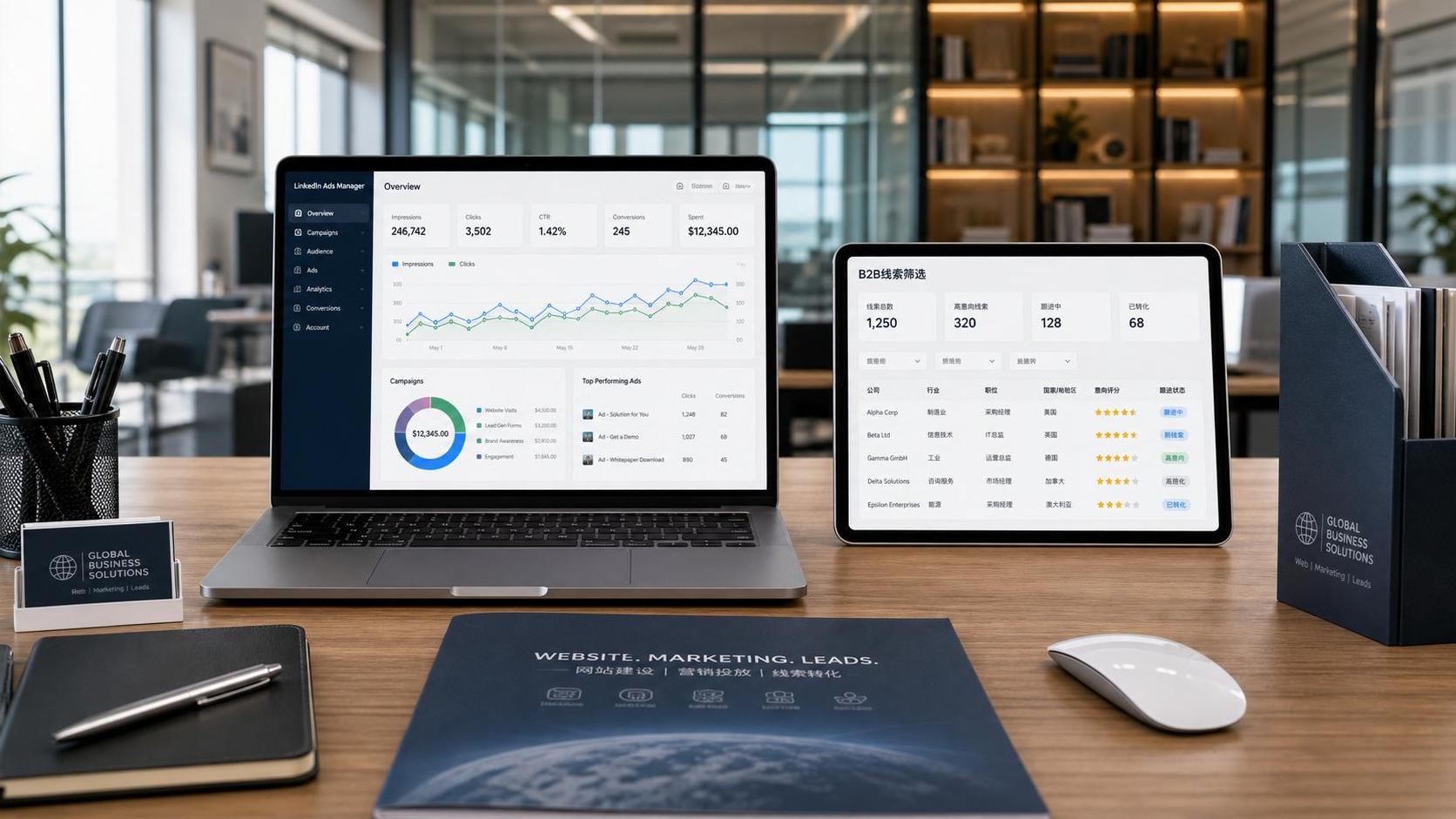
After leads enter the system, they should be graded according to company email, country, company size, position, clarity of demand, and estimated procurement cycle. The sales team should establish a clear initial response time limit and feed invalid reasons back to the campaign team. Accumulated rejection reasons often provide better guidance for targeting and content adjustments than one-time click data.
VI. Cost Structure, ROI, and Operating Rhythm
The total cost of ownership of LinkedIn advertising includes more than media spending. It also includes strategy research, account setup, creative production, multilingual pages, data tracking, form or customer relationship management system integration, and labor costs for sales follow-up. For businesses with high average order values, customer acquisition costs should be evaluated against gross profit, repeat purchases, and customer lifetime value.
ROI can be calculated progressively based on advertising spend, number of valid leads, qualified lead rate, opportunity rate, close rate, and average gross profit. At the initial stage, “cost per form lead” and “cost per qualified opportunity” should be distinguished to avoid incorrect conclusions caused by low-cost but invalid submissions. Where sales cycles are long, a sufficient attribution observation window should be retained.
Campaign delivery is not a one-time setup. It is recommended to review impressions, clicks, form completion rates, and invalid lead reasons weekly; assess different country, industry, and creative combinations monthly; and re-evaluate customer profiles and quotation strategies quarterly. Based on form optimization practices, reducing unnecessary fields, explaining the purpose of collecting information, and improving the mobile experience generally help reduce form abandonment risk.
VII. Trends for 2026 and Recommendations for Long-Term Growth
In 2026, LinkedIn advertising will place greater emphasis on first-party data, account-based marketing, content credibility, and cross-channel attribution. Companies need to turn advertising audiences, website visit behavior, sales follow-up records, and customer lists into analyzable data assets rather than treating each campaign as an isolated expenditure.
Generative artificial intelligence can assist with organizing keywords, rewriting ad versions, creating multilingual drafts, and refining sales Q&A, but it cannot replace industry judgment. When technical specifications, delivery terms, certification scope, and case descriptions are involved, they must be reviewed by business and technical personnel to prevent information distortion from affecting overseas buyers’ trust.
A more robust growth path is to use LinkedIn advertising to establish initial contact with target accounts, use multilingual independent websites to accumulate product and professional content, and then extend the engagement cycle through search optimization, remarketing, and social media operations. YiYingBao’s integrated capabilities in website building, advertising, social media, and website operations are suitable for overseas expansion teams seeking to reduce the coordination costs of multiple suppliers through integrated planning.
 Which B2B industries is LinkedIn suitable for?LinkedIn is suitable for B2B industries such as manufacturing, SaaS, professional services, and cross-border e-commerce, especially for businesses with high average order values, long decision-making chains, and strong trust endorsements. Learn how to combine your website, SEO, content, and advertising to create a convertible LinkedIn customer acquisition loop.
 What are the LinkedIn ad formats? Lead gen ads, message ads, and content ads explainedWhat are the LinkedIn ad formats? Quickly understand the differences and use cases of lead gen ads, message ads, and content ads to help you determine which is better suited for lead generation, brand exposure, and overseas customer acquisition, improving ad efficiency and conversion results.
 Is LinkedIn advertising suitable for B2B companies? How do you judge industry fit, customer value, and lead quality?Is LinkedIn advertising suitable for B2B companies? This article helps you quickly evaluate whether it is worth investing in by looking at industry characteristics, customer value, and lead quality, and shows how the official website, content marketing, and sales follow-up affect the final conversion.
 Mainstream LinkedIn Ad Types and Basic Applicable Scenarios - Part 1
![LinkedIn广告做B2B获客有效吗?行业、客单价与线索质量这样判断]()
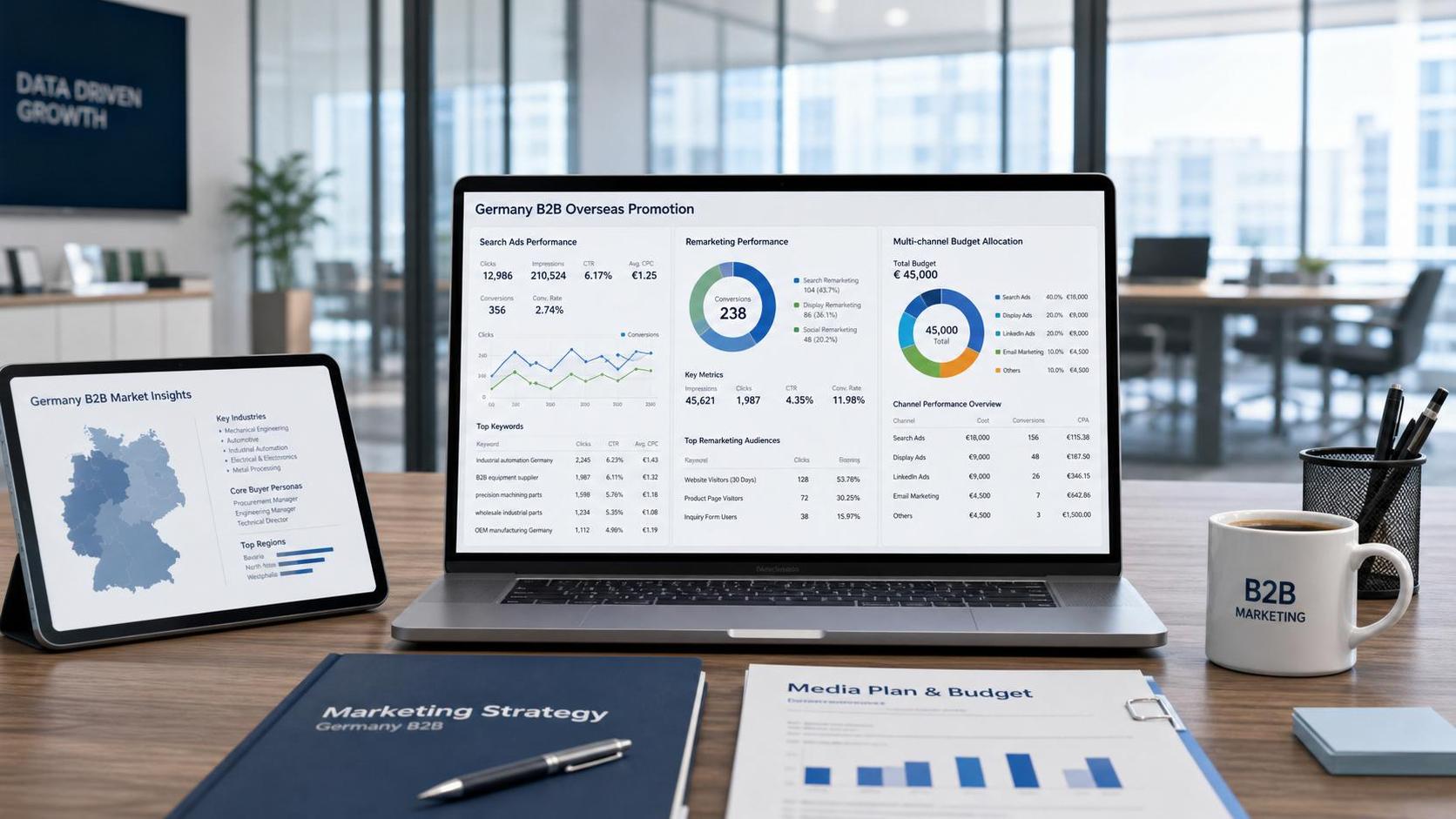
 What are the common channels for overseas advertising in Germany? Budget allocation analysis for B2B enterprisesWhat are the common channels for overseas advertising in Germany? This article focuses on B2B enterprise practice, analyzing the channel characteristics and budget allocation strategies of Google, LinkedIn, YouTube, and others to help businesses improve lead quality and optimize website conversion efficiency.