

I. Definition and Business Scope of Cross-Border E-Commerce Systems
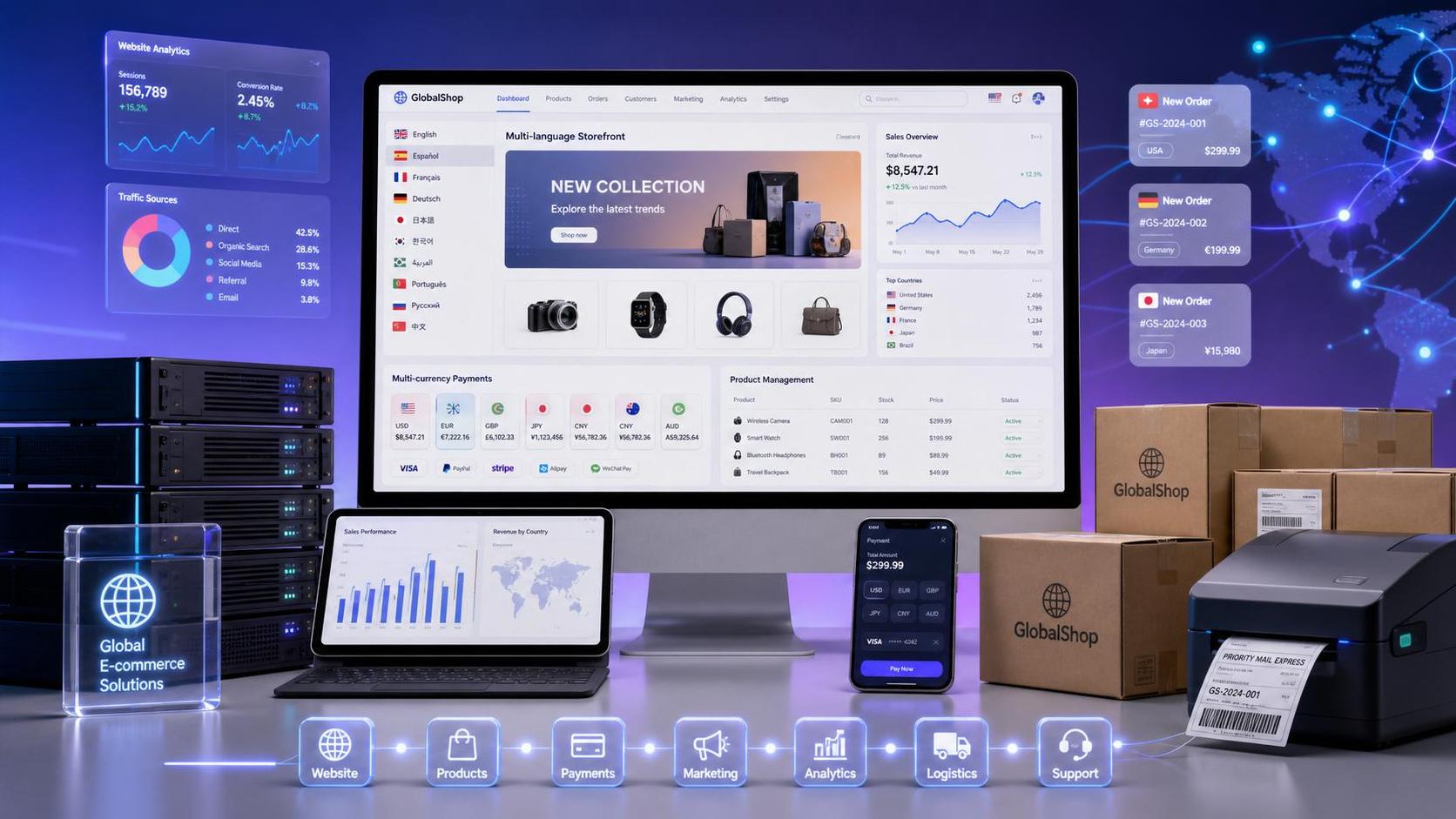
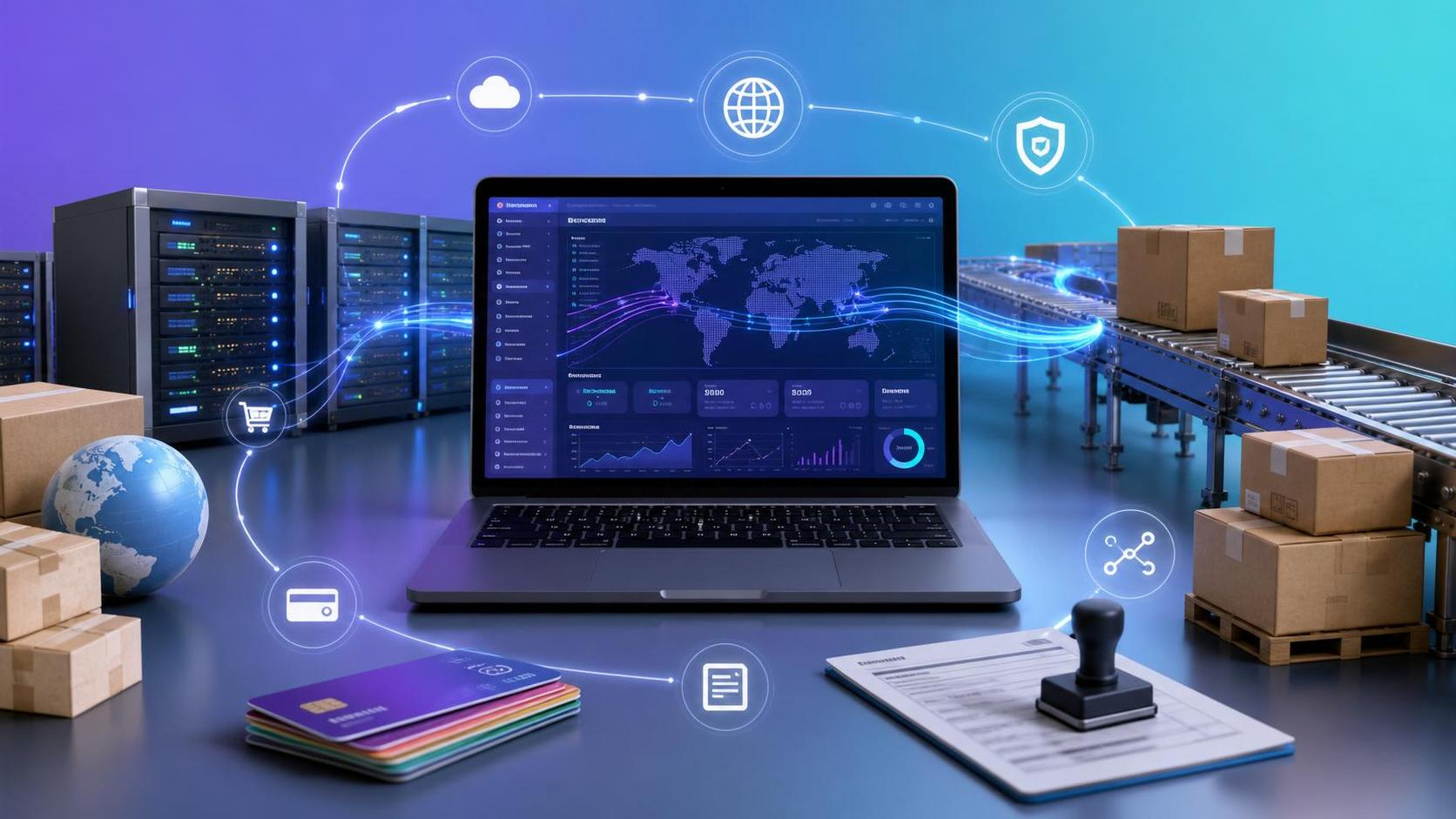
A cross-border e-commerce system is a website operation system designed to sell products and services to consumers and buyers in different countries or regions. It is more than an online product catalog; it connects front-end browsing, product management, shopping carts, inquiries or order placement, payment, order processing, and customer communication into a unified workflow.
In B2C scenarios, the system typically emphasizes retail pricing, inventory specifications, promotions, and the checkout experience. In B2B scenarios, greater importance is placed on product parameters, minimum order quantities, customization capabilities, document downloads, inquiry forms, and sales lead allocation. The two models can share content and brand assets, but their conversion designs should not be mixed.
When evaluating a cross-border e-commerce system, companies should regard it as an owned digital asset that can accumulate customer, content, and channel data. Marketplace stores are suitable for acquiring existing traffic, while independent online stores help establish brand touchpoints, reduce reliance on a single channel, and receive traffic from search, advertising, and social media.
II. Core Technical Principles and Fundamental Capabilities
A mature cross-border e-commerce system generally consists of content management, product information management, transaction modules, user permissions, data analytics, and integration capabilities. Responsive pages that adjust layouts according to desktop, tablet, and mobile screens are a fundamental requirement for overseas mobile access scenarios, rather than an additional feature.
Multilingual capabilities should not be limited to translating buttons. Language paths, page titles, product units, currency formats, delivery instructions, and after-sales policies should all be reviewed according to the target market. For pages in different languages, clear language mappings should be configured to prevent search engines from mistakenly identifying duplicate content.
Performance and security directly affect visits and transactions. Image compression, caching, global node distribution, HTTPS, permission management, regular backups, and form protection should be included in launch acceptance testing. When payments, orders, and customer information are involved, data ownership, export mechanisms, and service boundaries should also be clearly defined.
III. Main Types and Suitable Businesses
By deployment and management method, cross-border e-commerce systems can be divided into SaaS systems, open-source systems, and custom development. SaaS is suitable for teams seeking rapid launch and reduced operations and maintenance investment; open-source systems are suitable for companies with development resources that require in-depth control; custom development is suitable for large projects with complex processes and clear integration requirements.
By operating model, they can be categorized as branded retail stores, wholesale inquiry stores, manufacturer product centers, and multi-market website networks. DTC brands should prioritize product details, checkout, and repeat-purchase engagement; factories and trading companies should prioritize category filtering, technical documentation, qualification certificates, sample requests, and sales follow-up efficiency.
Yiyingbao provides website building, product management, multilingual pages, and marketing landing page capabilities for B2C cross-border online stores and foreign trade independent websites. It is suitable for companies that lack dedicated technical teams but need to build their website and customer acquisition channels simultaneously. Before selecting a solution, functional compatibility should still be validated based on the actual number of SKUs, country coverage, and transaction processes.
IV. Key Criteria for Procurement and Solution Selection
First, assess the business closed loop: whether products support multiple specifications, attributes, images, and document materials; whether retail sales, inquiries, sample requests, and bulk purchasing can be differentiated; and whether order statuses can be effectively followed up by business personnel. More features are not necessarily better; the key is to reduce obstacles for customers to complete their intended actions.
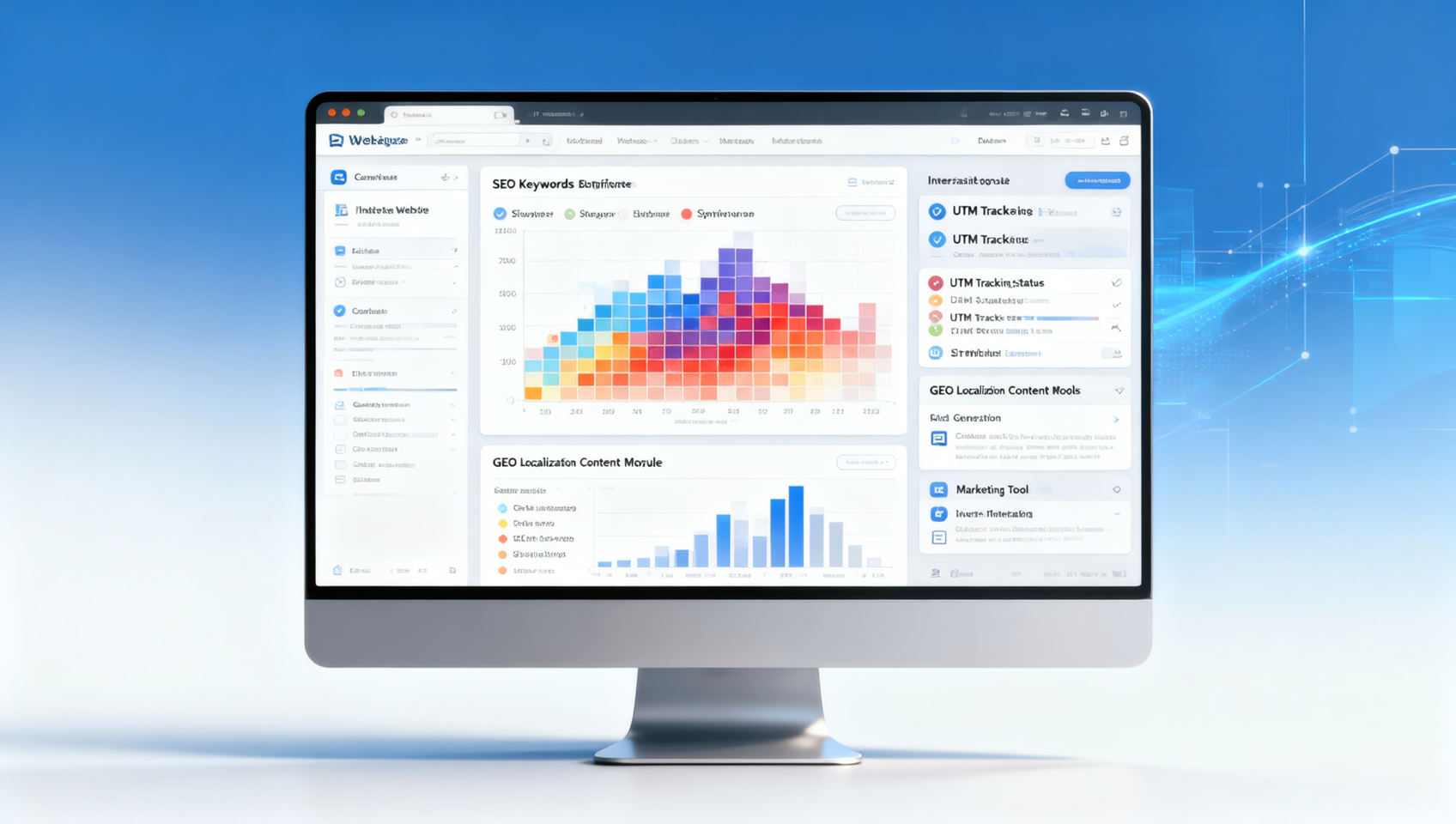
Second, assess the foundation for growth: whether page titles, descriptions, links, and image descriptions can be edited independently; whether category and product pages facilitate internal linking; and whether content sections, landing pages, and analytics tools are supported. If a cross-border e-commerce system makes it difficult to continuously publish high-quality content, subsequent organic traffic costs will usually increase.
Third, assess service and scalability: confirm the scope of domains, servers, SSL, backups, technical support, migration, and training, and check how payment, logistics, customer relationship management, or advertising analytics tools can be integrated. Procurement contracts should clearly specify launch deliverables, response time limits, renewal items, and data export rules.
V. Content Optimization and Overseas Marketing Growth
Before the store goes live, the sitemap, page indexing status, redirects, mobile experience, form testing, and analytics tool verification should be completed. Product pages should not directly copy supplier materials. Content should be organized around use cases, core parameters, delivery terms, frequently asked questions, and trust information to help buyers make comparisons.
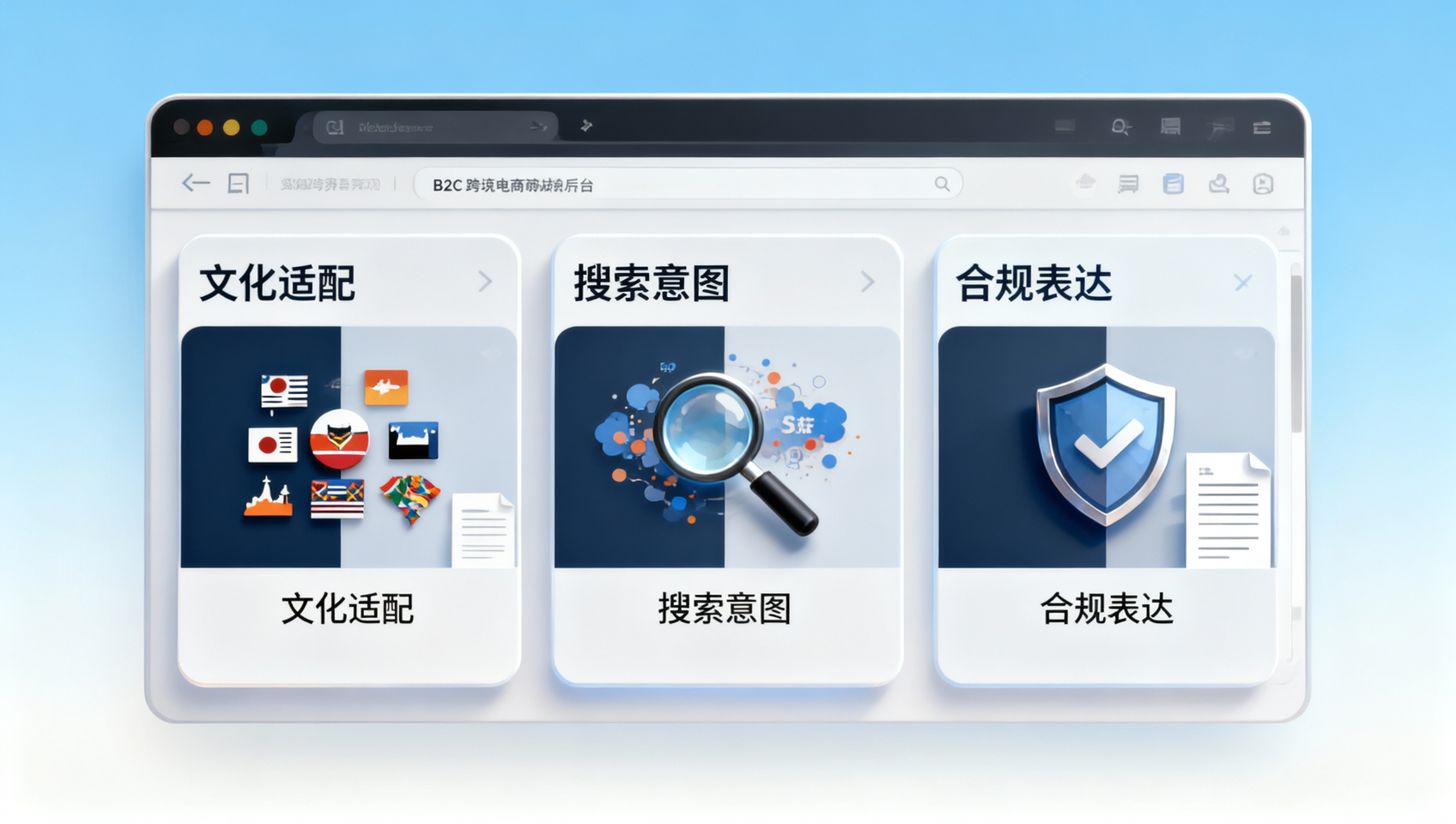
Search growth requires a consistent content system. Sections can be planned around category keywords, application keywords, problem keywords, and solution keywords, with articles, category pages, and product pages properly interconnected. Multilingual content should be based on the search intent of the target market. Pages produced through machine translation still require reviews of terminology, units, and commercial wording.
Yiyingbao's AI-powered website building, multilingual development, AI plus SEO, advertising placement, and social media operations services can help companies connect website development, traffic acquisition, and inquiry conversion. For industries with longer decision cycles, such as laser engraving machines, chemicals, machinery, and new energy, it is recommended to continuously build trust through product knowledge and case-study content.
VI. Total Cost of Ownership and Return on Investment Assessment
The total cost of ownership of a cross-border e-commerce system is not equal to the first-year website development quotation. It also includes template or customization fees, domains and servers, plugin integrations, translation, localized content, product material preparation, payment service fees, maintenance and upgrades, advertising, and operational labor. Unclear requirements can significantly increase rework costs after launch.
When evaluating returns, retail businesses can focus on order conversion rate, average order value, repeat purchase rate, and customer acquisition cost. B2B companies should place greater emphasis on the number of qualified inquiries, inquiry-to-quotation rate, quotation-to-order rate, and cost per qualified lead. Traffic volume alone cannot represent the operating quality of an online store.
It is recommended to first define one market, one core product category, and one primary conversion path, then gradually expand languages, countries, and advertising budgets. Choosing a platform that is editable, analyzable, and sustainable for ongoing operation is generally more beneficial for controlling trial-and-error costs and validating market feedback than pursuing complex features all at once.
VII. Maintenance Cycles and Industry Development Trends
Store maintenance should be carried out on a regular schedule: check orders, inquiries, forms, and core pages every week; update products, content, and conversion data every month; and review keyword coverage, channel quality, page speed, and security configurations every quarter. When new products are launched, prices are adjusted, or target markets change, related pages and advertising materials should be updated accordingly.
Future cross-border e-commerce systems will place greater emphasis on AI-assisted content production, personalized recommendations, multilingual localization, and omnichannel data coordination. However, automated generation should not replace companies' reviews of product facts, compliance statements, and customer commitments, particularly in industries such as industrial products, medical products, and high-value equipment.
Generative search is changing how users discover brands and compare solutions. Companies need to build clearly structured, factually verifiable product pages, FAQ pages, and solution pages. Yiyingbao already provides GEO operations guidance and website operations services. Companies can continuously improve their content assets and conversion workflows in line with their own market pace.
 What should I do if the failure rate for B2C cross-border marketplace payments is high? Common risk control and payment rejection issue troubleshootingWhat should I do if the failure rate for B2C cross-border marketplace payments is high? Starting from the four high-frequency issues of risk control blocking, payment channel abnormalities, address verification mismatch, and payment rejection disputes, this article helps you quickly identify the cause and improve payment success rates and order stability.
 Which SEO optimization company ranks best? Don’t just look at cases. First verify these 5 delivery capabilitiesWhich SEO optimization company ranks best? Don’t just look at cases and pricing. First verify the 5 delivery capabilities of strategy development, technical execution, content production, data tracking, and results delivery so you can more quickly identify a provider that can truly drive traffic and inquiry growth.
 How should SMEs choose a low-cost customer acquisition service provider? First look at the channel mix or first look at conversion capabilityHow should SMEs choose a low-cost customer acquisition service provider? Don’t just look at the number of channels; also look at the integrated capability from website building, traffic generation, inquiry capture to conversion. This article teaches you how to evaluate service providers from acquisition, data, optimization, and conversion pathways, and choose a solution that saves more budget and makes orders easier to close.
 Can a SaaS website system be built quickly? Comparing template launch speed and secondary development restrictionsCan a SaaS website system be built quickly? This article compares template launch speed and secondary development restrictions, analyzes differences in SEO, data, extensibility, and marketing collaboration, and helps you determine which website-building solution is better for long-term customer acquisition growth.
 How to build an industry customer acquisition solution? The framework from traffic channels to online lead conversionHow to build an industry customer acquisition solution? This article breaks down a sustainable growth framework from target customer profiling, integrated search and advertising channels, and marketing-oriented website support to online lead conversion, helping businesses improve lead quality and conversion efficiency.
 Which business models is the SaaS cross-border ecommerce system suitable forWhich business models is the SaaS cross-border ecommerce system suitable for? This article focuses on scenarios such as independent brand websites, multi-region sales, and content-driven conversions, analyzing the value of integrated website building + marketing to help businesses determine whether it is worth investing in and improve overseas conversion efficiency.
 B2C cross-border ecommerce system selection — what capabilities should you look forWhen selecting a B2C cross-border ecommerce system, don’t just focus on whether it can go live quickly; also pay attention to multilingual support, multi-currency support, payment risk control, and integrated SEO and marketing capabilities to help brands expand overseas and improve conversion efficiency and long-term growth.
 How to choose a cross-border e-commerce platform? Payment, tax, and logistics integrations are keyHow to choose a cross-border e-commerce platform? Don’t just look at the interface; focus on whether the payment, tax, and logistics integrations are stable and compliant. This article helps you judge, from the perspectives of conversion, order fulfillment, and growth, whether the platform is truly suitable for the long-term operation of an independent website.