
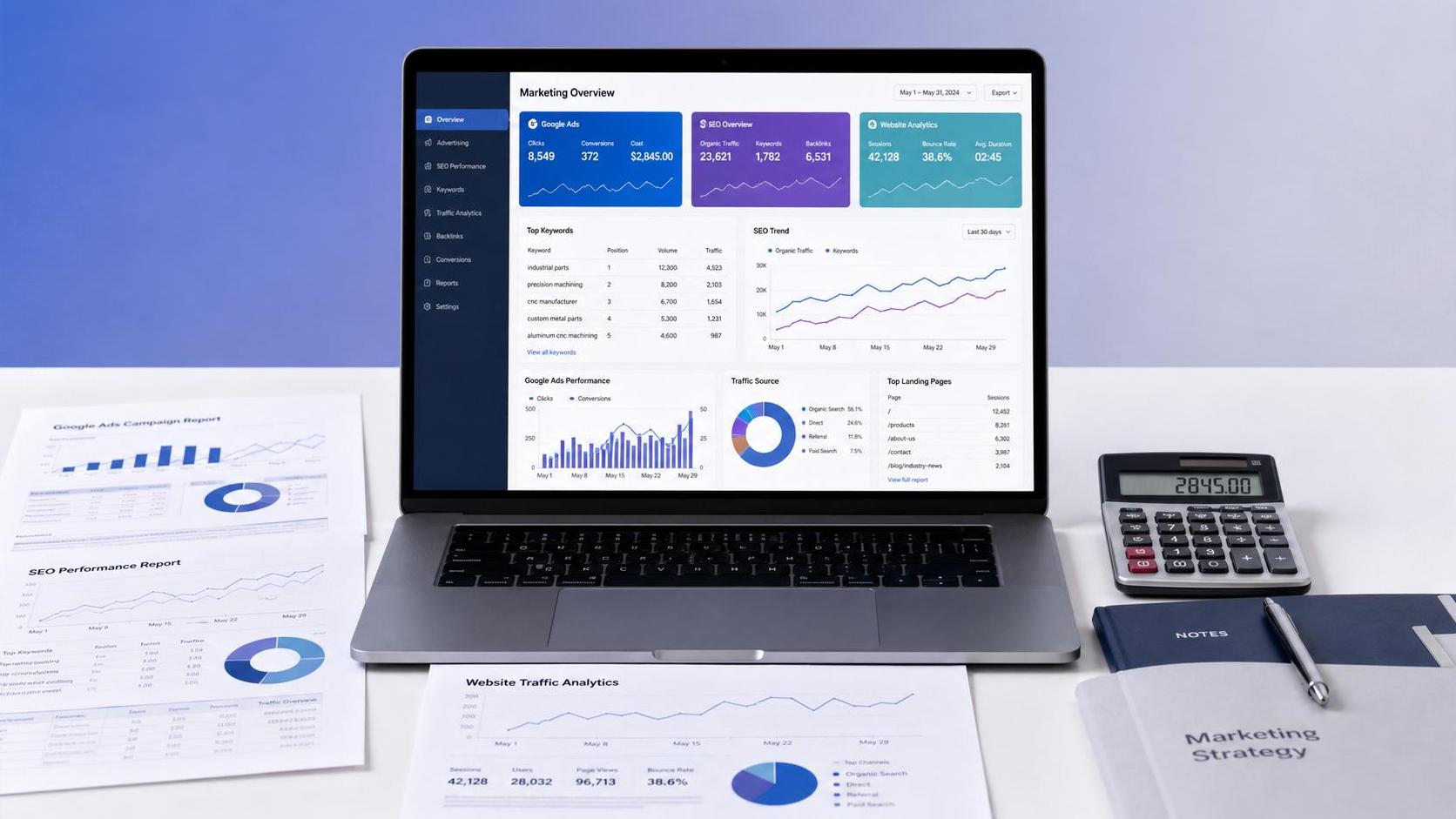
I. Definition and Business Value of Google Ads
Google Ads refers to digital marketing activities in which businesses use the Google Ads platform to display promotional information to users across search results, partner websites, video content, and apps, while managing budgets based on clicks, impressions, views, or conversion objectives. Its value lies not only in acquiring traffic, but more importantly in connecting with overseas audiences that have clear purchase intent.
For foreign trade B2B companies, buyers often search using terms such as product names, specifications, applications, suppliers, and factories. Google Ads can give product pages or solution pages exposure before organic rankings build up, shortening the customer acquisition validation cycle for new markets, new product categories, and new websites.
Campaign performance should be measured by verifiable business actions, such as valid forms, phone calls, emails, WhatsApp inquiries, quotation requests, and sales leads, rather than clicks alone. Advertising, website conversion support, sales follow-up, and data feedback together determine the final quality of customer acquisition.
II. Technical Principles and Account Operating Mechanisms
Google Ads is auction-based, but ad opportunities are not determined by bids alone. Keyword or audience relevance, ad creative quality, landing page experience, expected click-through rate, and conversion signals all affect ad eligibility, ad position, and actual cost per click.
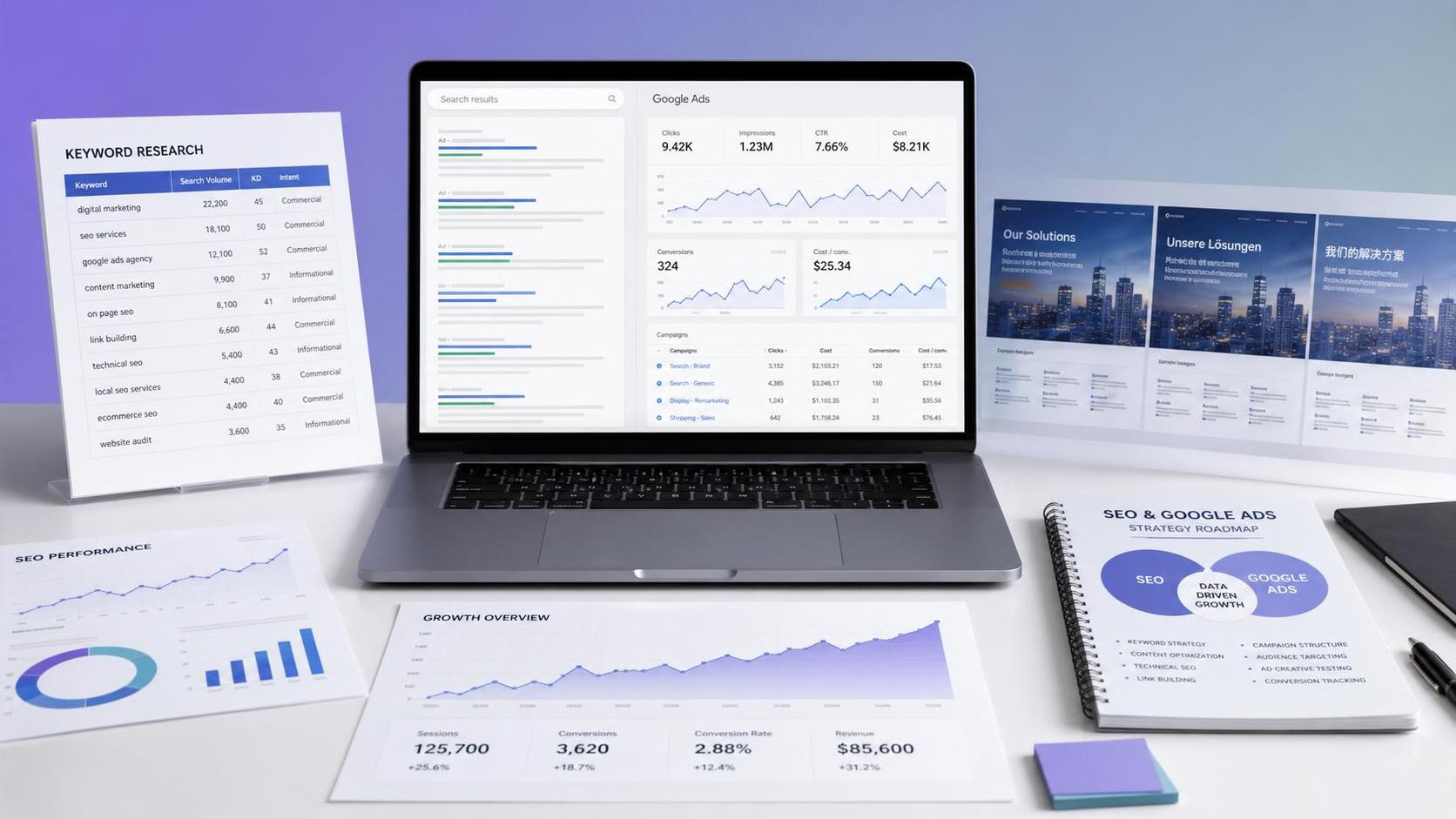
A complete process typically includes market and keyword research, account structure setup, ad copy and creative production, landing page matching, conversion tracking implementation, budget management, and periodic reviews. B2B customers should distinguish between general visits and high-value inquiries, and feed qualified lead outcomes back into campaign decisions.
Smart bidding relies on continuous and accurate data input. If forms are duplicated, spam inquiries are not filtered, or the sales team does not label lead quality, the system may allocate budget toward low-value traffic. Therefore, conversion definitions, consent management, and data verification are foundational tasks for account optimization.
III. How to Choose Between Search, Display, PMax, and YouTube Ads
Search ads are suitable for capturing users who have already generated demand, especially for industrial equipment, components, raw materials, and customized services. Businesses can group ads around product terms, model terms, application terms, and supplier terms, while using negative keywords to exclude recruitment, repair, tutorials, and low-relevance consumer demand.
Display ads primarily reach audiences in partner media and app environments. They are suitable for remarketing, brand exposure, and ongoing reminders during long-term purchasing decisions. They are generally not suitable for independently carrying all inquiry objectives; instead, they work better as a supplement to search ads by re-engaging visitors who have visited the website but have not yet made an inquiry.
Performance Max campaigns, or PMax, can automatically identify conversion opportunities across multiple Google placements and are suitable for accounts with stable conversion tracking, creative assets, and product data. YouTube ads are appropriate for showcasing factory capabilities, equipment operation, case processes, and brand stories. Industries with high average order values can use video to build awareness first, then capture inquiries through search and remarketing.
IV. Selection Criteria and Suitable Businesses
When selecting Google Ads campaign types, businesses should first assess demand intensity, sales cycle, average order value, target countries, and existing assets. Companies that urgently need to acquire clear purchase demand and have considerable product search volume should generally prioritize search ads; brands that need to educate the market or enhance credibility can add video and display reach.
Manufacturing factories, OEM/ODM companies, foreign trade companies, industrial product suppliers, and cross-border brands can all use this channel. The prerequisite is that the website can clearly explain product parameters, application scenarios, delivery capabilities, qualification information, and communication methods; otherwise, even high-quality clicks may be lost due to insufficient information.
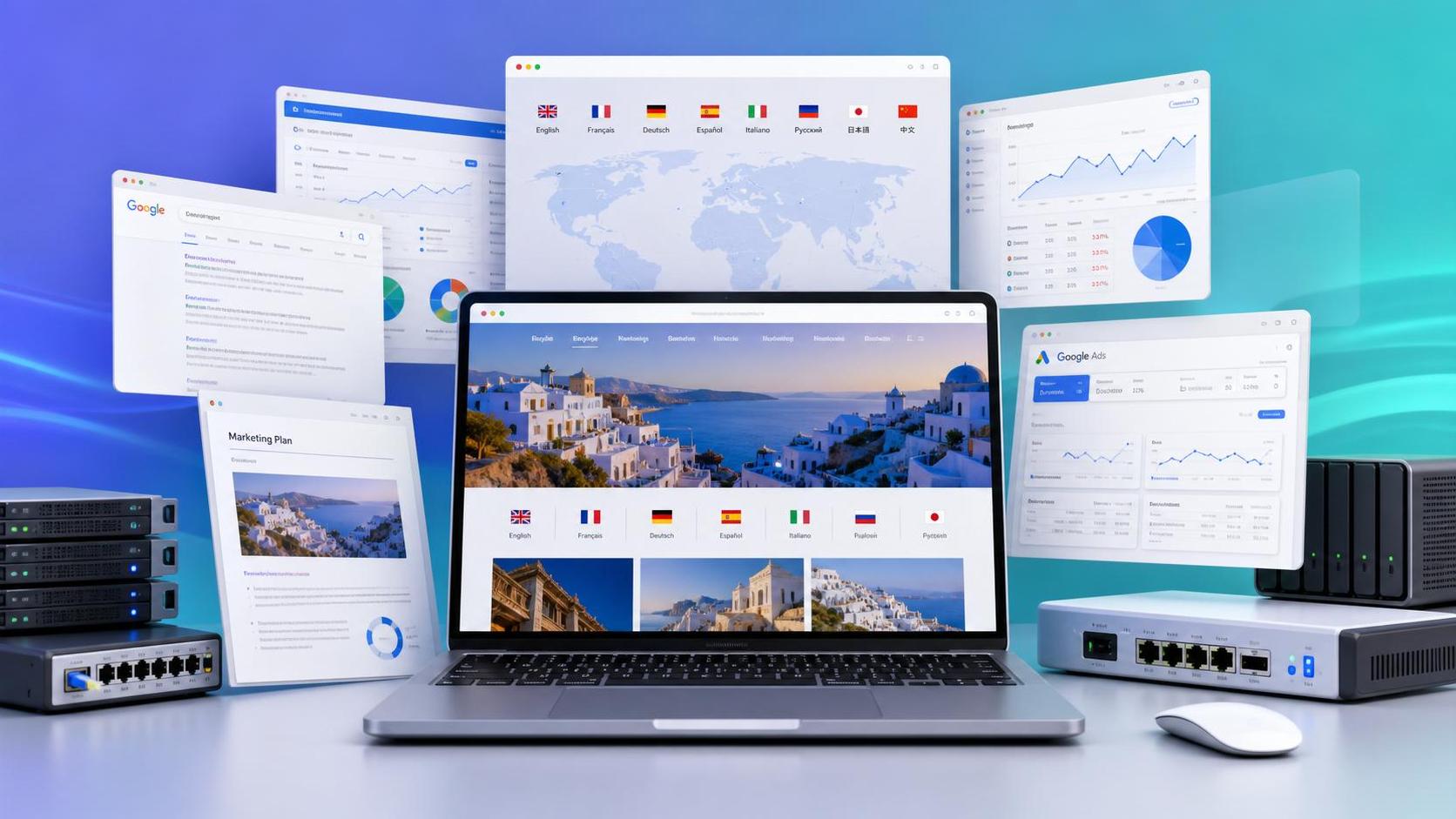
Yiyingbao addresses integrated website and marketing needs by providing multilingual independent websites, advertising account operations, landing page optimization, and inquiry conversion setup. For campaigns targeting multiple countries and product lines, synchronizing language pages, country targeting, ad copy, and conversion entry points is generally more conducive to forming an analyzable closed loop for customer acquisition than simply purchasing traffic.
V. Landing Pages, Creative Assets, and Quality Control
Landing pages for Google Ads should correspond directly to the ad theme. After buyers click ads for laser equipment, steel processing, or new energy components, they should directly see the relevant products, core specifications, application descriptions, delivery time communication options, and proof of company capabilities, rather than being taken to a homepage with generalized information.
Creative production can proceed through market research, page structure, product content, localized translation, mobile testing, conversion setup, and launch monitoring. Yiyingbao's responsive website building, multilingual content, and AI-assisted generation capabilities can be used to reduce the pressure of maintaining multiple pages; before formal publication, businesses should still verify technical parameters, the scope of commitments, and wording for the target market.
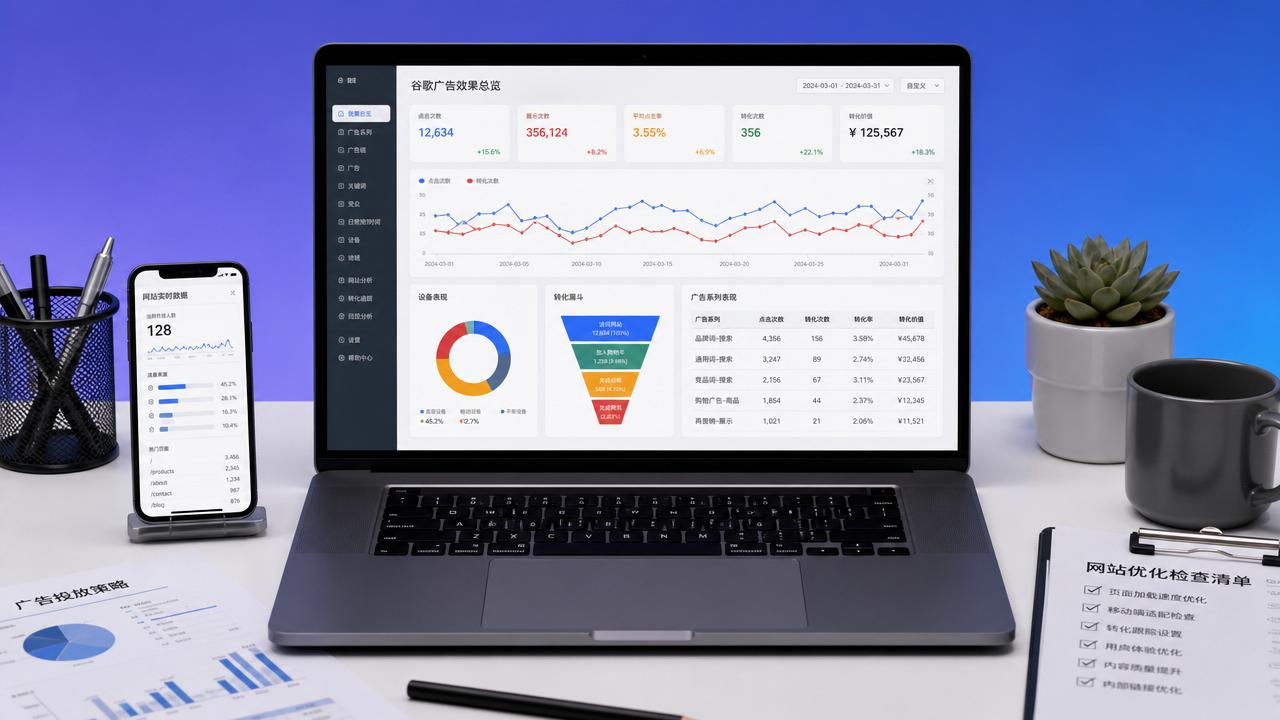
Quality control focuses on page loading performance, mobile form usability, telephone and instant messaging links, inquiry notifications, tracking trigger events, and the presentation of privacy information. Ad copy must not include unsubstantiated performance claims, and authorization for the use of images, videos, and customer logos should also be confirmed.
VI. Cost Structure, TCO, and ROI Evaluation
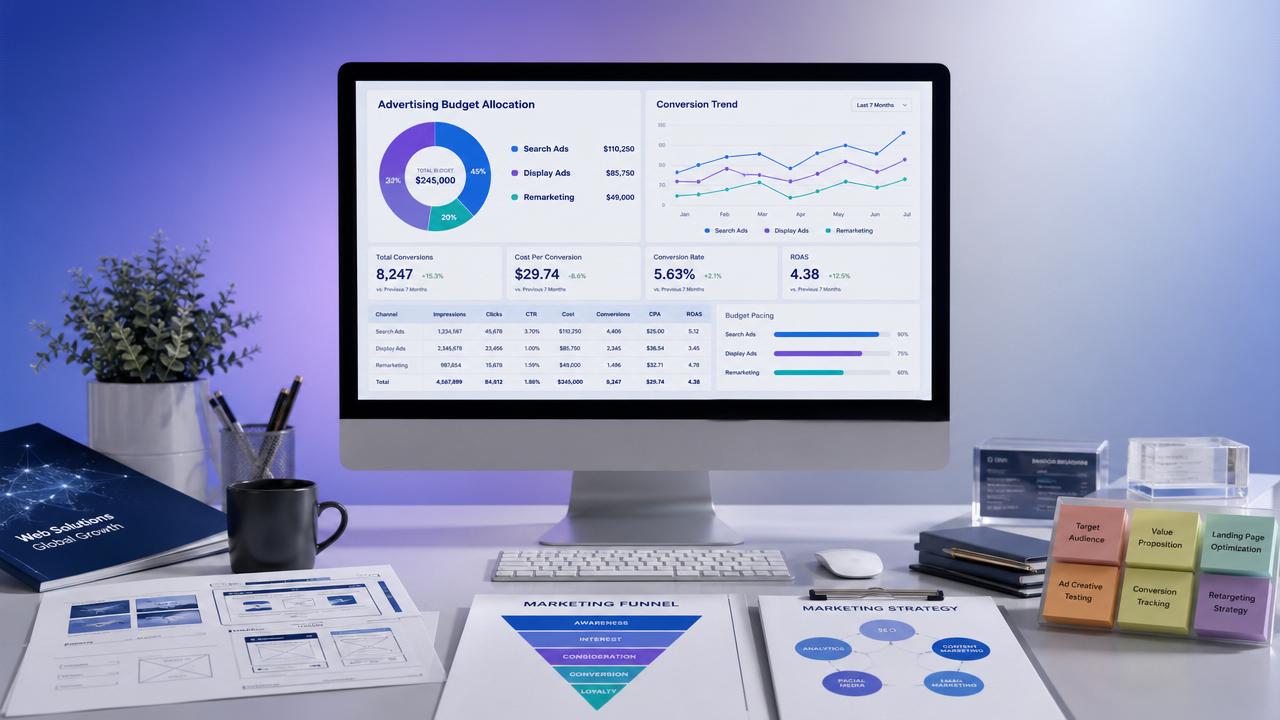
The total cost of ownership of Google Ads includes not only media click costs, but also account setup, creative production, multilingual landing pages, data tracking, operational services, and sales lead processing costs. Industry competition, regional purchasing power, keyword scope, conversion objectives, and website fundamentals all affect the rate of budget expenditure.
ROI evaluation should be conducted in layers: first examine the cost of valid visits and inquiries, then assess qualified lead rate, quotation rate, and transaction value. For industries with long order cycles, such as machinery, chemicals, and steel, advertising value should not be judged solely by short-term transactions; revenue generated from subsequent samples, meetings, and repeat purchases should also be recorded.
It is recommended to first establish small-scale tests in core countries and for high-intent products, then adjust budgets based on search terms, regions, devices, and lead quality. Yiyingbao can conduct reviews by combining advertising data, website data, and operational reports, helping businesses identify high-spend, low-conversion areas and avoid distributing budgets evenly across unvalidated markets.
VII. Application Scenarios, Operating Rhythm, and Future Trends
In export scenarios involving laser engraving machines, steel, chemicals, heavy-duty trucks, machinery, new energy, agriculture, and healthcare, advertising is commonly used for new product promotion, customer development in key regions, traffic generation before and after trade shows, and lead replenishment during off-seasons. Yiyingbao serves multiple industries, and its website building and marketing operation capabilities can support businesses in configuring promotional pages according to their actual business rhythm.
Account maintenance is not a one-time task. During the initial launch period, the focus should be on removing irrelevant search terms, checking conversion data, and optimizing landing pages; after entering a stable period, budget and lead changes can be monitored weekly, while country, product, and creative performance can be reviewed monthly. Sales teams should promptly provide feedback on the reasons for invalid leads to support continuous optimization.
In the future, automated campaigns, first-party data, multilingual localization, and video content will further affect Google Ads efficiency. Businesses still need to retain business judgment over keywords, creative assets, brand messaging, and lead quality, while coordinating advertising with SEO, social media, and content development for generative search to reduce reliance on a single traffic source.
 Before launching Google Ads, look at these 4 pointsBefore launching Google Ads, look at these 4 points: qualification review, account structure, conversion tracking, and budget planning. Plan your website and advertising logic in advance to reduce approval bottlenecks and ineffective spend, making lead generation more stable and conversions higher.
 Overseas customer acquisition promotion: should you run ads first or build a website first? Small and medium-sized enterprise budget allocation recommendationsOverseas customer acquisition promotion: should you run ads first or build a website first? This article combines the current budget situation of small and medium-sized enterprises, breaks down the proper sequence of website setup, ad testing, and SEO planning, and provides more stable budget allocation recommendations to help businesses avoid detours and improve inquiry conversion.
 Google Ad Optimization: Where to Start? First, Look at These 6 Key Conversion FactorsGoogle Ad Optimization: Where to Start? This article focuses on 6 key factors that affect conversions, helping you quickly determine whether the issue lies on the traffic side or the landing page side, improve inquiry quality, reduce wasted spend, and serve as a reference for foreign trade lead generation and independent site promotion.
 How to choose between Google Ads and Google SEO optimization? Comparison of effectiveness and costHow to choose between Google Ads and Google SEO optimization? This article compares effectiveness, investment cost, and long-term returns in detail, helping you determine when to prioritize ads and when to focus on SEO, and providing a growth plan better suited to export businesses by combining website conversion and ROI.
 How to make overseas brand marketing more effective? Analysis of independent sites, content, and ad synergy strategiesHow to make overseas brand marketing more effective? This article analyzes the synergy strategy of independent sites, content, and advertising to help businesses build customer acquisition, trust, and conversion loops, improve SEO visibility and inquiry quality, and achieve more stable overseas growth.
 What problems does the independent website ad platform have for B2B?Which is more suitable for B2B, Google Ads or Facebook Ads? Choosing the wrong platform can easily lead to low lead quality, high customer acquisition costs, and unstable conversions. This article analyzes the differences between the two in a B2B context and helps you find a more efficient independent website customer acquisition path.
 Can European inquiries recover and grow after a redesignCan European inquiries recover and grow after a redesign? This article breaks down recovery strategies and lead generation growth paths, from how to reduce the hreflang error rate of multilingual sites and whether SEO or Google Ads is better for foreign trade lead generation, to how to keep global node access latency within 100ms.
 How Should Foreign Trade Companies Choose Between SEO and Google AdsCan European inquiries recover and grow after a website redesign? This article focuses on how foreign trade companies should choose between SEO and Google Ads, analyzing strategies for traffic recovery, inquiry growth, budget allocation, and conversion improvement after a redesign to help you find a more reliable customer acquisition solution.