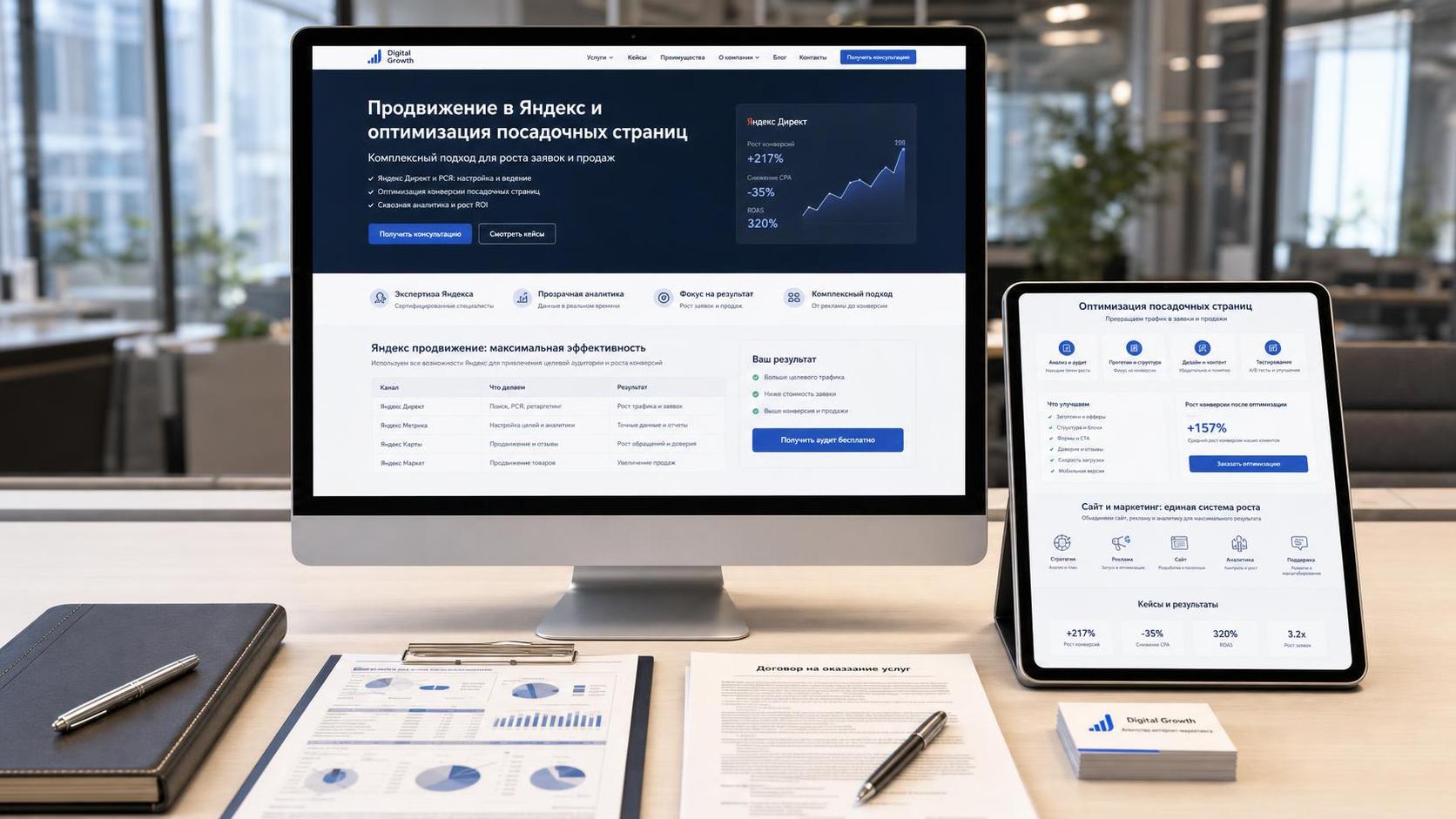
I. Definition and Business Scope of Advertising Landing Page Development
Advertising landing page development refers to the systematic work of directing visitors from search, social media, display ads, or email links to a dedicated page around a specific advertising objective, and achieving conversion through clear information, calls to action, and data collection. It is not a simple copy of a standard corporate website page, but a conversion touchpoint within the advertising funnel.
In foreign trade B2B scenarios, conversions typically include submitting inquiries, requesting catalogs, scheduling meetings, downloading materials, initiating WhatsApp communication, or obtaining quotations. For B2C independent websites, objectives may also include adding items to cart, checkout, and repeat-purchase subscriptions. Page objectives must align with advertising promises, audience stage, and sales follow-up capabilities.
High-quality advertising landing page development should address information relevance, loading performance, mobile experience, trust signals, form friction, and attribution data simultaneously. Click-through rate reflects the appeal of an advertisement, while landing page conversion quality determines whether the budget is truly converted into actionable business opportunities.
II. Landing Page Types for Different Advertising Channels
Google Search ads are suitable for keyword-intent pages. Keywords with clear purchasing intent can lead to product detail pages, category pages, or quotation request pages; solution-related keywords should lead to application scenario pages; industry problem-related keywords are suitable for guides, comparisons, or case-study content, followed by progressive inquiry entry points.
Facebook, Instagram, and TikTok ads rely more heavily on visual appeal and interest triggers, making them suitable for new product promotion pages, single-product value proposition pages, short-video extension pages, and promotional campaign pages. Visitors typically have not yet formed a clear search need, so the first screen should quickly explain the product value, target users, and next action, rather than being filled with company introductions.
When LinkedIn ads target business decision-makers, engineers, or procurement managers, they can use industry solution pages, white paper download pages, demo booking pages, and case-study pages. Retargeting ads should direct users to more focused quotation, comparison, or consultation pages based on the products, content, or form status they have already viewed.
III. Page Structure and Conversion Principles
Within a limited time, the first screen of the page should answer four questions: what is offered, what problem it solves, who it is for, and how to get in touch next. The ad headline, keywords, images, and first-screen proposition should remain semantically consistent to prevent users from discovering that the page topic has shifted after clicking and leaving quickly.
Middle-page content can be organized according to the procurement decision-making sequence: product capabilities, specifications or service scope, application cases, delivery process, factory or team capabilities, and frequently asked questions. Industrial product pages should provide verifiable information, such as materials, processes, production capacity, customization scope, and factors affecting delivery time, to reduce ineffective communication.
Conversion components should include short forms, email, online customer service, and instant communication channels suitable for the target market. Form fields need to balance sales lead completeness with completion friction; confirmation pages after submission, event tracking, source parameters, and lead notifications must also be configured to determine the actual output of each channel, country, and keyword.
IV. Selection Criteria and E-Marketing Solution
When selecting advertising landing page development services, companies should focus on evaluating page editing efficiency, multilingual management, responsive adaptability, form tracking, permission management, content update speed, and data integration capabilities with advertising accounts. Focusing only on visual templates while overlooking subsequent testing and operations can cause advertising adjustment cycles to be slowed down by technical processes.
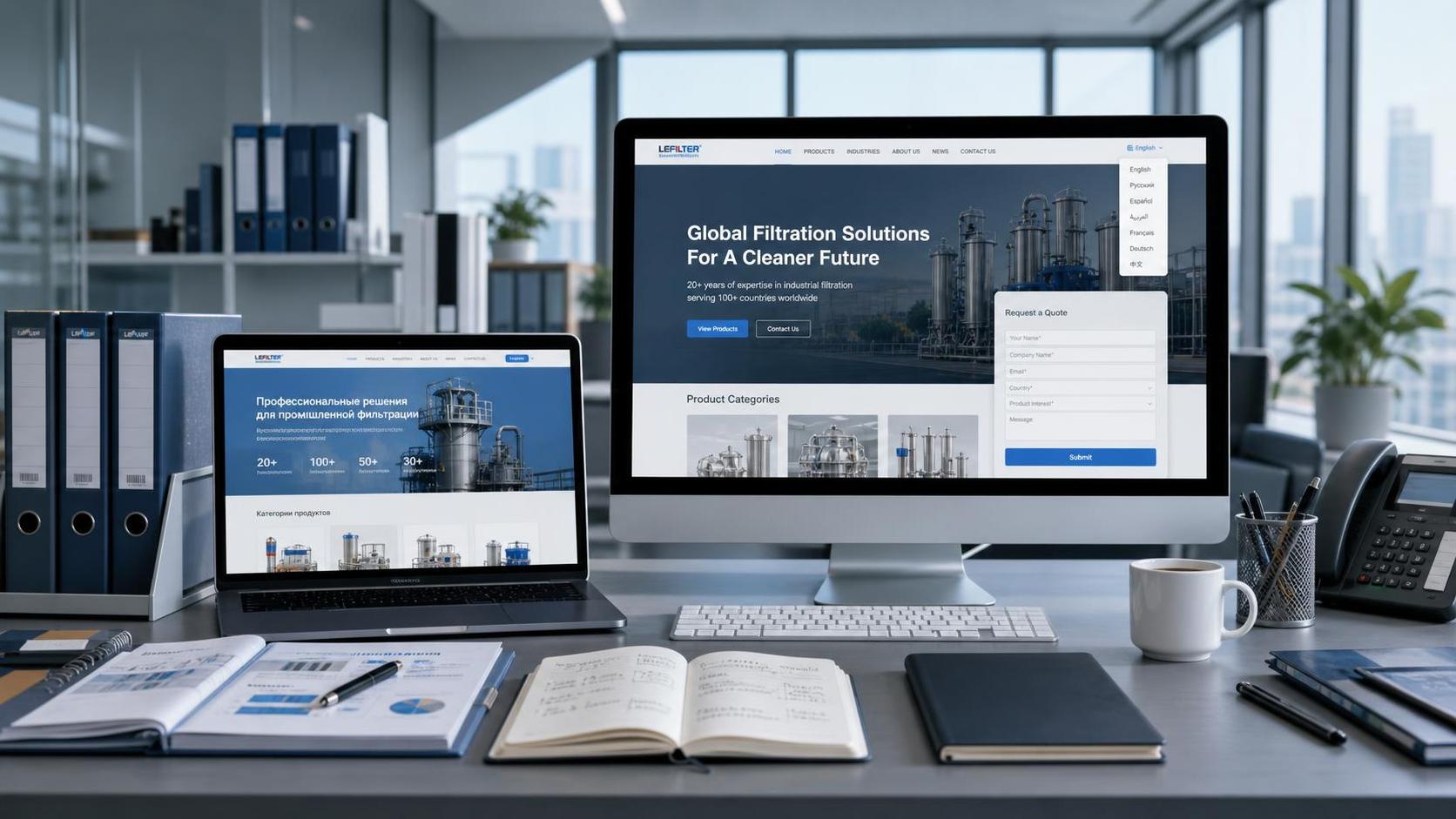
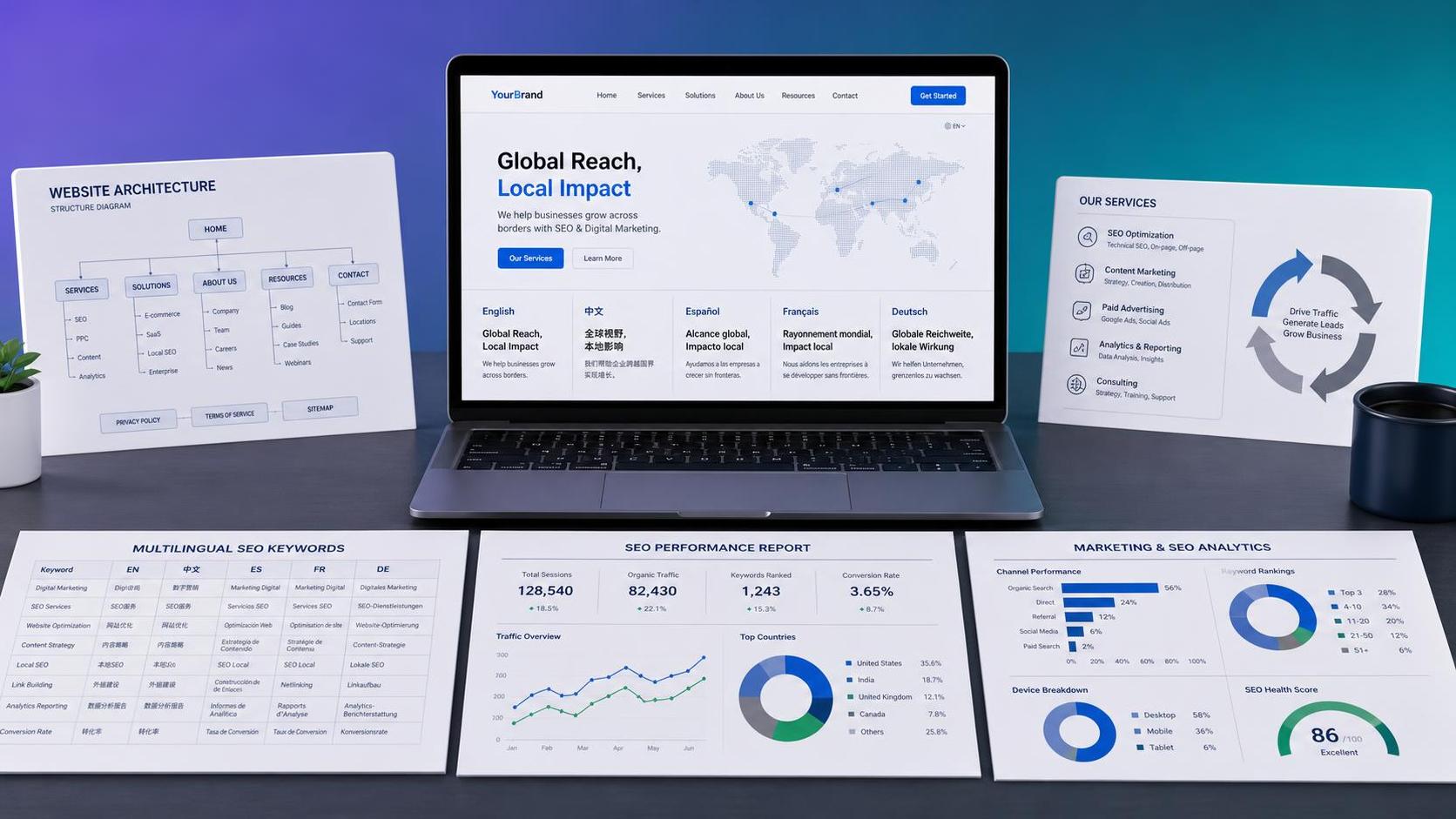
E-Marketing provides AI-powered website development, multilingual independent website, and advertising landing page development capabilities, which can be used for foreign trade corporate websites, B2B inquiry websites, and cross-border online stores. Its component-based editing and content management mechanisms facilitate the creation and continuous updating of different pages by product line, national market, and advertising campaign.
For overseas advertising, pages should also focus on access stability and mobile loading speed. E-Marketing states that it adopts a responsive architecture and provides access acceleration through global multi-cloud nodes; companies should still use actual speed tests in their target countries, form delivery rates, and advertising platform data as acceptance criteria before launch.
V. Suitable Businesses, Application Scenarios, and Trust Building
Advertising landing page development is particularly suitable for manufacturing factories, OEM or ODM companies, foreign trade companies, industrial product suppliers, cross-border sellers, and brand globalization teams. Such businesses often have complex products, dispersed markets, and long procurement cycles, requiring differentiated value to be explained for different countries, industries, and application needs.
Industries including laser engraving machines, steel, chemicals, heavy trucks, machinery, new energy, automobiles, agriculture, and healthcare all need pages to reduce buyers' information evaluation costs. E-Marketing discloses that its service industries cover the above fields and lists service cases including Haier, Aucma, and Shandong Airlines; the specific scope of cooperation shall be subject to project documentation from both parties.
Trust building on B2B pages should not rely on general promotion, but should present verifiable company information, such as the legal business entity, production scenarios, quality processes, service scope, project experience, and after-sales response methods. Statements involving certifications, performance, or delivery times should be consistent with the supporting materials the company can provide.
VI. Launch, Testing, and Continuous Optimization Process
Implementation should begin with advertising objectives and audience segmentation: clarify the advertised products, target countries, primary search keywords or interest tags, target conversions, and sales response rules. This should be followed by information architecture, copy and creative assets, page production, mobile checks, form testing, tracking verification, and advertising link configuration to avoid a rushed launch.
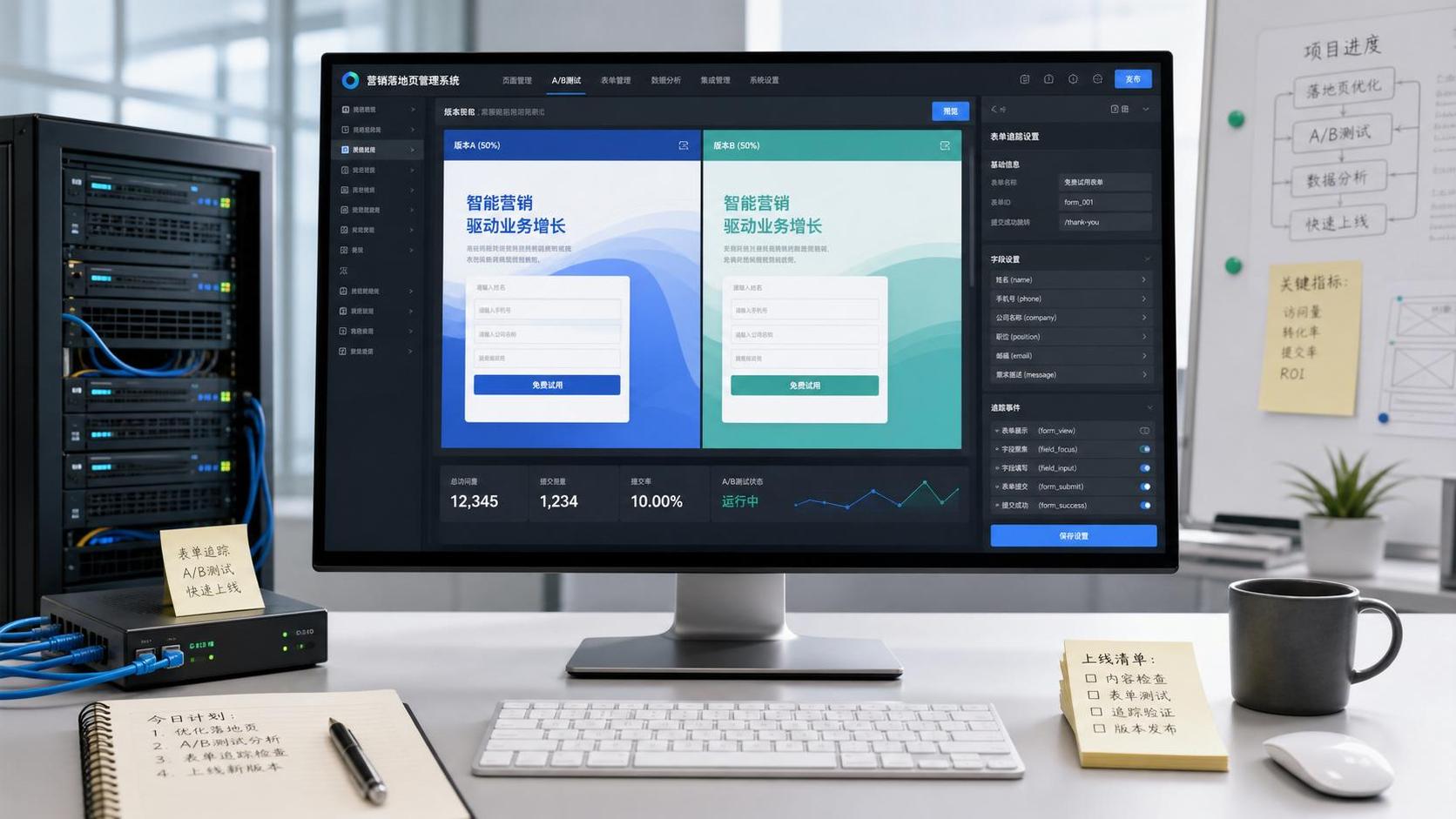
Testing should focus on the first-screen proposition, call-to-action button copy, number of form fields, case-study placement, product images, quotation thresholds, and expressions in different languages. Each test should focus on one core variable and retain a sufficient sample size; technical issues such as page loading, lost redirect parameters, duplicate submissions, and spam leads should also be investigated.
Advertising landing page development is not a one-time project. When new ads go live, products are upgraded, market changes occur, or sales feedback emerges, pages should be iterated accordingly. It is recommended to review traffic and conversion events weekly, analyze qualified lead rates, follow-up speed, and contribution to closed deals monthly, and feed the results back into advertising targeting and page content.
VII. Total Cost of Ownership, Return Assessment, and Future Trends
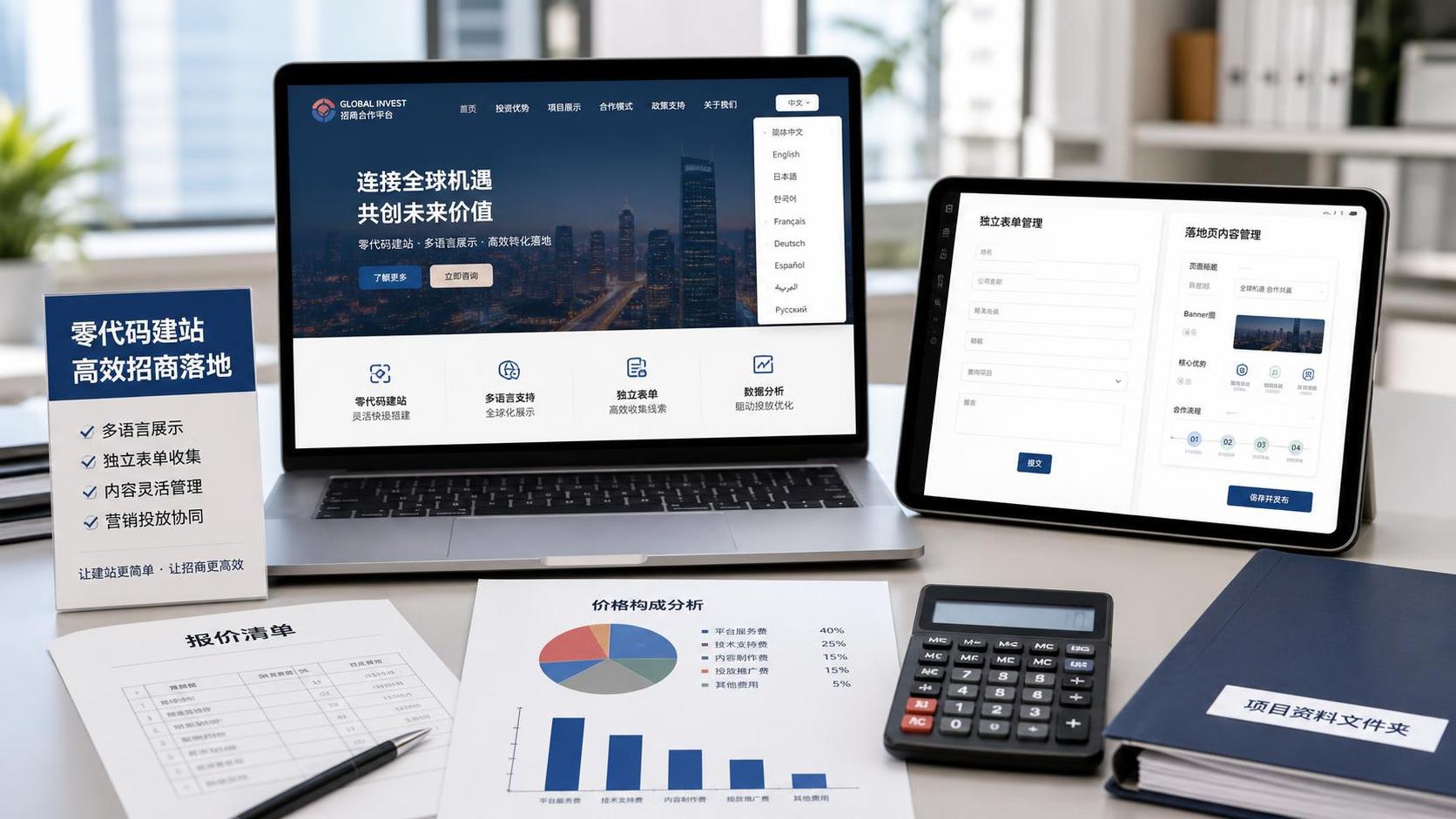
The total cost of ownership of advertising landing pages includes strategy planning, design and development, multilingual content, images and videos, domains and acceleration, data tools, advertising management, testing and iteration, and sales follow-up costs. When advertising across multiple markets, directly copying pages may save initial costs, but may result in lost conversions due to mismatches in language, currency, compliance disclosures, and purchasing habits.
Return assessment should not focus only on the cost per individual form submission. B2B companies should also track qualified inquiry rate, sample request rate, opportunity conversion rate, sales cycle, and customer lifetime value. For high-ticket equipment or customized projects, micro-conversions such as material downloads and consultation bookings can be included in the analysis, then combined with sales results to assess page value.
Future advertising landing page development will place greater emphasis on AI-assisted content production, dynamic audience matching, multilingual localization, privacy compliance, and first-party data accumulation. As generative search evolves, pages with clear entity information, Q&A content, structured product materials, and authentic case studies will also have greater opportunities to become part of a brand's long-term digital assets.
 How Is an Overseas Social Media Advertising Budget Usually Allocated?How should an overseas social media advertising budget be allocated? This article breaks down the budget logic across testing, scaling, remarketing, and website conversion optimization to help businesses avoid common pitfalls and improve inquiry and deal-closing efficiency.
 How is the pricing calculated for multilingual support in zero-code project investment and franchise programs?How is the pricing calculated for multilingual support in zero-code project investment and franchise programs? Don’t just look at the website development quote; you should also consider the number of languages, SEO configuration, lead forms, promotional landing pages, and ongoing maintenance costs. Quickly understand the pricing structure and avoid the trap of low initial costs followed by high subsequent expenses.
 Which Customer Acquisition Scenarios Are Most Suitable for the Initial Implementation of AI Marketing ServicesWhich customer acquisition scenarios are most suitable for the initial implementation of AI marketing services? This article focuses on high-traffic landing pages, multilingual websites, and B2B inquiry screening, helping businesses identify priority entry points and improve website conversions, content efficiency, and lead quality.
 Can Reselling Multilingual SEO Services Work? An Evaluation of Profit Margins and Delivery Risks for AgenciesIs “resell multilingual SEO” feasible? This article examines profit models, technical implementation, content localization, and delivery risks to help agencies determine whether multilingual SEO is worth offering, control costs while protecting profit margins, and quickly identify replicable growth opportunities.
 How to Avoid Turning Product Selection Guide Content Planning into a Product ManualHow can product selection guide content planning avoid becoming a product manual? This article examines decision-making scenarios, project risks, implementation difficulty, and growth collaboration, teaching you how to translate functional parameters into project language and helping decision-makers quickly determine whether a solution is suitable and worth moving forward with.
 The Three Most Common Reasons for Slow Foreign Trade Website DevelopmentWhy Do Foreign Trade Website Speed Issues Keep Recurring? This article breaks down three common causes: server locations, excessive page resources, and incompatible system architectures. Learn how to quickly identify the root cause of website sluggishness and improve the overseas browsing experience and inquiry conversions.
 Facebook Ads Have High Clicks but No Conversions? Check These 5 Optimization Areas FirstWhat are the Facebook ad optimization techniques? If clicks are high but conversions are low, first check these five key areas: targeting, creatives, landing pages, pixels, and remarketing to quickly identify problems and improve inquiry and conversion efficiency.
 How to Evaluate Delivery and Ongoing Operating Costs of SaaS Website Development ProvidersHow should you choose a SaaS website development provider? Don’t compare only the initial quote. Pay closer attention to delivery scope, feature expansion, content maintenance, SEO promotion compatibility, and data ownership. Calculating the total cost of ownership in advance can help you avoid ongoing additional charges later.