

I. Definition and Business Value of B2B Website SEO
B2B website SEO is organic search optimization conducted around a corporate website. Its goal is to make it easier for buyers to find and trust the company website when searching for products, suppliers, application solutions, technical specifications, and industry-related questions. It serves longer decision-making cycles and is not simply about pursuing website traffic.
Compared with consumer goods websites, B2B website SEO places greater emphasis on clear product categorization, complete specification information, verifiable factory capabilities, specific application scenarios, and smooth inquiry channels. Rankings are only an intermediate metric; quality traffic, valid inquiries, and sales follow-up potential are the ultimate business value.
A complete system typically covers technical crawlability, keyword research, page content, internal linking, external brand signals, and conversion data analysis. Companies should regard their official websites as digital assets that can accumulate value over time, rather than as one-time online brochures.
II. Technical Principles and Website Infrastructure
Search engines must first discover, crawl, and understand pages, then determine display opportunities based on topical relevance, content quality, user experience, and external signals. Therefore, sitemaps, canonical links, logical link hierarchy, status code management, and indexable pages form the foundation of B2B website SEO.
Mobile responsiveness, HTTPS, secure and stable servers, and fast page loading directly affect visitor experience and crawl efficiency. Images should use meaningful file names and alt text. Content such as product parameters, FAQs, and breadcrumbs can be combined with structured data to help search engines identify page relationships.
Multilingual websites should use independent and stable language paths, configure language and region correspondences, and avoid widespread duplication caused by machine translation. Yiyingbao's responsive website building, multilingual management, and global node capabilities are suitable for companies that need to centrally maintain pages for multiple overseas markets.
III. Page Classification and Content Strategy
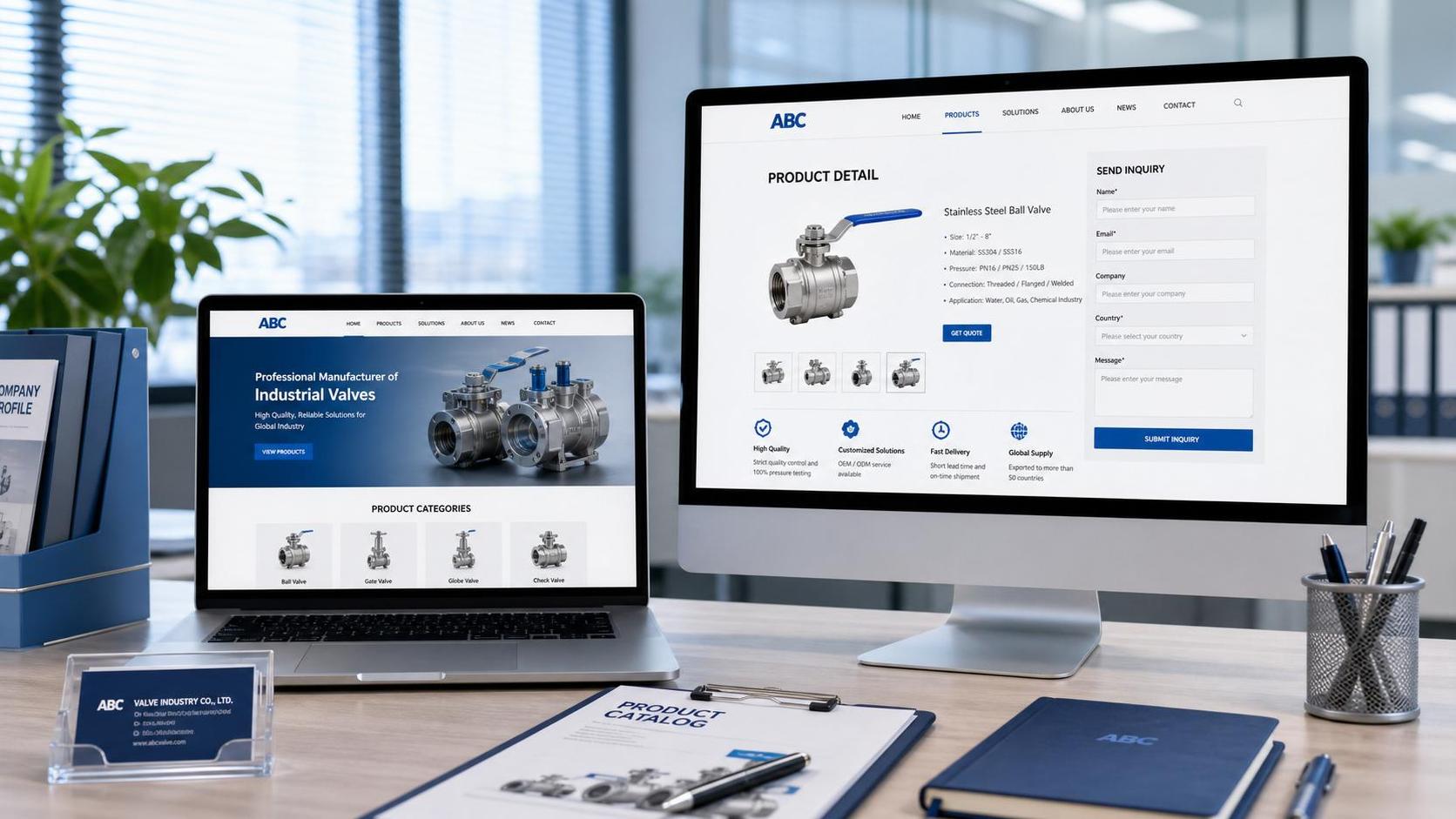
B2B website SEO content should not rely solely on blog articles. The homepage is responsible for positioning the brand and core capabilities; product category pages address broad demand; product detail pages cover models, materials, specifications, and purchasing questions; solution pages explain industry applications; and knowledge pages respond to searches related to comparisons, selection, and maintenance.
Keywords should be grouped by search intent. Product and supplier terms with clear purchasing intent should be prioritized on category pages, detail pages, and landing pages; application terms are suitable for solution pages; and technical Q&A terms are suitable for articles and FAQs. Each page should focus on one primary intent and avoid having multiple pages compete for the same topic.
High-value pages need to provide information that buyers can verify, including dimensions, performance, compatible environments, minimum order requirements, delivery methods, quality control, cases, or frequently asked questions. AI can assist with generating first drafts and expanding topics, but technical data, commitment scope, and industry-specific wording should still be reviewed by the business team.
IV. Suitable Companies and Typical Application Scenarios
Manufacturing factories, OEM or ODM companies, industrial product suppliers, foreign trade companies, and brand globalization teams are all suitable for using B2B website SEO to reduce their reliance on trade shows, third-party platforms, and short-term advertising. Industries with high technical barriers and complex purchasing decisions particularly need long-term content accumulation.
In industries such as laser engraving machines, steel, chemicals, heavy-duty trucks, machinery, new energy, automobiles, agriculture, and healthcare, buyers typically search repeatedly for parameters, applications, and supply capabilities. Websites should organize product capabilities, production conditions, delivery processes, and project experience into an evidence chain that is searchable and easy to read.
Yiyingbao's website building and marketing operations services can connect product catalogs, multilingual content, inquiry forms, WhatsApp or email entry points, and basic SEO configurations into a closed loop. Its service experience covers multiple export industries, but companies should still set priorities based on their target countries, product margins, and sales response capabilities.
V. Implementation Process, Quality Control, and Maintenance Schedule
Implementation usually begins with business interviews and data inventory: clarifying target markets, key products, existing pages, competitive topics, and conversion paths, followed by completion of the keyword map and site section planning. New websites should not begin by publishing large volumes of homogeneous content; they should first improve core product, category, and trust pages.
Before launch, check whether pages are accessible, whether titles and descriptions are accurate, whether images are compressed, whether forms can be submitted, whether the mobile version is easy to use, and whether different language versions point correctly. After launch, identify issues through indexation, rankings, organic visits, conversion events, and inquiry quality, rather than looking only at impression figures.
The maintenance cycle should align with product updates and sales rhythms. It is recommended to check technical issues and core keyword performance monthly, supplement key pages and remove outdated information quarterly, and update FAQs based on customer inquiries. Search terms, Q&A, and landing page data generated from advertising and social media can also inform B2B website SEO content decisions.
VI. Service Selection and Total Cost of Ownership Assessment
When purchasing B2B website SEO services, companies should first confirm the scope of services: whether they include technical diagnostics, website improvements, keyword strategy, content production, multilingual proofreading, data tracking, conversion optimization, and ongoing reporting. If a provider only promises a quantity of keywords without explaining page, content, and conversion work, it is difficult to assess the actual input-output ratio.
Total cost of ownership includes not only website building or monthly operating fees, but also product information organization, translation review, internal approvals, server and security maintenance, sales follow-up, and labor for ongoing content updates. Low-cost solutions lacking an editable backend, data ownership, and subsequent maintenance capabilities may result in higher migration and rebuilding costs.
ROI evaluation should preferably be divided by product line or country, recording organic traffic growth, the number of valid inquiries, inquiry-to-quotation rate, sales cycle, and order gross margin. Yiyingbao provides coordinated website building, SEO, advertising, social media, and operations services, making it suitable for companies lacking overseas digital marketing teams; however, objectives, deliverables, and data access permissions should still be clarified before cooperation.
VII. Future Trends and Growth Recommendations
Future B2B website SEO will place greater importance on topical authority and consistency of entity information. As search results include more summaries, videos, images, and Q&A entry points, companies need to ensure that their products, brands, applications, and professional viewpoints mutually validate one another across their official websites and trusted channels, rather than merely placing keywords in isolation.
Generative search is changing how users obtain information. Content designed for AI Q&A environments should use clear questions, direct conclusions, verifiable parameters, and complete context. GEO does not replace traditional optimization; it is an extension built on crawlable websites, professional content, and credible brand information.
For companies, the priority should be to first complete the technical foundation and core product pages, then build solution and knowledge content, and subsequently use data to iterate high-value pages. Only by coordinating SEO with advertising tests, social media outreach, and sales follow-up can organic search gradually become a stable overseas customer acquisition channel rather than merely a ranking exercise.
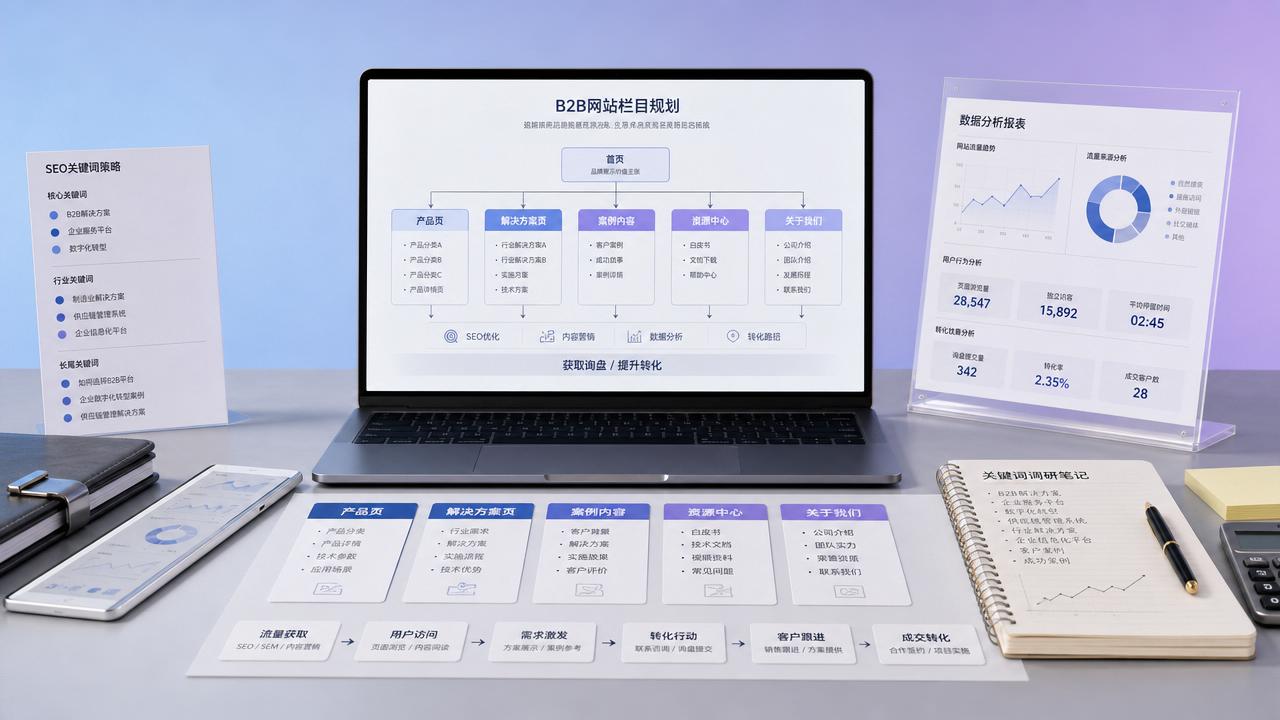
 How to do B2B website SEO to generate inquiries? Section structure, content layout, and conversion point designHow to do B2B website SEO to generate inquiries? This article breaks down the practical path of B2B website SEO from section structure and content layout to conversion point design, helping businesses improve indexing, build trust, and truly convert traffic into high-quality inquiries.
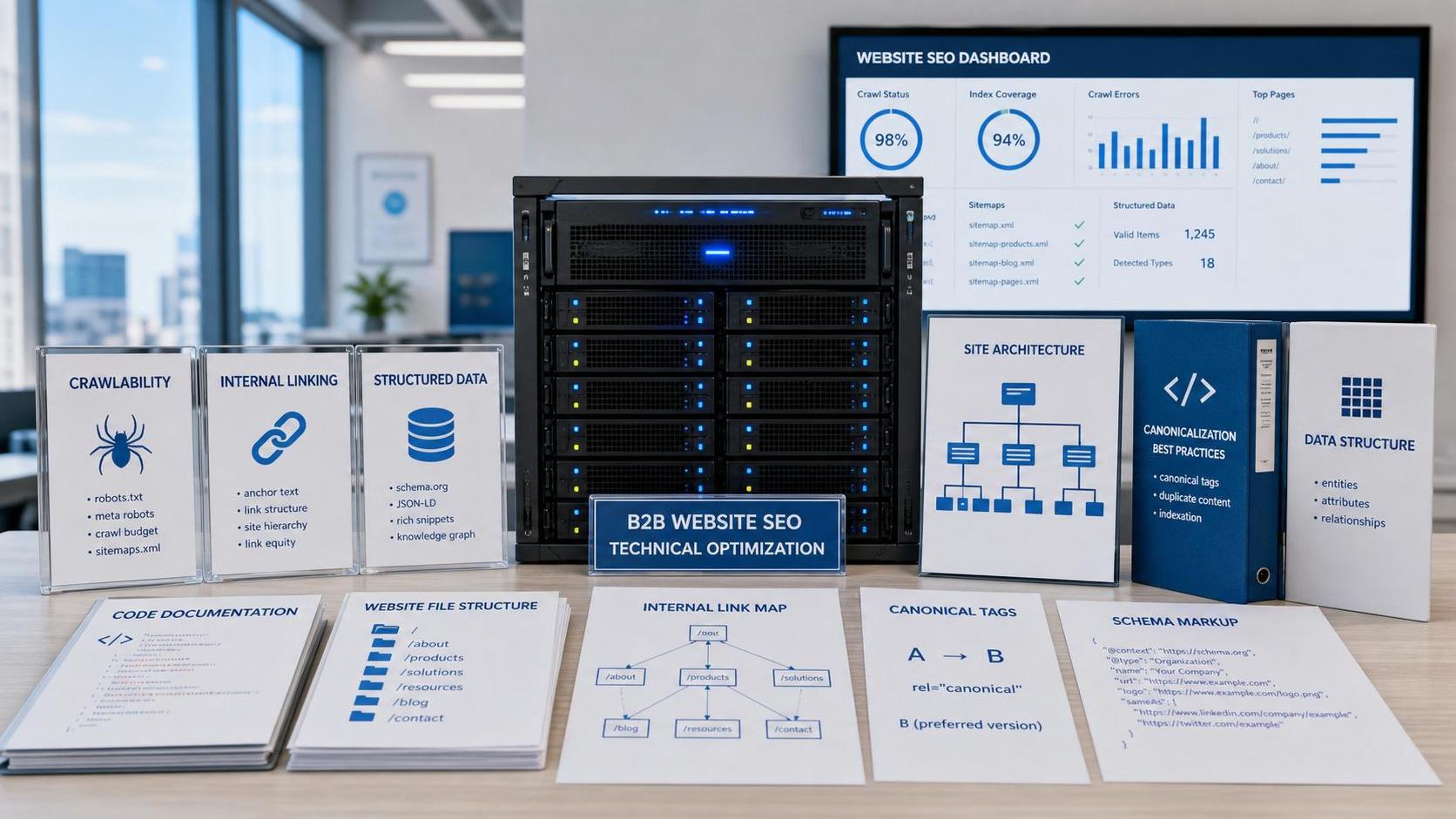
 What does B2B website SEO technical optimization include?A detailed explanation of crawling、internal linking and structured deploymentWhat does B2B website SEO technical optimization include?This article focuses on analyzing crawling efficiency、internal linking systems and structured deployment,helping corporate websites improve indexing、enable better understanding of page structure and enhance inquiry conversion capability。
![B2B网站SEO结构维护要多少技术人?内容量和站点复杂度是关键]()
 How to Structure Inquiry Entry Points for a B2B Website SEO Standalone SiteHow to Structure Inquiry Entry Points for a B2B Website SEO Standalone Site? This article analyzes optimization techniques for inquiry buttons, form design, and conversion paths across the homepage, product pages, and landing pages, helping businesses convert SEO traffic into overseas inquiries and business opportunities more efficiently.