
What Is B2B Foreign Trade Website Development: A Strategic Digital Hub Beyond a Display Page
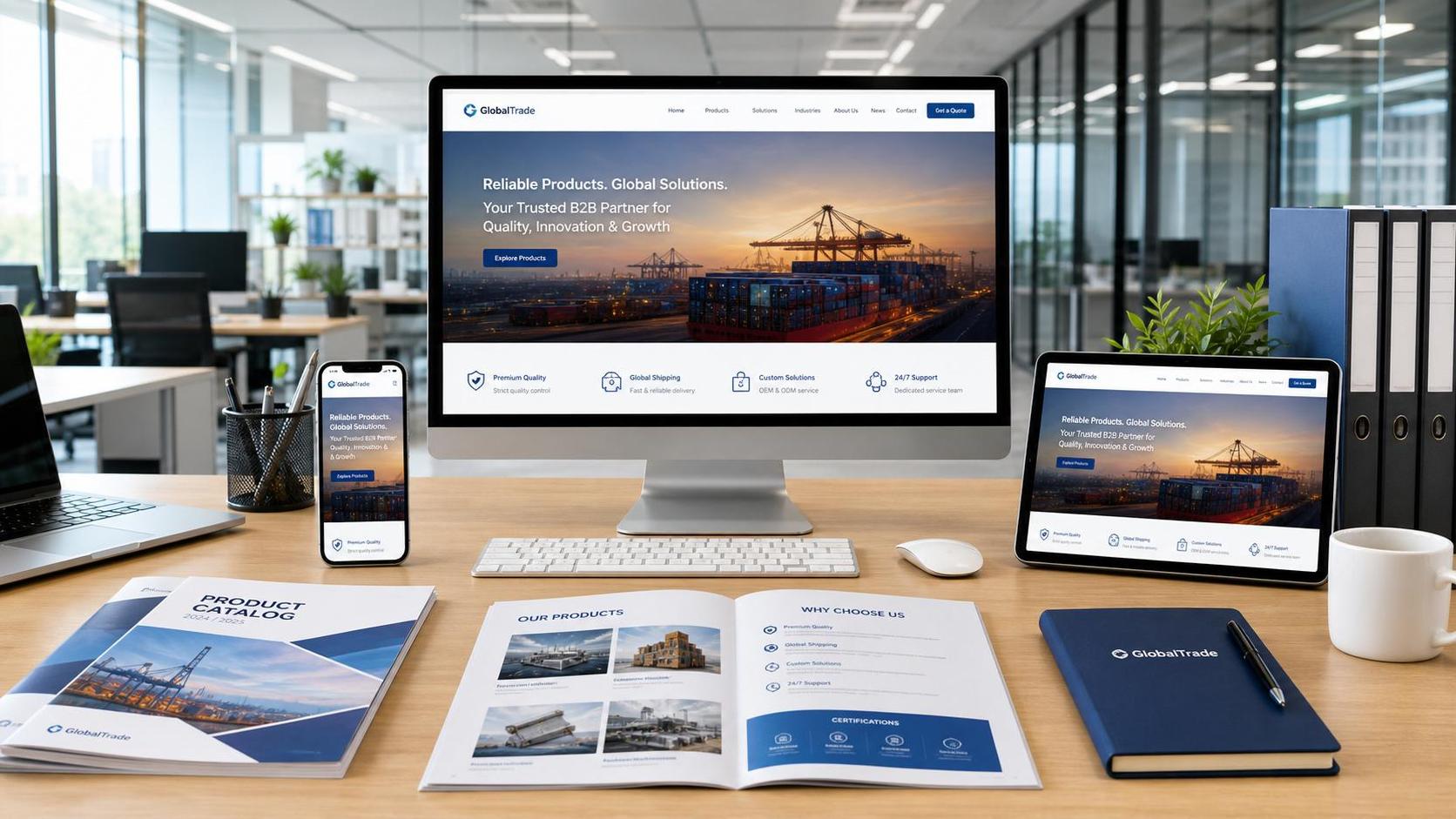
B2B foreign trade website development refers to the customized construction of independent websites for overseas industrial buyers, distributors, and project-based customers. Its essence is not information display, but a B2B marketing system centered on inquiry conversion. It must carry high-decision elements such as product technical specifications, real factory footage, certifications and qualifications, case deliveries, and multilingual inquiry paths.
Unlike B2C online stores or brand websites, B2B foreign trade website development emphasizes suitability for procurement scenarios, including advanced functions such as PDF specification downloads, embedded MOQ tiered quotations, intelligent RFQ form pre-filling, one-click WhatsApp inquiry integration, and multi-currency quotation currency switching. The page structure must align with the data-crawling logic of Google Business Profile and AI search (GEO) for B2B entity information.
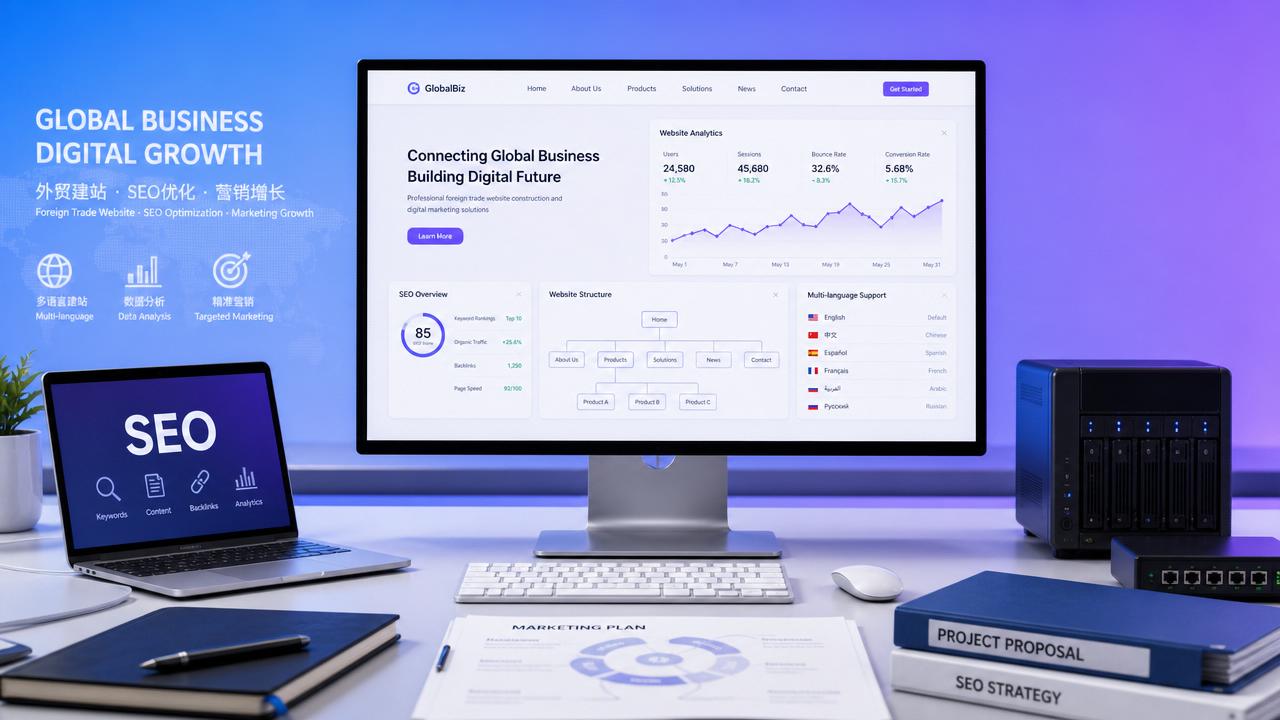
Yiyingbao defines B2B foreign trade website development as “operational customer acquisition infrastructure.” Through its AI intelligent website-building system, it delivers a one-stop solution ranging from template selection, multilingual product page generation, and automatic TDK optimization to inquiry funnel tracking, enabling manufacturing companies without technical teams to launch professional websites that meet international procurement practices within 72 hours.
Why Traditional Website Development Models Are Becoming Obsolete: Three Irreversible Trends for 2026
First, multilingual SEO has shifted from a “bonus” to an “entry threshold.” Google data shows that B2B keyword search volume in non-English markets, such as German-, Spanish-, and Arabic-speaking regions, is growing by 37% annually. However, 82% of Chinese foreign trade websites offer only an English version, causing them to completely miss localized long-tail keywords. Simple machine translation cannot meet buyers’ needs for precise understanding of technical terminology and industry-standard expressions.
Second, localized payment and trust chains are broken. Overseas buyers refuse to submit inquiries to websites without local payment methods such as SEPA, PIX, and PayID; without SSL+GDPR compliance statements; or without genuine company addresses and telephone numbers. Starting in 2026, the EU Digital Services Act (DSA) will require all B2B websites targeting the European market to clearly disclose the data processing entity and DPO contact details.
Third, AI search is restructuring traffic entry points. Generative engines such as ChatGPT and Google AI Overviews prioritize structured, clearly identified, and Q&A-friendly content. Traditional B2B foreign trade websites built around keyword stuffing cannot be recommended in AI summaries, making brands “invisible” at critical procurement decision-making stages. Yiyingbao’s AI+GEO engine was developed specifically for this trend, enhancing AI visibility through technologies such as FAQ Schema, product attribute graphs, and multilingual entity anchor text.
Who Needs Professional B2B Foreign Trade Website Development: Typical Customer Profiles and Pain Point Mapping
Core target groups include export-oriented manufacturing plants, such as laser equipment, heavy-duty truck, and new energy battery companies; OEM/ODM service providers; industrial product distributors; and cross-border e-commerce sellers transitioning from platforms to independent brands. These customers generally face three gaps: a technical gap—the lack of front-end developers and SEO engineers; a content gap—the difficulty of continuously producing multilingual, highly professional product copy; and an operational gap—the lack of a team to maintain SEO, advertising, and social media traffic acquisition after the website is launched.
For example, China Heavy Duty Truck, under Shandong Heavy Industry Group, used Yiyingbao’s B2B foreign trade website development solution to connect its Russian, Arabic, and Spanish websites with localized product specification databases. Combined with AI-generated FAQs commonly asked by local buyers, its organic search inquiry volume in the Russian market increased by 210%. Yuanhe Power Station, meanwhile, embedded multilingual factory videos and configured GDPR-compliant pop-ups, raising its inquiry conversion rate in the EU market to 18.6%, far above the industry average of 9.2%.
Such customers do not need to establish their own IT teams, but they must ensure that their websites provide a “credibility verification chain” from the buyer’s perspective: real-time online customer service responses, real factory images with geographic coordinates, embedded third-party factory audit reports, and multilingual displays of certificate scans. These are all standardized configurations of Yiyingbao’s multilingual website-building system.
How B2B Foreign Trade Website Development Is Truly Implemented: A Four-Stage Closed Loop from Website Development to Growth
Stage One: AI intelligent website building. The Yiyingbao SaaS platform provides more than 200 foreign trade-specific templates and supports drag-and-drop creation of responsive PC/mobile pages. Built-in AI assists in generating Chinese-English bilingual homepage copy, technical descriptions for product detail pages, and factory capability introduction modules, reducing manual writing costs by more than 70%.
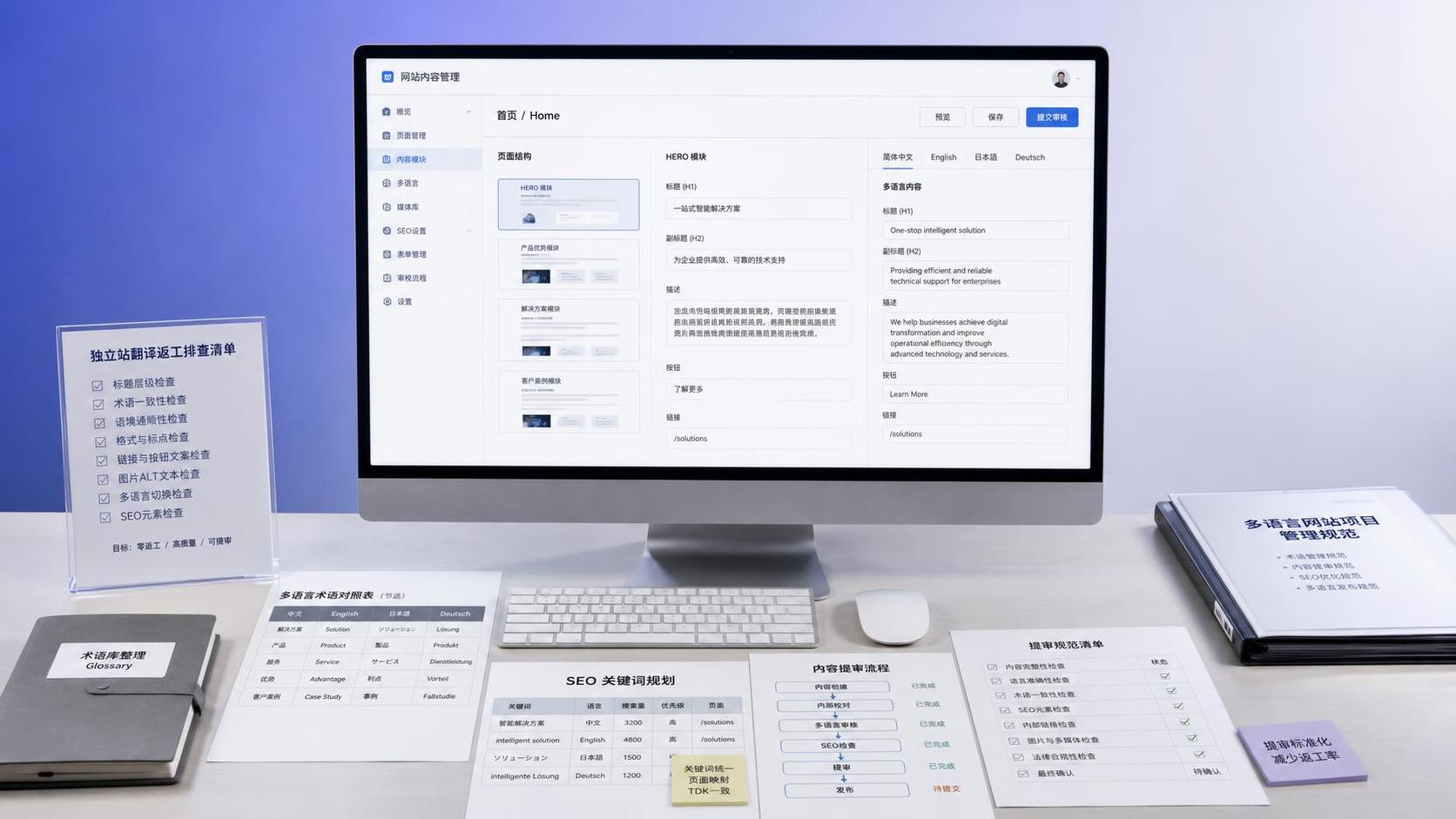
Stage Two: Multilingual and localized deployment. The system automatically configures hreflang tags, language switchers, and localized URL paths, such as /de/ and /es/, and integrates an AI translation center. It supports terminology database calibration and contextual optimization for eight major languages, including German and Spanish, avoiding “literal translation errors.” It also completes SSL certificate deployment, GDPR Cookie Consent pop-ups, and multilingual privacy policy generation.
Stage Three: B2B-specific SEO and GEO optimization. In addition to standard TDK settings, Yiyingbao’s AI+SEO engine batch-generates procurement-oriented long-tail keywords, such as “industrial laser cutting machine for metal sheet wholesale,” and automatically builds product attribute Schema, FAQ pages, and supplier capability matrix pages, strengthening dual exposure in AI search and Google organic rankings.
Stage Four: A full-channel operational closed loop. After the website goes live, the AI+SEM system automatically matches high-intent countries and keyword combinations on Google/Facebook; the AI+SNS engine generates LinkedIn technical posts and TikTok factory short-video scripts; and all inquiries are centrally integrated into a CRM dashboard, creating a trackable growth flywheel of “website development → exposure → outreach → conversion → repeat purchase.”
When to Launch B2B Foreign Trade Website Development: Decision Timing Based on Lifecycle and ROI
Not every business needs to invest immediately. There are three optimal launch windows. The first is when a company has secured its first overseas order but lacks independent customer acquisition capabilities—at this stage, website development can replace reliance on trade shows and yellow pages, reducing the cost per customer acquisition by more than 60%. The second is six months before expanding into a new market, such as the Middle East or Latin America—localized content and payment trust elements need to be deployed in advance. The third is when an existing website has been online for more than 18 months and organic traffic has stagnated—this indicates an outdated technical architecture and ineffective SEO strategy, requiring an urgent upgrade to a new AI-driven B2B foreign trade website development model.
Yiyingbao customer data shows that the average website development cycle is 5–8 working days, with Google indexation increasing by 300% in the first month and high-quality inquiries steadily generated within three months. After Haier Group adopted the Yiyingbao V6.0 system, 47 keywords for the English website of its commercial refrigeration equipment independent site reached the first page of Google within six months, while inquiry costs decreased by 41% compared with traditional SEM.
It is worth noting that B2B foreign trade website development is not a one-time project, but an annual operations contract. Yiyingbao provides an integrated package of “website development + first-year SEO + social media managed operations” to ensure that websites continuously adapt to algorithm updates, market changes, and evolving customer procurement behavior.
Total Cost of Ownership (TCO) Analysis for B2B Foreign Trade Website Development: A Rational Return-on-Investment Model
TCO includes explicit and hidden costs. Explicit costs include website development fees, with Yiyingbao’s standard edition starting at ¥29,800; multilingual expansion fees of +¥4,500 for each additional language; annual SSL and global CDN fees of ¥3,200; and annual AI SEO and advertising managed-operation fees starting at ¥38,000. Hidden costs are even more critical: traditional outsourced website development requires an average of 127 hours of communication and has a rework rate of 43%; without SEO maintenance, organic traffic falls to zero, resulting in a monthly loss of approximately ¥86,000 in potential inquiry value, calculated at the industry average of ¥1,200 per inquiry.
ROI calculations should focus on quantifiable indicators: reduced inquiry costs, with Yiyingbao customers achieving an average reduction of 52%; improved inquiry quality, with the proportion of qualified inquiries increasing from 31% to 68%; and shorter customer acquisition cycles, reduced from an average of 142 days to 79 days. For a hardware export company with annual revenue of ¥50 million, B2B foreign trade website development investment accounts for less than 0.8% of revenue, while additional orders generated by new inquiries in the first year can reach ¥3.2 million, with a payback period of less than 4 months.
Yiyingbao provides a TCO transparency tool. After entering a company’s annual export volume, target market, and product category, it automatically generates a three-year cost-benefit comparison model, helping procurement decision-makers overcome the technical black box and make data-driven website development decisions.
 What common pitfalls should be avoided in B2B foreign trade website developmentWhat common pitfalls should be avoided in B2B foreign trade website development? This article focuses on target positioning, website structure, content planning, SEO layout, multilingual experience, and technical tracking, analyzing the key issues that affect inquiry conversion and helping businesses avoid detours and build a truly customer-generating foreign trade website.
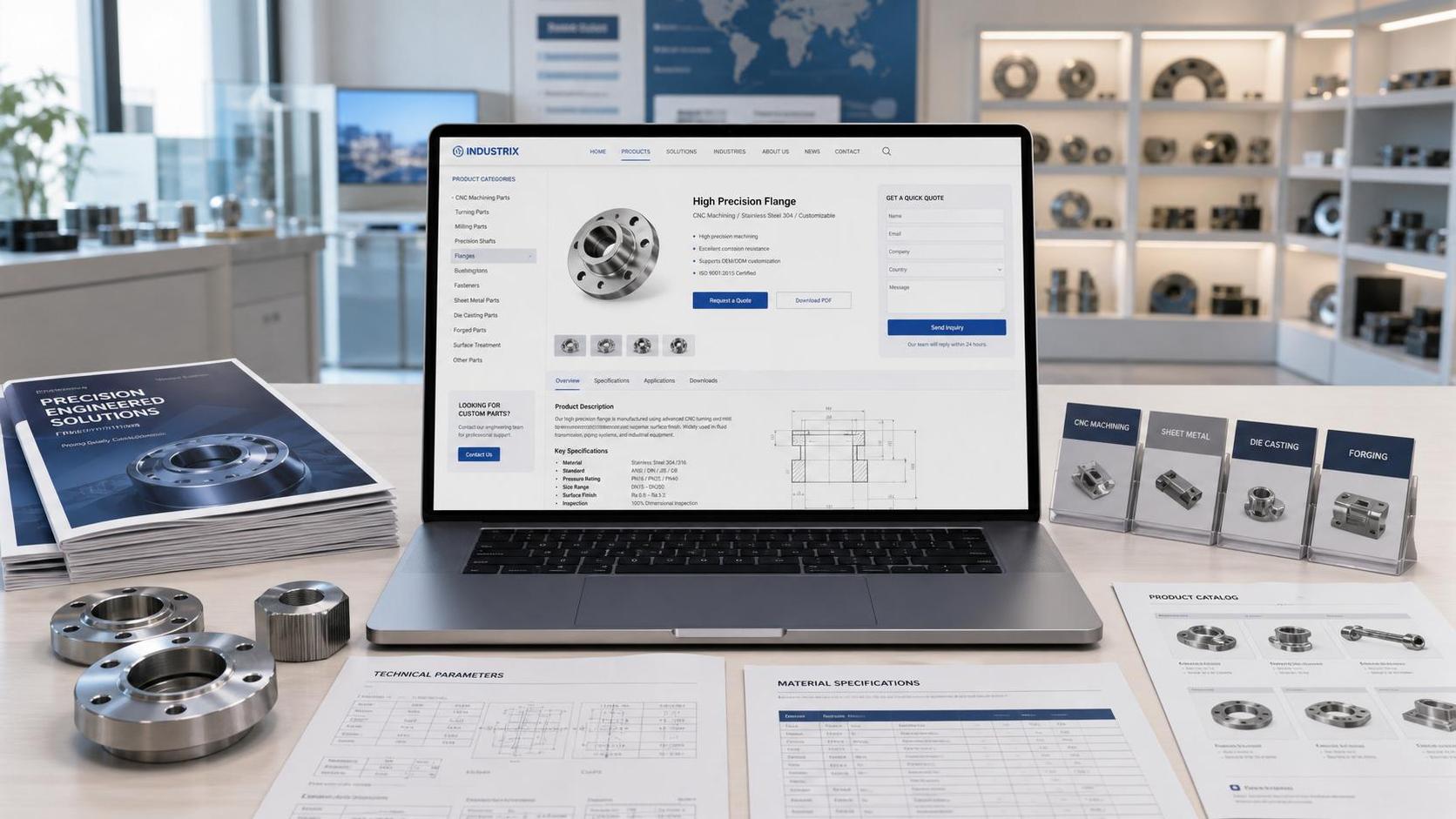
 Why B2B foreign trade website development for manufacturing companies should place greater emphasis on product pages and inquiry pathsWhy can’t B2B foreign trade website development for manufacturing companies focus only on the homepage? This article focuses on in-depth product pages and inquiry path design, analyzing how to improve SEO accessibility, strengthen buyer trust, and obtain higher-quality inquiries.
 How to build a B2B foreign trade website? Key steps from inquiry path planning to multilingual deploymentHow to build a B2B foreign trade website? Systematically sort out the key steps from inquiry path planning, website structure design to multilingual deployment and SEO layout, helping enterprises improve overseas customer acquisition efficiency, enhance conversion capability, and build a website that truly brings in inquiries.
 What Are the Main Costs of Building a B2B International Trade Website?What are the main costs of building a B2B international trade website? This article breaks down the costs of planning and structure, design and development, multilingual support, basic SEO, content entry, and server maintenance, helping purchasers understand differences in quotations and hidden costs to avoid exceeding the budget due to additional charges later.
 What is usually not properly defined when the rework rate for independent website translations is high?A high rework rate for independent website translations is often not caused by the translator’s capabilities, but by failing to define the terminology, page objectives, SEO keywords, and review process in advance. This article breaks down common sources of rework and troubleshooting methods to help you reduce revisions and improve launch efficiency.