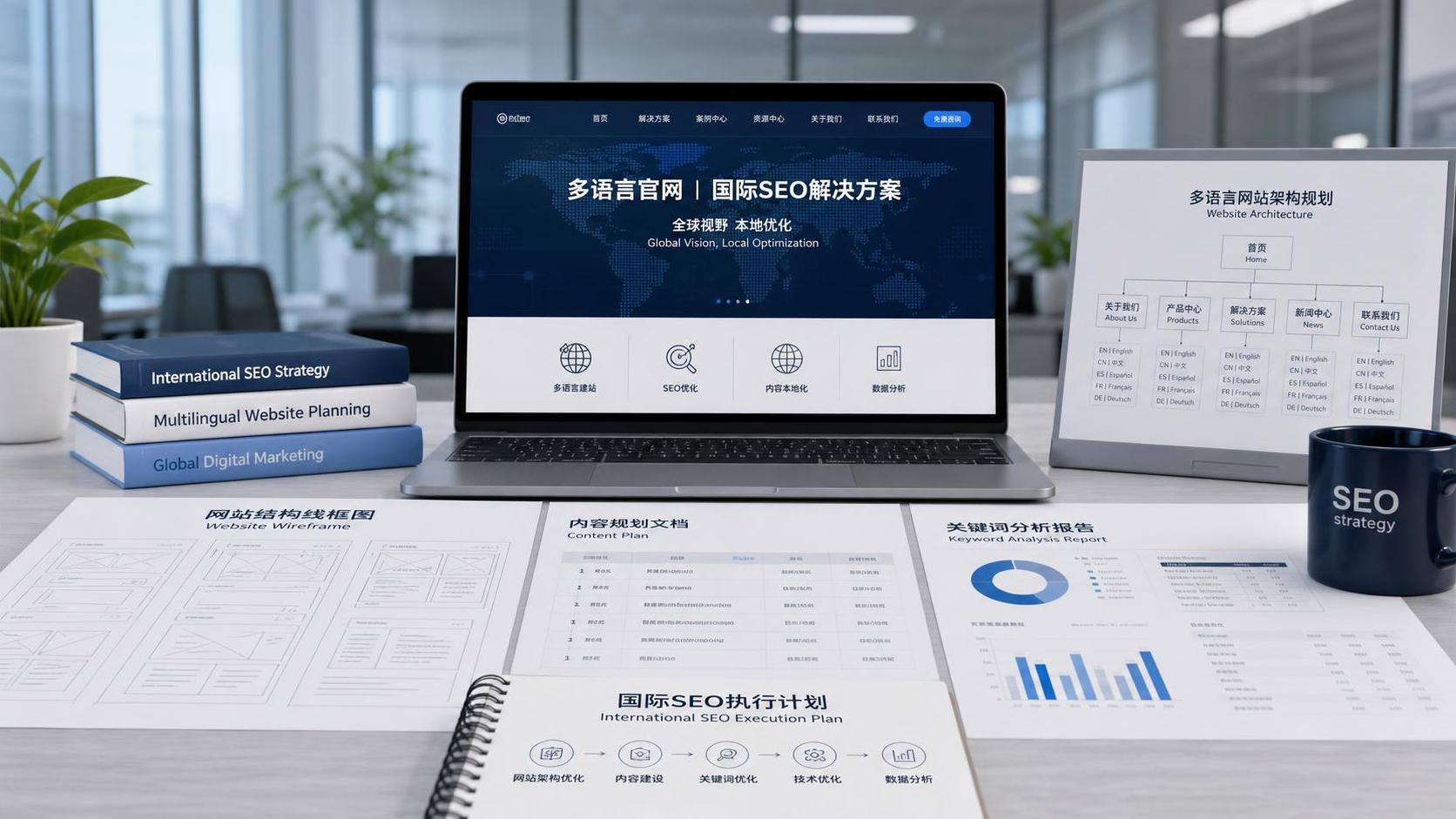




I. Definition and Business Scope of International SEO Optimization
International SEO optimization is an ongoing operational process aimed at improving a website's visibility, relevance, and conversion capability in local search results across multiple countries, regions, or language markets. It is not simply a matter of translating Chinese pages into foreign languages; it also requires alignment with local buyers' search terms, content preferences, device environments, and communication methods.
For export-oriented B2B companies, the core focus of international SEO optimization typically includes product catalog pages, product detail pages, industry solution pages, factory capability pages, certification and case study pages, and contact pages designed to capture inquiries. For cross-border retail businesses, it should also cover category pages, product pages, review pages, and transaction processes.
Its objectives should not be measured solely by rankings for individual keywords, but by effective exposure in target countries, non-branded keyword coverage, page indexing, organic traffic quality, inquiry volume, and cost per business opportunity. Search traffic only creates measurable business value when it enters a clear consultation, quotation, or purchase journey.
II. Technical Principles: Enabling Search Engines to Correctly Understand Market Targeting
International SEO optimization first addresses the identification issue of “which page serves which audience.” Common approaches include organizing content through country-specific domains, subdomains, or language directories, and establishing clear relationships among versions for different languages or regions to reduce duplication and competition between similar pages.
Multilingual annotations, canonical page references, sitemaps, crawlable navigation, and logical internal linking together form the technical foundation. Pages should also maintain stable server response, mobile compatibility, image compression, and secure access, enabling search engines to discover, crawl, and understand product information.
At the content level, information should be organized around search intent: buyers seeking suppliers focus on production capacity, materials, specifications, lead times, and quality control; those seeking solutions focus on application conditions, selection parameters, and delivery capabilities. Structured headings, tables, Q&A sections, and internal links help improve information readability.
III. Main Categories and Applicable Scenarios
By coverage scope, international SEO optimization can be divided into single-language, multi-country operations; multilingual, single-market operations; and multilingual, multi-country operations. English-language websites are suitable for testing broad demand in the early stage, but when targeting markets such as Germany, Japan, Russia, the Middle East, or Latin America, local-language pages are generally more conducive to building understanding and trust.
By page function, it can be divided into four categories: technical SEO, keyword and content SEO, external brand mentions and link building, and conversion rate optimization. The first two determine discoverability and relevance, while the latter two affect credibility and post-visit action efficiency. The absence of any link will constrain long-term growth.
Manufacturing factories, OEM/ODM companies, and industrial product suppliers are suited to building content clusters around product keywords, application keywords, and solution keywords; DTC brands can strengthen category keywords, usage scenario keywords, and comparison keywords. Yiyingbao's multilingual standalone websites and AI-assisted content capabilities can be used to centrally manage pages for multiple countries, product materials, and inquiry entry points.
IV. Overseas Keyword and Localized Content Methods
Keyword research should be conducted across six dimensions: product names, materials and processes, specifications and models, application industries, procurement needs, and question-based keywords, with data segmented by country. Literal translation often overlooks commonly used local expressions; for example, the same product may be searched differently due to regional differences, industry terminology, or measurement conventions.
Content localization does not mean merely replacing one language with another. Dimensions and units, currency descriptions, delivery terms, regulatory notices, case study presentation, contact details, and after-sales commitments on a page should align as closely as possible with the reading and decision-making habits of the target market. Machine first drafts can improve efficiency, but key product parameters and commercial wording still require review.
It is recommended to establish a keyword map for each priority market: core category keywords correspond to category pages, long-tail specification keywords correspond to product pages, and procurement and technical questions correspond to article or Q&A pages, which are then connected through related products, application pages, and form pages. This can prevent multiple pages from competing for the same search intent.
V. Service Selection, Launch Process, and Quality Control
When procuring international SEO optimization services, companies should first define priority countries, product lines, sales objectives, and the materials that can be provided internally. Priority should be given to regions with clear market demand, stable delivery capabilities, and existing English or local-language sales support, while avoiding the simultaneous rollout of too many low-quality language pages.
The implementation process typically includes website diagnosis, market and keyword research, information architecture design, multilingual page production, technical configuration, content publication, indexing monitoring, and conversion review. Acceptance should not focus solely on page quantity; it should verify language correspondences, link validity, mobile experience, form delivery, and the completeness of data tracking.
Yiyingbao provides capabilities including AI intelligent website building, multilingual websites, SEO operations, advertising placement, and social media traffic generation, making it suitable for companies seeking to advance website development and customer acquisition in coordination. Its responsive architecture, global node deployment, and multilingual management capabilities can serve as references for evaluating overseas access experience and subsequent maintenance efficiency.
VI. Total Cost of Ownership and Return on Investment Assessment
The total cost of ownership for international SEO optimization includes domains and servers, website development, multilingual translation and review, content production, technical maintenance, data tools, backlinks and brand communication, as well as internal sales follow-up costs. The number of markets, product complexity, content foundation, and target competition level all affect the budget cycle.
Companies should divide their budgets into three parts: website development foundation, content for priority markets, and ongoing operations. For new websites, priority should be given to resolving architecture, core pages, and conversion entry points; after entering the indexing and ranking growth stage, long-tail content should be expanded based on exposure, click, and inquiry data, rather than publishing low-value pages in bulk at one time.
ROI assessment can combine qualified inquiries generated by organic traffic, inquiry-to-quotation rate, quotation-to-order rate, average order value, and customer lifetime value. For industrial products with longer decision cycles, intermediate actions such as material downloads, meeting bookings, and sample requests should also be recorded to avoid underestimating the long-term contribution of content assets.
VII. Maintenance Cadence and 2026 Development Trends
International SEO optimization is not a one-time project. It is recommended to check crawl anomalies, indexing changes, core keyword performance, country-level traffic, and inquiry sources every month; update key product pages, incorporate market feedback, and review conversion paths every quarter; and plan topic-based content and landing pages simultaneously when launching new products, participating in trade shows, or entering new markets.
In 2026, search results will continue to integrate traditional web pages, videos, product information, and generative answers. Companies need to accumulate verifiable product parameters, application knowledge, company profiles, frequently asked questions, and case study materials, so that content can both serve buyer searches and be more accurately understood by emerging search and Q&A systems.
Yiyingbao already covers AI content assistance, GEO operations, multilingual website building, SEM, and overseas social media. For export-oriented companies serving industries such as laser engraving machines, steel, chemicals, machinery, new energy, medical care, and furniture, international SEO optimization can be used as a foundation for long-term traffic, then coordinated with advertising and social media to validate markets and amplify high-quality inquiries.
 Where Should International SEO Optimization Start? A Detailed Guide to Site Structure, Content, and Backlink LayoutWhere should international SEO optimization start? Begin with site structure, content framework, and backlink layout. This article explains multilingual URL paths, page hierarchy, conversion page setup, and high-quality backlink strategies to help businesses improve overseas indexing, traffic, and inquiry conversions.
 Why Does International SEO Need Localized Content? Strategies for Improving Rankings Across Multiple CountriesWhy is localized content essential for international SEO? This article focuses on improving rankings across multiple countries, analyzing differences in search behavior, keyword layout, and conversion page design logic to help businesses gain more traffic, clicks, and inquiry growth through content that is better aligned with local markets.
 How to approach international SEO optimization for the U.S. market? From keyword layout to local signal buildingHow to approach international SEO optimization for the U.S. market? From keyword layout、search intent matching to local signal building,systematically breaking down the key paths to improving rankings、traffic and inquiry conversions,helping enterprises enter the U.S. market more steadily。
 Slow Indexing in the German Market? Use This SEO Audit ChecklistInternational SEO Optimization for Slow Indexing in the German Market: A Practical Guide to Troubleshooting Slow Indexing on German Pages. Start by checking crawlability, hreflang, server stability, and trust signals, then optimize content structure to quickly identify issues and improve overseas website indexing and conversions.
 Should an International SEO Multilingual Website Start with Architecture or Content?Should an international SEO strategy and multilingual website start with architecture or content? Combining practical experience in foreign trade and manufacturing, this article explains the key sequence for indexing, rankings, and inquiry conversion, helping you avoid unnecessary rework and build a sustainable-growth overseas website.