









- Which channel has the highest ROI in the global traffic ecosystem? Comparative analysis of search, social media, and advertisingJul 10, 2026View details
- What multilingual website services are available in Sanya? Which model is more suitable for local businesses going global?Jul 08, 2026View details
- How to view the complete list of China SaaS companies in the top 100? Practical methods for screening website-building and marketing service providersJul 08, 2026View details
- How to view pricing in the global traffic ecosystem? Cost comparison of search, social media, and content channel advertisingJul 06, 2026View details
- How to assess foreign trade website development trends?Looking at 2026 changes from multilingual,AI content to conversion pathsJul 04, 2026View details
- What are the new trends in multilingual marketing data analytics tools in 2026? Focus on attribution、automation and complianceJul 04, 2026View details
Default content title displayed here
Whether LinkedIn ads are effective for B2B customer acquisition is not usually answered with a simple "effective" or "ineffective" answer. What truly influences the judgment is not just the cost per click and the number of forms, but also industry relevance, average order value, decision-making chain length, and whether leads ultimately enter the sales process. For businesses that need to evaluate budget allocation, LinkedIn ads for B2B customer acquisition are more like a portfolio investment, requiring consideration of both short-term customer acquisition efficiency and long-term customer value accumulation.
First consider the platform's characteristics, then discuss the campaign results.
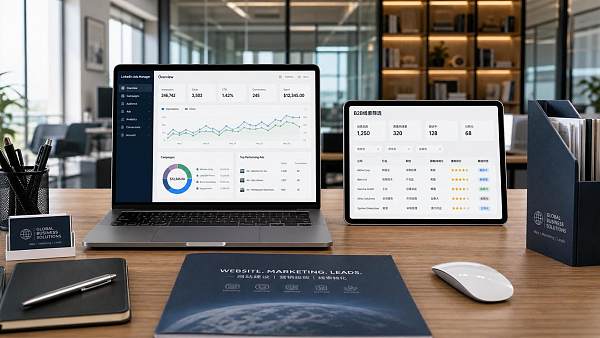
LinkedIn's core advantage lies not in its user base, but in its professional profiles and business networks. Compared to consumer-oriented platforms, it's better suited for finding individuals involved in corporate decision-making, such as those in purchasing, marketing, technology, and management roles.
This determines that LinkedIn's B2B customer acquisition logic is not "casting a wide net," but rather narrowing down the target range as much as possible and improving the commercial relevance of communication by using dimensions such as industry, job title, company size, region, interests, and account behavior.
In other words, if the business itself requires dealing with a specific corporate role and the transaction depends on professional communication and multiple rounds of screening, LinkedIn is often closer to the source of real business opportunities than general traffic platforms.
Which industries are more likely to successfully implement LinkedIn B2B advertising for customer acquisition?
Not all industries are suited to using LinkedIn as their primary sales channel. Generally speaking, the more focused the target customers, the more specialized the business, and the more trust-based the decision-making process, the more effective LinkedIn advertising will be for B2B customer acquisition.
Common areas of application include software services, enterprise digitalization tools, industrial equipment, supply chain services, professional consulting, cross-border technology cooperation, and high-barrier manufacturing products.
If products are highly similar and can only compete on price, LinkedIn B2B advertising often faces pressure in customer acquisition. This is because the platform's click and impression costs are usually not low, and after lead generation, content creation, website conversion, and sales follow-up are also required.
Average order value determines the margin of error in ad placement.
When determining whether investing in B2B customer acquisition through LinkedIn advertising is worthwhile, the average order value (AOV) is an unavoidable metric. A higher AOV better covers the overall costs of initial testing, audience screening, content creation, and sales conversion.
Simply put, if a customer's annual contribution is high enough, even if the cost of front-end leads is high, as long as the conversion rate is stable, the campaign may still be effective. Conversely, if the average order value is too low, even the most precise platform may not be able to generate healthy profits.
Three more suitable areas for focused evaluation
- For high-value projects: LinkedIn is more suitable as a channel for targeted development and brand outreach.
- For projects with a medium average order value: the sales cycle, repurchase rate, and regional market should be considered together for judgment.
- Low-priced projects: Unless the conversion path is extremely short, it is not advisable to heavily invest in them alone.
Many companies, when evaluating leads, only compare the cost per lead with other platforms, which can easily lead to misjudgments. LinkedIn B2B customer acquisition should focus on the cost per valid lead, as well as the probability of that lead progressing to a quote, sample, meeting, and repeat purchase.
Lead quality is more important than the number of forms.
In actual deployment, the most common problem is not "no leads," but "leads that are not accurate enough." If you only pursue low-threshold submission, you will often get a lot of contacts with incomplete information, unclear intentions, and vague procurement cycles.
Therefore, the effectiveness of B2B lead acquisition through LinkedIn advertising should be assessed by examining the quality of leads. More important than the number of forms are questions such as: Are they from the target industry? Do they match the target job title? Do they demonstrate genuine need? And can we move on to further communication?
Dimensions that can be used to judge the quality of clues
- Does the company's attributes match the target market, size, and region?
- Does the contact person have the ability to initiate procurement or influence decision-making?
- Are the requirements specific? Can they explain the product, service, or cooperation direction?
- Whether the follow-up response rate, meeting rate, and quotation rate are stable.
- Does the sales team recognize it as a potential business opportunity?
If these metrics remain weak, the problem may not lie with the advertising itself, but rather with the landing page, form design, website content, or sales conversion. The platform is responsible for bringing in users, but whether this translates into sales opportunities depends on the completeness of its integrated website and marketing service capabilities.
Why does a website's capacity directly affect the success or failure of a campaign?
LinkedIn B2B customer acquisition is not an isolated process. Ad reach is just the beginning; what truly influences conversion is what the viewer sees after clicking, whether they trust the ad, whether they are willing to leave their information, and whether they can continue to be searched and reached in the future.
This is why more and more companies are emphasizing the integration of website and marketing services. An independent website targeting overseas markets needs to balance speed, structure, multilingual support, content expression, SEO fundamentals, ad execution logic, and data feedback capabilities.
From the perspective of Yiyingbao's business strategy, its self-developed cloud intelligent website building system, AI advertising and marketing system, and AI+SEO/GEO optimization system actually address the same issue: how to ensure that traffic does not just stay at the click level, but enters a growth path that can be indexed, promoted, and converted.
This capability is especially crucial for companies that need to establish a presence in markets such as North America, Europe, and Southeast Asia. This is because LinkedIn generates business touchpoints, while closing deals often relies on official websites, case studies, content assets, and repeated outreach across multiple channels.
The judgment criteria differ for several typical scenarios.
Even within the same B2B customer acquisition strategy on LinkedIn, the evaluation methods differ across business scenarios. Applying the same set of metrics to all projects can easily lead to inaccurate conclusions.
New products enter overseas markets
These scenarios place greater emphasis on target market feedback, click-through rates for target positions, quality of industry interaction, and data from previous rounds of effective communication. Short-term sales may not be numerous, but they can quickly validate the direction.
Expanding high-value customers with mature products
These types of scenarios prioritize the proportion of high-quality business opportunities. As long as the proportion of deals progressing to the sample, meeting, or quotation stages remains stable, higher upfront costs may be reasonable.
With existing SEO or trade show experience, supplement with proactive outreach.
At this point, LinkedIn is better suited to be integrated with the official website, SEO, and remarketing. It fills the gap in proactively discovering customers and increases brand visibility within target companies.
Don't just focus on the ad backend during evaluation.
A truly mature approach to evaluation typically involves looking at advertising data, website behavior, and sales results together. It's difficult to determine the true value of B2B customer acquisition through LinkedIn advertising by only looking at reports from a single platform.
- The front end focuses on click-through rate, engagement rate, lead cost, and audience matching.
- In the middle section, look at landing page dwell time, form completion rate, repeat visit rate, and content reading depth.
- The backend tracks sales follow-up rate, opportunity conversion rate, quotation rate, and transaction cycle.
If a company already possesses capabilities in website building, content creation, advertising, SEO, and social media collaboration, acquiring customers through LinkedIn B2B advertising is more likely to generate compound returns. Conversely, single-point advertising can easily lead to the problem of "traffic without retention."
The next step, and more worthwhile, is to establish a judgment framework.
When deciding whether to launch or expand LinkedIn advertising for B2B customer acquisition, the safest approach is not to jump to conclusions, but to first establish an evaluation framework suitable for your own business: Is the industry a good fit? Can the average order value support it? Is the website capable of handling this? Can the quality of the leads be accepted by sales?
If these basic conditions are already in place, you can first conduct small-scale tests to verify the region, target audience, content, and landing page before deciding whether to scale up. If the basic elements are still weak, you should first improve the official website, content, and data tracking before discussing campaign efficiency.
Ultimately, the effectiveness of LinkedIn ads for B2B customer acquisition depends not on the platform itself, but on whether businesses can integrate precise targeting, website conversion, and follow-up into a complete chain. Understanding this chain will provide a more accurate assessment than simply asking "is it expensive or not?"
Related Articles
 How to improve Facebook ad ROI? 3 core judgment criteria for audience optimization
 What TikTok marketing tools are there? A comparison of traffic acquisition, product selection, and data analysis tools
 SEAEC unified compliance customs clearance launched, Southeast Asia B2C independent sites must connect to local payment and tax engines from July 12.

Related Products
 EasyCamp SaaS Smart Website Marketing SystemE-Yingbao SaaS Smart Website Marketing System: AI-powered, zero-code website building. Rapidly launch multilingual independent e-commerce sites in just 10 minutes. Global server acceleration and AI-driven SEO optimization empower businesses to efficiently connect with global markets. The seamless integration of technology and user-friendly operation makes building e-commerce sites incredibly simple.
 AI+SEM Intelligent Advertising Marketing SystemAI+SEM drives intelligent ad creation, empowering full-funnel precision advertising marketing. The system automatically generates weekly/monthly reports, AI recommends keywords and target countries, monitors core metrics in real-time with intelligent alerts, and enables one-click high-conversion ad solutions to help quickly acquire customers and improve ROI.
 AI+SEO Dual Engine Optimization ServiceEasyWin AI+SEO Dual Engine Optimization System leverages AI-powered keyword mining, content generation, and comprehensive technical optimization to help foreign trade enterprises acquire high-quality organic traffic, significantly improving search rankings and conversion rates.
 AI+SNS Social Media Marketing SystemYingbao AI+SNS Social Media Marketing System - Precision social capture for the social media era. Supports one-click content synchronization across major platforms like Facebook and LinkedIn. AI intelligently rewrites posts for enhanced relevance. 24/7 AI customer service and user profiling analysis empower businesses to efficiently expand into global markets.
 AI+SEO营销解决方案易营宝AI+SEO营销解决方案,通过AI批量写作、智能生成TDK、精准关键词扩词等功能,全面优化网站SEO效果,提升流量与转化率。助力企业构建高效智能网站新生态。
 AI+SEM Advertising Marketing SolutionsAI+SEM Advertising Marketing Solution leverages AI technology to deeply empower SEM ad campaigns. It automatically generates weekly/monthly reports using AI, presenting account data across multiple dimensions for comprehensive insights into campaign performance and trends. The system precisely recommends keywords and target countries, intelligently generates high-conversion ad copy, and enables one-click activation of efficient campaign plans to help businesses rapidly acquire customers. Simultaneously, it monitors core metrics in real time, intelligently identifies abnormal fluctuations, and issues timely alerts to ensure stable, high-return advertising results.
 Domain Name ServicesEasyWin provides professional domain name services, including intelligent queries, one-stop registration, brand protection, and full lifecycle management, helping businesses build a digital brand image.
 EasyOperate B2C Cross-Border E-Commerce Platform & Independent WebsiteEasyStore B2C Cross-border E-commerce Independent Store is an intelligent website building and cross-border e-commerce integrated solution independently developed by EasyStore Information Technology (Beijing) Co., Ltd. The system is specially designed for small and medium-sized as well as large export enterprises, integrating 'website building, operation, marketing, advertising, and conversion' into one, helping enterprises quickly establish cross-border e-commerce independent stores to achieve brand globalization and global sales growth.
The platform supports multiple languages, multiple currencies, and multi-channel marketing, with built-in AI intelligent translation and SEO optimization systems, suitable for mainstream markets such as Southeast Asia, Europe and America, Latin America, and the Middle East, assisting Chinese manufacturing enterprises in efficiently deploying international e-commerce strategies. SSL证书易营宝提供专业SSL安全证书服务,包括单域名和泛域名证书,确保网站数据传输加密、身份验证和完整性保护,助力企业建立安全可信的在线业务环境。









