









- Will GEO change its SEO strategy?Jun 04, 2026View details
- What types of businesses are end-to-end solutions suitable for?Jun 03, 2026View details
- 2026 Global Growth Channel TrendsJun 02, 2026View details
- Changes in Search Engine Ranking Factors in 2026Jun 06, 2026View details
- Which stages is the brand visibility enhancement service suitable forMay 29, 2026View details
- What Are the Key Modules of International Digital Marketing ServicesMay 29, 2026View details
- Why Global Websites Are Switching to Headless CMSMay 29, 2026View details
- Which overseas expansion companies are Guangzhou global digital marketing solutions suitable forMay 30, 2026View details
How Can a Mobile Digital Marketing Website Improve Lead Conversion
Why Mobile Digital Marketing Websites Often Get Traffic but Fail to Retain Leads
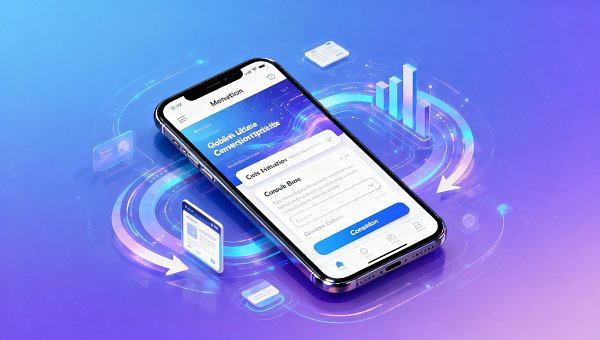
For a mobile digital marketing website to improve its lead capture rate, the key lies not only in traffic, but also in user experience and conversion design. Only by continuously optimizing user journeys, page loading, form setup, and trust building can visitors be more willing to proactively leave their information.
For integrated website + marketing service businesses, a mobile digital marketing website is not only a display window, but also an entry point for lead acquisition. Whether visitors are willing to inquire, book, or submit their needs often depends on their feelings and judgment within the first few seconds.
Yiyingbao Information Technology (Beijing) Co., Ltd. has been deeply engaged in intelligent website building, SEO optimization, social media marketing, and advertising for many years. Practice has shown that if mobile pages ignore scenario differences, even increased ad spending may only lead to a higher bounce rate.
First Identify the Scenario: Different Visit Intentions Determine Lead Capture Strategies
To improve conversions on a mobile digital marketing website, the first step is to see where users come from, why they come, and what they want to accomplish at this moment. Only by identifying the scenario first and then designing the page can lead capture optimization avoid staying superficial.
Even when visiting the homepage, users entering from search care more about solutions and credibility, users entering from ads care more about benefits and response speed, while users entering from social media value content appeal and interactivity more.
Therefore, a mobile digital marketing website should not have only one unified entry point. Instead, it should arrange corresponding above-the-fold information and lead capture actions around different channels, different keywords, and different conversion stages.
Search Traffic Scenario: Answer Questions First, Then Guide Inquiries
Visitors entering through organic search usually come with clear questions. At this time, the mobile digital marketing website should first respond quickly to their needs, such as service scope, delivery methods, case results, and pricing logic.
If the above-the-fold section contains only vague slogans, or if the content does not match the keywords, users will leave quickly. Search-oriented pages are more suitable for low-friction form buttons such as “Get a Solution”, “View Pricing”, and “Book a Consultation”.
Advertising Scenario: Present Benefits First, Then Shorten the Path
Users who enter through ad clicks have a shorter attention span. A mobile digital marketing website should explain its value within the above-the-fold section, such as “Increase Inquiry Volume”, “Shorten the Customer Acquisition Cycle”, and “Achieve a Closed-Loop Advertising Process”.
In this scenario, the page hierarchy must be shorter. Buttons should be clear, form fields should be fewer, and contact methods should be visible at all times. Each additional step in the path often significantly reduces the lead capture rate.
Social Media Communication Scenario: Build Interest First, Then Carry Conversion
Social media users are often attracted by content rather than making an immediate decision. In such scenarios, a mobile digital marketing website should strengthen case studies, viewpoints, and results displays, so users are willing to keep scrolling and gradually build trust.
For example, naturally integrating methodological resources into industry content pages can increase dwell time. Content entry points like On the Path of Enterprise Financial Management Informatization Construction Under the Background of the Digital Economy are suitable for capturing knowledge-interest traffic.
Breakdown of Typical Application Scenarios: Which Positions Most Affect Lead Capture Rates
In actual operations, lead capture issues on mobile digital marketing websites are usually concentrated in the above-the-fold section, content area, form area, and inquiry touchpoints. Different positions undertake different tasks, so it is not enough to simply place a form at the bottom and wait for users to fill it out.
Above-the-Fold Scenario: Clearly Explain What Can Be Solved Within 3 Seconds
The above-the-fold section is the highest-converting position on a mobile digital marketing website. The headline should be direct, the subheadline should explain service value, and the button should be clear. Avoid having large images fill the screen while no inquiry entry point is visible.
Priority can be given to presenting three types of information: target customers, core benefits, and immediate actions. If users still need to scroll repeatedly after the page loads to find the button, the lead capture rate is usually significantly affected.
Content Reading Scenario: Let Users Build Trust While Reading
Many mobile digital marketing websites have plenty of content, but lack conversion support. Case studies, processes, delivery cycles, team capabilities, and customer reviews should all appear interspersed with inquiry buttons, rather than being separated from each other.
When users read key paragraphs, concise call-to-action prompts can be inserted. For example, “Get an Exclusive Consultation” and “Receive the Solution Checklist”. This is more likely to trigger lead capture actions than placing only one form at the end of the article.
Form Submission Scenario: Reducing Concerns Is More Important Than Adding Fields
A form is not better just because it collects more information. A mobile digital marketing website should prioritize keeping only necessary fields, such as name, phone number, and requirement description. If company, budget, and job title are requested from the start, resistance is easily created.
At the same time, near the form it should be explained what users will receive after submission, such as a callback, solution, quotation, or demo. Clear returns can effectively improve willingness to fill out the form and the authenticity of submissions.
Under Different Scenarios, the Needs of Mobile Digital Marketing Websites Are Clear at a Glance
Scenario Adaptation Recommendations: Optimize Experience, Content, and Technology in Sync
- Keep a clear value proposition in the above-the-fold section, and set a fixed floating inquiry entry point.
- Compress the page loading time of the mobile digital marketing website as much as possible, avoiding large images and redundant scripts.
- Control form fields to 3 to 4 items, prioritize improving the submission rate, and then conduct secondary follow-up.
- Embed action buttons among case studies, processes, and FAQ to form a continuous conversion path.
- Add trust elements, such as years of service, real customers, data results, and privacy statements.
- Create independent landing pages for different channels instead of directing all traffic to the same page.
If content operations are relatively strong, topic-based articles can also be used to capture part of the demand and then guide inquiries. For example, embedding topic content like On the Path of Enterprise Financial Management Informatization Construction Under the Background of the Digital Economy again is more suitable for extending reading time and transitioning to lead capture.
Common Misjudgments: Why Lead Capture Rates Remain Low Even After Optimization
The first misjudgment is attributing lead capture rate problems entirely to traffic quality. In fact, the main issues of many mobile digital marketing websites lie in confusing page messaging, unclear buttons, and untimely post-submission feedback.
The second misjudgment is focusing only on visual design while ignoring loading speed. Mobile users face complex network environments, and every second of delay on a page may cost some potential leads.
The third misjudgment is hoping to collect all information at once. For first-time visitors, the higher the threshold for leaving information, the lower the willingness to submit. It is more realistic to first obtain valid contact information and then improve the details through follow-up communication.
The fourth misjudgment is the lack of continuous testing. Button copy, form order, case study placement, and above-the-fold headlines on mobile digital marketing websites can all be continuously improved through small-scale testing and iteration.
What to Do Next: Turn the Mobile Digital Marketing Website into a True Customer Acquisition Entry Point
To improve the lead capture rate of a mobile digital marketing website, you can start with four steps: sort out traffic sources, distinguish visit scenarios, redesign the above-the-fold section and forms, and establish data tracking. Only by seeing clearly at which stage the problem occurs can optimization have direction.
For integrated website + marketing service businesses, the truly effective solution is not isolated page redesign, but unified coordination of website building, content, SEO, advertising, and conversion design. In this way, traffic is more likely to turn into real business opportunities after entering the site.
If you are upgrading a mobile digital marketing website, you may first check whether the above-the-fold section is clear, whether the buttons are explicit, whether the forms are lightweight, and whether trust elements are sufficient. Once these fundamentals are done well, the lead capture rate often improves faster than simply increasing ad spending.
Related Articles
 B2B Enterprises Must Read! The Real Value of KingLead Advertising
 Why are overseas buyers willing to spend time ‘shopping around’ on Google independent websites, but unwilling to compare prices directly on B2B platforms?
 Still relying on Google for steel export inquiries? This combination strategy lets you secure orders directly!



Related Products
 EasyCamp SaaS Smart Website Marketing SystemE-Yingbao SaaS Smart Website Marketing System: AI-powered, zero-code website building. Rapidly launch multilingual independent e-commerce sites in just 10 minutes. Global server acceleration and AI-driven SEO optimization empower businesses to efficiently connect with global markets. The seamless integration of technology and user-friendly operation makes building e-commerce sites incredibly simple.
 AI+SEM Intelligent Advertising Marketing SystemAI+SEM drives intelligent ad creation, empowering full-funnel precision advertising marketing. The system automatically generates weekly/monthly reports, AI recommends keywords and target countries, monitors core metrics in real-time with intelligent alerts, and enables one-click high-conversion ad solutions to help quickly acquire customers and improve ROI.
 AI+SEO Dual Engine Optimization ServiceEasyWin AI+SEO Dual Engine Optimization System leverages AI-powered keyword mining, content generation, and comprehensive technical optimization to help foreign trade enterprises acquire high-quality organic traffic, significantly improving search rankings and conversion rates.
 AI+SNS Social Media Marketing SystemYingbao AI+SNS Social Media Marketing System - Precision social capture for the social media era. Supports one-click content synchronization across major platforms like Facebook and LinkedIn. AI intelligently rewrites posts for enhanced relevance. 24/7 AI customer service and user profiling analysis empower businesses to efficiently expand into global markets.
 AI+SEO营销解决方案易营宝AI+SEO营销解决方案,通过AI批量写作、智能生成TDK、精准关键词扩词等功能,全面优化网站SEO效果,提升流量与转化率。助力企业构建高效智能网站新生态。
 AI+SEM Advertising Marketing SolutionsAI+SEM Advertising Marketing Solution leverages AI technology to deeply empower SEM ad campaigns. It automatically generates weekly/monthly reports using AI, presenting account data across multiple dimensions for comprehensive insights into campaign performance and trends. The system precisely recommends keywords and target countries, intelligently generates high-conversion ad copy, and enables one-click activation of efficient campaign plans to help businesses rapidly acquire customers. Simultaneously, it monitors core metrics in real time, intelligently identifies abnormal fluctuations, and issues timely alerts to ensure stable, high-return advertising results.
 Domain Name ServicesEasyWin provides professional domain name services, including intelligent queries, one-stop registration, brand protection, and full lifecycle management, helping businesses build a digital brand image.
 EasyOperate B2C Cross-Border E-Commerce Platform & Independent WebsiteEasyStore B2C Cross-border E-commerce Independent Store is an intelligent website building and cross-border e-commerce integrated solution independently developed by EasyStore Information Technology (Beijing) Co., Ltd. The system is specially designed for small and medium-sized as well as large export enterprises, integrating 'website building, operation, marketing, advertising, and conversion' into one, helping enterprises quickly establish cross-border e-commerce independent stores to achieve brand globalization and global sales growth.
The platform supports multiple languages, multiple currencies, and multi-channel marketing, with built-in AI intelligent translation and SEO optimization systems, suitable for mainstream markets such as Southeast Asia, Europe and America, Latin America, and the Middle East, assisting Chinese manufacturing enterprises in efficiently deploying international e-commerce strategies. SSL证书易营宝提供专业SSL安全证书服务,包括单域名和泛域名证书,确保网站数据传输加密、身份验证和完整性保护,助力企业建立安全可信的在线业务环境。









