


I. What Exactly Is Inquiry Conversion, and Why Is It Not a Single Metric
Inquiry conversion generally refers to the process through which a visitor submits a form, makes an online inquiry, sends an email, clicks an instant communication tool, or initiates a quotation request on a website, thereby becoming a lead that can be followed up. It includes not only the submission action, but also lead quality and the potential for a subsequent transaction.
In B2B scenarios, inquiry conversion cannot be measured solely by the number of forms submitted. The lead's source, country or region, product fit, purchasing stage, budget, and project urgency all determine whether it is worth investing sales resources in.
Therefore, truly effective inquiry conversion should cover three levels: first, encouraging visitors to submit an inquiry; second, enabling the company to obtain sufficient information to assess the lead's value; and third, allowing the sales or operations team to move quickly toward a transaction at the right time.
If a website has traffic but no clear conversion path, even high visitor numbers will be difficult to turn into results. Conversely, well-structured pages, clear calls to action, and a stable follow-up mechanism are the foundation for sustained inquiry conversion growth.
II. The Core Principles of Inquiry Conversion: Traffic, Trust, Pathways, and a Feedback Loop
The technical principles behind inquiry conversion are not mysterious. They are essentially the result of user decision-making psychology working together with website interaction design. Visitors first arrive at a page through search engines, advertising, social media, or referrals, and then determine whether the company is trustworthy, whether the product is suitable, and whether communication is convenient based on the page content.
When a page can explain the product's purpose, supply capabilities, delivery conditions, relevant experience, and contact details within a short time, users' uncertainty decreases and their willingness to submit an inquiry increases. In contrast, vague content, scattered contact options, and slow loading can all lead to visitor loss.
From an execution perspective, inquiry conversion depends on the coordination of four stages: first, bringing targeted traffic to the appropriate page; second, establishing trust through the page; third, reducing the cost of taking action through forms or communication tools; and fourth, continuously refining the page and advertising strategy through data analysis.
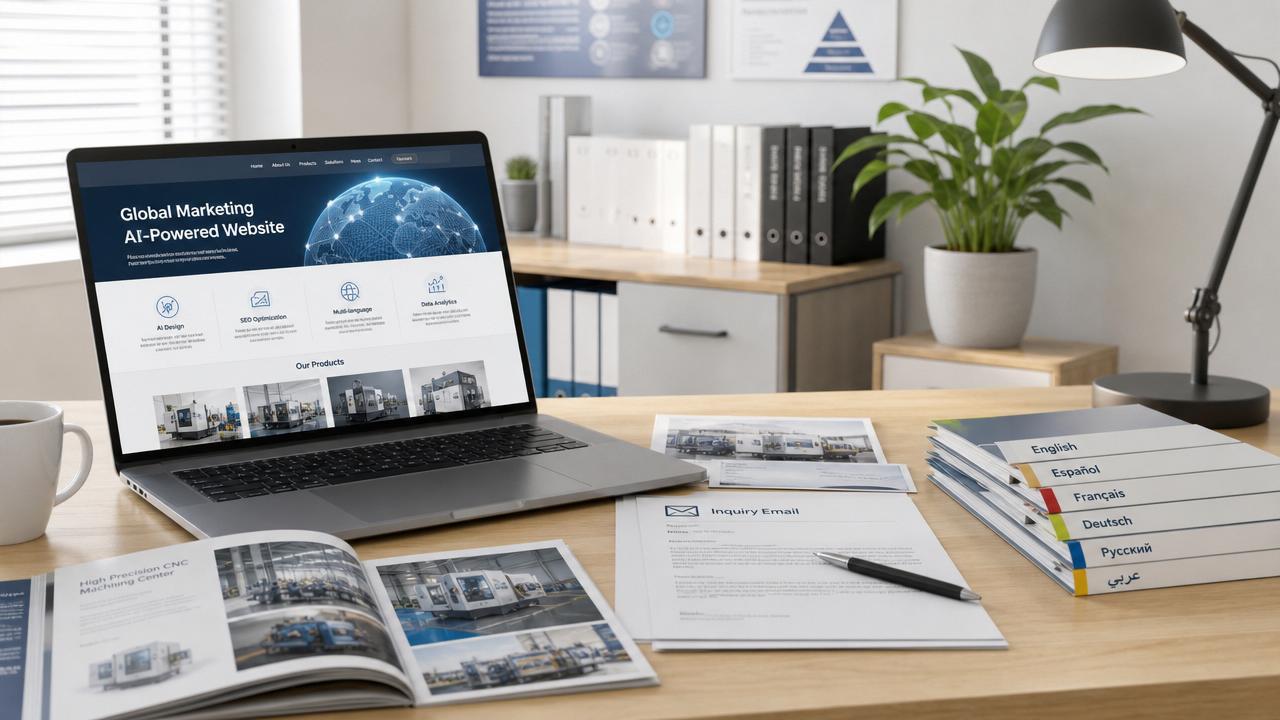
The value of 易营宝's AI-powered website building, multilingual independent websites, SEO optimization, advertising, and growth operations services lies in managing these four stages within one system, reducing the disconnect between “one team managing the website, another running promotions, and no one managing conversion.”
III. Main Categories: Different Inquiry Conversion Objectives Require Different Website Structures
From a business objective perspective, inquiry conversion can generally be divided into quotation inquiries, sample requests, project consultations, and channel partnership inquiries. Quotation inquiries focus more on fields such as model, quantity, and delivery location; sample requests place greater emphasis on specifications, materials, and application scenarios; and project consultations require more complete business background information.
From the perspective of traffic sources, inquiries can also be divided into organic search inquiries, advertising landing-page inquiries, social media referral inquiries, and repeat-purchase inquiries from existing customers. User intent varies significantly by source, so page content and form complexity should not follow a one-size-fits-all approach.
From the perspective of page conversion methods, common structures include direct inquiries from product detail pages, centralized conversion through campaign landing pages, multi-entry lead collection on brand websites, and quotation carts or order conversion in e-commerce scenarios. Companies should select an appropriate model based on product complexity and the decision-making cycle.
For export manufacturers and companies in the equipment and industrial product sectors, a combined structure of “product pages + case study pages + qualification pages + form pages” is often more suitable. In its B2B international trade marketing website development, 易营宝 designs inquiry conversion pathways around this purchasing logic.
IV. Who Most Needs to Prioritize Inquiry Conversion Optimization
Those who most need to optimize inquiry conversion are not limited to companies building new websites. Many factories, foreign trade companies, and cross-border brands already have websites, but common problems include pages that resemble electronic brochures, a lack of clear calls to action, and information that is not organized around purchasing decisions.
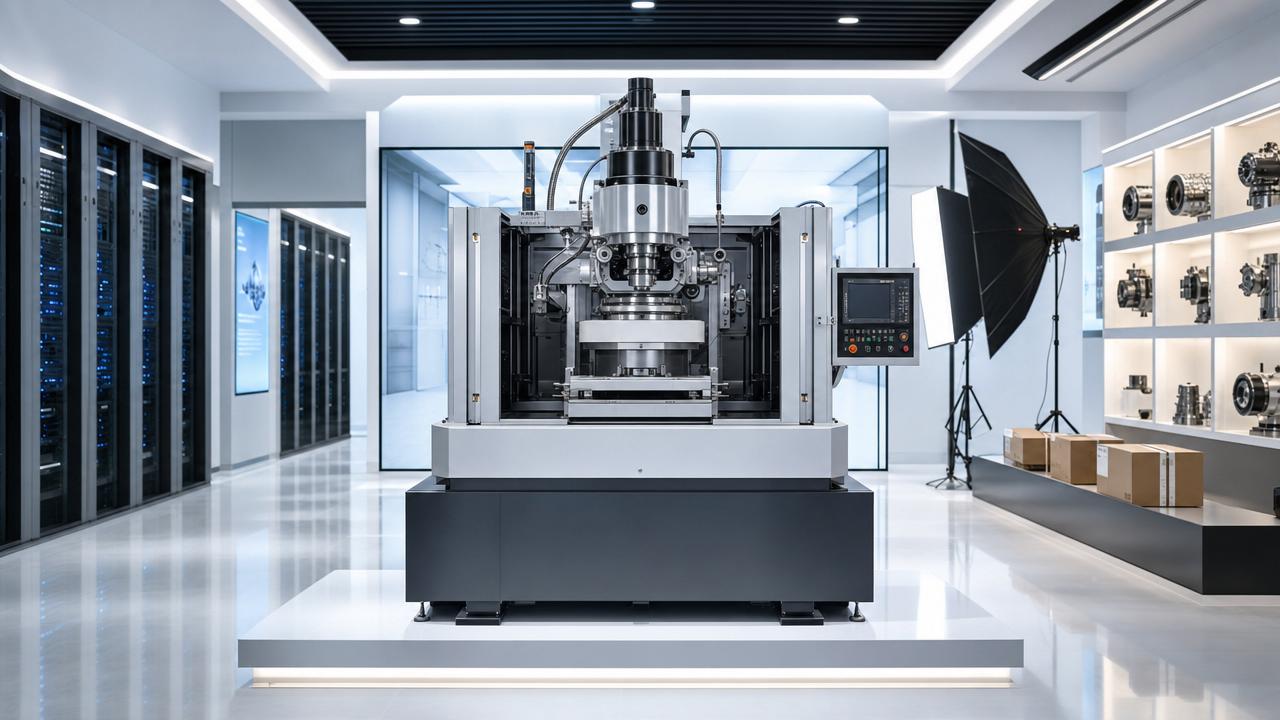
Manufacturing factories, OEM/ODM companies, machinery and equipment businesses, chemical material companies, new energy suppliers, and other high-order-value industries generally rely more on high-quality leads. For these businesses, a small number of highly relevant inquiries is often more valuable than a large number of low-intent messages.
For cross-border sellers and brands expanding internationally, inquiry conversion also serves to test market demand, validate product selling points, and build a private customer base. This capability of independent websites to generate leads becomes particularly important when platform traffic fluctuates or advertising costs rise.
If a company lacks a technical team, cannot build multilingual pages, or does not know how to conduct SEO or manage advertising traffic, adopting an integrated website-and-marketing solution such as 易营宝 is generally more effective at ensuring response speed and a closed data loop than distributing execution among multiple suppliers.
V. Application Scenarios and Selection Criteria: How to Determine Whether a Solution Is Truly Suitable
When determining whether an inquiry conversion solution is suitable, the first consideration is the target market. When targeting English-speaking countries, Russian-speaking markets, the Middle East, or Latin America, language versions, communication styles, and preferences for contact tools differ. Multilingual structures and localized content directly affect submission rates.
The second consideration is the website's fundamental capabilities, including responsive adaptation, loading speed, SSL security, stable overseas access, form usability, and the completeness of data tracking. Mobile experience is especially important because an increasing number of buyers first visit from mobile devices or switch through instant messaging tools.
The third consideration is content's ability to support conversion. A high-quality inquiry conversion page should not simply place a form on the page. It should combine product parameters, application scenarios, factory capabilities, delivery capacity, case studies, and frequently asked questions into an information package required for purchasing decisions.
The fourth consideration is ongoing operational capability. 易营宝's coordinated advantages in intelligent website building, AI content generation, Google SEO, advertising, and social media traffic acquisition make it suitable for companies seeking to upgrade their websites from display tools into assets that generate leads continuously, especially for B2B international trade inquiry websites.
VI. How: From Page Development to Quality Control, How Should Inquiry Conversion Be Implemented
When implementing inquiry conversion, the first step is not to rush into changing the form, but to first organize the page structure. The homepage is responsible for building trust and providing navigation, category pages are responsible for classification and filtering, product detail pages are responsible for explaining value, and landing pages are responsible for receiving a specific type of traffic in a focused manner.
The second step is to design form fields. Too few fields make it difficult to assess a lead, while too many fields raise the submission threshold. A relatively reliable approach is to retain the name, email address or other contact method, and inquiry description, then add key fields such as quantity, specifications, and country according to the industry.
The third step is to set up multiple communication options. In addition to forms, companies should provide email, WhatsApp, online customer service, and other methods to accommodate the communication preferences of customers in different countries. For B2B purchasing, whether customers can quickly find the right person is often directly related to whether they are willing to continue communicating.
The fourth step is to establish quality control and iteration mechanisms, including identifying spam inquiries, monitoring page bounce rates, analyzing conversion differences by source, and continuously testing headlines, buttons, form placement, and case study content. 易营宝's operations services are better suited to handling this type of long-term optimization rather than stopping after a one-time delivery.
VII. How Much: Key Factors Affecting Total Cost of Ownership and Return on Investment
When evaluating inquiry conversion, companies should not focus only on website development costs; they should also consider the total cost of ownership. This usually consists of website development, content production, multilingual maintenance, SEO optimization, advertising, social media operations, server and security configuration, data analysis, and manual follow-up costs.
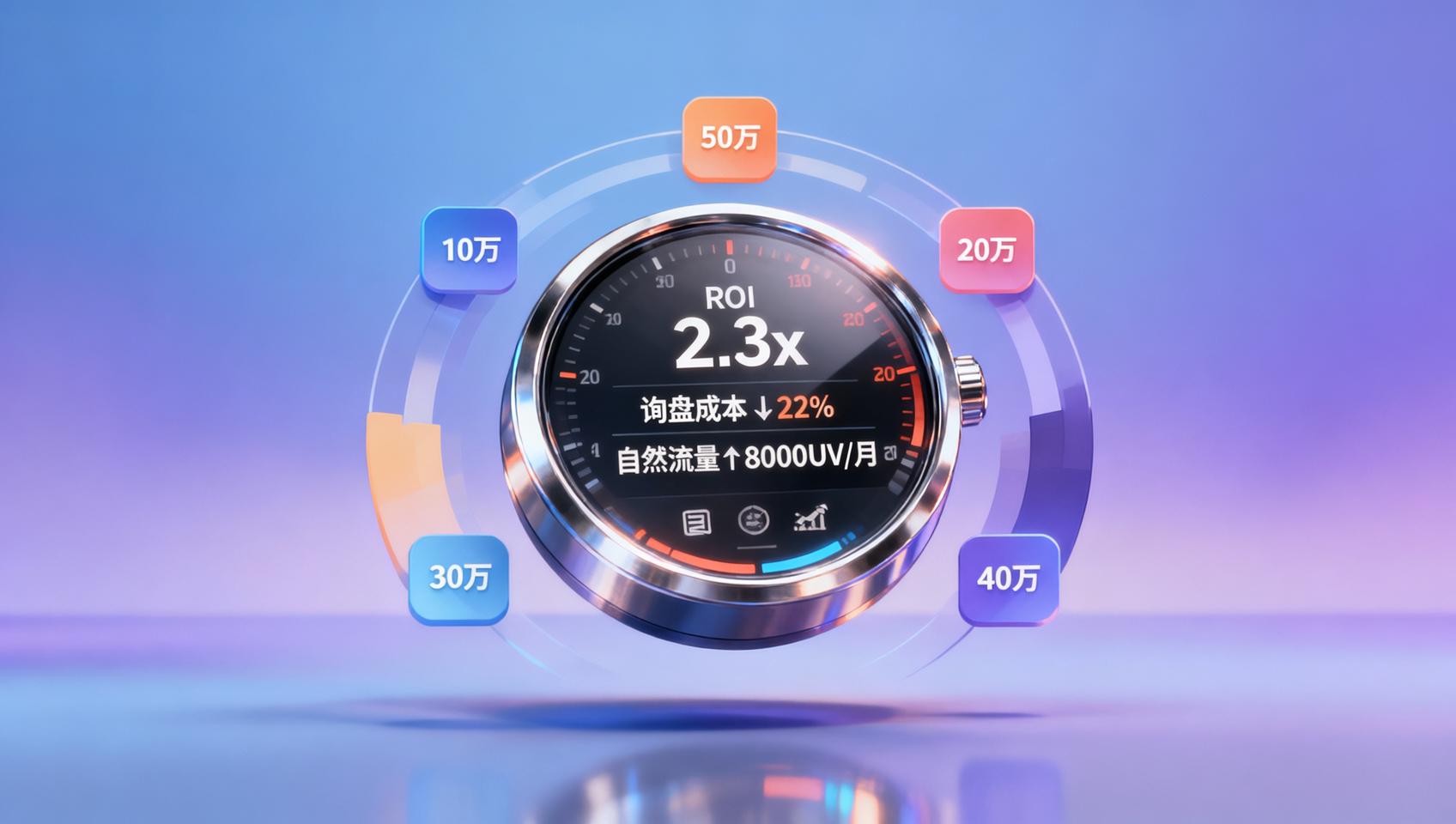
If the website structure is poor and the content is weak, companies often need to compensate for insufficient conversion with higher advertising spending, ultimately causing customer acquisition costs to continue rising. Conversely, once the page foundation is properly established, organic traffic, advertising conversion rates, and sales efficiency generally improve simultaneously, making ROI easier to stabilize.
From the perspective of purchasing decisions, it is advisable to compare three indicators first: the cost per qualified inquiry, the conversion rate from qualified inquiries to sales opportunities, and the cycle from sales opportunity to transaction. Only by considering these three metrics together can a company determine whether its investment is truly worthwhile.
易营宝's one-stop model helps reduce communication losses caused by collaboration among multiple parties, making it especially suitable for small and medium-sized enterprises. For companies without a complete overseas marketing team, placing website development, content, promotion, and inquiry conversion within the same system often makes it easier to control total costs.
VIII. Industry Trends: Future Inquiry Conversion Will Depend More on Multilingual Capabilities, AI, and Refined Operations
Three clear trends will emerge in inquiry conversion in the future. First, multilingual and region-specific expression will become the norm. More and more companies are no longer creating English-only websites, but are building localized pages for markets such as Russian-speaking, Spanish-speaking, and Arabic-speaking regions to improve reading comprehension and willingness to submit inquiries.
Second, AI will participate more deeply in content production, keyword expansion, ad copy generation, lead identification, and page optimization. However, companies still need to retain industry expertise and human review to ensure that the output is accurate, credible, and aligned with purchasing scenarios.
Third, inquiry conversion will shift from “single-point optimization” to “full-funnel operations.” From search engines, advertising, and social media to the website, followed by sales follow-up and data review, any weak link will negatively affect the final result. Experience serving industries such as laser engraving machines, steel, chemicals, machinery, new energy, medical care, and furniture also shows that cross-industry commonalities are becoming stronger.
Considering 易营宝's recent system releases, multilingual website-building capabilities, global acceleration network, and AI marketing capabilities, companies seeking to improve form submission rates, lead quality, and transaction efficiency should treat inquiry conversion as a long-term operational capability as early as possible, rather than as a temporary repair measure.
 How to determine the budget for building an international trade website? Six investment scenarios ranging from 50,000 to 500,000 RMB and their ROI calculation logic.How to determine the budget for building an international trade website? In-depth analysis of 6 real-world scenarios with budgets ranging from 50,000 to 500,000 RMB and the logic for ROI calculation, helping you avoid price-cutting traps and improve customer acquisition efficiency. Click to get your personalized ROI analysis report!
 Will AI Translation Affect Export ConversionsWill AI translation affect export conversions?The key is not simple literal translation,but localized expression,SEO keyword adaptation and customer trust building。This article analyzes the correct use of AI translation in multilingual website development,inquiry communication and overseas marketing,helping businesses improve qualified inquiries and conversion rates。
 Where to Look for Differences in Website Design QuotesDifferences in website design quotes should not be judged only by the number of pages,but more importantly by the scope of requirements,technical architecture,content planning,SEO optimization and conversion services。This article helps procurement teams identify low-price traps,establish evaluation criteria,and choose an integrated website building and marketing solution better suited to B2B customer acquisition and long-term growth。
 How YouTube videos can generate inquiriesYouTube not only boosts brand exposure but also creates an measurable lead growth path through content strategy, website landing pages, data tracking, and remarketing. Learn how businesses can use YouTube videos to reduce communication costs, improve lead quality, and choose integrated marketing services for sustained conversions.
 What Is GEO Optimization?Why Should Export Businesses Plan Ahead for AI SearchGEO optimization is becoming a new entry point for foreign trade enterprises to seize AI search traffic. This article analyzes the differences between GEO and traditional SEO, applicable scenarios, implementation risks, and integrated website + marketing service layout methods to help enterprises improve overseas exposure, AI citation probability, and high-quality inquiry conversion.
 How can foreign trade websites in the machinery industry improve inquiry conversionTo improve inquiry conversion for foreign trade websites in the machinery industry,companies should not only display products,but also optimize site structure,SEO content,case-based trust,and inquiry paths around buyer needs。This article analyzes an integrated strategy from website development,content,advertising to data optimization,helping machinery export enterprises acquire more targeted traffic and increase high-quality inquiries。
 How to evaluate pricing standards for foreign trade website developmentPricing standards for foreign trade website development should not be judged only by the quotation,but also by functional configuration,SEO architecture,inquiry conversion,long-term maintenance and marketing synergy。This article breaks down the factors affecting costs from a procurement perspective,helping enterprises determine whether the website development budget is reasonable and choose a more suitable integrated solution for overseas customer acquisition。
 How to Allocate a Foreign Trade Website Development BudgetHow can a foreign trade website development budget be allocated without waste?This article breaks down website development、SEO content、marketing conversion and ongoing operations investment from the perspective of financial approval,helping businesses identify key costs,choose an integrated website+marketing solution,and improve inquiry conversion and global customer acquisition ROI。