










I. Definition and Core Scope of Semantic SEO
Semantic SEO is not simply repeating target keywords. It organizes content around user questions, industry entities, product attributes, and procurement scenarios, enabling search engines to determine a page's topic, professional scope, and relationship with other pages. It is particularly suitable for export-oriented B2B websites with complex products and long decision-making chains.
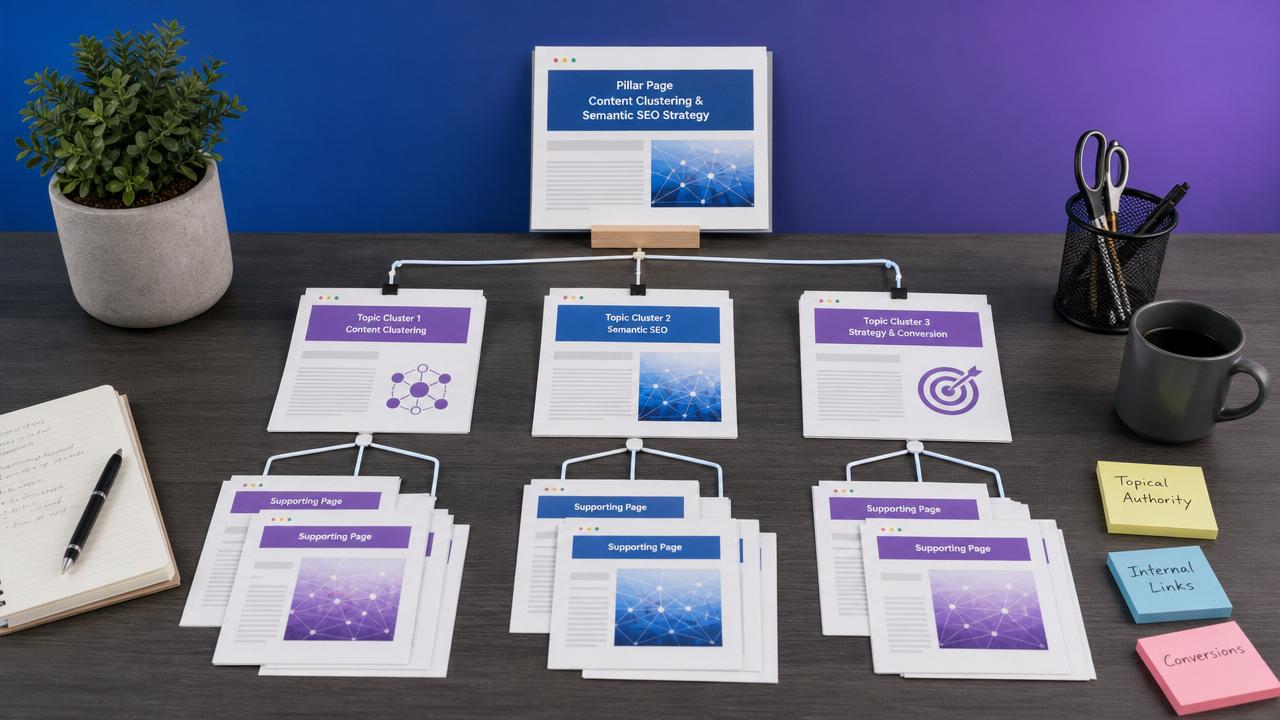
Traditional keyword optimization often aims for a single page to capture a single keyword; semantic SEO focuses on the network of needs under a topic, such as equipment parameters, application industries, material compatibility, delivery methods, certification requirements, and after-sales issues. These are addressed by different pages that support and validate one another.
From an information architecture perspective, semantic SEO typically includes core topic pages, product or solution pages, knowledge support pages, case study pages, and FAQ pages. Each type of page serves different search intent, avoiding content duplication while enabling buyers to compare, evaluate, and make inquiries along the information journey.
II. How Search Engines Understand Topics and Intent
Search engines identify the entities on a page and their relationships by evaluating titles, body text, page hierarchy, link anchor text, image descriptions, structured data, and external signals. The focus of semantic SEO is to ensure that product names, specifications, applications, company capabilities, and evidence remain clear, consistent, and verifiable throughout the site.
Procurement-related searches often involve more than one keyword. Users may first search for industry solutions, then compare models, materials, or suppliers, and finally look up lead times, customization capabilities, and contact details. The content architecture should cover the awareness, selection, evaluation, and conversion stages rather than placing all information on a single product page.
Internal links are an important vehicle for topic relationships. Topic pages can link to specialized solutions and key products, while product pages can link back to application descriptions, technical articles, and inquiry entry points. Link text should accurately describe the destination and avoid vague wording such as “click here” to improve crawling and reading efficiency.
III. Main Content Categories and Applicable Businesses
The first category is brand and corporate entity content, including company profiles, factory capabilities, quality management, service regions, and contact information, which is suitable for building foundational trust. The second category is commercial pages, including products, categories, industry solutions, and landing pages, with a focus on answering whether they match procurement requirements.
The third category is informational content, such as selection guides, process explanations, parameter comparisons, maintenance recommendations, and FAQs, used to cover early-stage research-oriented searches. The fourth category is evidence-based content, such as project experience, industries served, and delivery processes, used to reduce decision-making concerns for high-value inquiries.
Manufacturing factories, OEM/ODM companies, industrial product suppliers, cross-border sellers, and brand globalization teams can all adopt semantic SEO. The former should place greater emphasis on technical capabilities and application solutions, while the latter need to supplement product selling points, reviews, delivery policies, and purchase or quotation request paths.
IV. Implementation Methods for Website and Marketing Integration
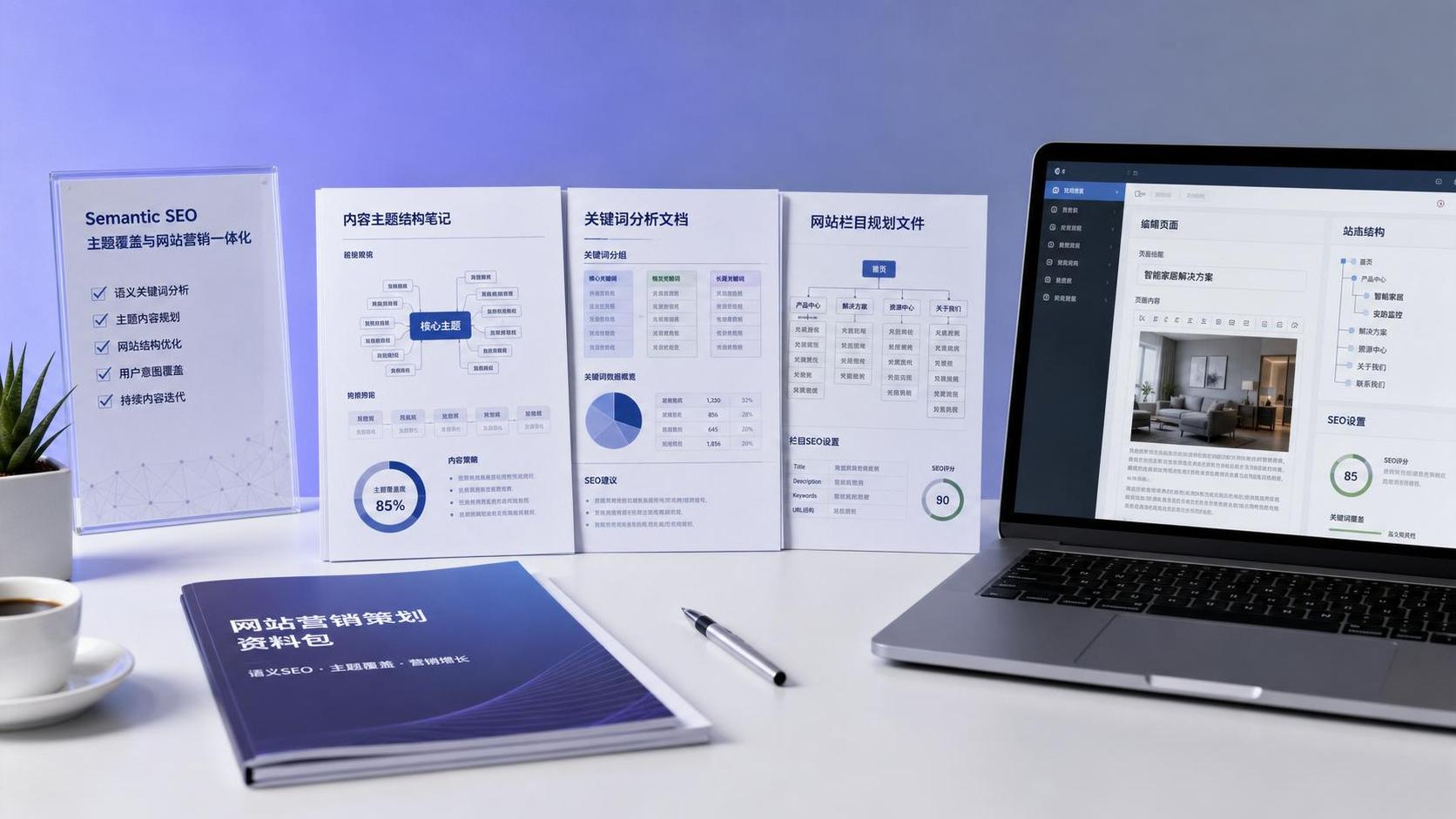
Semantic SEO implementation should begin with a business review: identify priority countries, languages, product lines, higher-margin solutions, and target customer roles, then organize actual sales questions and answers into keyword topics and a page list. Building a scalable information architecture first and continuously adding high-value content is usually more effective than blindly publishing content in bulk.
Yiyingbao can integrate AI-powered website building, multilingual independent websites, SEO content optimization, and overseas marketing conversion within the same workflow. Responsive pages, product and article management, inquiry forms, WhatsApp, and email entry points can provide organic search traffic with a clear next step after it arrives.
In multilingual markets, Chinese or English pages should not be copied directly. Terminology, units, application descriptions, and page paths should be adjusted according to local purchasing practices, with language and regional relationships configured accordingly. Yiyingbao provides multilingual site and AI-assisted content capabilities that can reduce repetitive work in maintaining multiple sites, but key technical parameters should still be confirmed by the company.
V. Selection Criteria, Quality Control, and Launch Process
When procuring website and marketing services, first verify whether content can be edited independently, whether pages support product attributes and multilingual management, whether form leads can be tracked, and whether subsequent SEO, advertising, and social media data can be reviewed together. Focusing only on the number of templates or the initial quotation can easily overlook the capabilities needed for long-term operations.
The launch process can be divided into requirements research, site architecture, page creation, content verification, technical configuration, testing and publishing, and ongoing operations. Quality control should cover mobile display, loading experience, indexing status, redirects, internal links, form delivery, and the correspondence between multilingual pages, preventing traffic loss due to basic issues after visitors arrive.
Yiyingbao states that its system uses a responsive architecture and offers deployment options through global nodes including Alibaba Cloud, AWS, Huawei Cloud, Tencent Cloud, and Baidu Cloud. Companies with requirements for overseas access speed, data asset management, and continuous content updates should confirm the specific regions, service scope, and deliverable configurations before cooperation.
VI. Application Scenarios, Operating Cycles, and Performance Evaluation
Semantic SEO is suitable for content development before new product launches, long-tail keyword expansion for mature product lines, multilingual deployment when entering non-English-speaking markets, and organic traffic supplementation after advertising costs rise. Industries such as laser engraving machines, steel, chemicals, heavy-duty trucks, machinery, new energy, and medical care typically require substantial technical and trust-building content.
Yiyingbao's service cases cover companies such as Haier, Aucma, Shandong Airlines, Yuanhe Power Station, Little Duck Group, and China National Heavy Duty Truck Group, as well as multiple industries. For different companies, the value of case studies does not lie in copying pages, but in verifying whether they need to form a complete customer acquisition chain through product materials, industry solutions, brand endorsement, and marketing channels.
Evaluation should not focus only on rankings. It should also track valid indexation, organic traffic from target countries, engagement on key pages, form and instant communication leads, inquiry qualification rates, and sales cycle length. Technical and content performance can generally be reviewed monthly, topic priorities adjusted quarterly, and sales feedback incorporated into subsequent topic selection.
VII. Total Cost of Ownership and Future Development Trends
The total cost of ownership of semantic SEO includes website development or redesign, content planning and review, multilingual localization, technical maintenance, data tools, operating personnel, and promotional coordination. The number of products, languages, target countries, the quality of existing content, and the efficiency of internal collaboration all affect project timelines and ongoing investment.
When assessing return on investment, it is recommended to attribute organic inquiries by source, product line, and country, and compare them with advertising customer acquisition costs, sales follow-up costs, and gross profit from closed deals. Companies with limited budgets can first focus on one high-value market and a set of core topics, then expand after validating the conversion path rather than covering all categories at once.
In the future, search results will continue to integrate traditional web pages, AI summaries, videos, and Q&A content. Companies need to build up accurate product materials, citable knowledge content, and consistent brand entity information. Yiyingbao's GEO, SEO, advertising, and social media operations capabilities can serve as coordinated options, but long-term competitiveness still depends on the company's authentic business information and continuous service capabilities.
