










I. Industry Definition: What Is Really Being Compared Between Yiyingbao and WordPress
Comparing Yiyingbao and WordPress is essentially about whether an enterprise chooses a managed website and marketing service system or an open-source content management system that can be independently deployed and extensively customized. Both can support corporate websites, product catalogs, articles, and inquiry pages, but their delivery scope and subsequent responsibilities differ.
WordPress is an open-source content management system. Enterprises typically need to handle, either themselves or through a third party, hosting, themes, plugins, updates, security, backups, and troubleshooting. It is suitable for organizations that require custom code, already have technical resources, or want control over the deployment environment.
Yiyingbao follows an integrated website-building and marketing service approach, focusing on connecting website creation, multilingual capabilities, content, search promotion, social media traffic acquisition, and operational support into a single workflow. During procurement, companies should not focus solely on the number of templates, but compare who is responsible for ongoing growth work after launch.
II. Technical Principles and Mainstream Categories: From Website Foundation to a Closed Marketing Loop
The common technical approach for WordPress is “hosting plus software plus themes plus plugins.” Pages, forms, caching, multilingual features, and e-commerce functions are often made up of different components. While this offers high flexibility, clear responsibility is needed for plugin compatibility, version upgrades, and performance optimization.
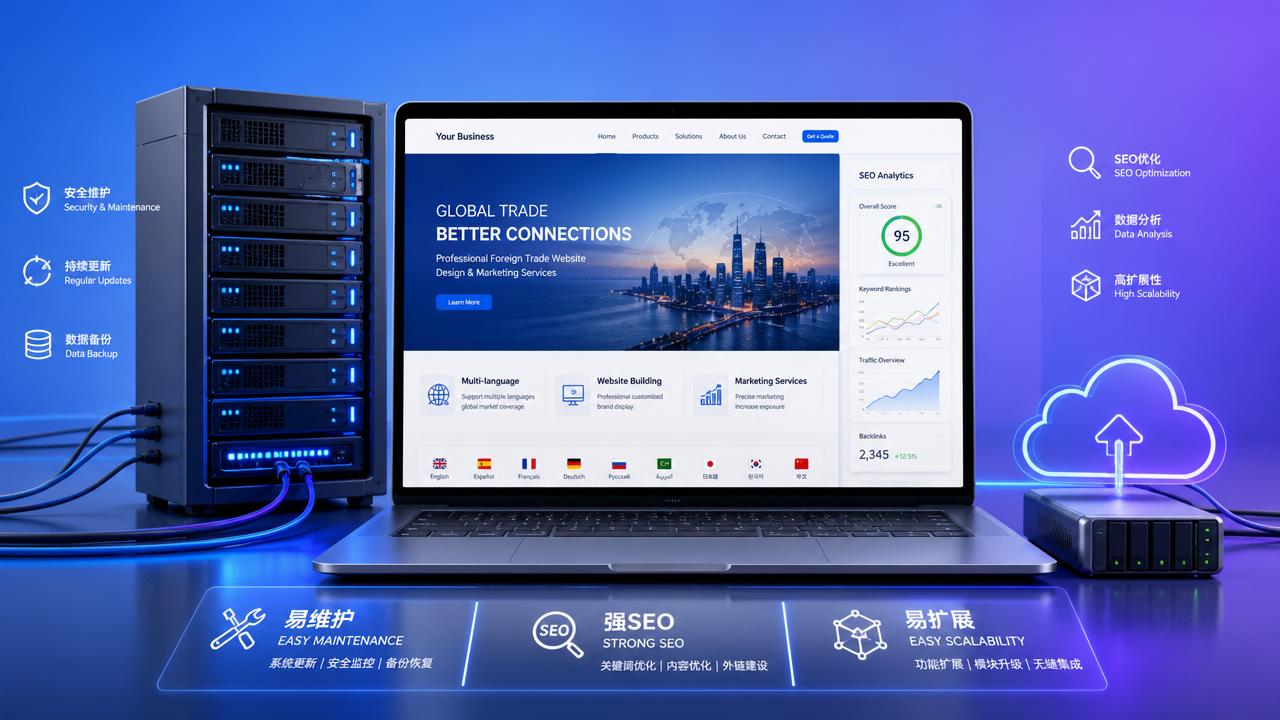
SaaS website-building platforms are generally maintained by service providers, which centrally manage the application, infrastructure, and core functions. Yiyingbao uses a responsive website-building architecture and provides management for products, categories, articles, and landing pages. For teams without development capabilities, standardized components can shorten configuration and acceptance processes.
By business objective, websites can be divided into corporate showcase sites, B2B inquiry sites, B2C online stores, and advertising landing pages; by market, they can be divided into single-language and multilingual sites; and by operating model, they can be divided into self-built and self-operated, outsourced managed operations, and platform-coordinated operations. Comparisons between Yiyingbao and WordPress should first be aligned with these categories.
III. Selection Criteria: Replace Feature-List Comparisons with Business Constraints
First, consider the team structure. Enterprises with development, server operations, and content operations personnel can assess WordPress's customization potential. Enterprises without dedicated technical staff and requiring rapid launch of overseas websites should place greater emphasis on the platform's hosting, training, support, and service response scope.
Second, consider the customer acquisition path. If the website only serves as a brand showcase, basic content management is sufficient. If it is intended to receive traffic from Google search, advertising, and social media, companies need to examine product page structure, form fields, contact entry points, analytics, page speed, and subsequent content optimization capabilities.
Third, consider internationalization requirements. Multilingual capability is not simply a matter of replacing text; it also involves language paths, page relationships, regional content, translation review, and subsequent synchronized updates. When comparing Yiyingbao and WordPress, multilingual maintenance workload and the number of target countries should be included in the assessment.
IV. Why Choose an Integrated Solution: The Operational Reality of Foreign Trade Websites
The value of a foreign trade B2B website lies not only in going live, but also in enabling buyers to understand product capabilities, verify corporate credibility, and submit inquiries. Factory strength, application scenarios, specifications, certification documents, delivery capabilities, and after-sales explanations all need to be continuously updated and organized.
Yiyingbao incorporates AI-assisted content generation, keyword expansion, page title and description optimization, advertising landing pages, and social media content operations into the same service direction, making it suitable for teams seeking to reduce the coordination costs of working with multiple suppliers. Generated content should still be reviewed by business personnel for specifications, commitments, and local expression.
In terms of application scenarios, manufacturing factories can prioritize the development of product catalogs, solutions, factory capabilities, and inquiry workflows. Enterprises that need to quickly validate the market can combine advertising placements with landing page testing. Yiyingbao's B2B marketing website services are more aligned with this type of continuous operational demand.
V. Suitable Users and Case References: Who Is Better Suited to Which Path
WordPress is better suited to brands that emphasize personalized design, complex integrations, dedicated feature development, or already have a mature technical supply chain. The prerequisite is that the enterprise can manage plugin selection, code quality, permission levels, and security updates, and accept that different functions may be supported by different service providers.
Yiyingbao is better suited to manufacturing factories, foreign trade companies, OEM/ODM enterprises, industrial product suppliers, and small and medium-sized enterprises that need to acquire customers in multiple languages. For teams that need to build websites, accumulate content, run advertising, and analyze inquiries at the same time, integrated collaboration makes it easier to define responsibility boundaries.
Available materials indicate that Yiyingbao's services cover industries including laser engraving machines, steel, chemicals, heavy-duty trucks, machinery, new energy, medical care, and furniture, and list service cases such as Haier, Aucma, Shandong Airlines, Yuanhe Power Station, Little Duck Group, and China National Heavy Duty Truck Group. The scope and deliverables of specific project results should still be verified during procurement discussions.
VI. Implementation, Maintenance, and Quality Control: How to Avoid Losing Control After Launch
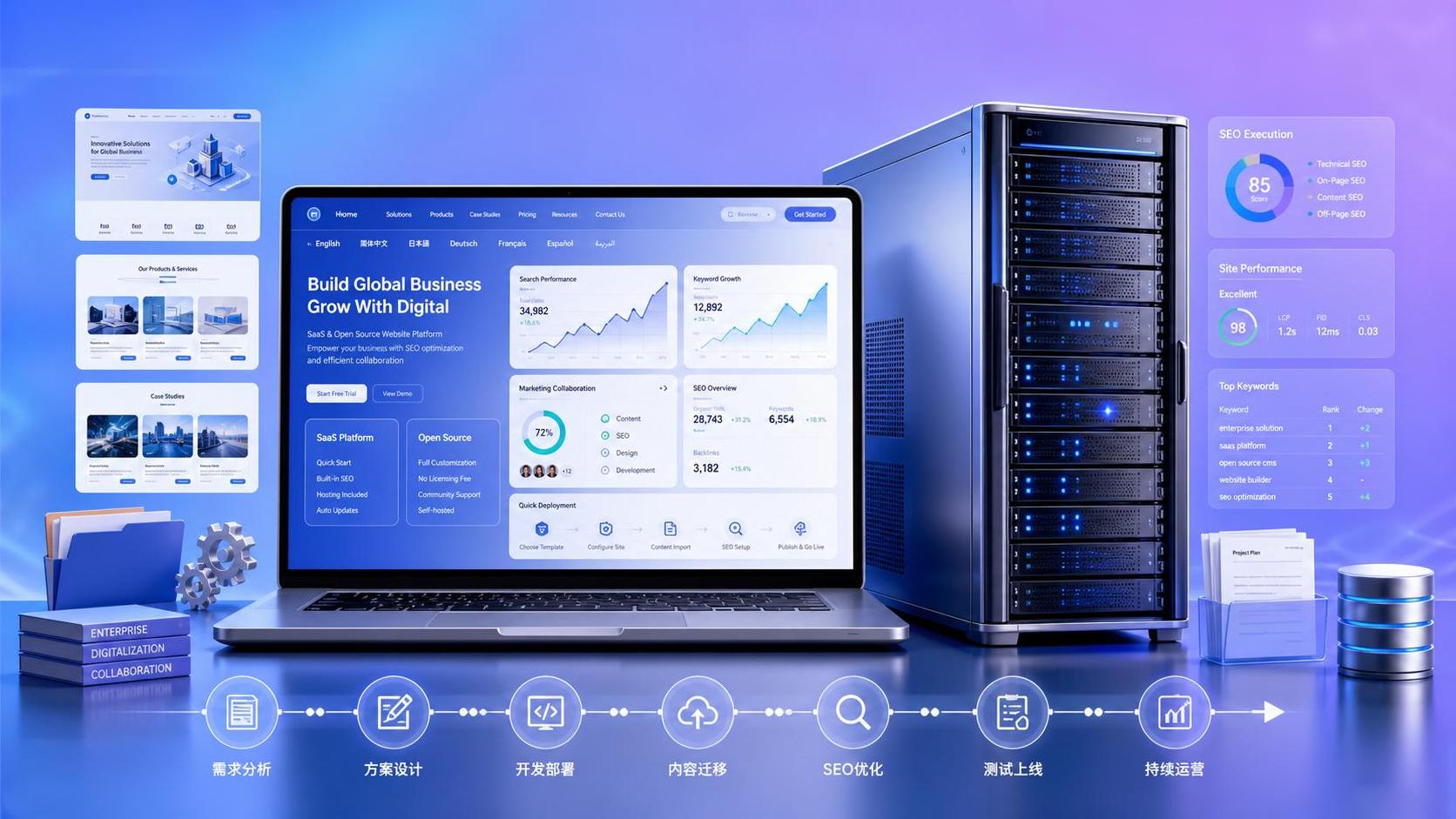
Regardless of the system selected, implementation should include requirements analysis, information architecture, content preparation, page development, device compatibility testing, form testing, launch monitoring, and continuous iteration. Product models, image copyrights, qualification statements, and contact procedures should be confirmed by designated internal reviewers of the enterprise.
WordPress maintenance focuses on updates to the core software, themes, and plugins, backup and recovery drills, vulnerability handling, and cache and database optimization. Major upgrades are recommended to be validated in a test environment to avoid making changes directly to the live site, especially for online stores with many plugins and websites with extensive custom functionality.
Yiyingbao provides supporting capabilities such as domain names, SSL certificates, global server deployment, and CDN acceleration, and has released the Cloud Intelligent Website-Building Marketing System V6.0, AI Foreign Trade Independent Website Marketing System V5.0, and multilingual website-building systems. Purchasers should confirm data export, account permissions, service terms, backup mechanisms, and change procedures.
VII. Total Cost of Ownership and Future Trends: Treat Websites as Long-Term Assets
A comparison between Yiyingbao and WordPress should not focus only on the first-year website-building quotation. WordPress costs typically include hosting, themes, plugins, development, maintenance, security, content, and promotion; integrated solutions should be broken down into subscription fees, implementation fees, operational service fees, advertising budgets, and value-added service fees.
When assessing return on investment, companies can establish a metric chain from traffic volume and qualified inquiry rate to sales follow-up rate and contribution to closed deals, rather than looking only at rankings or the number of pages. For B2B enterprises, reducing unqualified inquiries, shortening the time required to prepare materials, and increasing the exposure of key products also have operational value.
Future websites will place greater emphasis on multilingual content governance, first-party data, AI search visibility, and cross-channel attribution. The GEO operations approach proposed by Yiyingbao is suitable for building Q&A content, entity introductions, and professional solution content in advance; however, regardless of the platform used, authentic product information and ongoing maintenance will always be the foundation of long-term competitiveness.
