What Is a Marketing-Oriented Foreign Trade Website? — A Paradigm Shift from Display Window to Growth Engine
A marketing-oriented foreign trade website is not simply a page displaying company information, but a digital growth hub deeply customized for B2B international procurement scenarios. At its core, it is an integrated platform driven by overseas buyers' search behavior, decision-making journeys, and trust-building logic, combining product presentation, multilingual content, inquiry conversion, SEO structure, social media traffic acquisition, and AI optimization capabilities.
Unlike static corporate websites or basic standalone sites, a true marketing-oriented foreign trade website has three essential characteristics: first, a technical architecture built on visibility in search engines such as Google/Bing/Yandex; second, a content system organized around buyers' key concerns, including factory capabilities, certifications, minimum order quantities, delivery lead times, and proven cases; third, a conversion closed loop integrating WhatsApp online customer service, multilingual inquiry forms, real-time chat, and automated email distribution.
In 2026, as AI search tools such as Google AI Overviews and Perplexity become new entry points for procurement decisions, marketing-oriented foreign trade websites also need GEO (Generative Engine Optimization) capabilities—using structured Q&A, enhanced entity information, and credible knowledge accumulation to ensure that brands are accurately cited and recommended in AI summaries, truly achieving the goals of being “searched, understood, trusted, and selected.”
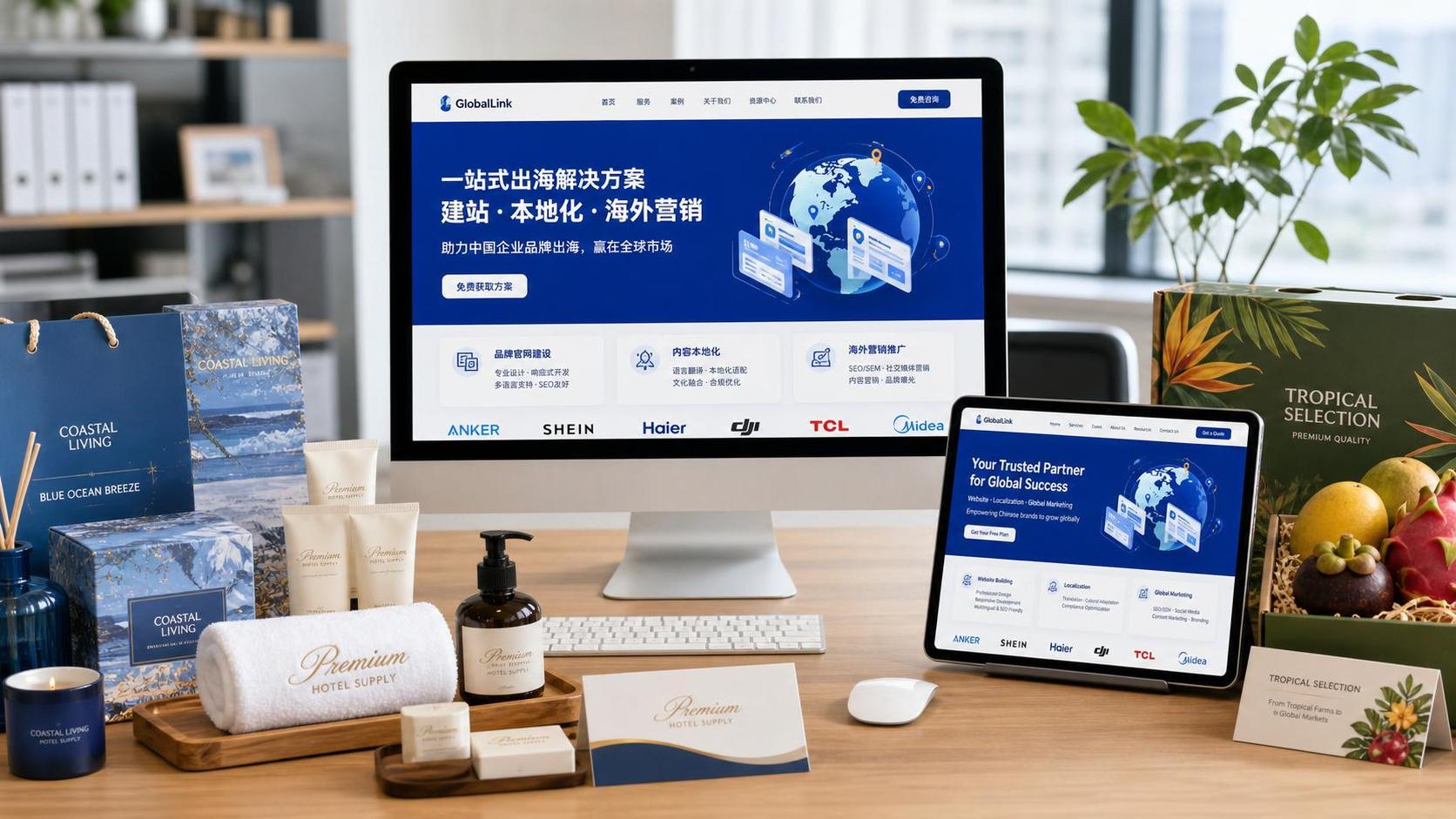
The marketing-oriented foreign trade website defined by Yiyingbao is precisely a practical vehicle for this evolution: built on AI-powered website development, with multilingual capabilities + SEO + SEM + SNS + GEO as four major growth engines, it creates a digital global expansion operating system covering the entire journey of website development, customer acquisition, conversion, and repeat purchases.
Why Upgrade to a Marketing-Oriented Foreign Trade Website? — Breaking Through Three Major Growth Bottlenecks in B2B Global Expansion
Traditional foreign trade websites commonly face a triple dilemma: “a website without traffic, traffic without inquiries, and inquiries without trust.” After launch, Google indexing is slow and keyword rankings remain low; advertising ROI fluctuates sharply, and traffic stops as soon as advertising is paused; even when visits are obtained, pages lack support for procurement decisions, leaving conversion rates below 3% for the long term. Behind these issues lies the failure to rebuild websites according to B2B marketing logic.
Yiyingbao's solution addresses these pain points directly: its AI-powered website development system shortens the website-building cycle to 3–7 days while simultaneously completing PC/mobile responsiveness, multilingual site development, and basic SEO configuration; the AI+SEO dual engine can generate product descriptions and industry articles in batches based on Google search intent, improving content depth and keyword coverage density; meanwhile, GEO optimization services establish an early presence in the AI search ecosystem, enabling tools such as ChatGPT to automatically present company qualifications, certifications, and real cases when answering “best supplier of laser engraving machines in China,” significantly enhancing professional credibility.
More importantly, the “integrated website + marketing services” model completely breaks down the separation between website development and operations. Yiyingbao provides continuous operational services from website delivery to first-month SEO ranking monitoring, advertising account management, and social media content updates, enabling small and medium-sized enterprises to obtain stable and predictable inquiry growth without building overseas digital teams. Clients such as Haier and China National Heavy Duty Truck Group have confirmed that, after adopting this model, the share of inquiries from organic search increased to 42% within six months, advertising costs decreased by 28%, and inquiry quality—such as inquiries containing clear product model and quantity requirements—increased by 3.2 times.
This is not only a technology upgrade, but also a strategic shift that enables B2B global expansion companies to move from “passively responding” to “actively influencing procurement decisions.”
Who Needs a Marketing-Oriented Foreign Trade Website? — Precisely Matching Eight High-Potential Global Expansion Segments
Marketing-oriented foreign trade websites are not universal templates; the value they deliver depends heavily on company type and stage of global expansion. Typical clients served by Yiyingbao include manufacturing factories that need to highlight production line visuals, ISO certifications, and OEM/ODM capabilities; foreign trade companies that emphasize multi-category supply chain integration and rapid response; OEM/ODM service providers focused on R&D design, sample lead times, and compliance certifications; industrial product suppliers that strengthen technical parameters, application cases, and after-sales support; and new energy and machinery equipment companies that highlight patented technologies, market access qualifications in export countries, and localized service networks.
In addition, manufacturers transforming into global brands, cross-border sellers seeking Shopify alternatives, and DTC brands aiming to reduce dependence on Amazon are also well suited to this solution. These clients share common characteristics: they have their own products or core technologies but lack overseas digital infrastructure capabilities; they already have offline channels or trade show resources and urgently need online inquiries to supplement growth; and they have limited budgets but require highly predictable returns. Through modular service combinations, such as enabling only AI website development + multilingual capabilities + basic SEO, Yiyingbao supports clients in starting according to their needs and avoiding the risks of one-time investment.
It is worth noting that clients in highly regulated industries such as agricultural food, medical devices, and chemicals have extremely high requirements for multilingual content localization and compliant regulatory wording. Yiyingbao's AI Translation Center not only supports major languages such as Russian, Arabic, and Spanish, but also includes industry terminology databases and local expression verification mechanisms to ensure that key information such as “FDA registration” and “Halal certification” is accurately communicated in target markets, avoiding legal and trust risks.
The Xiaoya Group case shows that after launching a multilingual marketing-oriented website, 67% of inquiries for its commercial refrigerated cabinet products in the Middle East market specifically mentioned “GCC certification” and “in-stock inventory at the Dubai warehouse,” directly increasing the efficiency of signing local distributor agreements by 50%.
How to Build a High-Quality Marketing-Oriented Foreign Trade Website? — 12 Essential Core Modules
A truly effective marketing-oriented foreign trade website consists of 12 mutually supporting core modules, none of which can be omitted: ① responsive front-end architecture to ensure 100% compatibility across global devices; ② a multilingual site management hub supporting hreflang and regional paths; ③ an AI-assisted content generation engine covering product pages, FAQs, and solution pages; ④ B2B-specific conversion components, including multi-level inquiry forms, one-click WhatsApp redirection, and automated email distribution; ⑤ a factory capability visualization system with production line videos and interactive certification displays; ⑥ a procurement decision support module with MOQ information, payment methods, and delivery lead-time calculators; ⑦ a multi-dimensional SEO structure covering category hierarchy, internal link matrices, and dynamic TDK generation; ⑧ a GEO optimization layer featuring Q&A knowledge graphs, structured data markup, and AI-summary-friendly pages; ⑨ an overseas access acceleration network with global CDN nodes and latency <100ms; ⑩ social media traffic landing pages with dedicated Facebook/TikTok landing page templates; ⑪ a data tracking and conversion attribution system distinguishing trade show, advertising, and organic search sources; and ⑫ an operations dashboard for real-time monitoring of inquiry sources, keyword rankings, and page bounce rates.
Yiyingbao's V6.0 intelligent website-building platform has productized all of the above modules. For example, its GEO engine automatically identifies user query intent and turns “how to choose a reliable CNC machine supplier” into an FAQ page connected to corporate technical white papers and customer case videos; meanwhile, the procurement decision support module allows buyers to enter order quantities and calculate FOB prices and estimated delivery times in real time, substantially increasing their willingness to submit contact information. This design logic, deeply coupled with procurement behavior, is precisely the differentiated barrier that traditional website-building tools cannot achieve.
The Aokema laser equipment case confirms that after enabling the complete 12-module configuration, the average time spent on its German product pages increased from 48 seconds to 217 seconds, inquiry conversion rates rose from 1.8% to 9.3%, and 76% of inquiries included specific technical parameter requirements, greatly shortening the sales follow-up cycle.
The modular design also ensures scalability—clients can first launch the six core modules of website development + multilingual capabilities + SEO + inquiries + acceleration + basic analytics, then gradually activate advanced capabilities such as GEO, social media, and intelligent advertising according to business progress, achieving precise alignment between investment and growth.
Key Points for Localized Adaptation — A Deep Cultural Project Beyond Language Translation
Multilingual does not equal localization. Localization for marketing-oriented foreign trade websites must go beyond the surface of language and deeply address procurement habits, trust mechanisms, and decision-making logic in target markets. For example, Middle Eastern clients value religious compliance and local agency qualifications, so pages need to include Halal certification icons and Dubai office contact information; German buyers focus on environmental standards and energy efficiency ratings, so product pages must indicate CE, RoHS, and specific energy consumption figures; Latin American markets, meanwhile, prefer highly interactive content and require Spanish-language live-stream appointment portals and WhatsApp group links.
Yiyingbao's AI Translation Center adopts a three-layer localization strategy: the first layer verifies terminology consistency, ensuring that “stainless steel grade 304” is accurately translated as “acier inoxydable de qualité 304” on French sites rather than translated literally; the second layer adapts wording to culture, transforming the Chinese phrase “热销爆款” into the Spanish phrase “producto más vendido en Europa” to avoid cultural ambiguity; the third layer reconstructs SEO localization by deploying a separate keyword database for the Brazilian Portuguese market, covering long-tail terms such as “fornecedor de máquinas CNC no Brasil” rather than simply copying English keyword lists.
The Shandong Airlines case demonstrates that its English site emphasizes its global route network and IATA certification, while its Japanese site highlights its ground service team at Tokyo Narita Airport and details of its cooperation with All Nippon Airways. This localized content increased the share of Japanese B2B client inquiries asking “whether technical personnel can be arranged to travel to Japan for commissioning” to 41%, directly resulting in two maintenance service contracts.
In addition, localization includes compliance adaptation at the technical level: EU sites enable GDPR Cookie pop-ups and privacy policy links by default; Saudi sites mandate HTTPS encryption and preconfigure SAMA financial regulatory statements; all multilingual pages pass W3C validation to ensure barrier-free crawling and indexing by search engines such as Yandex and Google.
2026 Trends and Investment Recommendations — From Cost Center to Growth Hub
Over the next three years, marketing-oriented foreign trade websites will accelerate in three directions: first, AI-native development, where website content, advertising copy, and social media posts are dynamically generated by AI based on real-time market data; second, the normalization of GEO, where companies need to operate their official websites over the long term as authoritative knowledge sources for AI search; third, integrated operations, where website development, SEO, advertising, and social media data are fully connected to form a single customer journey view. This means that websites will no longer be isolated projects, but enterprise-level growth hubs.
For procurement decisions, total cost of ownership (TCO) should not be assessed solely based on website-building costs; customer acquisition cost (CAC) and cost per lead (CPL) must also be evaluated. Yiyingbao client data shows that for companies adopting an AI+SEO strategy, the CPL of organic search inquiries within six months is only 1/5 of Google Ads; after GEO optimization is enabled, high-intent inquiries from AI search account for 23%, while the average sales cycle is shortened by 37 days. Therefore, initial investment should prioritize the completeness of core modules—website development + multilingual capabilities + SEO + conversion components—before GEO and social media capabilities are iterated on a quarterly basis.
Finally, the key criteria for selecting a service provider are whether it has validation in real global expansion scenarios, such as serving clients in machinery and new energy industries; whether it provides measurable performance commitments, such as having core homepage keywords enter Google's top 20 within three months; and whether it supports data ownership, allowing clients to retain full control of domain names, SSL certificates, and databases. Since 2013, Yiyingbao has focused on SaaS website development, serving 12 major export industries including laser engraving machines, heavy-duty trucks, and chemicals. All systems support private deployment and data migration, ensuring that corporate digital assets remain controllable, secure, and traceable over the long term.
As global procurement decisions increasingly move online and become more intelligent, marketing-oriented foreign trade websites are no longer an “optional item,” but essential infrastructure for B2B global expansion companies. Build one one day earlier, and gain control of traffic and brand voice one day earlier.
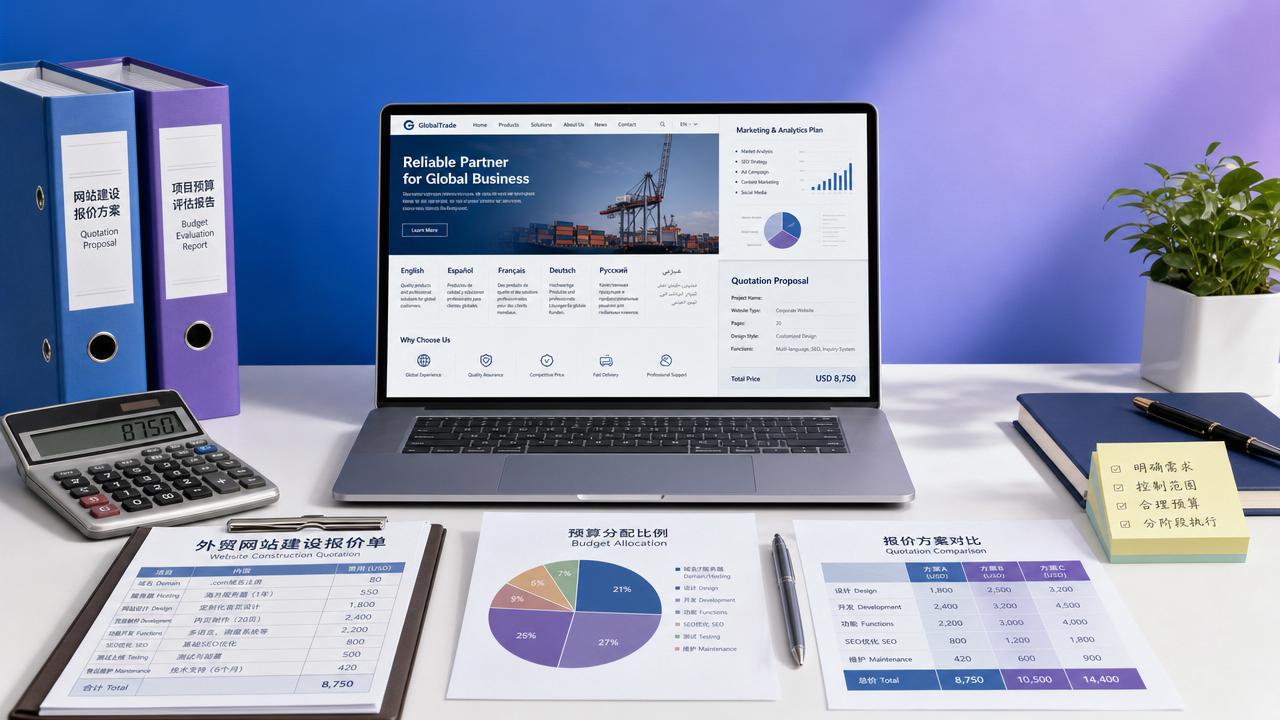
 How much does a foreign trade website cost? Cost structure, quotation differences, and budget allocation methodsHow much does a foreign trade website cost? Don’t just look at low quotes. This article breaks down the cost structure, service provider pricing differences, common budget ranges, and allocation methods to help you understand website development, SEO, and conversion investment, and make a more cost-effective foreign trade website purchasing decision.
 What multilingual website services are available in Sanya? Which model is more suitable for local businesses going global?Multilingual website services in Sanya go beyond just translating pages; they're crucial for overseas exposure, inquiry handling, and conversion growth. This article analyzes local businesses' overseas website building models, key selection points, and integrated website marketing solutions to help you find the most suitable path to success.