









What: In-Depth Definition and 12 Core Elements of Marketing Landing Page Development
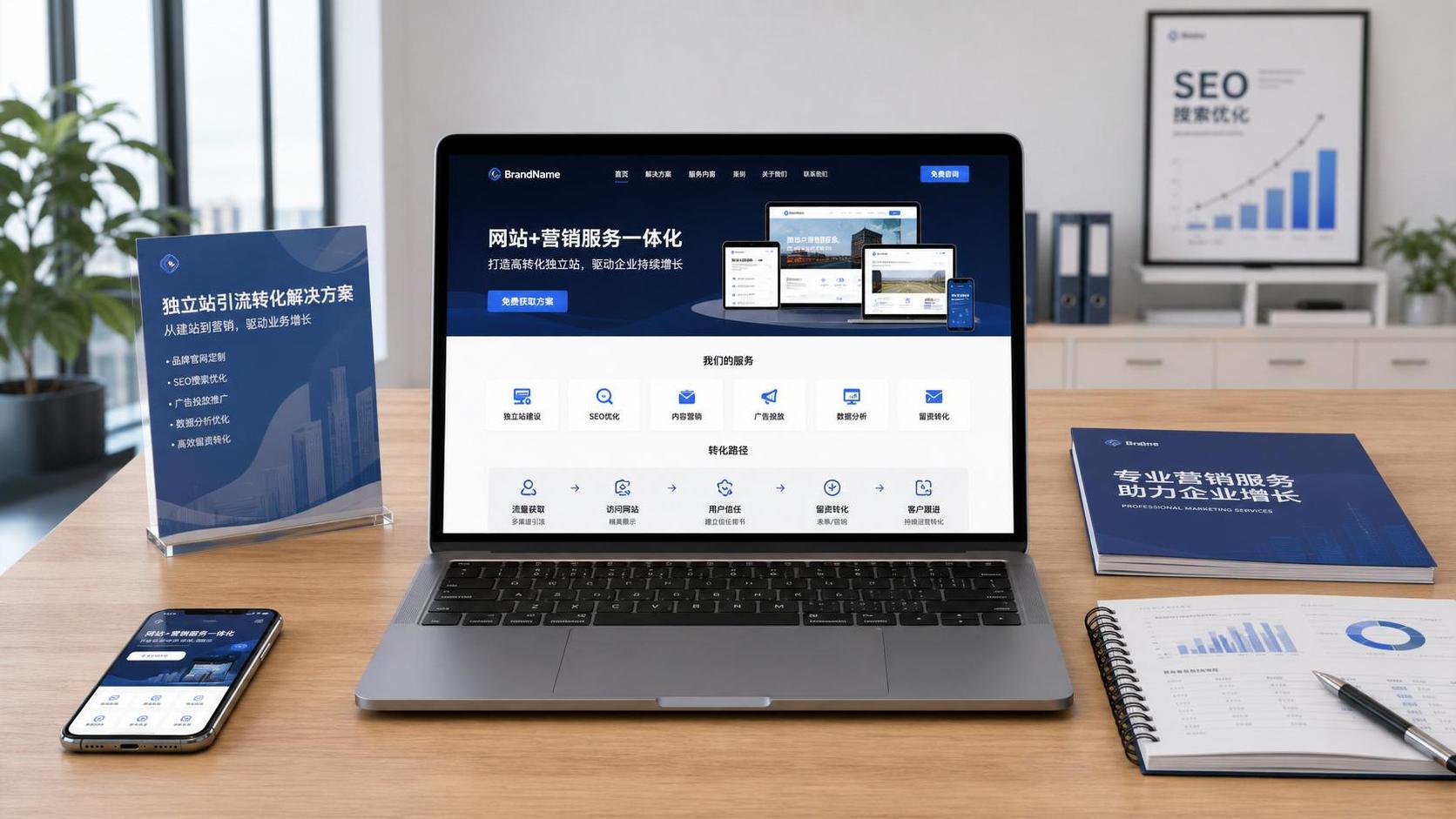
Marketing landing page development is not simply the creation of a single-page website, but the construction of a high-conversion digital touchpoint around specific customer acquisition scenarios, such as Google Ads, social media promotion, and email marketing. Its essence is an integrated combination of technology, content, and user experience that precisely aligns traffic intent, user behavior paths, and business objectives.
The industry consensus in 2026 has shifted from “page aesthetics” to “credible conversion across the entire journey.” Based on hands-on experience serving more than 2,300 foreign trade enterprises, E-Yingbao has identified 12 essential core elements for marketing landing page development: ① precise audience persona matching; ② visualization of the value proposition within the first 3 seconds; ③ a multilingual localized copywriting engine; ④ a 100% responsive mobile architecture; ⑤ AI-generated SEO-friendly product descriptions; ⑥ structured trust endorsement modules (qualifications/cases/certifications); ⑦ compliant form design (GDPR/advertising law/privacy policy); ⑧ GEO-ready Q&A content layout; ⑨ a highly streamlined inquiry path (≤3 steps); ⑩ redundant configuration of three access points: WhatsApp/email/online customer service; ⑪ page loading speed <1.2s (overseas field testing); and ⑫ full-funnel data tracking with UTM+GA4+CRM.
These 12 elements constitute the industrial-grade standard for marketing landing page development, and none can be omitted. In particular, Elements ④ and ⑪ rely on E-Yingbao’s intelligent website-building engine to achieve 100% PC/mobile compatibility and page loading speeds 99% ahead of the industry average, providing the technical foundation for conversion.
Why: Why Integrated Website and Marketing Services Have Become an Inevitable Choice for Marketing Landing Page Development
Traditional website-building companies end their services upon delivery, advertising agencies focus only on media placement without managing conversion handoff, and SEO service providers struggle to optimize page structures simultaneously—fragmented services have long resulted in three mismatches in marketing landing page development: a mismatch between traffic sources and page content, a mismatch between users’ language habits and copywriting expression, and a mismatch between conversion objectives and technical delivery capabilities.
Through the integration of four capabilities—“AI intelligent website building + multilingual independent websites + overseas marketing customer acquisition + website operations growth”—E-Yingbao enables closed-loop control of marketing landing page development. For example, when a customer runs Russian keywords on Google Ads, the system automatically invokes the AI Translation Center to generate a Russian landing page while simultaneously deploying Hreflang tags, Russian TDK, and a Yandex-compatible structure, avoiding traffic waste caused by delays in manual translation.
More importantly, E-Yingbao embeds GEO (Generative Engine Optimization) capabilities into the landing page development process, enabling page content to naturally adapt to AI search environments such as ChatGPT and Google AI Overviews. For example, a solution page developed for a heavy truck customer used structured FAQs, specification tables, and embedded scenario-based videos, significantly increasing the likelihood of being cited in AI conversations. Customer case data from 2025 showed that AI search referrals accounted for 37% of organic traffic.
Who: Who Needs Professional-Grade Marketing Landing Page Development? Analysis of Typical Applicable Groups
The core target users of marketing landing page development are rapidly expanding from “brand owners with budgets” to B2B manufacturing companies that “have orders but lack online conversion capabilities.” E-Yingbao service data shows that demand for marketing landing page development among factory clients in industries such as laser engraving machines, chemicals, new energy, and machinery equipment grew by 186% (2024→2025).
Typical applicable groups include: ① manufacturing factories with stable overseas customers but reliant on trade shows or referrals from existing customers; ② OEM companies that have just completed product certifications (CE/FCC/UL) and urgently need to enter new markets; ③ cross-border sellers with considerable sales on platforms such as Temu/Shopee but under pressure on profit margins and urgently needing to establish their own brand presence; ④ companies in transition that have already built independent websites but have an inquiry rate <2% and a bounce rate >75%; and ⑤ entities expanding multilingual operations into emerging markets such as the Middle East, Latin America, and Eastern Europe.
These groups share common characteristics: a lack of professional website-building teams, no overseas digital marketing experience, and a need to quickly validate market response. E-Yingbao’s AI intelligent website-building system supports no-code drag-and-drop development, combined with AI-assisted generation of industrial product copy that aligns with buyers’ reading habits (for example, “maximum load capacity of 3.2 tons” instead of “high-strength structure”), greatly lowering the professional threshold.
Where & When: Global Market Entry Scenarios and Real-Time Application Validation
The effectiveness of marketing landing page development must be tested in real global market environments. In serving clients such as Haier, China National Heavy Duty Truck Group, and Aokema, E-Yingbao has developed three typical implementation scenarios: ① 30 days before the Hannover Messe in Germany, a German-English bilingual product landing page was launched for a heavy truck client, integrating TÜV certification document downloads, a 3D configurator, and an engineer appointment form, resulting in a 210% increase in qualified inquiries within three months after the exhibition; ② during the launch period of a SABIC chemical tender in Saudi Arabia, an Arabic GEO-optimized page was deployed for a chemical company, focusing on procurement concerns such as “Halal certification,” “customs clearance cycle,” and “local warehousing,” with 47 keywords entering the first three pages of Google organic rankings in the first month; ③ driven by a viral product on TikTok US, an English landing page was launched for a furniture company within 72 hours, embedding a short-video player, real-time inventory lookup, and a free-shipping calculator, raising CVR to 8.3% (industry average: 3.1%).
These cases demonstrate that marketing landing page development is not a static deliverable, but a strategic asset that dynamically responds to market rhythms. E-Yingbao’s AI+SEM intelligent ad placement system can automatically identify high-conversion time periods, such as 9–11 a.m. on European working days, and trigger switching between landing page A/B test versions to achieve a positive cycle of “traffic peak → optimal page → inquiry surge.”
All cases are deployed on a global acceleration network, leveraging nodes from Alibaba Cloud/AWS/Huawei Cloud and others to ensure overseas access latency below 100ms—this is the technical prerequisite for marketing landing page development to deliver results in emerging markets.
How: E-Yingbao’s Industrialized Process and Quality Control for Marketing Landing Page Development
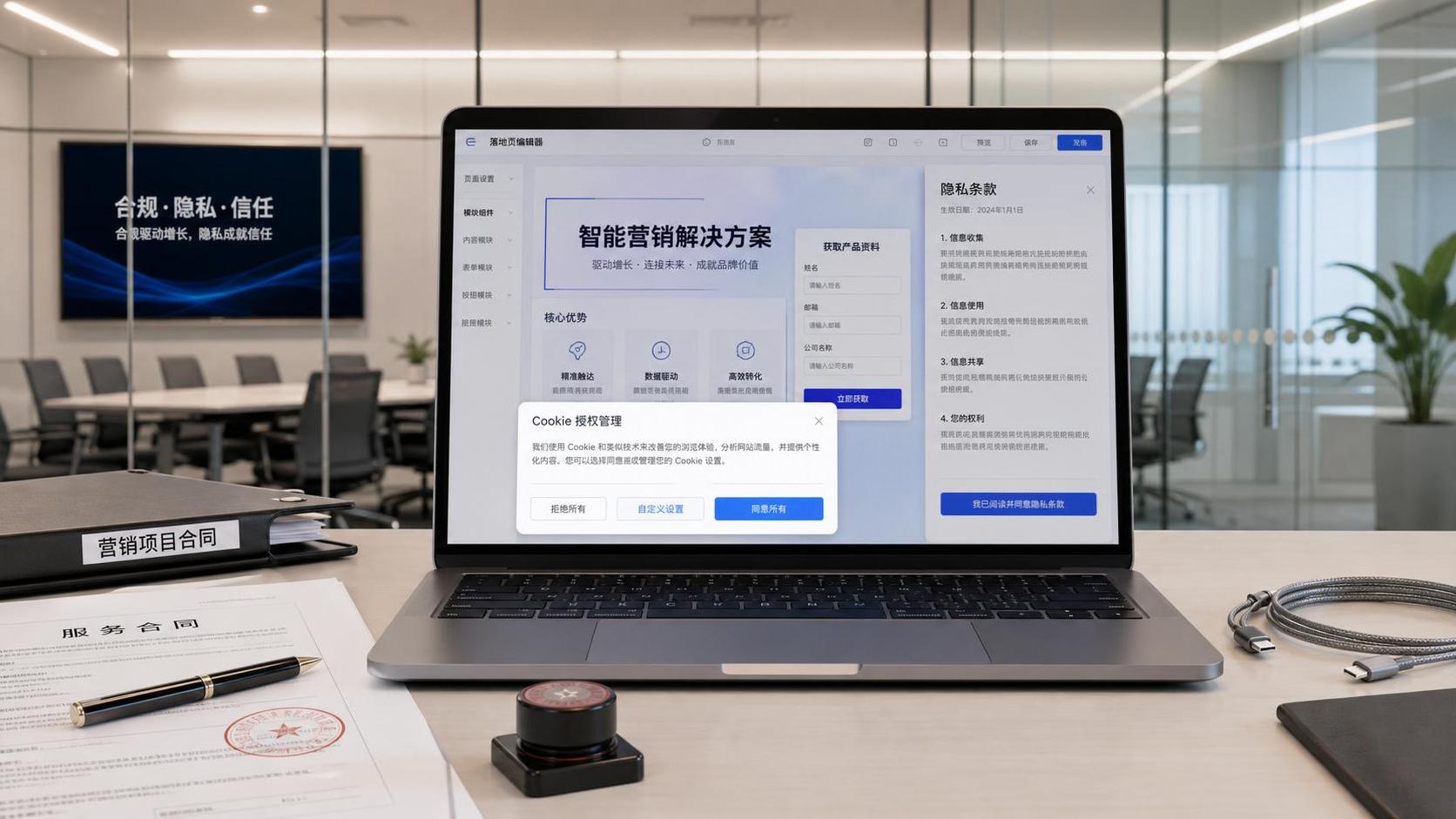
E-Yingbao standardizes marketing landing page development into a five-stage industrialized process: ① scenario diagnosis (analyzing ad sources, user devices, geographic distribution, and competitor page structures); ② framework generation (AI outputs a page framework containing a 12-element checklist); ③ content injection (calling the AI Translation Center + AI+SEO engine to generate multilingual copy in batches); ④ compliance verification (automatically checking form privacy clauses, Cookie notices, and advertising identifiers); and ⑤ stress testing (simulating 500 concurrent visits + multi-device rendering validation).
Quality control runs throughout the entire process: technically, responsive architecture and CDN acceleration are used to ensure 100% mobile compatibility; for content, AI-generated first drafts are reviewed by localization editors with industry backgrounds (for example, chemical terminology is subject to final review by editors holding REACH certification); for conversion, an “inquiry funnel heatmap” is established to monitor in real time the points at which users abandon form fields, driving continuous page iteration.
This process has been incorporated as a core module of E-Yingbao Cloud Intelligent Website Building Marketing System V6.0. Since its launch in 2025, customers’ average landing page launch cycle has been reduced to 4.2 days, 5.8 times faster than the traditional outsourcing model, while the qualified inquiry rate in the first month has increased to 68.4% (industry benchmark: 31.7%).
How Much: TCO Composition and ROI Calculation Logic for Marketing Landing Page Development
The total cost of ownership (TCO) for marketing landing page development extends far beyond website-building fees. Based on audits of more than 200 customers, E-Yingbao found that hidden costs account for 63% of TCO, mainly including: labor for multilingual maintenance (an annual average of ¥86,000), traffic loss caused by delayed SEO content updates (an annual average loss of ¥152,000), CPC waste caused by page exits after ad clicks (an annual average of ¥224,000), and compliance risk penalties (up to 2% of revenue per incident).
E-Yingbao’s one-stop service restructures TCO into a predictable model: the basic website-building fee covers the AI website-building system + multilingual websites + GEO optimization; the annual service fee includes SEO content updates, A/B testing of advertising landing pages, compliance inspections, and data dashboards. Taking a machinery manufacturing company with annual revenue of ¥20 million as an example, an investment of ¥138,000/year can achieve: 41% annual growth in organic search traffic, a 29% decrease in advertising CPC, an inquiry cost reduced to ¥83/inquiry (industry average: ¥217), and a 12-month ROI of 217%.
The key is that E-Yingbao’s service upgrades marketing landing page development from a “cost center” to a “growth engine”—every landing page is a trackable, optimizable, and replicable digital asset. After Yuanhe Power Station adopted its new energy solution landing page matrix, it covered markets in 17 countries within three months, and 62% of newly acquired prospective customers explicitly mentioned that they had “learned about your company through the independent website,” validating the long-term value of professional-grade marketing landing page development for brand ownership.
