









I. Definition and Business Scope of Industry SEO Solutions
An industry SEO solution is a systematic approach to designing website visibility and customer acquisition pathways based on the product characteristics, procurement processes, target countries, and search languages of a specific industry. It covers keyword research, page planning, technical optimization, content production, data analysis, and inquiry conversion, rather than pursuing rankings in isolation.
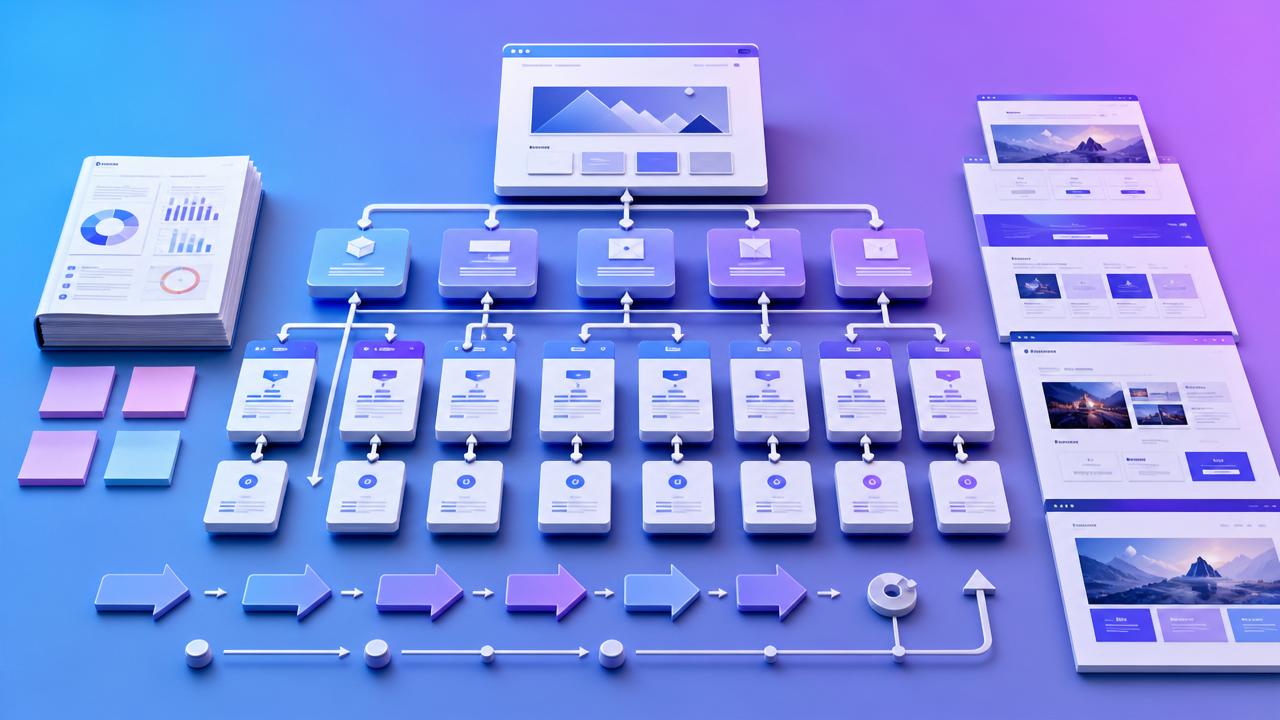
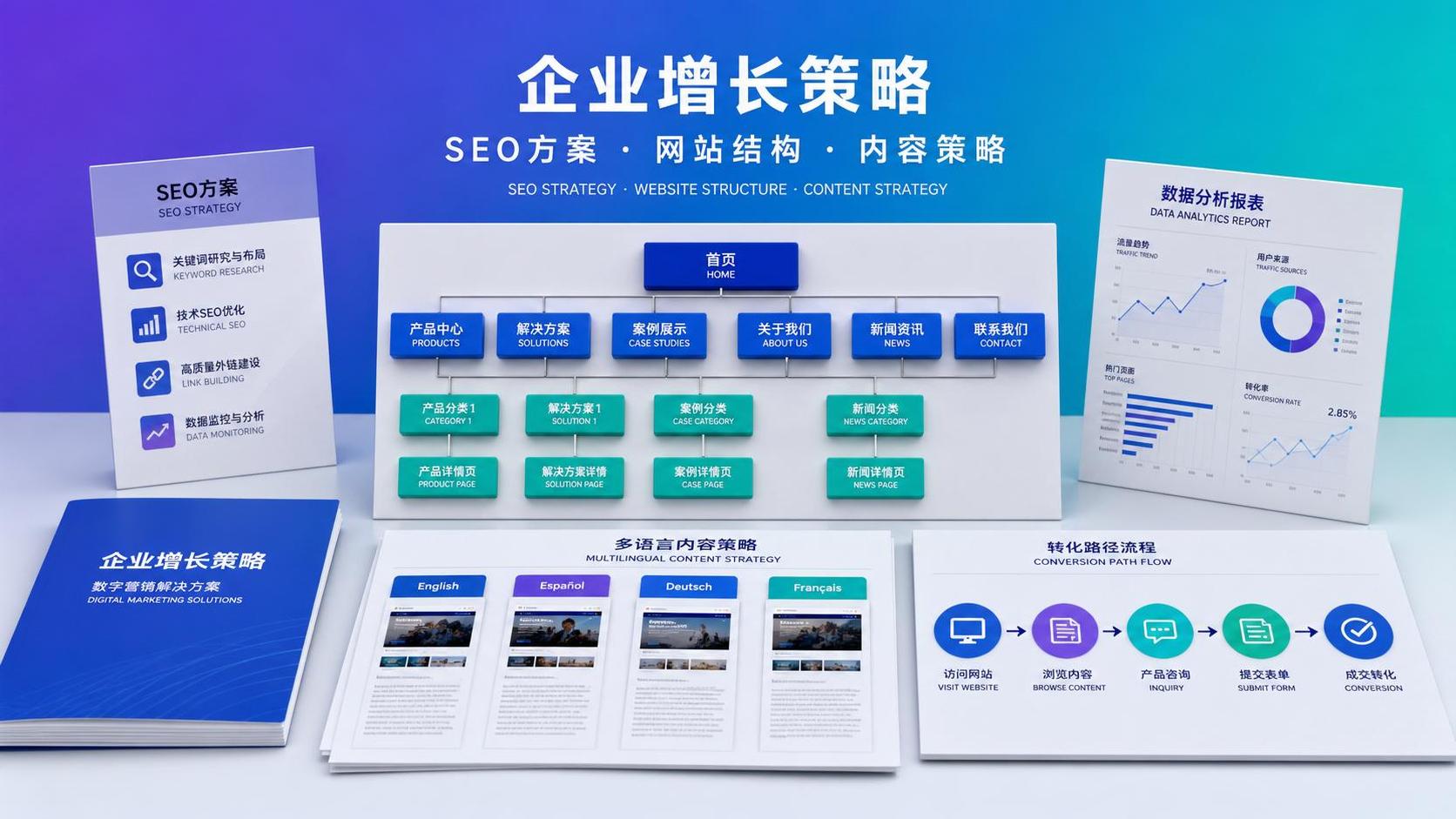
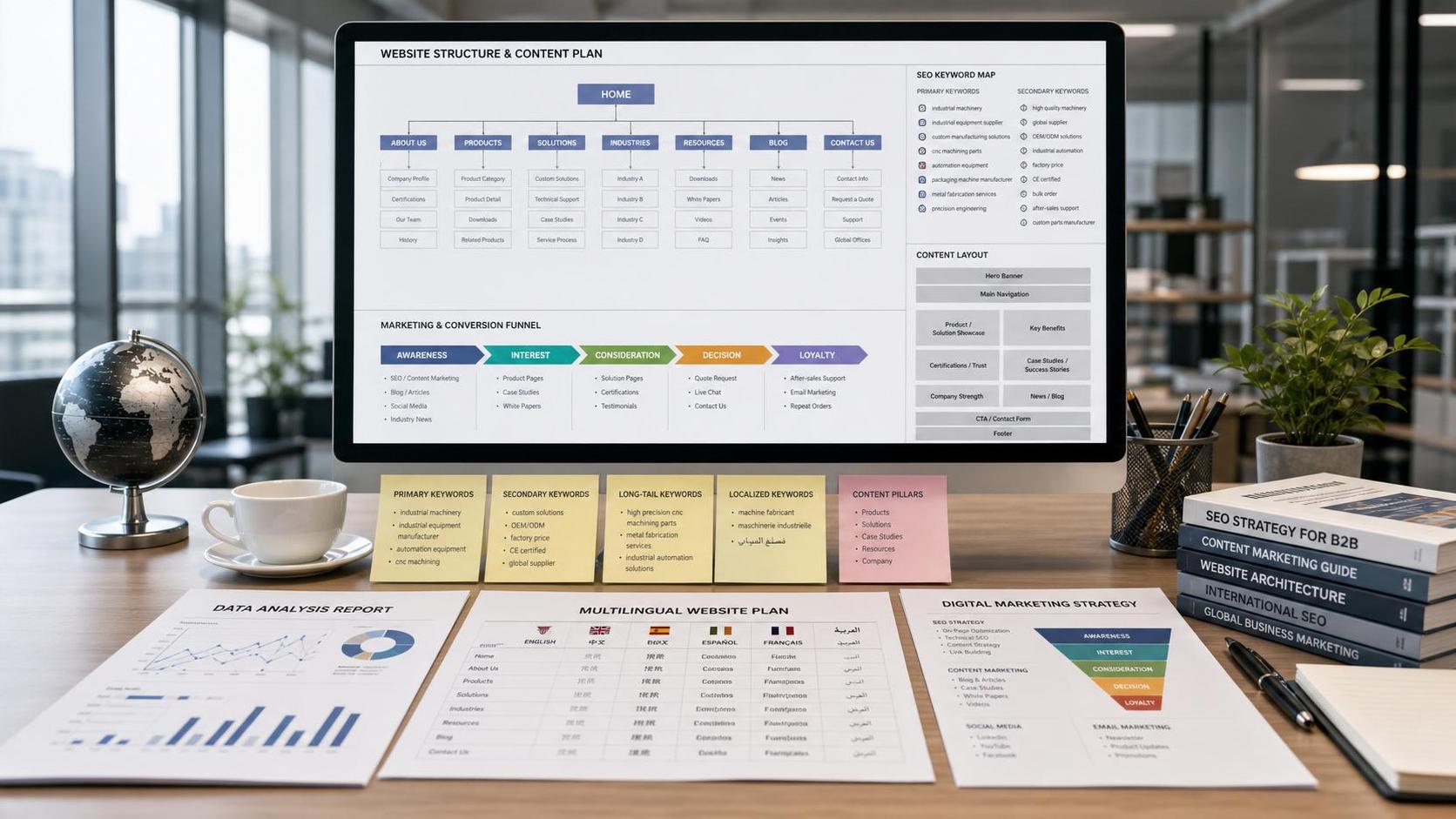
In the foreign trade B2B context, buyers typically search progressively through category terms, specification terms, application terms, supplier terms, and solution terms. Therefore, an industry SEO solution needs to organize the homepage, product category pages, product detail pages, case study pages, knowledge articles, and contact pages into an understandable topic network.
Its ultimate goal should be measurable business results: enabling visitors from the right countries and in the right roles to find the pages, understand the company's capabilities, and submit valid requirements through forms, email, WhatsApp, or online communication channels. Traffic volume, number of indexed pages, and inquiry quality need to be evaluated together.
II. Technical Principles and Website Infrastructure
Search engines assess page value through crawling, parsing, indexing, and ranking. Clear navigation hierarchies, stable links, accessible product content, appropriate titles and descriptions, and mobile user experience are the technical prerequisites for the continuous implementation of industry SEO solutions.
Multilingual websites also need to handle language paths, regional targeting, and page relationships, avoiding the mechanical duplication of the same content across pages in different languages. For markets such as English, Russian, Japanese, and Arabic, titles, parameter descriptions, application scenarios, and calls to action should be rewritten according to local purchasing expressions.
Yiyingbao's responsive website-building capabilities are suitable for consistent presentation across mobile and desktop devices, and provide support for multilingual websites, content management, and overseas access acceleration. Companies should still continuously identify issues that affect user experience based on actual website speed tests, indexing status, and access data from target markets.
III. Main Categories and Keyword Deployment Methods
By customer acquisition objective, industry SEO solutions can be divided into brand visibility building, customer acquisition through product terms, solution content marketing, multilingual market expansion, and localized regional coverage. New websites typically establish core product topics first, then gradually expand into long-tail queries and application content with high commercial value.
Keywords can be layered by search intent: category and supplier terms are suitable for category pages and capability pages; model, material, size, and process terms are suitable for product pages; selection, maintenance, comparison, and application terms are suitable for articles or solution pages; brand terms should be consistently supported by the official website and trust-building pages.
When planning the layout, multiple pages should not compete for the same core term. Each page should clearly define its main topic, supporting terms, and next action, while establishing internal links through related products, industry applications, and knowledge content. This both facilitates further comparison by buyers and helps search engines recognize business relationships between pages.
IV. Content Strategy, Quality Control, and Conversion Support
High-value content should address specific questions before procurement, such as what operating conditions a product can solve, what specifications are available, how quality is controlled, and what the delivery time and customization boundaries are. For high-decision industries such as machinery, chemicals, and new energy, parameters, application limitations, and service processes are more informative than general promotion.
AI can be used to organize keywords, generate initial content drafts, supplement product descriptions, and improve the efficiency of multilingual updates, but it cannot replace manual verification. Before publication, technical parameters, industry terminology, image copyrights, compliance statements, and link validity should be checked to avoid inaccurate information that may undermine purchasing decisions and brand credibility.
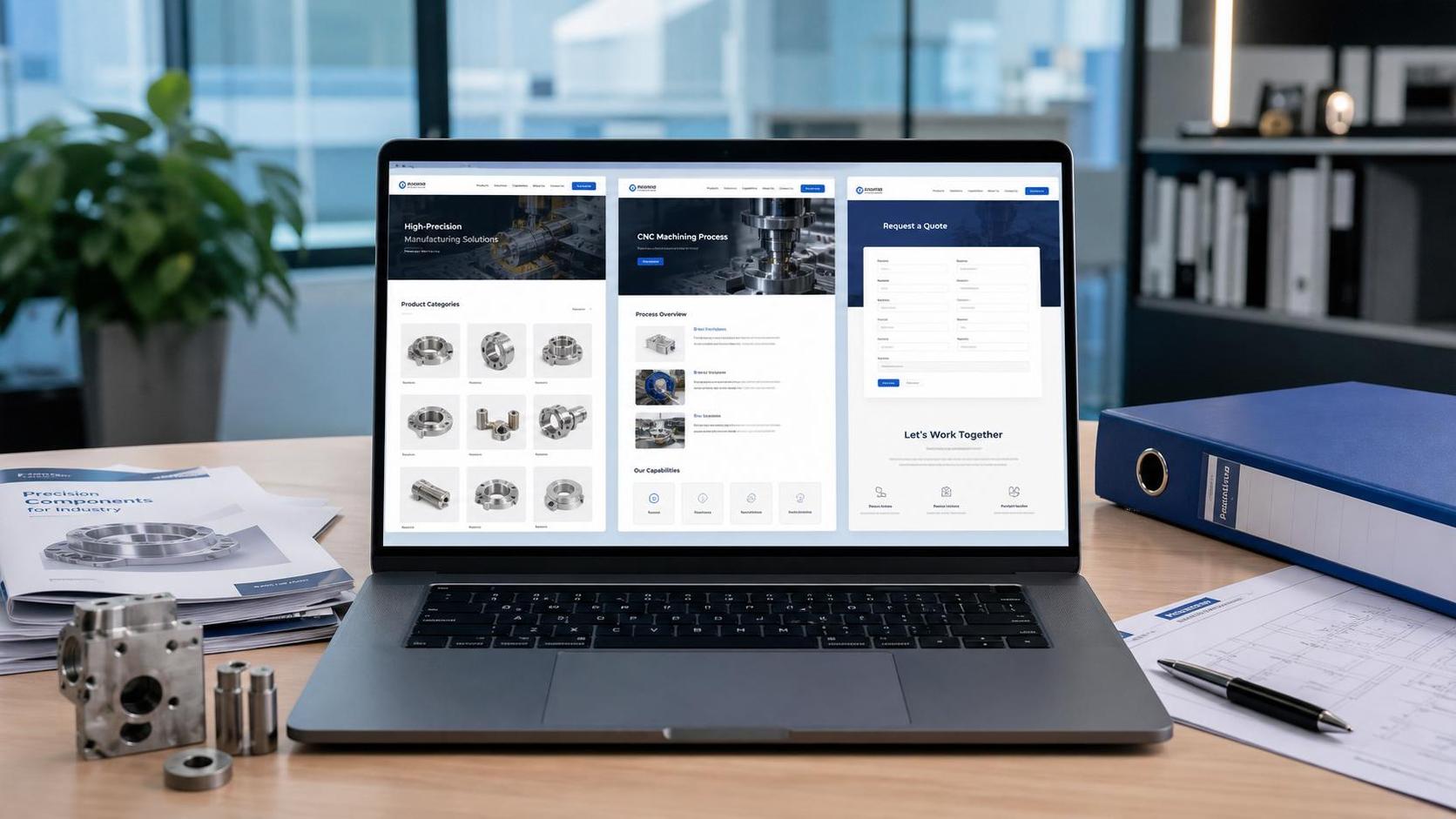
Page conversion should align with content intent. Product pages can provide entry points for quotations, sample consultations, or specification discussions; solution pages can guide visitors to submit project requirements; brand and factory pages should present company profiles, production capabilities, service processes, and verifiable case information to reduce decision-making concerns among overseas customers.
V. Applicable Users, Application Scenarios, and Selection Criteria
Industry SEO solutions are suitable for manufacturing factories, foreign trade companies, OEM or ODM enterprises, industrial product suppliers, and global expansion teams with ongoing supply capabilities, clear product lines, and long-term overseas customer acquisition needs. For companies that rely entirely on trade shows, platforms, or sales representatives for business development, an independent website can become an accumulable proprietary digital asset.
Yiyingbao's services cover industries including laser engraving machines, steel, chemicals, heavy-duty trucks, machinery, new energy, automobiles, agriculture, healthcare, and furniture, and it has also served companies such as Haier, Aucma, Shandong Airlines, Yuanhe Power Station, Little Duck Group, and Sinotruk. Each project still requires a tailored solution based on product complexity and target markets.
When selecting a solution, key considerations should include whether the website-building system supports responsive display, multilingual content maintenance, product and article management, inquiry components, basic technical optimization, and data tracking. It is also necessary to confirm whether the service provider can connect advertising landing pages, social media traffic generation, and subsequent operations, rather than only delivering a static website.
VI. Implementation Cycle, Operating Rhythm, and Future Trends
Implementation usually begins with business interviews and market and keyword research, followed by information architecture, page development, content publishing, technical checks, and data tracking setup. After launch, indexing, rankings, organic traffic, source countries, form submissions, and sales feedback should be reviewed monthly before priorities are adjusted, rather than publishing once and leaving the site unmaintained for a long time.
When a company launches new products, enters new countries, updates certification materials, or identifies high-conversion search terms, it should promptly expand its pages and content. Advertising data can also be used to validate the commercial value of keywords: terms with high clicks but low conversion require an examination of the match between search intent and the landing page, rather than simply increasing the budget.
Future industry SEO solutions will place greater emphasis on entity information, structured Q&A, multilingual localization, and readability for generative search. Content development for generative search should accumulate clear information on company capabilities, product knowledge, and frequently asked questions, making brand information easier to retrieve, understand, and cite.
VII. Total Cost of Ownership and Return on Investment Assessment
The total cost of ownership of an industry SEO solution includes not only website-building expenses, but also multilingual processing, content production, image and material organization, technical maintenance, data tools, promotional coordination, and internal sales follow-up costs. The number of products, target languages, competitive intensity, and the foundation of the existing website all affect the investment scope and pace of results.
When evaluating returns, it is recommended to compare valid inquiries generated by organic search, qualified opportunity rates, average order contribution, and customer lifetime value against ongoing operational investment. As B2B projects have long sales cycles, their full value cannot be judged solely by short-term rankings or the number of leads in a single month.
For companies lacking technical and overseas marketing teams, website development, SEO operations, advertising, and social media content can be coordinated in phases. Yiyingbao provides services including AI-powered website building, multilingual independent websites, SEO, advertising, and website operations, making it suitable for gradually building a customer acquisition closed loop based on unified data and page assets.
 How should an industry SEO solution be developed? The differences in website structure and content strategy across different product linesHow should an industry SEO solution be developed? Start with business objectives, then break down the website structure and content strategy. This article analyzes the differences among different product lines in category design, keyword attribution, and conversion paths, helping businesses build growth-oriented websites that are easier to index and better at generating leads.
 How to Do Industrial SEO for Manufacturing? From Keyword Layout to Inquiry Page OptimizationHow to Do Industrial SEO for Manufacturing? This article starts from lead generation pathways and breaks down keyword layout, capability messaging, multilingual page structure, and inquiry page optimization to help manufacturing companies improve indexing, attract precise traffic, and convert more high-quality inquiries.
