









I. Industry Definition: From Brand Showcase to Transactions and Inquiries
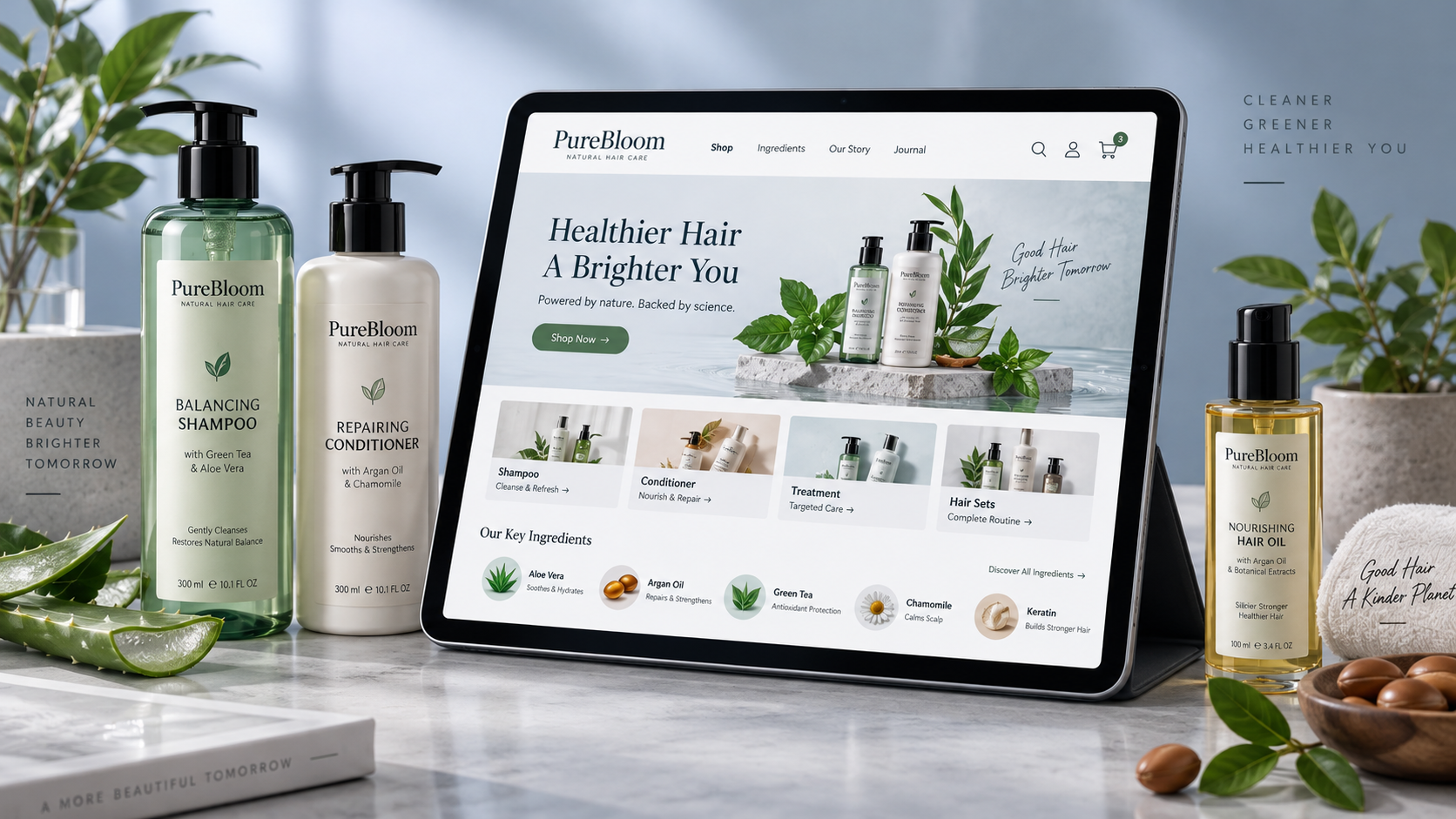
Building a direct-to-consumer website for a hair and body care brand means creating a website operated by the brand itself for products such as shampoo, conditioner, body wash, and body cleansing products. Its value lies in presenting product information, brand positioning, and transaction terms consistently, while capturing visits from search, advertising, and social channels.
Typical users include own-brand businesses, cross-border retailers, factories transitioning to brand ownership, and contract manufacturers. Consumers focus on their needs, fragrances, and ease of purchase, while wholesale buyers place greater importance on specifications, minimum order quantities, supply capacity, and cooperation terms. The site should provide separate pathways for these user groups.
Before starting a project, define the target markets, primary customer groups, and conversion goals. A website focused on retail should prioritize a smooth shopping journey; one focused on channel partnerships should highlight product catalogs and inquiry information. For businesses serving both models, navigation and page copy should clearly distinguish between the two sets of needs.
II. Technical Principles: Establishing Consistent Product and Page Structures
A content management system is used to maintain products, categories, articles, and pages, which are then presented through the front end with navigation and interactive features. Product data should be managed consistently, including names, sizes, fragrances, prices, and inventory, to prevent discrepancies between category pages, product detail pages, and the shopping cart.
Multilingual websites need stable language paths, corresponding page relationships, and regional settings. Language and sales regions should be managed separately; currency, delivery coverage, and product availability should not be inferred from translations alone. Data flows for payments, taxes, and order statuses should also be verified at checkout.
Quality acceptance testing should cover mobile usability, image loading, on-site search, form submissions, and the order process. Responsive layouts, image compression, and content delivery networks can improve the user experience. Performance targets should be determined based on page complexity and network conditions, with testing carried out in target markets.
III. Main Categories: Helping Users Shop by Product and Need
Primary categories should use product names familiar to users, such as shampoo, conditioner, hair masks, body wash, and hair and body care sets. Secondary categories can then be organized by product line and usage scenario. Avoid mixing sizes, benefits, and customer groups at the same level of the catalog, as this increases the effort required to understand and maintain it.
Filters can cover hair type, scalp condition, fragrance, size, and price range, but each filter must be supported by accurate product information. For example, claims such as “suitable for sensitive skin” or “suitable for children” require appropriate supporting evidence. Products must not be assigned suitability labels arbitrarily for marketing purposes.
Wholesale pages can include packaging formats, units per carton, minimum order quantities, and customization options to help buyers quickly assess whether the products meet their needs. Bundles should list each item and its size. Filter pages should also be managed to avoid duplicate URLs, with search demand directed primarily to categories that offer distinct value for shoppers.
IV. Ingredient Information: Balancing Clarity, Evidence, and Market Requirements
The ingredient section should distinguish between the full ingredient list and explanations of key ingredients. The full list should reflect the actual formula and comply with the requirements of the sales market; where necessary, retain the international nomenclature for cosmetic ingredients. Explanations of key ingredients should describe their role in the formula and avoid treating research on a single ingredient as direct evidence of the finished product’s effects.
Product detail pages should also provide directions for use, precautions, size, and intended use. Claims such as “silicone-free” or “fragrance-free” must match the formula. Claims about benefits and testing should be supported by verifiable documentation and specify the test subjects and conditions. Ordinary hair and body care products should not be presented as treatments for diseases.
For markets such as the EU and the US, separately verify product classification, labeling, responsible parties, and applicable regulatory requirements. Website information must be consistent with the packaging. 易营宝’s multilingual content management can be used to maintain regional pages, but ingredient names and compliance copy should still be reviewed by qualified brand personnel.
V. Shopping Experience: Reducing Uncertainty During Selection and Checkout
Product pages should make it easy for users to understand the product’s purpose, size, fragrance, price, and delivery coverage. Key shipping and return information should appear near the purchase button. When users change product options, images, inventory, and prices should update together to prevent them from selecting the wrong product or discovering only after adding it to the cart that delivery is unavailable.
The shopping cart should allow users to change quantities and remove items. Before checkout, explain shipping costs, taxes, and estimated delivery coverage. Offer payment methods suited to the target market and remove unnecessary form fields. For liquid products, check packaging, shipping restrictions, and damage handling procedures against the carrier’s requirements.
Wholesale inquiry forms should collect the product, required quantity, destination, and contact details, with packaging and lead-time details requested separately for customization inquiries. 易营宝’s e-commerce store, inquiry forms, and communication channels can support different purchasing paths. During implementation, confirm the capabilities of the specific plan, payment integrations, and the scope of order management.
VI. Selection and Costs: Evaluating Service Plans Against Business Processes
When evaluating a direct-to-consumer website solution for a hair and body care brand, first check product specifications, filters, multilingual support, order management, and inquiry functions, then compare how easy each solution is to maintain. Ask service providers to demonstrate key workflows using actual products, and clarify domain ownership, data export, permission settings, and conditions for future migration.
Total cost of ownership includes website development or subscription fees, content preparation, translation review, payment processing fees, integrations, and ongoing operational costs. 易营宝 offers website development in combination with search promotion, advertising, and social media management. Before purchasing, confirm the scope of each service, delivery frequency, and renewal terms.
Calculate return on investment based on actual gross margins and customer acquisition costs, while also accounting for refunds, fulfillment costs, and repeat purchases. Retail businesses should track qualified orders and customer value; wholesale businesses should track qualified inquiries, quotations, and sales. Establish measurement definitions before launch to avoid evaluating performance based on traffic alone.
VII. Operational Trends: Continuously Updating Product Knowledge and Purchase Paths
Direct-to-consumer websites for hair and body care brands are evolving from simple showcases into resources for product knowledge and ongoing service. Ingredient explanations, hair and body care routines, and shopping FAQs can make decisions easier. Content should specify applicable conditions and be reviewed by people familiar with the products to keep brand information consistent with the actual formulas.
Day-to-day operations require timely updates to inventory, prices, and shipping policies, as well as regular checks for broken links and checkout issues. Use search queries, customer service questions, and exit pages to identify obstacles, then adjust categories, explanations, or forms. Intelligent content tools can help organize information, but they cannot replace fact-checking.
Brands preparing to start a project can compile product lists, formula information, target markets, sales models, and budgets, then discuss a phased implementation plan with 易营宝. Launch core products and a complete conversion path first, then expand languages, content, and marketing investment based on actual traffic, order, and inquiry data.
