











I. Definition and Core Categories of Foreign Trade SEO Courses
Foreign trade SEO courses are search-driven customer acquisition training programs for export enterprises, cross-border brands, and overseas marketing teams. Their core objective is to enable independent websites to obtain organic traffic that better matches overseas purchasing intent and convert visits into inquiries, quotation requests, or order leads.
Unlike general traffic courses, mature foreign trade SEO courses typically cover market positioning, keyword research, site architecture, product page optimization, content production, technical diagnosis, backlinks and brand signals, data attribution, and other areas, emphasizing the relationship between search rankings and sales processes.
By learning scenario, they can be divided into courses for B2B inquiry-generation websites, B2C store growth, multilingual international SEO, and content operations. Industrial product companies should focus more on specifications, applications, certification materials, and solution pages rather than merely pursuing broad, high-volume product keywords.
II. Search Technology Principles and Content Strategy
Search engines must first crawl pages, then understand topics, assess content quality and website relationships, and finally rank them based on the user's country, language, device, and search intent. Therefore, foreign trade SEO courses should first address fundamental issues such as indexability, accessibility, page structure, and index management.
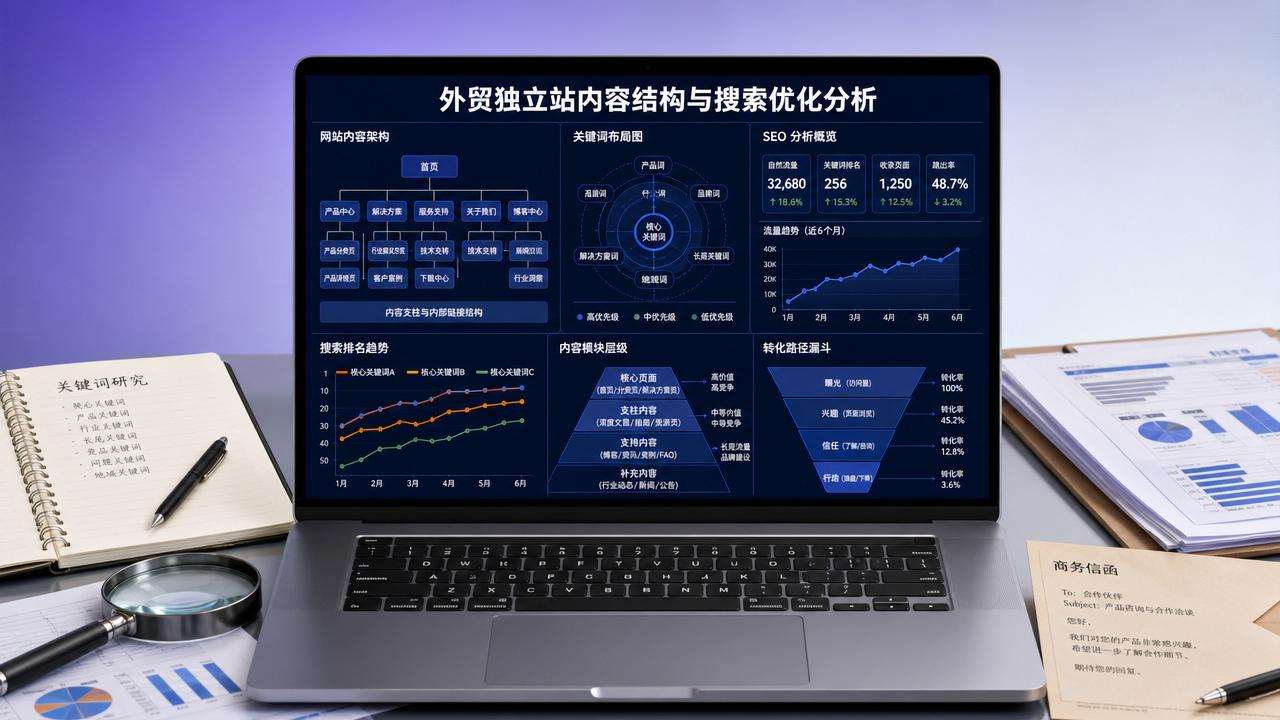
Keyword research should not focus solely on search volume. Companies should categorize core product terms, model terms, material terms, application terms, purchasing terms, problem terms, and competitor alternative terms, and assign them respectively to category pages, product pages, case study pages, article pages, and landing pages to avoid competition among similar pages.
The focus of content strategy is to answer real questions in purchasing decisions, such as how specifications compare, how to communicate minimum order quantities, how to arrange lead times, and what customization options are available. Product descriptions should provide verifiable information, while articles should educate the market, cover long-tail demand, and build internal links.
III. Applicable Businesses, Application Scenarios, and Multilingual Requirements
Foreign trade SEO courses are particularly suitable for manufacturing factories, OEM and ODM companies, industrial product suppliers, foreign trade companies, cross-border sellers, and brand globalization teams. For companies that rely on trade shows, platforms, or sales representatives for business development, organic search can supplement ongoing customer acquisition channels, but it requires consistent investment rather than short-term volume expansion.
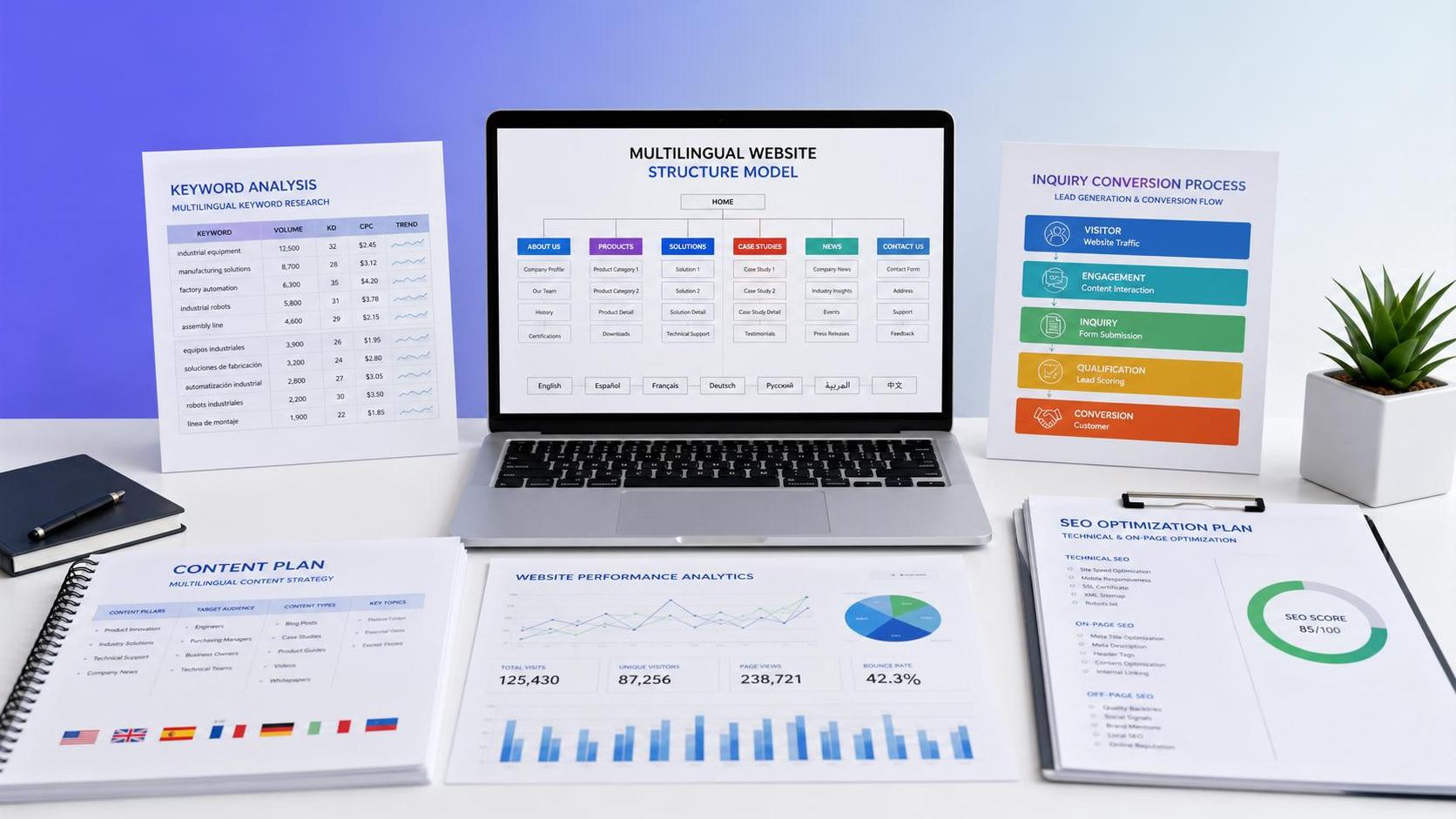
In markets beyond English, multilingual development does not mean mechanical translation. Language paths, regional targeting, page relationships, and Hreflang configuration need to be clear; product terminology, units of measurement, delivery practices, and calls to action should also be adapted to the reading habits of local buyers.
Yiyingbao's multilingual independent websites and AI-assisted content capabilities can serve as practical course tools for managing products, articles, and language versions, as well as configuring entry points such as inquiry forms, WhatsApp, and email. Its responsive website building, global node acceleration, and basic SEO configurations are suitable for teams that need to advance website development and promotion in coordination.
IV. How to Choose Foreign Trade SEO Courses and Service Solutions
When choosing a foreign trade SEO course, first determine whether it is tailored to your business model. B2B companies need to learn purchasing keyword selection, product specification presentation, trust pages, and lead tracking; B2C brands need category architecture, rich product content, user reviews, and shopping path optimization.
Next, verify the depth of practical implementation: whether it can deliver a keyword list, page map, title and description, content outline, internal linking plan, indexation checks, and monthly reviews. Content that only explains ranking concepts or promises rapid keyword rankings often cannot resolve the technical and conversion issues that actually exist on corporate websites.
You should also assess whether the instructor or service team understands industry products, communication with overseas buyers, and data tools. Ideally, the course should diagnose the company's existing website, clarify which pages should be retained, rewritten, merged, or added, and create a task list that internal staff can continuously execute.
V. Implementation Process from Website Development to Inquiries
Implementation usually begins with a business interview to clarify target countries, main product lines, profit structure, customer types, sales cycles, and existing materials. A keyword database and page mapping are then established, prioritizing category pages, product pages, application pages, and inquiry pages with high commercial intent rather than publishing a large volume of low-quality articles all at once.
Technical aspects include responsive display, access speed, sitemaps, canonical links, redirects, image alt text, structured information, and mobile form experience. Before content goes live, check whether titles correspond to page topics, specifications are accurate, and images, case studies, and company capability materials can support purchasing decisions.
Conversion design needs to connect search visits with sales actions. In addition to inquiry forms, clear access should be provided for product material downloads, sample discussions, specification consultations, email, and instant messaging, while recording source keywords, countries, landing pages, and lead quality for joint review by sales and operations teams.
VI. Total Cost of Ownership and Return on Investment Assessment
The total cost of ownership for foreign trade SEO courses and supporting operations includes not only training or service fees, but also website redesign, content organization, translation and localization, image and video production, technical maintenance, tool subscriptions, and internal staff investment. The number of languages, product complexity, and competition level in target markets all affect the budget.
ROI should not be measured by rankings alone. Companies should also monitor the number of effectively indexed pages, impressions and clicks for target keywords, organic traffic share, number of inquiries, qualified lead rate, sample or quotation conversion rate, and sales cycle. Even with relatively few leads, high-ticket industrial products may still have substantial commercial value.
A more prudent investment approach is to proceed in stages: first repair the technical foundation and core pages, then expand content around key markets, and finally integrate SEO, advertising, and social media data. Yiyingbao's integrated website operations services can reduce the coordination costs of multiple suppliers, but companies should still retain responsibility for content review and sales follow-up.
VII. Maintenance Cycles and Future Industry Trends
Foreign trade SEO is not a project that can stop after launch. It is recommended to review indexation, crawl anomalies, ranking fluctuations, conversion performance of key pages, and content gaps monthly; and review keyword opportunities, competitor pages, product updates, and changes in national markets quarterly. New product launches, specification adjustments, and added case studies should all be updated on the website simultaneously.
Future foreign trade SEO courses will place greater emphasis on multilingual entity information, structured Q&A, coordination between video and text-image content, first-party conversion data, and content comprehensibility in generative search environments. Companies need to establish a consistent and verifiable information system on their websites for products, capabilities, service scope, and industry experience.
Yiyingbao has launched systems related to multilingual website building and AI-powered foreign trade independent websites, and provides SEO, SEM, social media, and GEO operational capabilities. For companies lacking dedicated overseas digital teams, course learning should be combined with executable platforms, content processes, and data review mechanisms in order to gradually build sustainable independent website assets.
