









I. Definition and Scope of Impact of Foreign Trade Website Development Issues
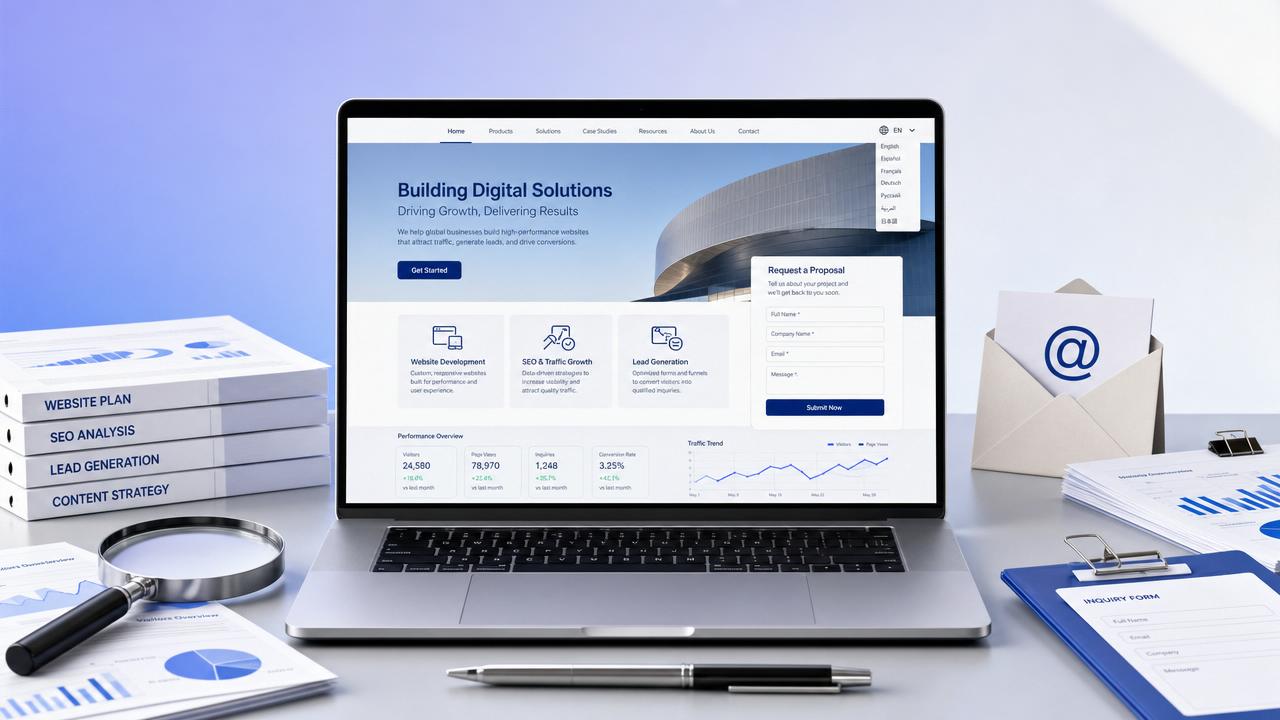
Foreign trade website development issues refer to gaps in overseas-market websites in terms of access performance, information architecture, search crawling, multilingual presentation, trust display, and conversion paths, preventing traffic from effectively reaching, understanding, or converting. This is not simply a matter of whether a website can be opened, but an issue affecting the entire business chain from exposure to inquiries.
For B2B export enterprises, common consequences include product pages not being indexed by Google for a long time, low rankings for core keywords, slow mobile loading, failed form submissions, and buyers still being unable to confirm qualifications, lead times, customization capabilities, or contact details after viewing the pages.
Foreign trade website development issues are generally categorized into five types: technical, content-related, structural, conversion-related, and operational. Technology determines whether search engines and users can access the site smoothly; content determines whether pages can address procurement needs; and operations determine whether the website can continuously accumulate organic traffic and qualified leads.
II. Technical Principles Behind Google Indexing Obstacles
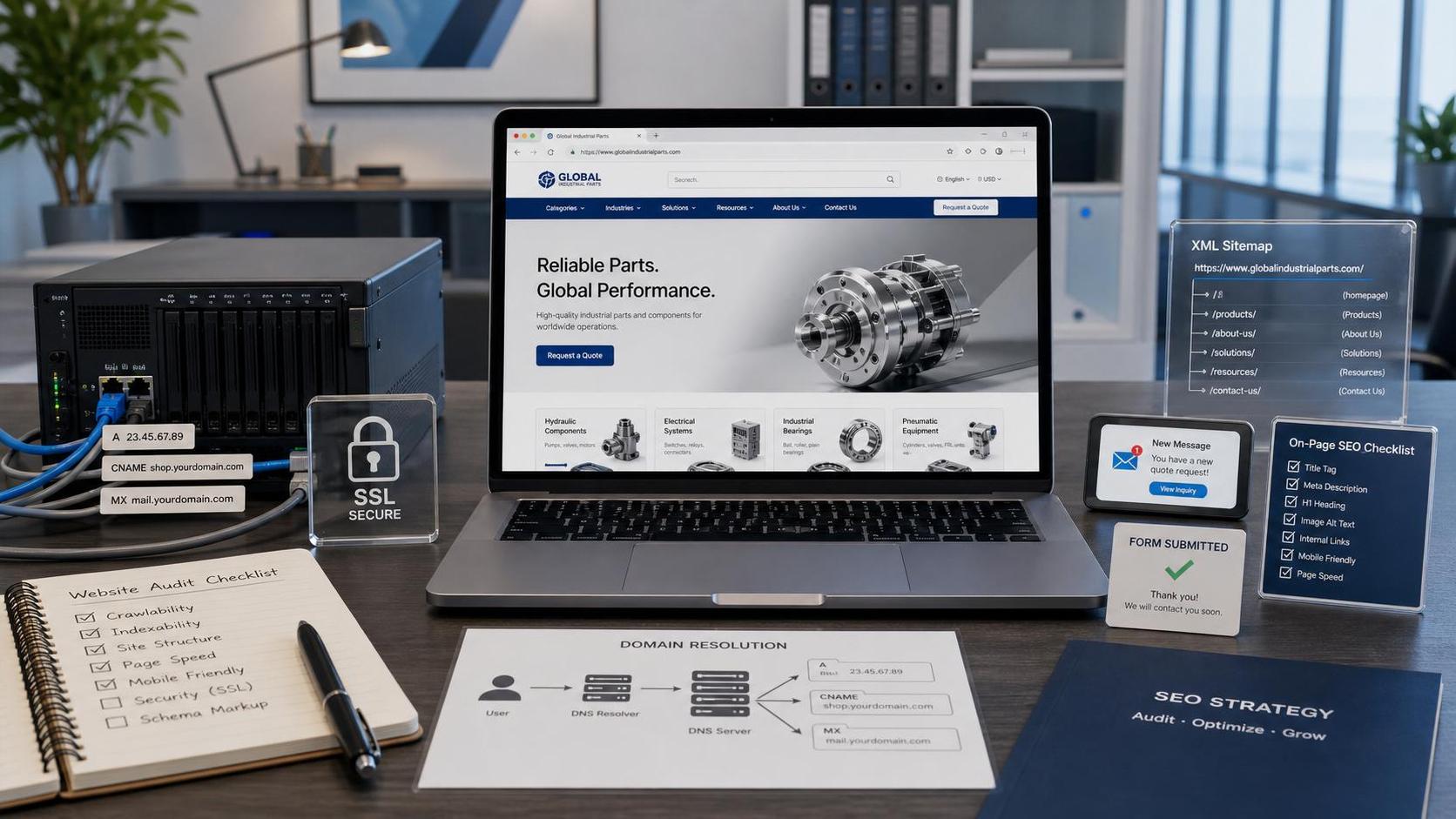
Google indexing generally involves discovering links, crawling pages, parsing content, creating an index, and participating in rankings. Unstable servers, slow page responses, incorrect redirects, duplicate URLs, crawl-blocking configurations, or orphan pages can all make it difficult for search engines to fully identify a website's assets.
Many companies regard homepage optimization as the entire task while overlooking the hierarchical relationships among category pages, product detail pages, case study pages, and article pages. Without clear navigation, breadcrumbs, sitemaps, and relevant internal links, crawlers have difficulty discovering deep-level product pages, and buyers also find it difficult to compare solutions horizontally.
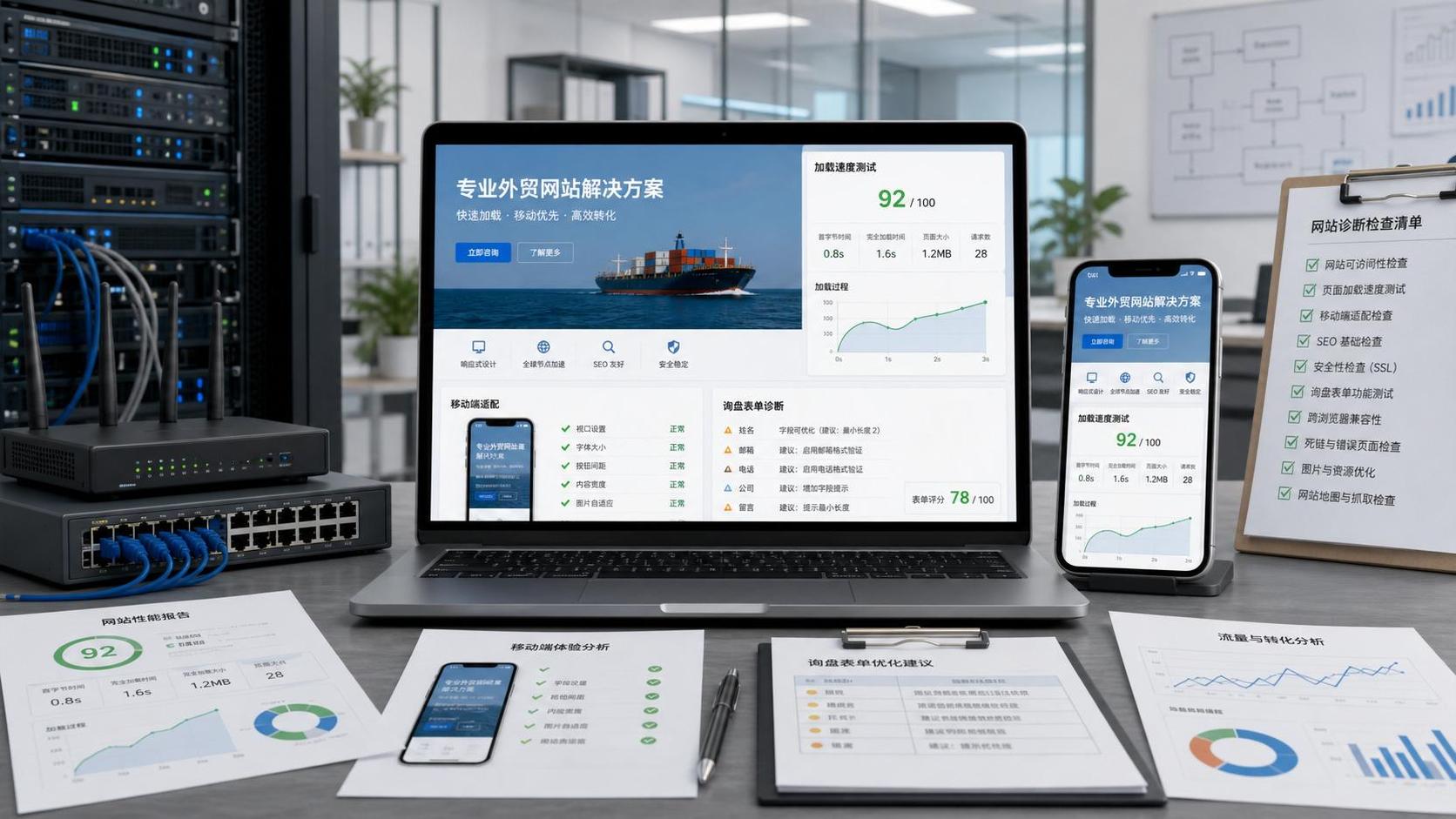
Yiyingbao's responsive website development architecture can be used to unify desktop and mobile presentation, while global nodes, CDN, SSL certificates, and basic technical configurations can improve overseas access conditions. Actual projects should still confirm crawl status through Search Console, logs, and page testing rather than judging results solely by the number of indexed pages.
III. Common Misconceptions About Multilingual Content and Content Quality
Multilingual foreign trade website development issues commonly arise from direct machine translation, using the same page for multiple languages, disorganized language URLs, and highly duplicated content across pages for different markets. Language versions should enable both users and search engines to clearly identify the relevant country or language, rather than merely replacing navigation text.
Industrial product pages, in particular, cannot simply stack models and parameters. Procurement decisions often also require information such as application scenarios, materials or processes, specification ranges, quality control, packaging and transportation, minimum order quantities, lead times, and customization methods in order to reduce the comprehension cost of initial communication.
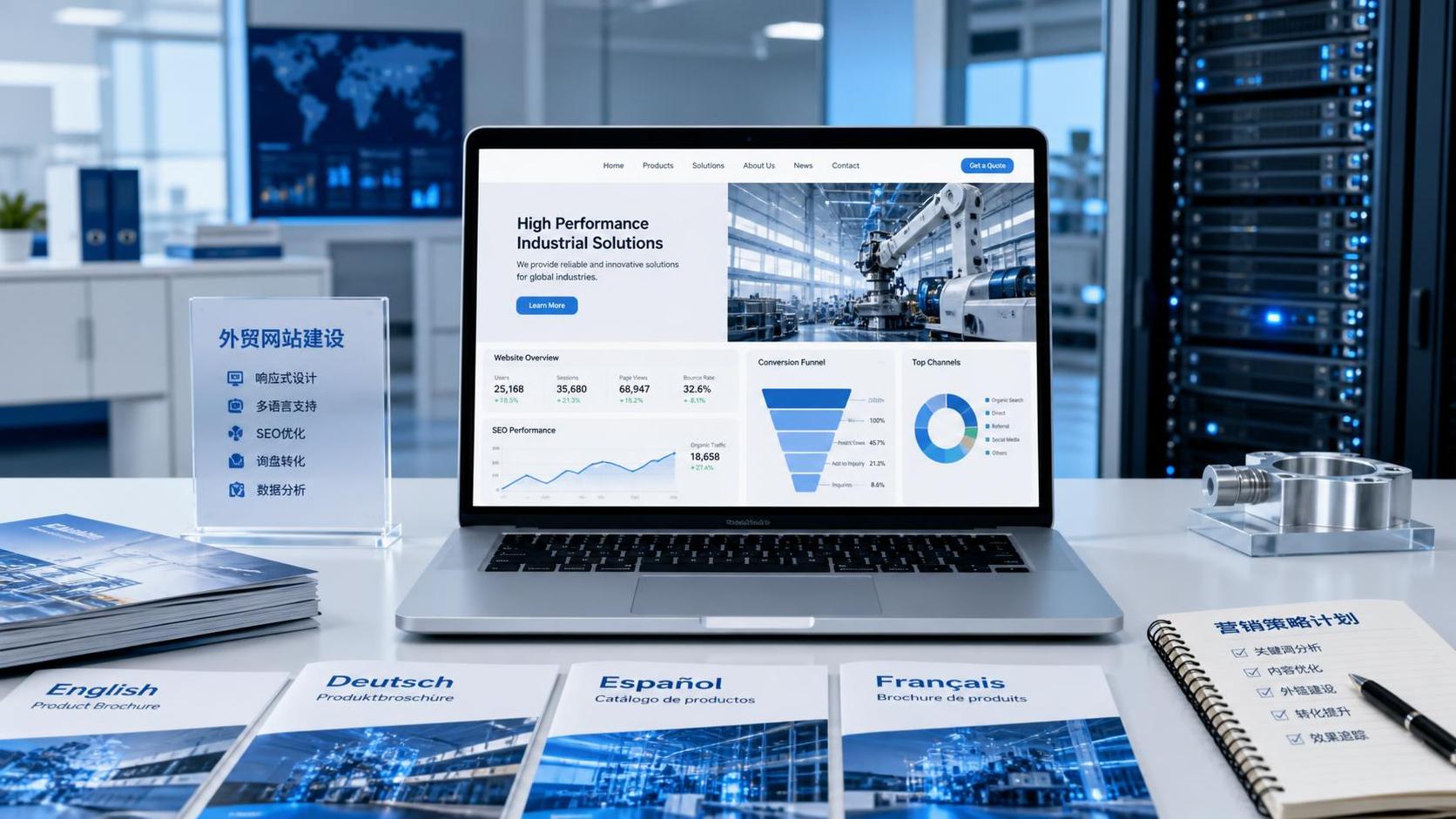
Yiyingbao's multilingual website development and AI translation capabilities can support the maintenance of pages in English, Russian, Japanese, Arabic, French, German, Spanish, and other languages, and can configure language paths and Hreflang. AI-generated content should be reviewed by personnel familiar with the products and target markets to avoid terminology mistranslations and inaccurate commitments.
IV. Why the Inquiry Conversion Path Fails
Having traffic but no inquiries does not necessarily mean that promotional channels are ineffective; it may also indicate that the landing page provides insufficient support. Overseas buyers usually first verify the supplier's identity, product suitability, and ease of communication. When pages only display promotional slogans or lack information about factories, certificates, case studies, and processes, bounce rates increase.
Excessive form fields, abnormal verification codes, failed email delivery, and buttons obscured on mobile devices are all foreign trade website development issues that directly result in lost leads. B2B pages should provide actions such as obtaining catalogs, requesting quotations, and scheduling consultations according to the procurement stage, as well as channels suitable for the target market, such as email, WhatsApp, or online customer service.
Yiyingbao can organize marketing websites around product catalogs, detail pages, company capability pages, case study pages, and inquiry components, while connecting with landing page optimization for advertising. It is recommended to record leads by country, product line, and source channel, distinguish between spam inquiries, sample requests, and high-intent procurement opportunities, and then iterate the pages.
V. Applicable Enterprises and Global Application Scenarios
Manufacturing factories, OEM/ODM enterprises, foreign trade companies, industrial product suppliers, cross-border sellers, and businesses expanding brands overseas may all face foreign trade website development issues. Industries such as machinery, hardware, building materials, auto parts, chemicals, new energy, packaging, and agricultural food products usually need to address both complex product presentation and overseas customer acquisition.
For inquiry-driven enterprises, the focus is on establishing product and capability proof for procurement roles. For B2C brands, it is necessary to improve product specifications, shopping carts, order or inquiry processes, and landing page support for advertising and social media traffic. The structure, content, and metrics of these two types of websites should not be applied mechanically.
Yiyingbao's services cover fields including laser engraving machines, steel, chemicals, heavy-duty trucks, machinery, new energy, medical care, and furniture, and list service cases involving Haier, Aokema, Shandong Airlines, Yuanhe Power Station, Little Duck Group, and China National Heavy Duty Truck Group. When implementing a project, enterprises should still develop a page checklist based on their own products, export regions, and compliance requirements.
VI. Website Development Selection, Launch, and Quality Control
Before selecting a solution, companies should first define their target markets, core products, customer acquisition channels, language scope, content maintenance responsibilities, and lead-handling processes. Comparing only the number of templates or one-time quotations can easily overlook key capabilities such as future expansion, permission management, data ownership, speed assurance, multilingual maintenance, and marketing tool integration.
The launch process should include domain names and DNS resolution, server or global acceleration deployment, page development, product data import, multi-device adaptation, form and email testing, tracking code configuration, sitemap submission, and security checks. Each step should retain acceptance criteria, especially real access testing across different countries' network environments and on mobile devices.
Yiyingbao provides supporting services including AI-powered website development, B2B marketing websites, B2C cross-border online stores, as well as domain names, SSL, and global servers. Its team background, software version releases, and industry awards can serve as one source of supplier evaluation information, but buyers should still clearly define delivery scope, response mechanisms, and data migration arrangements in contracts.
VII. Total Cost of Ownership and Future Operational Trends
The total cost of ownership of a foreign trade website includes more than website development expenses. It also includes labor costs for domain names, hosting or CDN, translation, localized content, product photography, feature development, technical maintenance, SEO, advertising, social media operations, and lead follow-up. Launching at a low price without the ability to continuously update often increases later remediation costs.
When evaluating ROI, companies should simultaneously monitor the number of effectively indexed pages, target keyword exposure, organic traffic, advertising landing page conversion rates, qualified inquiry rates, sales follow-up speed, and sales cycle length. New websites should not measure investment solely by short-term rankings, but should review the combined results of channels, content, and page conversions on a quarterly basis.
In the future, foreign trade website development issues will focus more on AI search visibility, structured knowledge accumulation, first-party data, and multi-channel attribution. Yiyingbao's AI+SEO, AI+SEM, AI+SNS, and GEO services can form an operational combination after website development; enterprises should continuously update verifiable product, case study, and Q&A content to build long-term digital assets.
