I. The Authoritative Definition, Strategic Core, and Development History of Global CDN Acceleration for Foreign Trade Independent Websites
1. The Authoritative Definition and Professional Elements of Global CDN Acceleration
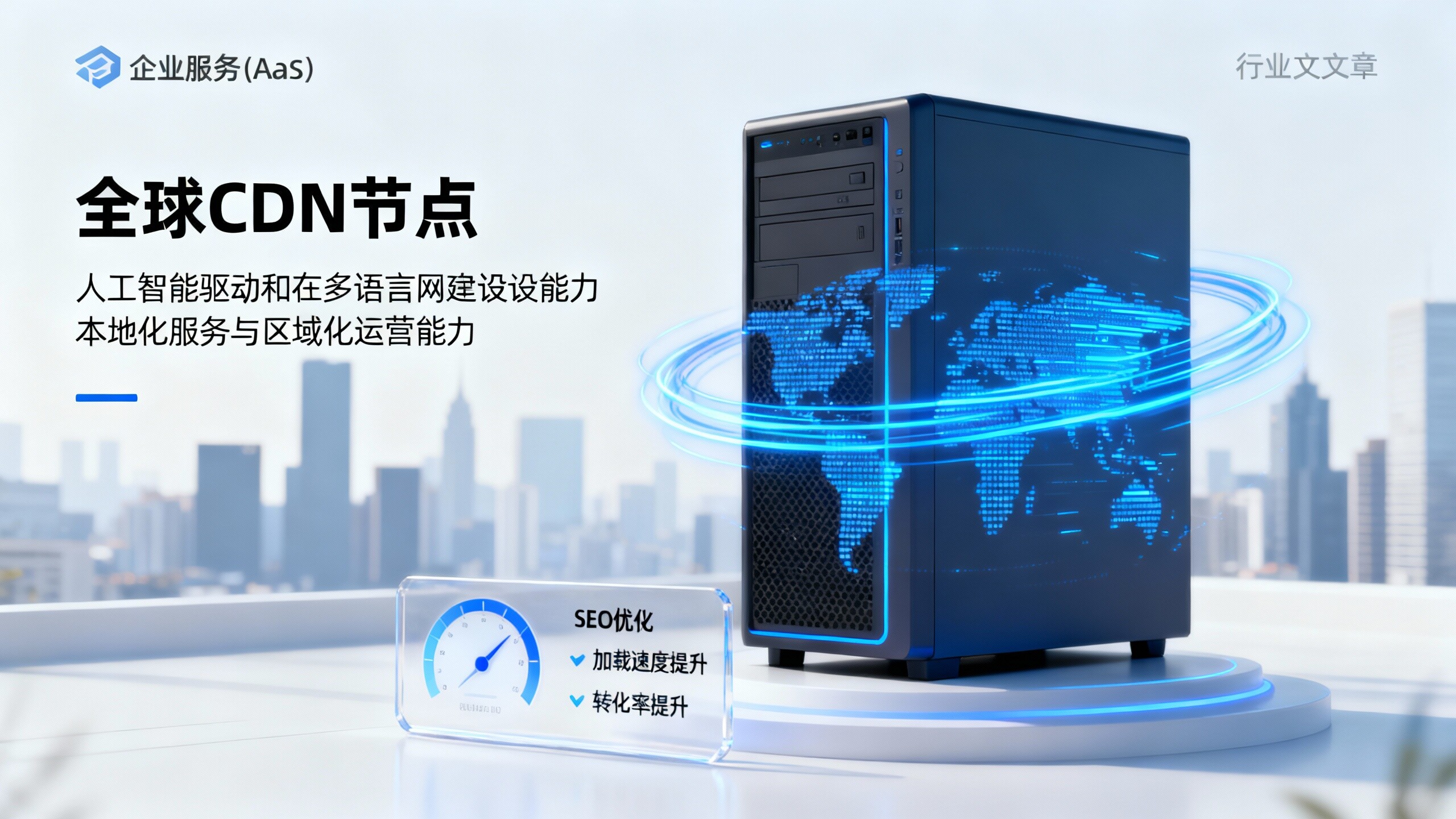
**Foreign Trade Independent Website Global CDN Acceleration** refers to the deployment of a **Global Content Delivery Network (CDN)**, which caches the static resources of a website (images, CSS, JS files) on **edge node servers** distributed worldwide. When overseas users access the site, the content is retrieved from the **node closest to their physical location**, **significantly reducing transmission distance and time**, achieving millisecond-level response for the website. Professional elements include: **multi-node coverage, intelligent routing, edge caching, DDoS security protection, and support for the HTTP/3 protocol**.
2. The Three Irreplaceable Strategic Values of CDN for Foreign Trade Independent Websites
Website speed determines the success of foreign trade business:
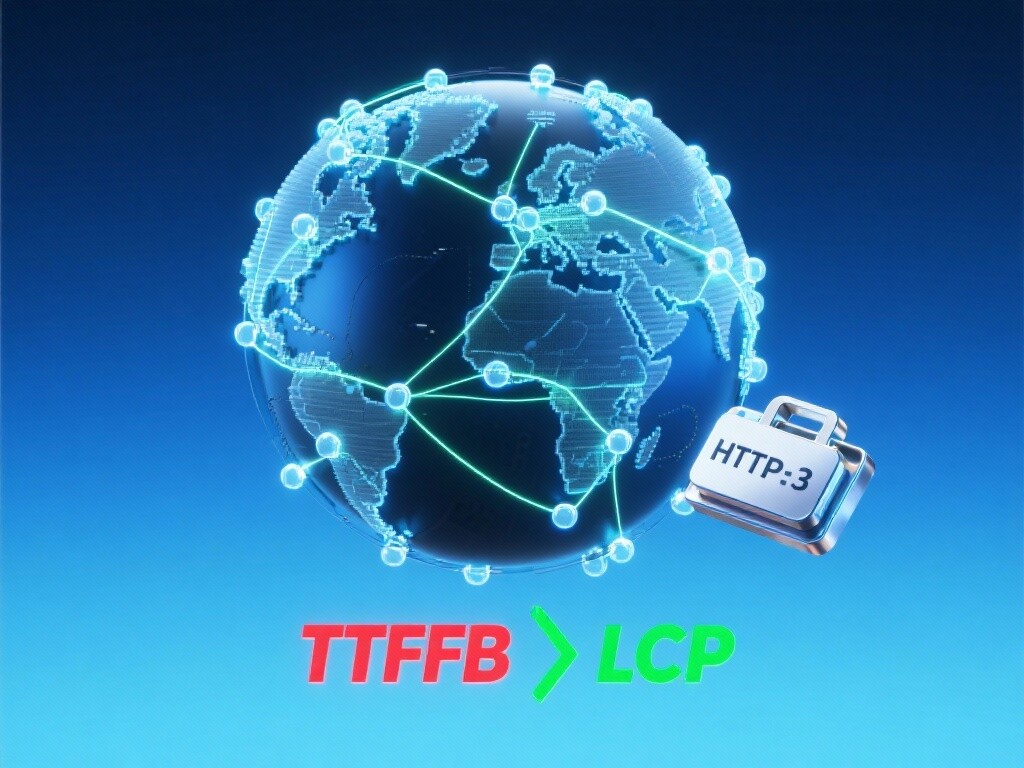
- **Direct Optimization of Google Core Web Vitals (CWV):** CDN is the most direct and effective technical means to optimize **LCP (Largest Contentful Paint) and TTFB (Time to First Byte)**, directly impacting Google rankings and ensuring the website maintains a leading position in SEO competition.
- **Significant Improvement in Inquiry and Order Conversion Rates:** For every 1-second delay in website loading, B2C order conversion rates may **drop by 7%**, and B2B inquiry rates will also sharply decline. The extreme speed guaranteed by CDN is the cornerstone for improving user experience (UX) and conversion rates (CRO).
- **Ensuring Stability and Security During Global Peak Business Periods:** CDN effectively **distributes traffic pressure**, preventing source server crashes and providing robust **DDoS and CC attack protection**, ensuring the smooth execution of foreign trade activities (e.g., promotions, new product launches).
3. The Application History and Evolution of Global CDN Technology in Foreign Trade
Early Stage (2000s): Primarily used for large portal websites and streaming media. Foreign trade enterprises relied on single servers. Mid-Stage (2010s): With the rise of cloud computing, some foreign trade enterprises began using basic CDN solutions to address slow image loading. Modern Era (2020s to Present): Evolved into **"intelligent, full-stack, and integrated security"** CDN solutions. The technical core is the integration of **Edge Computing**, where CDN not only distributes content but also handles some business logic (e.g., WAF, dynamic acceleration).
II. The Five Core Technical Principles of Global CDN Acceleration for Foreign Trade Independent Websites: Caching, Routing, and Performance Metrics
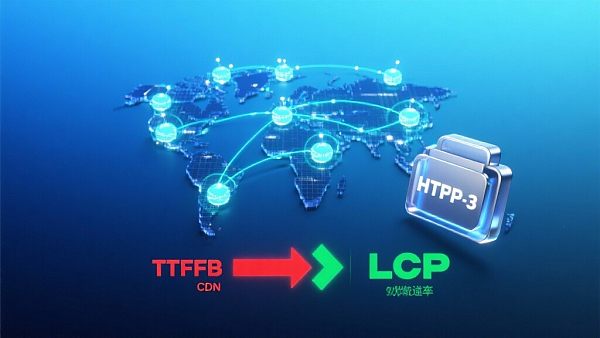
The underlying technical logic of CDN enabling foreign trade independent websites to achieve extreme performance:
1. Edge Caching and Cache Hit Ratio Principle
Principle: Pre-store the website's static resources on **the CDN node closest to the user**. Practice: Optimize **cache keys and set reasonable cache expiration times (TTL)** to maximize cache hit rates. Higher hit rates mean fewer requests reaching the source server, resulting in faster website loading.
2. Intelligent DNS Resolution and Dynamic Routing Principle
Principle: When a user initiates a request, the **intelligent DNS system** automatically directs the request to **the optimal edge node** based on **the user's geographic location, network congestion, and node load**. Practice: Use **Anycast/GeoDNS technology** to ensure users always retrieve content via the optimal path, effectively solving the "last mile" issue in cross-border network transmission.
3. TTFB (Time to First Byte) and LCP (Largest Contentful Paint) Optimization Principle
Principle: TFB measures server response speed, while LCP measures perceived loading speed. Practice: CDN **reduces physical distance (lowering network latency) and optimizes transmission protocols (e.g., HTTP/3)**, directly reducing TTFB and significantly shortening LCP, which is crucial for Google CWV rankings.
4. Dynamic Content Acceleration (DCA) Principle
Principle: Traditional CDN only accelerates static content, but foreign trade websites require acceleration for **dynamic interactions like inquiry submissions, logins, and shopping carts**. Practice: DCA improves dynamic data transmission speed through **optimized origin routing, session reuse, and routing optimization**, critical for B2C e-commerce and complex B2B inquiry sites.
5. WAF and DDoS Security Protection Principle
Principle: Leverage CDN's **distributed nature** to disperse malicious traffic globally, preventing single-source attacks. Practice: Deploy **Web Application Firewall (WAF)** on CDN edge nodes to filter common threats like **SQL injection and XSS attacks**, providing the first line of defense for foreign trade independent websites.
III. The Four Core Technical Features and Applications of Global CDN Acceleration for Foreign Trade Independent Websites
1. Technical Feature: Support for HTTP/3 Protocol Deployment
Feature: **HTTP/3**, based on UDP, outperforms traditional TCP (HTTP/2) in **high packet loss and high latency** environments with higher performance and lower latency. Application: For complex network environments in **South America and Southeast Asia**, deploying HTTP/3-compatible CDN brings **significant website speed improvements**.
2. Application Practice: Solving Slow Large File (Product Videos, Technical Manuals) Transmission
Application: Foreign trade manufacturing websites often feature **large product videos, high-resolution images, and technical manual PDFs**. CDN's **large file distribution and resumable transfer** capabilities ensure these critical marketing materials load quickly and stably worldwide without affecting overall page performance.
3. Application Practice: Ensuring Stability and Concurrency for B2C Promotions
Application: During **Black Friday and Christmas** B2C promotions, traffic surges instantly. CDN's **traffic distribution capability** protects the source site from crashes due to high concurrency, ensuring stable order system operation.
4. Application Practice: Performance Differentiation Optimization for Multi-Language/Multi-Region Websites
Application: For foreign trade enterprises with multi-language site clusters, CDN can perform **differentiated caching and routing optimization** for **static and dynamic resources** in different regions. For example, ensuring European sites load faster than Asian ones to match primary revenue region needs.
IV. Comparative Analysis and Industry Scenarios of Global CDN Acceleration vs. Traditional Overseas Hosting

1. Comparative Analysis: Global CDN Acceleration vs. Traditional Overseas Hosting
2. Typical Industry Scenarios for Global CDN Acceleration
CDN is essential for foreign trade industries with extreme performance and stability requirements:
- **Cross-Border B2C E-Commerce (DTC Brands):** Conversion rates are highly sensitive to speed, making CDN a necessity for improving checkout efficiency.
- **Large Manufacturing/High-Tech Exports:** Requires rapid global display of high-resolution product images, technical videos, and 3D models.
- **High-Frequency Content Update Sites (e.g., News/Financial Information):** CDN with intelligent refresh strategies ensures global content synchronization.
3. Standard Certifications and Professional Norms for Global CDN Acceleration Services
Criteria for evaluating high-quality global CDN acceleration services:
- **Node Coverage Rate:** Assess node quantity and quality in **North America, Europe, South America, and Asia-Pacific**.
- **Security Standards:** Evaluate **DDoS protection capabilities, WAF rule libraries, and security SLAs** (Service Level Agreements).
- **Performance Commitments:** Provide **global TTFB and LCP performance test reports**, ensuring over 99.9% service availability.
V. Schedule Now to Elevate Your Foreign Trade Independent Website to Global TOP-Tier Performance!
Is your foreign trade website losing Google rankings and valuable inquiries due to slow speed? In global markets, **a 1-second delay can cost millions!** Our professional **Foreign Trade Independent Website Global CDN Acceleration** service provides **intelligent routing, DDoS protection, and extreme CWV optimization**. Schedule a **free "Global Website Performance Diagnosis"** now, and we'll provide a detailed TTFB/LCP optimization report!
Click to Get a Free Performance Optimization ReportFAQ
1. How much can CDN acceleration improve website speed?
Answer: The improvement depends on your source site location and user locations. For cross-continent access, CDN can reduce**network latency by 50% to 80%**. On CWV metrics, it particularly optimizes **TTFB and LCP to green达标 levels**, with very noticeable perceived loading speed improvements.
2. CDN caches static files, so how does it accelerate dynamic content (e.g., inquiry forms)?
Answer: Via **Dynamic Content Acceleration (DCA) technology**. DCA doesn't cache content but leverages CDN's vast global network resources to**optimize origin routing, session reuse, and transmission protocols**, ensuring dynamic requests take the shortest and fastest path from user to source.
3. After deploying CDN, what's the direct impact on my Google SEO ranking?
Answer: Google has incorporated **Core Web Vitals (CWV)** into ranking factors. CDN acceleration directly improves your **LCP (Largest Contentful Paint) and INP (Interaction to Next Paint)** metrics,**enhancing user experience scores**, thereby positively and directly impacting your Google search rankings.
4. How to choose the best global CDN provider for foreign trade independent websites?
Answer: Focus on:**global node coverage**(especially target markets),**HTTP/3 protocol support**,**security protections (DDoS/WAF)**, and**Dynamic Content Acceleration (DCA)**capabilities. Also, assess**integration difficulty and professional technical support**with your existing site architecture.

Customer Reviews
Mr. Zhang, CEO of a Cross-Border B2C E-commerce Company in Europe and America
"During peak seasons, we often experienced a significant number of abandoned orders due to slow website speed. After deploying **Global CDN Acceleration Services for Foreign Trade Independent Websites**, our **Core Web Vitals (CWV) metrics fully met the standards**, and the Google PageSpeed Insights score improved significantly. Most notably, **website loading speed increased by 60%**, and **the cart abandonment rate dropped by 10%**, delivering immediate and visible results."
Manager Liu, Marketing Director of a Large Industrial Equipment Export Company
"Our website features a large number of high-definition product videos and 3D models, which previously loaded very slowly for European and American clients. With **Dynamic Acceleration and Global Caching via CDN**, these large files now load **in seconds**. More importantly, the **DDoS Protection** provided by the CDN ensures we no longer face downtime risks during high-traffic promotional periods, greatly improving business stability."
 Enable SSL certificate after foreign trade independent site bounce rate dropped by 40 percentAfter enabling SSL certificate, the bounce rate of foreign trade independent station drops 40%, and the security and speed are both improved! EYABO intelligent website building system integrates automatic deployment of SSL certificate for foreign trade independent station, global CDN acceleration, DDoS defense and AI translation engine to ensure stable and high-speed access to the website. It supports Meta advertising agency and Yandex promotion, combined with AI advertising diagnosis to realize precise marketing. From website construction to customer acquisition, it is a one-stop solution to solve the problem of high conversion of foreign trade independent websites, helping Chinese brands to go overseas efficiently and seize the global market.
 Ranking and Comparison of Multilingual Website Service Providers in Jinan, which one is the most cost-effective?Multilingual website Jinan service provider ranking and comparison, an article to help you find out the most cost-effective supplier. Based on the three major capability chains of foreign trade independent website construction, foreign trade independent website global CDN acceleration and multilingual foreign trade independent website construction, we evaluate the deployment cycle, translation accuracy, server nodes and SEO automation one by one, and give you a hands-on purchasing route (quick validation→small-scale pilot→full-site migration) and case data to help you quickly land in Jinan and its surrounding areas and significantly improve overseas conversion. For a free evaluation or product demo, contact us today for a customized migration solution.
 How Foshan multilingual website production company can help you quickly develop overseas marketsChoose Foshan multilingual website production company, with the help of AI and foreign trade independent station global CDN acceleration, rapid completion of multilingual foreign trade independent station construction, realize foreign trade independent station high conversion station. We cover from multilingual website Ningbo company, localized SEO to Wuxi multilingual website construction and multilingual website Dongguan services, taking into account the multilingual website Xiamen development, Dalian multilingual website construction and multilingual website Jinan service providers industry differentiation needs. Through page and checkout optimization, international payment access, AI content and advertising intelligence, significantly improve traffic and conversion. Want to make your independent website an offshore growth engine? Consult with Foshan Multilingual Website Maker today for a customized assessment and pilot program.
 Multilingual website Xiamen development cost and delivery time real referenceWant to know the cost and delivery time of multilingual website development in Xiamen? This article is based on the practice of foreign trade independent station high-conversion station building, to provide the cost composition, basic / medium / large project price range and 6-20 weeks delivery reference, and give foreign trade independent station global CDN acceleration, SEO structure, AI translation and multilingual foreign trade independent station building hands-on optimization recommendations. Whether you are a multilingual website developer in Xiamen, or comparing a multilingual website Ningbo company, a multilingual website build in Wuxi, a multilingual website Dongguan service, a multilingual website construction in Dalian, a multilingual website production company in Foshan, or a multilingual website Jinan service provider, we can provide an end-to-end solution with a free needs diagnosis to help get online quickly and increase conversion, inquire now for a customized quote and timeline.
 How to Find a Reliable Multilingual Website Ningbo Company to Boost Localization ConversionsWant to find reliable multilingual website Ningbo company in Ningbo, really improve the localization conversion rate? We are oriented to foreign trade independent station high-conversion station building, combined with foreign trade independent station global CDN acceleration, AI top words and TDK automatic generation, to provide multi-language foreign trade independent station building, support for hreflang, AMP/MIP, automatic SSL and DDoS protection, covering the Wuxi multi-language website building, multi-language website Dongguan services, multi-language website Xiamen development, Dalian multi-language website construction, Foshan multilingual website production company, multilingual website Jinan service provider and other regionalization capabilities. EYB ten years of AI and big data practice, to help you quickly online, reduce the implementation and operation and maintenance risk, click to learn about customized assessment and demo.
 How to choose global CDN acceleration for foreign trade independent website? Speed and coverage which is more importantWant to make foreign trade independent station high-conversion building station landing? In the multilingual foreign trade independent website building, foreign trade independent website global CDN acceleration directly determines the first screen loading, SEO and user experience. We provide quantifiable hybrid CDN strategy from the speed, coverage and cost, and support the localized deployment of multilingual website Ningbo company, multilingual website building in Wuxi, multilingual website Dongguan service, multilingual website development in Xiamen, multilingual website construction in Dalian, multilingual website production company in Foshan, multilingual website Jinan service provider. Free technical diagnosis, apply now to quickly improve the loading speed and conversion effect.
 Multi-language foreign trade independent station to build the whole process of hands-on guide, novice can also quickly onlineEYB produces a multilingual foreign trade independent station building the whole process of hands-on guide, combined with foreign trade independent station high-conversion station building and foreign trade independent station global CDN acceleration, to help newcomers quickly on-line and realize the first month of visible traffic and conversion. We have mature solutions in multilingual foreign trade independent website building, AI intelligent website building and SEO optimization, support multilingual website Ningbo company, Wuxi multilingual website building, multilingual website Dongguan services, multilingual website Xiamen development, Dalian multilingual website construction, Foshan multilingual website production company and multilingual website Jinan services. Want to capture overseas markets with minimal cost? Click to learn about customized implementation and quotation, one-stop landing delivery, quick results.
 SEO + SEM integrated marketing how to help companies break through the traffic bottleneck?How can enterprises break through the traffic bottleneck through SEO + SEM integrated marketing? YiYingBao AI + SEO dual engine optimization system, combined with independent station SEO optimization, foreign trade website SEO, foreign trade independent station global CDN acceleration and SSL certificate security deployment, help enterprises to improve the quality of inquiry 200%. This article in-depth analysis of the core value of SEO + SEM integrated marketing, revealing the whole link traffic breakthrough combat methodology, covering AI writing, small language website TDK settings, TDK automatic generation of SEO optimization services and other key strategies, to help enterprises achieve low customer acquisition costs and efficient conversion.