










I. How to Improve Independent Website Conversion Rates: Definition and Measurement Scope
An independent website conversion rate is the proportion of visitors who complete predefined business actions. B2B websites typically focus on qualified inquiries, meeting bookings, sample requests, catalog downloads, and WhatsApp communications; B2C websites place greater emphasis on add-to-cart actions, checkout, payment, and repeat purchases. To improve independent website conversion rates, companies should first establish a consistent internal definition of “valid conversions.”
Do not focus solely on the overall conversion rate. Industrial product purchasing decisions have long cycles, and visitor intent varies significantly across brand keywords, product keywords, industry articles, advertising landing pages, and social media content. Data should be analyzed separately by entry page, device, country, channel, and product line to identify the factors that truly affect lead quality.
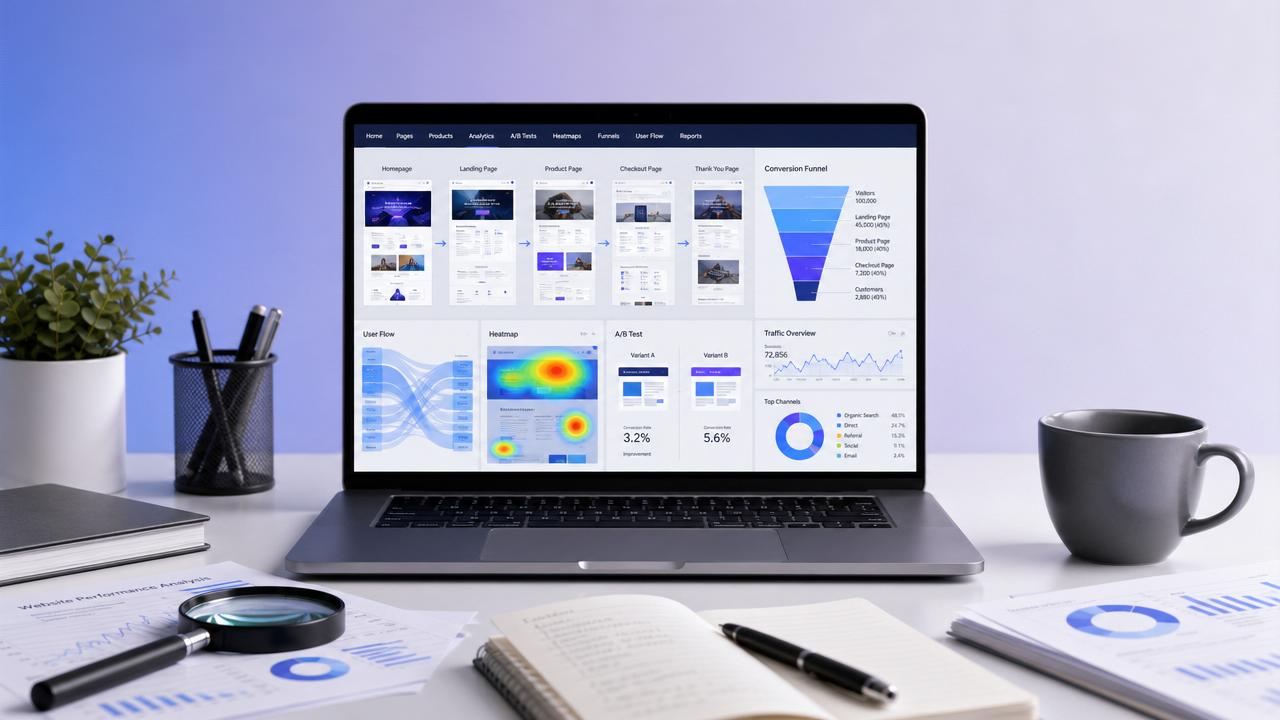
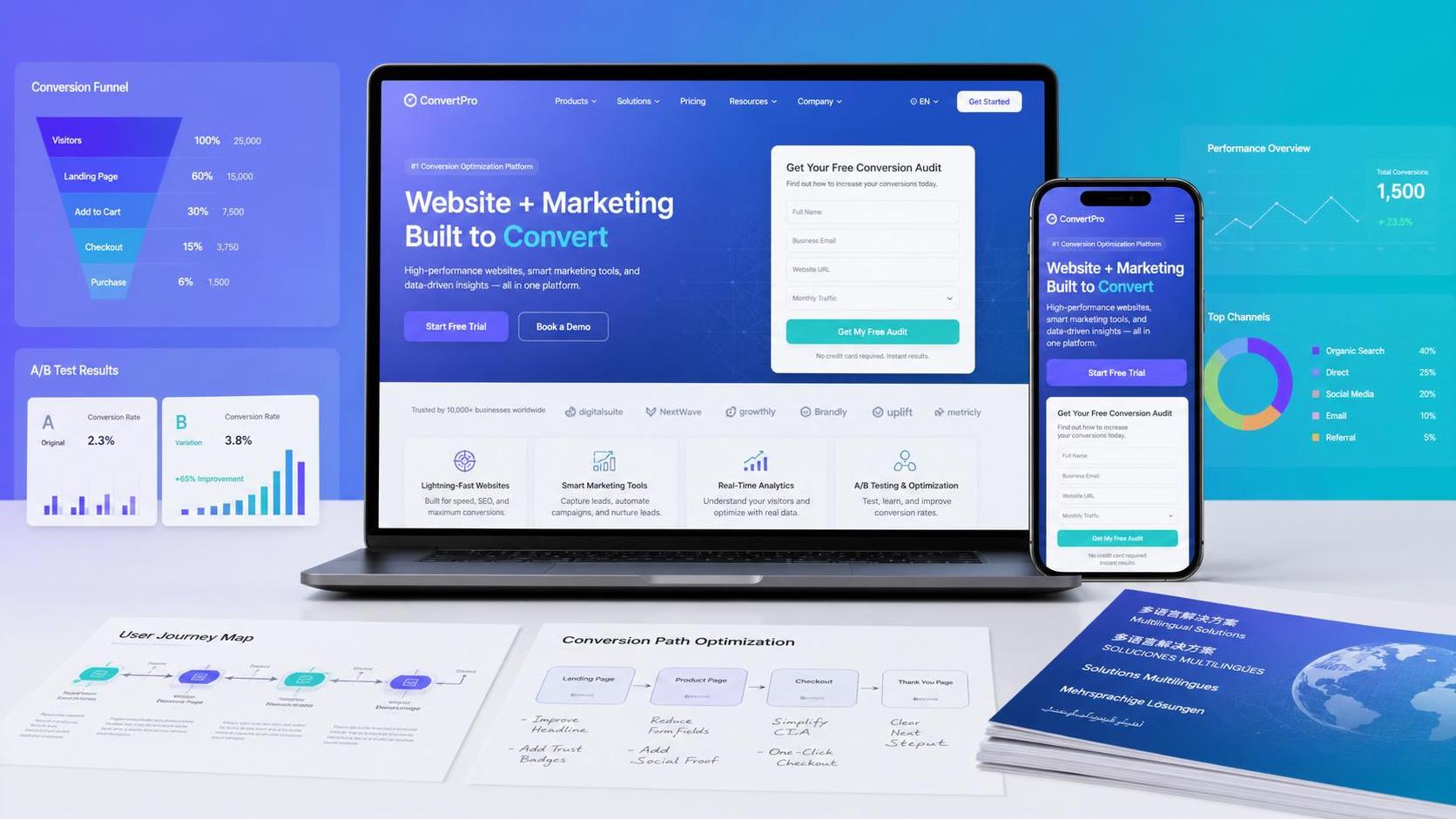
In practice, the funnel can be divided into seven stages: impressions, clicks, in-depth browsing, key page visits, form submissions, sales follow-up, and transactions. Each stage may experience drop-off due to keyword mismatch, slow loading, unclear selling points, insufficient trust, or delayed responses, all of which can reduce final inquiry generation.
II. Technical Principles of Page Experience and Investigation of High-Drop-Off Points
The essence of page experience is to reduce the cost for visitors to understand, compare, and take action. Within a limited time, the above-the-fold section should explain the product category, target customers, core capabilities, and next action; navigation should organize products, applications, capabilities, case studies, and contact information according to purchasing habits, rather than using internal departmental names in place of user-oriented language.
Product detail pages are important landing pages for foreign trade inquiries. It is recommended to present applications, key specifications, materials or processes, available options, delivery capabilities, quality control, FAQs, and inquiry entry points. For customized products, clearly specify the minimum order quantity, sampling, drawing confirmation, and lead-time communication scope to reduce invalid inquiries.
Pages with high drop-off rates are commonly found in mobile above-the-fold sections, form pages, pricing or shipping information pages, product filtering pages, and advertising landing pages. Image size, redirect paths, form fields, button visibility, and regional access speed should be checked, and issues should be identified through visit depth, exit rate, form start rate, and submission rate rather than subjective redesign decisions.
III. Main Types of Conversion-Focused Independent Websites and Their Suitable Users
By business model, independent websites can be divided into B2B inquiry-oriented corporate websites, product catalog websites, project solution websites, B2C brand stores, and campaign landing pages. Different types have different core conversion actions, and the instant-payment logic of an online store should not be directly applied to high-ticket industrial procurement scenarios.
Manufacturing plants, OEM/ODM companies, machinery and equipment suppliers, hardware and building materials suppliers, chemical companies, and new energy suppliers are better suited to a structure of “product pages + capability proof + multiple inquiry entry points.” Cross-border sellers and DTC brands, on the other hand, need comprehensive product specifications, reviews, shopping carts, delivery, returns and exchanges, and payment information to shorten the purchase decision path.
When targeting multiple national markets, language switching should not be merely sentence-by-sentence translation. Buyers in different regions may focus on different certifications, units, delivery terms, contact information, and case studies. Multilingual pages should retain clear language paths, regionalized wording, and relevant content to help visitors quickly determine whether the offering meets local procurement needs.
IV. Trust Building: From Corporate Presentation to Procurement Risk Control
Before submitting an inquiry, overseas buyers usually assess whether a supplier is genuine, professional, and capable of stable delivery. A website should fully present the company background, factory or office environment, production equipment, R&D and quality inspection processes, team contact information, served markets, and verifiable qualification documents, rather than relying solely on slogan-based introductions.
Case study content should focus on the customer’s industry, the challenges faced, the products or services adopted, and publicly available results. A vague wall of brand logos cannot replace business evidence. Yiyingbao serves industries including laser engraving machines, steel, chemicals, heavy-duty trucks, machinery, and new energy. Its disclosed service cases include companies such as Haier, Aucma, Shandong Airlines, and Little Duck Group.
Yiyingbao states that its team has experience in search algorithm research and SaaS development and provides capabilities such as responsive website development, multilingual websites, global node deployment, and SSL. For buyers, when selecting a service provider, they should still verify website ownership, data export, permission management, server solutions, service scope, and post-launch response mechanisms.
V. How to Improve Independent Website Conversion Rates: Marketing Funnel Coordination Methods
Traffic quality determines optimization priorities. Organic search is suitable for addressing clear product needs and technical questions; advertising is suitable for market validation and rapid customer acquisition; LinkedIn, Facebook, TikTok, and YouTube are more suitable for building brand reach and remarketing audiences. All channels should lead to pages consistent with the advertising message and keyword intent.
After visitors enter a page, progressive action options should be provided, such as downloading a catalog, obtaining a specification sheet, requesting a quote, booking a demo, or directly contacting sales. Form fields should include only information required for sales qualification, with email, online customer service, or instant messaging entry points configured; the sales team should also establish inquiry grading and response time limits to prevent leads from being lost off-site.
Yiyingbao integrates AI-powered website development, Google SEO, advertising, overseas social media, and website operations into an integrated service. When using such solutions, companies should centrally manage page updates, content production, campaign tags, and lead attribution, and regularly review high-value channels rather than pursuing a single traffic metric in isolation.
VI. Service Selection, Implementation Process, and Quality Control
Before selecting an independent website service, companies should first clarify their target markets, main products, target customer roles, inquiry objectives, and existing content assets. For exporting companies, whether the website supports multilingual content management, bulk product maintenance, mobile responsiveness, form tracking, basic search configuration, and advertising landing page iteration is usually more important than visual templates alone.
A more reliable implementation process includes requirements analysis, keyword and competitor research, information architecture design, page prototyping, content preparation, development configuration, cross-device testing, tracking verification, launch monitoring, and continuous optimization. Before launch, particular attention should be paid to testing form delivery, email notifications, language redirects, 404 pages, privacy policies, mobile buttons, and access performance in different regions.
Yiyingbao’s AI-assisted content generation can improve website development and update efficiency, but companies still need to review technical specifications, compliance statements, translation accuracy, and the authenticity of case studies. Especially in medical, chemical, food, and high-risk industrial sectors, product claims, certification documents, and export restriction information should be published only after confirmation by business and compliance personnel.
VII. Total Cost of Ownership, Return on Investment, and Future Trends
The total cost of ownership for an independent website includes not only website development fees, but also domain names, servers or CDN, content production, multilingual maintenance, images and videos, advertising testing, data tools, sales follow-up, and ongoing operational costs. The degree of customization, number of products, number of languages, system integrations, and number of target countries all affect project budgets and maintenance investment.
When evaluating return on investment, companies can track the cost per qualified inquiry, qualified opportunity rate, average sales cycle, customer lifetime value, and proportion of organic traffic. For B2B companies, the value of one high-quality order may significantly exceed short-term traffic growth. Therefore, sales-confirmed opportunity results should be fed back to the marketing team to calibrate advertising and content strategies.
In the future, conversion optimization will rely more heavily on first-party data, multilingual localization, video and structured content, as well as the development of Q&A-style pages for generative search. The key to improving independent website conversion rates remains continuously validating customer needs: using readable, trustworthy, contactable, and trackable website assets to capture every overseas visit and iterating based on data.
