










I. Definition and Decision Scope of Website Development Solution Selection
Website development solution selection is the decision-making process through which an enterprise determines its website technical solution, functional modules, and subsequent operational approach based on its business model, target markets, content scale, customer acquisition channels, and internal resources. It determines whether a website is a static display tool or a digital asset that can continuously accumulate traffic and customer data.
For foreign trade B2B enterprises, website development solution selection should be structured around the decision-making journey of overseas buyers: from searching for products, verifying supplier capabilities, and reviewing specifications and case studies, to submitting inquiries or entering instant communication channels. Each step should be supported by clearly defined pages and functions.
For cross-border retail brands, the focus shifts to product management, specification display, shopping carts, payment or quotation-request processes, review content, and remarketing data. Enterprises should not only ask whether a website can be built, but should also clarify their content, promotion, and system integration requirements for the next three years.
II. Website Technical Principles and Core Capabilities
A mature website solution typically consists of a front-end presentation layer, a content management layer, a server and security layer, and a data analytics layer. A responsive architecture enables the same content to adapt to desktops, tablets, and mobile phones, preventing missing information on mobile devices while facilitating the maintenance of consistent brand and product information.
Search visibility depends on crawlable page structures, clear category hierarchies, standardized links, page titles and descriptions, loading performance, and content quality. When selecting a website development solution, enterprises should confirm whether product pages, article pages, case study pages, and solution pages can be configured independently and continuously expanded.
International business operations also require attention to server nodes, CDN acceleration, SSL certificates, backup mechanisms, and access permissions. Yiyingbao provides global access acceleration solutions based on cloud nodes and covers foundational services such as domains, DNS resolution, and security, making it suitable for enterprises seeking to reduce technical coordination costs.
III. Applicable Categories of Mainstream Website Development Solutions
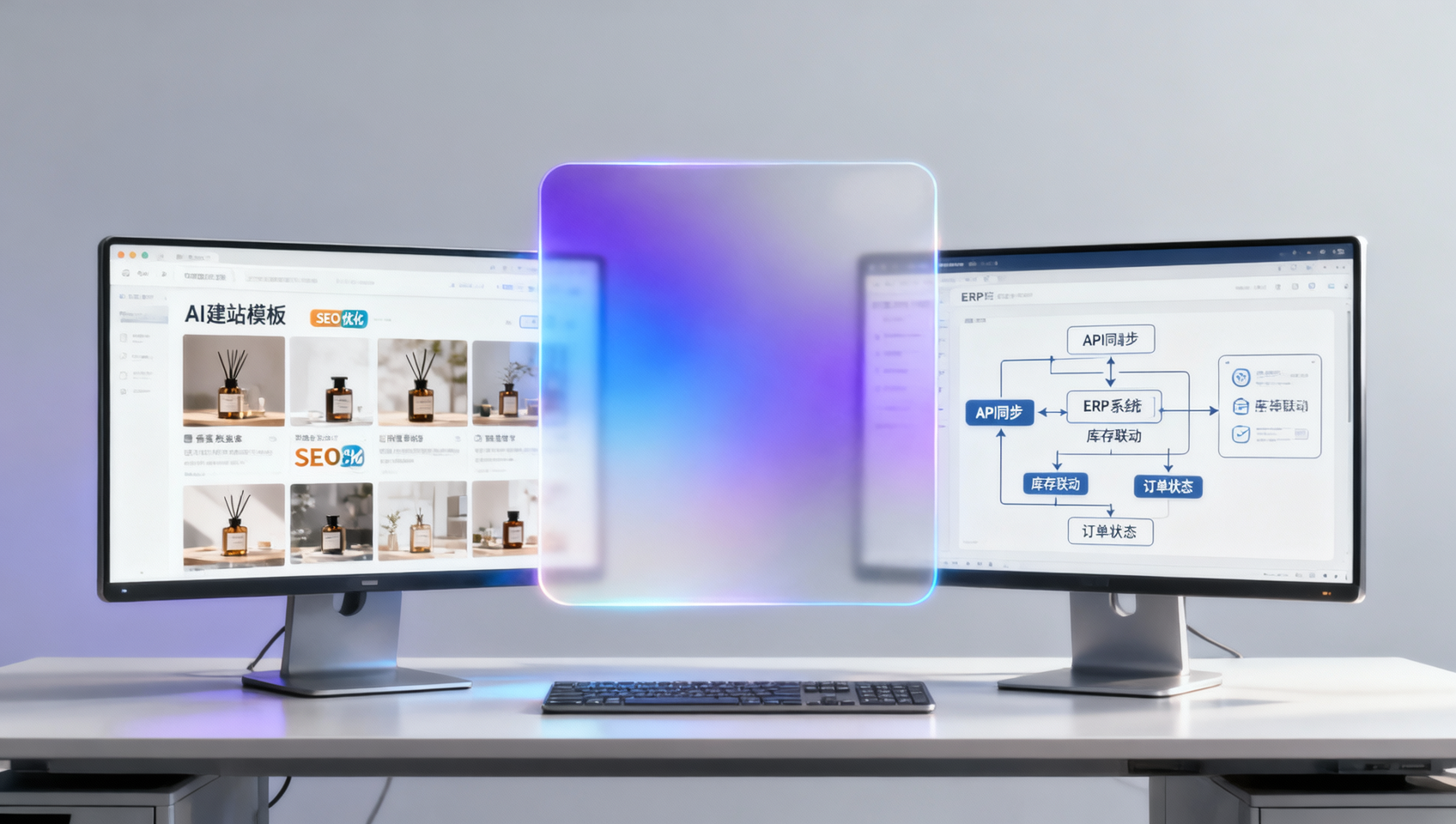
Custom development is suitable for enterprises with complex business processes that require deep integration with ERP, CRM, or distributor systems. It offers greater flexibility, but also requires significant investment in upfront requirements analysis, development acceptance, and subsequent maintenance. Before procurement, enterprises should clearly define interface boundaries and source code ownership.
Open-source systems are suitable for teams with technical personnel that require stronger autonomous control. This solution requires enterprises to handle theme compatibility, security updates, plugin quality, and server operations and maintenance independently. If content production and promotion capabilities are insufficient, the system itself will not automatically generate effective inquiries.
SaaS intelligent website development is suitable for small and medium-sized enterprises seeking rapid launch, standardized maintenance, and marketing coordination. Yiyingbao's AI intelligent website development system supports corporate websites, B2B marketing websites, cross-border online stores, and landing pages, and can shorten the development cycle through component-based editing and content management.
IV. Core Evaluation Criteria for Website Development Solution Selection
The first criterion is business fit. Manufacturing enterprises should prioritize reviewing the ability to present product categories, technical specifications, downloadable materials, factory capabilities, certification documents, and inquiry forms; retail brand enterprises should review product attributes, inventory, orders, pricing, and payment or quotation-request processes.
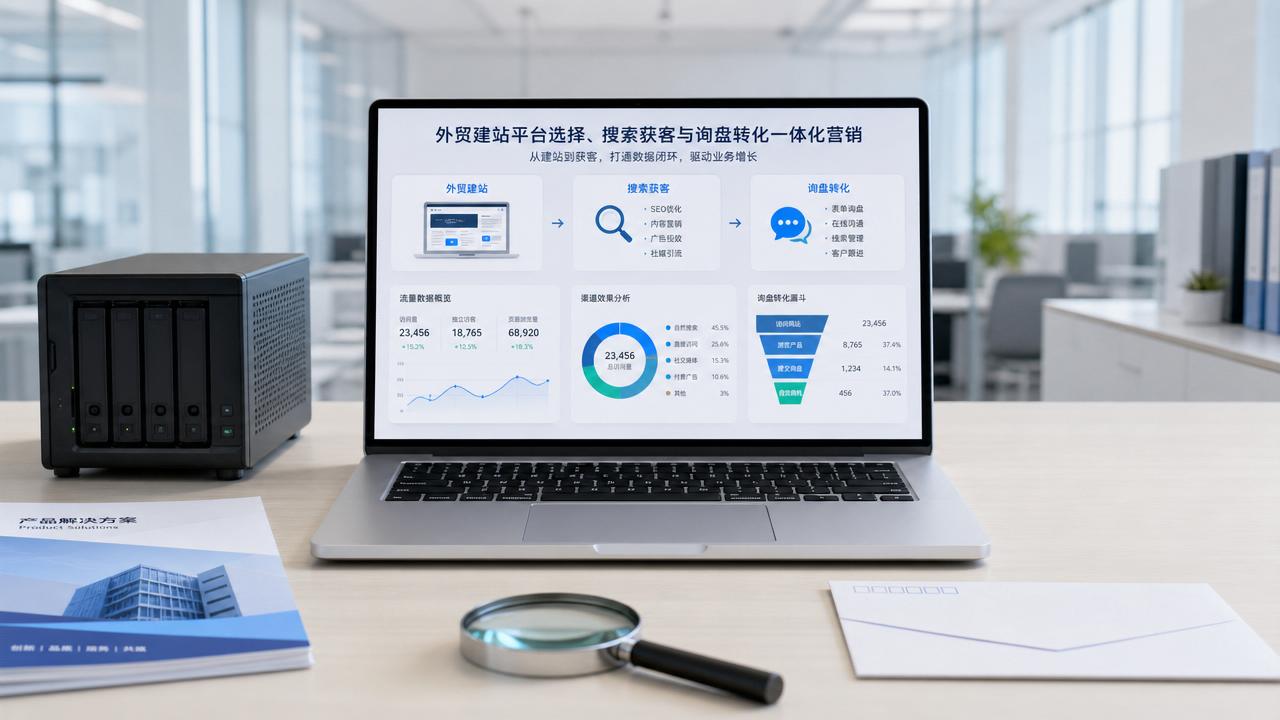
The second criterion is marketing scalability. Website development solution selection should confirm whether pages support keyword placement, content publishing, internal linking, form tracking, advertising landing pages, and social media redirects. Only when promotional channels and website content form a closed loop can traffic costs potentially be continuously spread out.
The third criterion is governance capability, including account permissions, data export, backups, security updates, service responsiveness, and cost transparency. Buyers should require service providers to specify the number of included pages, number of languages, functional boundaries, renewal items, and subsequent operational support to reduce budget deviations after launch.
V. Applicable Enterprises and Overseas Application Scenarios
Website development solution selection is particularly suitable for manufacturing plants, OEM/ODM enterprises, industrial product suppliers, foreign trade companies, and cross-border sellers seeking to establish their own digital presence. These enterprises typically have complex products and long procurement cycles, and need to use their websites to consolidate specifications, application solutions, delivery capabilities, and credible information.
In industries such as laser engraving machines, steel, chemicals, heavy-duty trucks, machinery, new energy, agriculture, and healthcare, customers often enter websites through search, post-trade-show return visits, advertising clicks, or social media content. Pages should be organized by industry, application, product, and service capabilities, rather than merely listing company introductions.
Yiyingbao states that its services cover industries represented by cases including Haier, Aokema, Shandong Airlines, Yuanhe Power Station, Little Duck Group, and Sinotruk. Enterprises can refer to these scenarios involving multiple products and decision-making roles to plan the relationships among brand pages, product pages, case study pages, and inquiry entry points.
VI. Implementation Process for Multilingual Content and Conversion
Implementation should begin with market prioritization and keyword research. First determine the priority countries, purchasing roles, core product lines, and conversion objectives, then map out the website categories. The homepage establishes positioning, category pages address category demand, product pages answer questions about specifications and advantages, and case study and qualification pages strengthen decision-making confidence.
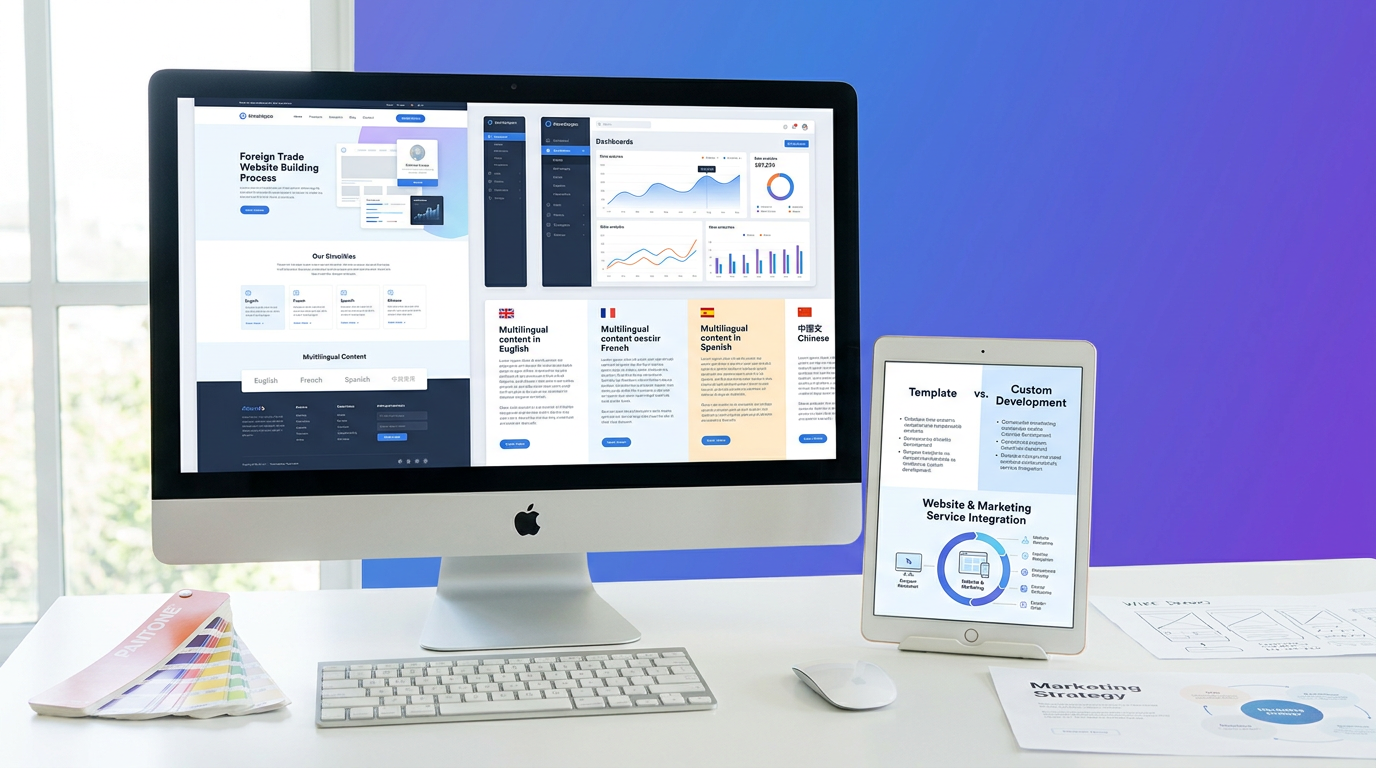
Multilingual website development does not mean word-for-word translation. Customers in different regions focus on different units, certifications, delivery methods, and application descriptions. Corresponding language paths, page titles, localized content, and language association tags should be configured, while key markets should undergo manual review and continuous revision.
Yiyingbao can provide multilingual websites, AI-assisted content generation, inquiry forms, WhatsApp and online communication entry-point configuration, combined with search optimization, advertising placement, and social media traffic generation. After launch, enterprises should track page visits, form submissions, inquiry sources, and sales follow-up results, continuously adjusting content and pathways.
VII. Total Cost of Ownership and Industry Development Trends
The total cost of ownership of a website includes not only initial development costs, but also domains, hosting or cloud resources, certificates, plugin or feature subscriptions, multilingual maintenance, content production, technical updates, promotional advertising, and operating personnel costs. Websites launched at a low price but unable to be updated or acquire customers often incur higher long-term costs.
When evaluating return on investment, enterprises should view the website as sales infrastructure: compare the number of effective inquiries, inquiry quality, proportion of organic traffic, advertising conversion costs, content reuse efficiency, and sales follow-up cycles. It is recommended to first validate the model in core markets and with high-margin products, then gradually expand languages and channels.
Future website development solution selection will place greater emphasis on AI-assisted content production, structured product data, automated marketing coordination, and generative search visibility. Yiyingbao has launched capabilities related to multilingual website development, AI-powered independent foreign trade websites, and GEO operations. Enterprises should establish knowledge and product assets that can be continuously updated while maintaining content authenticity.
