









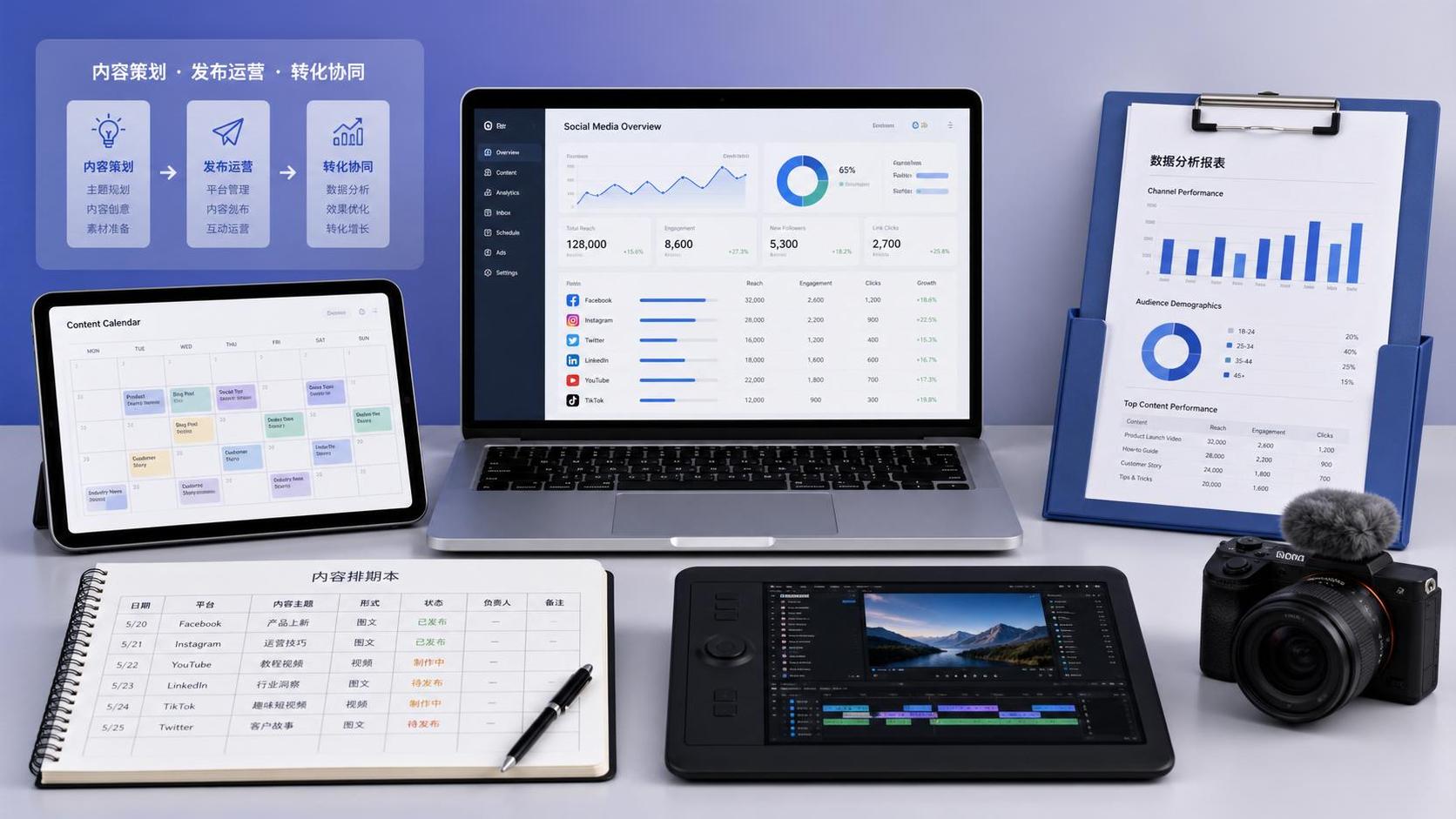
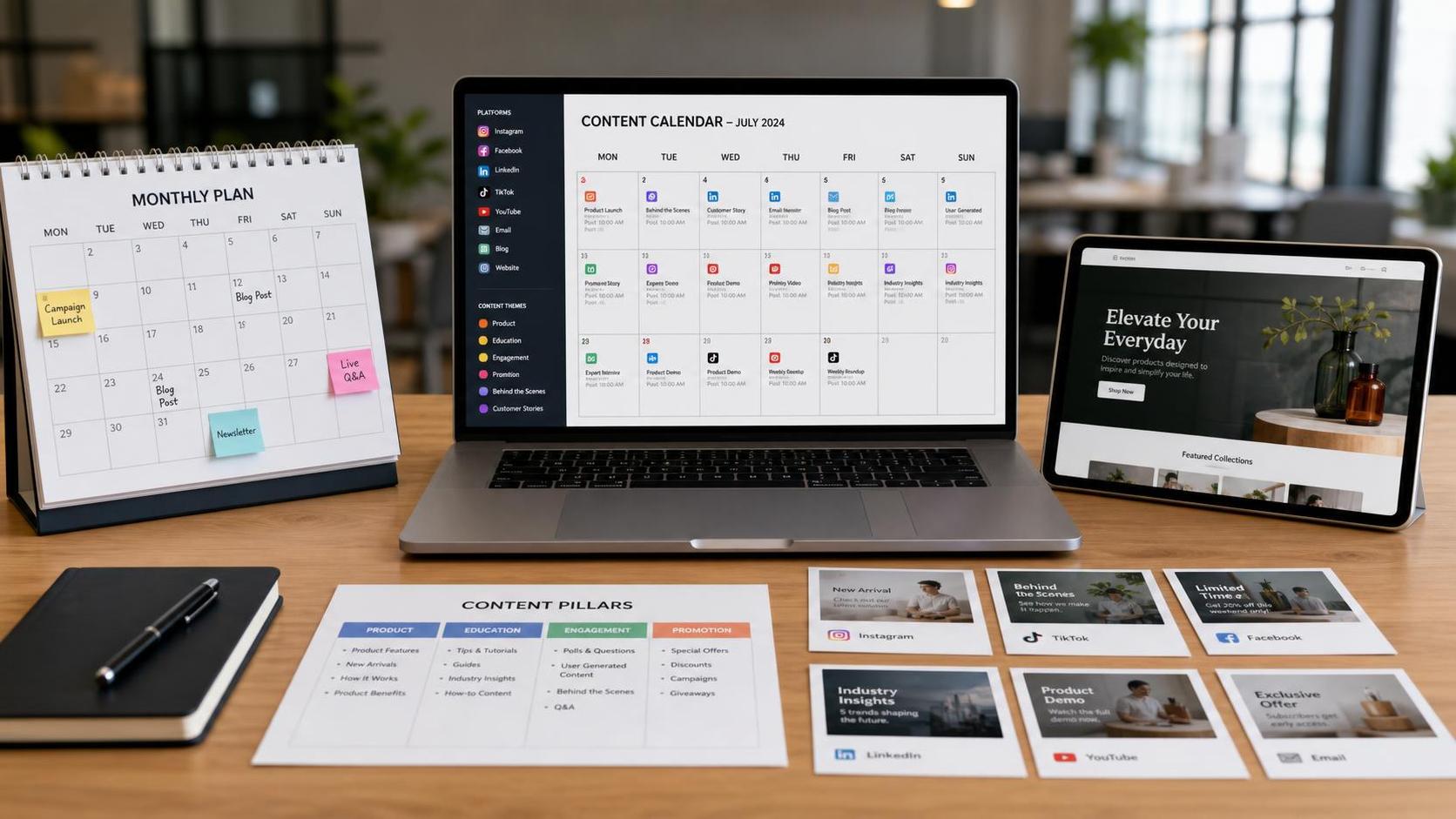
I. Definition and Business Scope of Overseas Social Media Account Operations
Overseas social media account operations are ongoing activities through which enterprises build accounts, produce content, manage interactions, coordinate advertising, track leads, and maintain brands on social platforms for overseas target markets. The goal is not merely to increase followers, but to enable potential buyers to develop verifiable trust during the search, browsing, and decision-making process.
For foreign trade B2B enterprises, accounts should work in coordination with official websites, product catalogs, inquiry forms, corporate email addresses, and instant communication tools. Social media is responsible for expanding touchpoints and generating repeated exposure, while independent websites provide product specifications, factory capabilities, certification materials, case studies, and inquiry conversion. The two should not be operated separately.
The operational scope also includes compliance management: enterprises should use genuine entity information, clearly define account administrator permissions, retain records of material sources and customer authorizations, and avoid buying followers, sending bulk unsolicited private messages, exaggerating product performance, or copying copyright-protected content, thereby reducing the risks of reach restrictions, account suspension, and reputational damage.
II. Main Platform Categories and Content Rules
Facebook is suitable for establishing company pages, product campaign pages, and remarketing audiences. Content should cover factory updates, application scenarios, customer reviews, and short videos. LinkedIn is more suitable for reaching decision-makers in procurement, engineering, supply chain, and distribution. It should emphasize professional insights, industry solutions, team capabilities, and verifiable project experience.
TikTok is suitable for using short videos to showcase production processes, equipment operation, installation demonstrations, product comparisons, and usage tips. Key visuals should be presented directly within the first few seconds. YouTube is suitable for accumulating longer product demonstrations, technical training, factory tours, and frequently asked question videos, while organizing long-term content assets through titles, descriptions, and playlists.
Different platforms should not simply publish the same content repeatedly. Overseas social media account operations should adapt titles, covers, video formats, and calls to action according to the audience's usage context, while complying with each platform's rules regarding music, advertising disclosures, sensitive industries, duplicate content, and private messaging behavior, and regularly reviewing official policy updates.
III. Account Setup and Content Production Mechanisms
Before an account goes live, brand name, profile image, description, location, website link, contact email, and primary product descriptions should be standardized. The description should clearly state the target customers, core product categories, and available cooperation methods, rather than using only vague slogans; pinned content can focus on presenting company strengths, featured products, and inquiry entry points.
Content planning can adopt a five-category structure of “products, capabilities, knowledge, proof, and interaction”: product content addresses specifications and applications; capability content showcases factories and delivery capacity; knowledge content explains product selection issues; proof content presents case studies and reviews; and interactive content gathers market feedback and procurement questions.
It is recommended to establish a monthly topic library, material checklist, and review process. Images and text, short videos, and long videos can share the same batch of authentic materials, but technical descriptions should be verified by personnel familiar with the products. For multilingual content, machine translation can only improve efficiency; industry terminology, dimensional units, delivery times, and compliance wording still require manual review.
IV. Data Metrics and Marketing Performance Evaluation
Overseas social media account operations should evaluate data by level. Impressions, reach, and video views reflect the scale at which content is seen; completion rate, viewing duration, engagement rate, and profile visit rate reflect content quality; while link click-through rate, form submissions, instant messages, and qualified inquiries reflect business conversion capability.
B2B decision cycles are relatively long, so value cannot be judged solely by whether a single piece of content leads directly to a transaction. Through tagged links, website analytics tools, and customer source records, enterprises should identify which platform, content, and country visitors come from, and further track inquiry quality, number of quotations, sample requests, and transaction progress.
When reviewing results, priority should be given to comparing the performance of similar content in comparable markets and under similar campaign conditions. For example, if an equipment demonstration video generates high profile visits but no inquiries, the enterprise should check whether the landing page lacks specifications, downloadable materials, or clear contact entry points, rather than merely increasing posting frequency.
V. Suitable Enterprises, Team Configuration, and Selection Criteria
Manufacturing plants, OEM/ODM enterprises, industrial product suppliers, foreign trade companies, cross-border brands, and service providers seeking to develop markets in new countries are all suitable for overseas social media account operations. Enterprises with products that have higher technical barriers and longer procurement cycles particularly need continuous content to reduce information asymmetry at the initial contact stage.
A basic setup usually requires product managers to provide professional materials, operations personnel to handle topic selection, publishing, and interactions, and sales personnel to follow up on leads; when video needs are substantial, filming and editing support can be added. Team size should be determined by the number of platforms, target countries, content frequency, and lead response time, rather than blindly pursuing a larger headcount.
When selecting a service provider, enterprises should focus on whether it understands the B2B procurement journey and can provide account permission handover, content review, data attribution, coordination with independent website landing pages, and regular performance reviews. Solutions that only promise follower growth without explaining inquiry tracking and asset ownership generally cannot support long-term decision-making.
VI. Collaborative Operation Application Scenarios of Yiyingbao
Yiyingbao addresses integrated website and marketing needs by providing coordinated services for AI-powered website building, multilingual independent websites, overseas social media operations, search optimization, and advertising. For social media traffic acquisition scenarios, Facebook, LinkedIn, TikTok, or YouTube content can direct users to product pages, solution pages, or inquiry pages in the corresponding language, shortening the path for visitors to find information.
In industries served such as laser engraving machines, steel, chemicals, heavy-duty trucks, machinery, new energy, automobiles, agriculture, and healthcare, enterprises often face issues of complex products and high verification costs for overseas customers. Factory footage, process demonstrations, technical Q&A, and project content can be combined with multilingual pages to accommodate access needs in different markets.
Yiyingbao's responsive website building, AI-assisted content, and global node acceleration capabilities can be used to improve the mobile browsing and landing page experience for social media visitors. Enterprises should continue making adjustments based on actual traffic data, page speed, inquiry quality, and sales feedback, and should not treat technical capabilities as promises of marketing results.
VII. Costs, Maintenance Cycles, and Future Trends
The total cost of ownership for overseas social media account operations includes account setup, content planning, filming and design, translation review, advertising testing, tool subscriptions, landing page maintenance, data analysis, and sales follow-up. Buyers should include content asset reuse rate, cost per qualified lead, and sales cycle in their evaluation, rather than comparing only monthly outsourced operation quotations.
For maintenance, publishing and interactions can be scheduled weekly, content and leads can be analyzed monthly, and product priorities, market strategies, and account permissions can be updated quarterly. New accounts should first complete basic information, content preparation, and tracking setup, then gradually test different countries, audiences, and materials, avoiding frequent changes to the entire strategy when data is insufficient.
In the future, short-video search, appearances by founders or technical personnel, private-domain communication through social media, first-party data accumulation, and generative search visibility will receive greater attention. Enterprises should continuously build verifiable product knowledge, case studies, and Q&A content, and enable social media, independent websites, advertising, and sales systems to share data, forming a more complete closed loop for overseas customer acquisition.
