










I. Definition and Business Scope of Overseas Brand Marketing
Overseas brand marketing is a systematic business activity through which enterprises build awareness in overseas target markets, acquire traffic, cultivate trust, and drive inquiries or transactions. It serves both short-term orders and accumulates long-term digital assets such as domain names, content, customer data, and branded search.
For foreign trade B2B companies, the core outcomes usually include qualified inquiries, sample requests, quotation discussions, and distributor partnerships; for DTC brands, greater attention is paid to add-to-cart actions, orders, repeat purchases, and user word-of-mouth. Different objectives determine how website structure, content depth, and channel budgets are allocated.
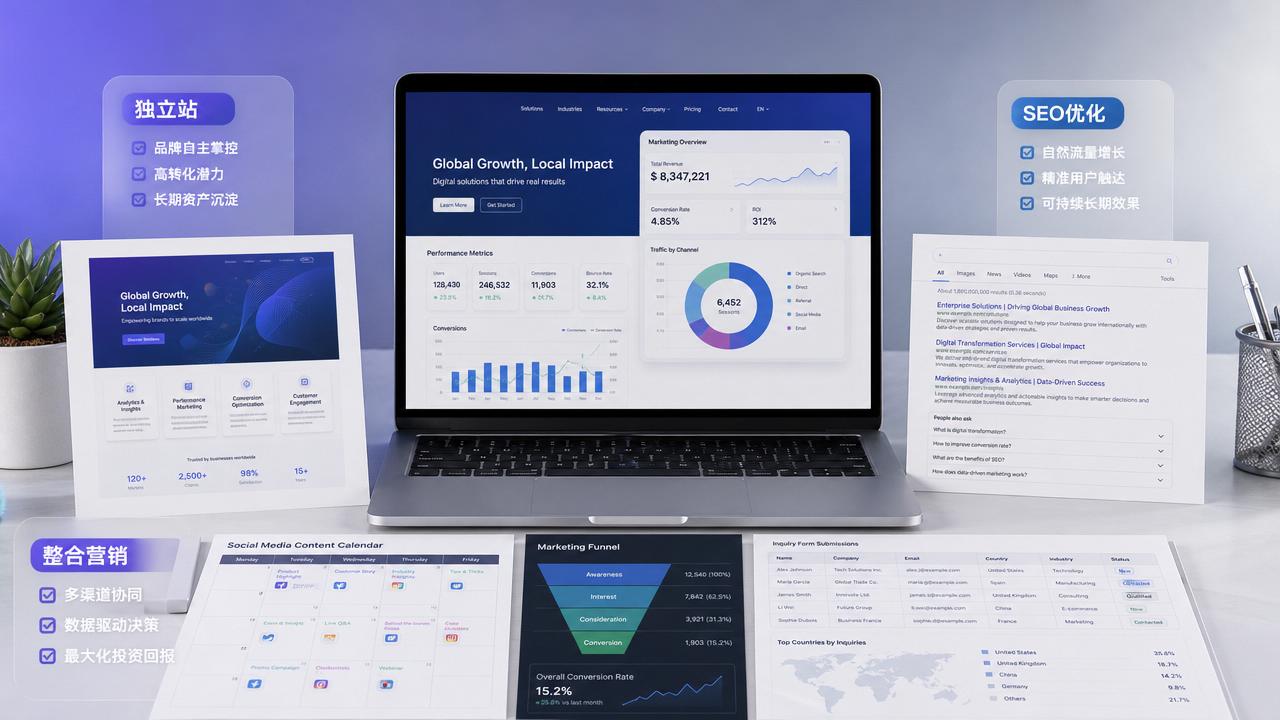
A complete overseas brand marketing strategy is not equivalent to a single advertising campaign. An independent website is responsible for engagement and conversion, search optimization provides ongoing coverage of demand, advertising validates markets and accelerates customer acquisition, and social media presents brand personality, application scenarios, and customer interactions.
Companies need to define countries, languages, customer roles, product compliance requirements, and sales cycles before designing content and channels. If they build a website or run traffic campaigns directly without market positioning, they often face issues such as gaining visits but receiving mismatched inquiries that are difficult for sales teams to follow up on.
II. How Independent Websites, Search, and Social Media Work Together
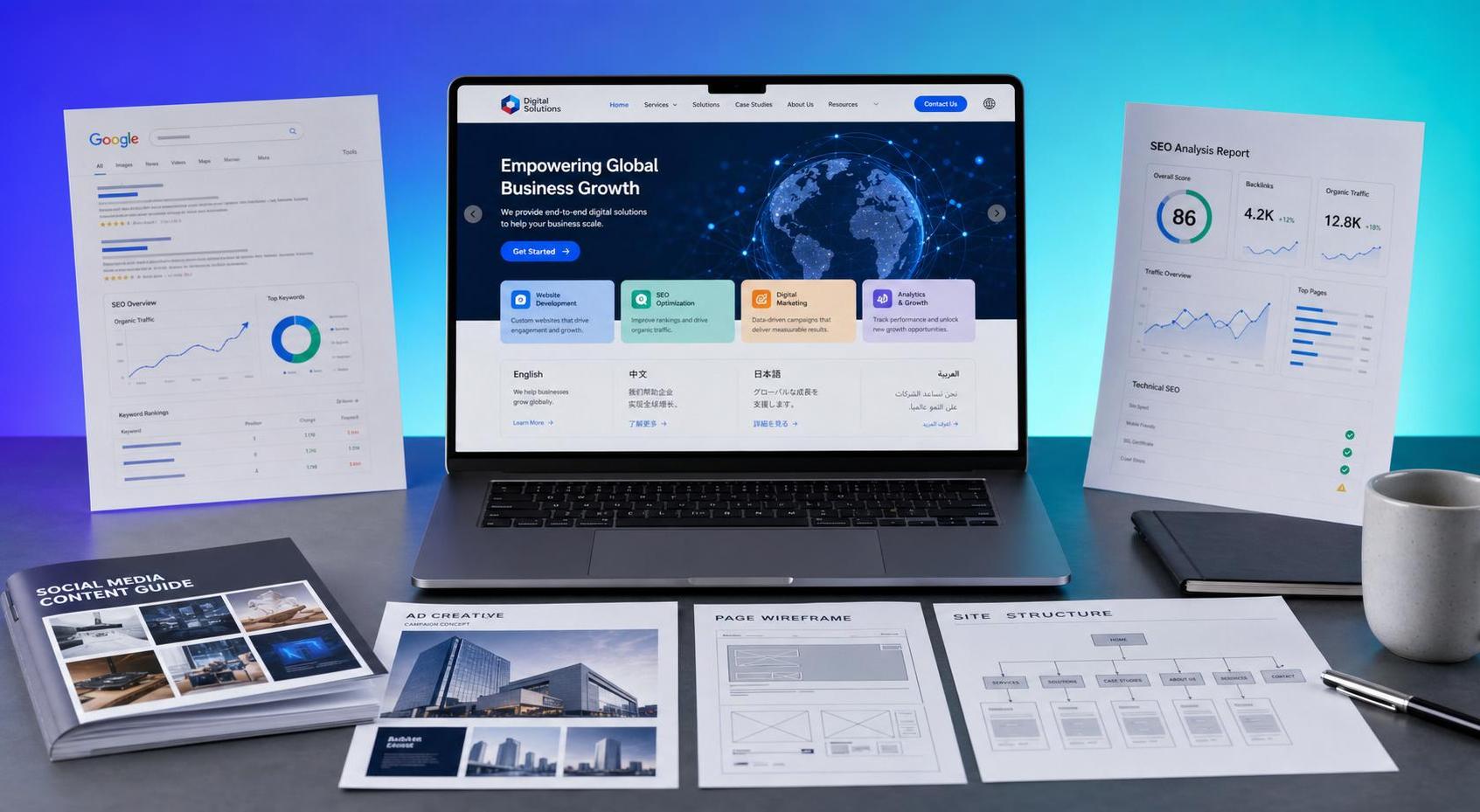
An independent website is the conversion hub for overseas brand marketing. It should clearly present product specifications, application industries, factory capabilities, quality control, case studies, delivery processes, and contact details. Its pages should facilitate comparison by buyers while also providing clear topical signals for search engines and advertising systems.
The foundation of search optimization lies in technical accessibility, a logical information hierarchy, alignment between keywords and page intent, and continuously updated professional content. Product pages address specification and procurement questions, solution pages explain application value, and knowledge articles cover early-stage research searches; together, they expand organic visibility.
Google Ads and social media advertising are suitable for quickly testing products, countries, and audiences. Clicks should not lead directly to a generic homepage, but instead to a landing page consistent with the advertising promise, providing low-friction communication options such as inquiry forms, email, WhatsApp, or online customer service.
Facebook, LinkedIn, TikTok, and YouTube serve different roles: LinkedIn is suitable for professional B2B outreach, short videos are suitable for demonstrating production, installation, and use processes, while Facebook can support community interaction and remarketing. After social media content directs traffic back to the independent website, visitor behavior can in turn be used to optimize advertising and content topics.
III. Mainstream Models and Suitable Enterprises
The first category is the B2B inquiry-oriented model, which is suitable for manufacturing factories, OEM/ODM companies, industrial product suppliers, and trading companies. Its focus is on multilingual product catalogs, parameter downloads, qualifications and capabilities, project case studies, and sales lead grading. It is particularly suitable for industries with long decision cycles, such as machinery, hardware, building materials, chemicals, and new energy.
The second category is the branded retail model, suitable for cross-border sellers and DTC brands with their own product lines. Websites need to include product categories, specifications, shopping carts or inquiry paths, brand stories, review content, and after-sales information, while using content and advertising to improve new customer conversion and repeat purchase efficiency.
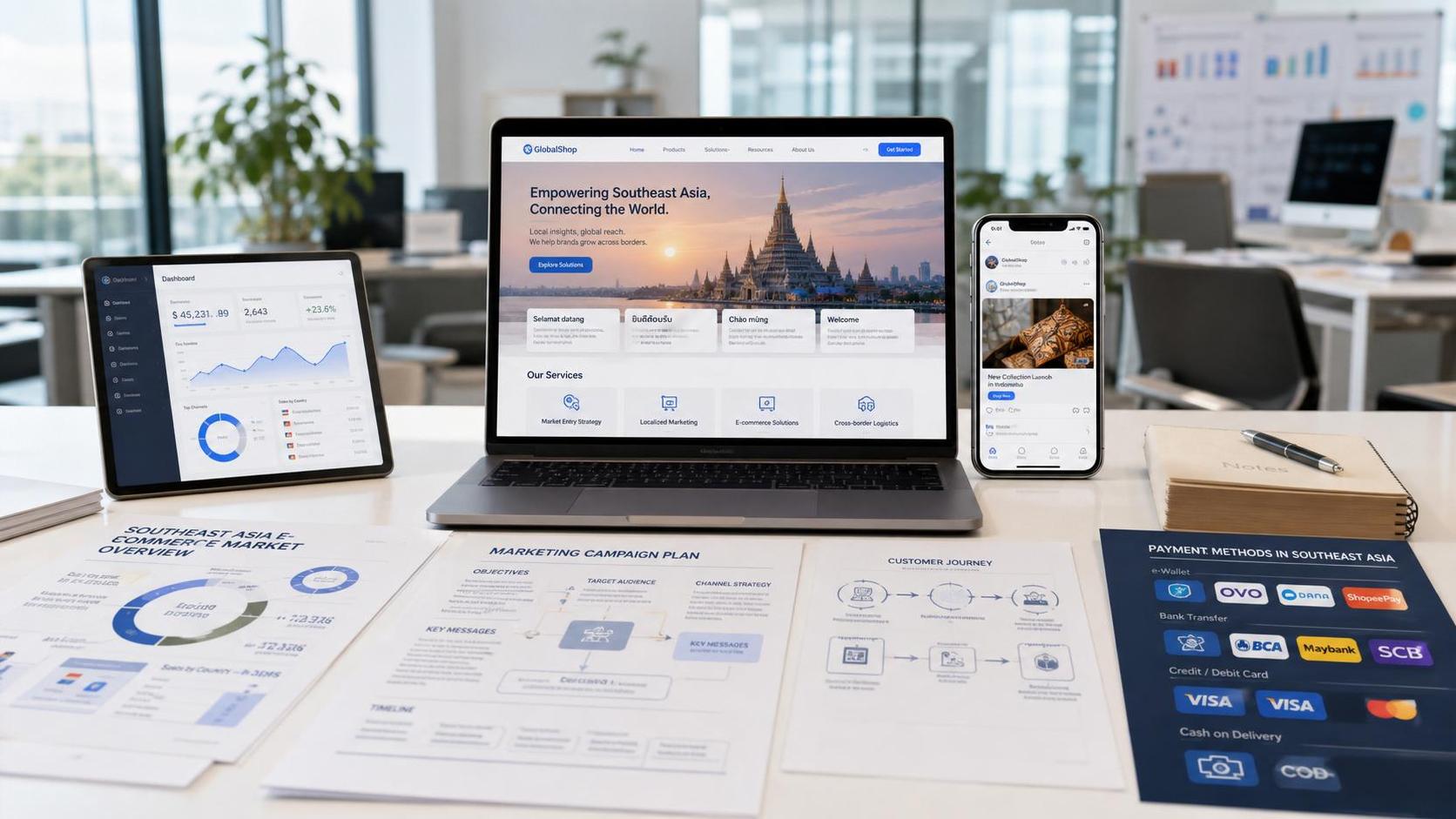
The third category is the regional market expansion model, suitable for companies with an existing export foundation that wish to enter non-English-speaking markets. In addition to translation, they need to adjust units, case studies, keywords, delivery descriptions, and communication methods according to local purchasing practices, and organize multilingual content through language paths and regional pages.
Startups can first focus on one high-potential country and one product line, while mature companies can divide on-site paths by industry, region, or customer type. Regardless of the model adopted, the sales team's inquiry response speed, quotation quality, and customer management directly affect the return on marketing investment.
IV. Service Selection, Website Implementation, and Quality Control
When selecting overseas brand marketing services, companies should first assess whether the services cover website building, content, search, advertising, social media, data analysis, and ongoing operations, rather than merely comparing homepage visual effects. They should also confirm domain ownership, content export, account permissions, data access, and responsibilities for subsequent maintenance.
For integrated website and marketing needs, Yiyingbao provides AI-powered website building, multilingual independent websites, search optimization, intelligent advertising placement, and overseas social media operations capabilities. Its responsive architecture is compatible with mobile and PC devices and can be combined with global node deployment to improve overseas access experience.
Implementation typically begins with market and keyword research, followed by organizing the sitemap, product materials, trust pages, and conversion entry points, then completing multilingual pages, basic technical configurations, tracking implementation, and form testing. Before launch, links, mobile display, loading performance, language switching, and inquiry notification workflows should be checked.
Quality control does not occur only during the launch phase. Indexing, keyword coverage, channel traffic, form validity, inquiry sources, and sales feedback should be reviewed monthly to promptly revise weak pages. For professional products, terminology, parameters, and claims still need to be verified by personnel familiar with the products and markets after AI generates the initial draft.
V. Global Application Scenarios and Key Procurement Decision Factors
In industries such as laser engraving machines, steel, chemicals, heavy-duty trucks, machinery, automobiles, medical care, and furniture, overseas buyers typically research supplier capabilities and product details before entering the inquiry or price comparison stage. Therefore, websites need to prioritize technical materials, production capabilities, application images, and contact paths.
The industries served as disclosed by Yiyingbao cover manufacturing, energy, the internet, tourism, agriculture, and other sectors, and include service cases such as Haier, Aokema, Shandong Airlines, Yuanhe Power Station, Little Duck Group, and China National Heavy Duty Truck Group. The objectives, timelines, and results of specific projects should still be subject to the scope and data confirmed by both parties.
Before entering different markets, companies should independently verify requirements concerning product labeling, environmental protection, safety, data privacy, payment, taxation, and logistics. Marketing pages must not make claims about unverified performance, certifications, or delivery times; for regulated industries, compliance, legal, or local professional organizations should conduct a review.
A pilot approach can be used for procurement decisions: select one market, several core pages, and trackable channels, first validate traffic quality and lead costs, and then expand keyword, language, and advertising coverage. This can prevent insufficient content maintenance and sales follow-up capabilities after launching websites across multiple countries all at once.
VI. Total Cost of Ownership, Return Assessment, and Future Trends
The total cost of ownership for overseas brand marketing includes domain names, servers and security configurations, website development, multilingual content, images and videos, search operations, advertising budgets, social media production, data tools, and personnel collaboration costs. If low-cost website building lacks subsequent content and conversion operations, the actual customer acquisition cost may not necessarily be lower.
When evaluating ROI, exposure, qualified visits, marketing-qualified leads, sales-qualified opportunities, and transaction value should be distinguished rather than looking only at click volume. B2B companies should also record average order value, gross profit margin, sales cycle, and repeat purchase opportunities, linking marketing sources with sales outcomes.
In terms of operating rhythm, after a new website goes live, technical issues should be fixed first and core pages should be completed; advertising can provide market feedback relatively quickly, while search content usually requires ongoing accumulation. It is recommended to review channel quality monthly and adjust countries, product portfolios, content topics, and budgets quarterly, rather than judging value solely by short-term rankings.
In the future, AI search, generative content, and multilingual retrieval will increase the importance of content structure and brand entity information. The GEO operations direction provided by Yiyingbao can serve as a forward-looking supplement, but the foundation remains accurate product materials, authentic case information, a stable website experience, and ongoing answers to customer questions.
