

I. Definition and Business Scope of Cross-Border E-Commerce Store Development
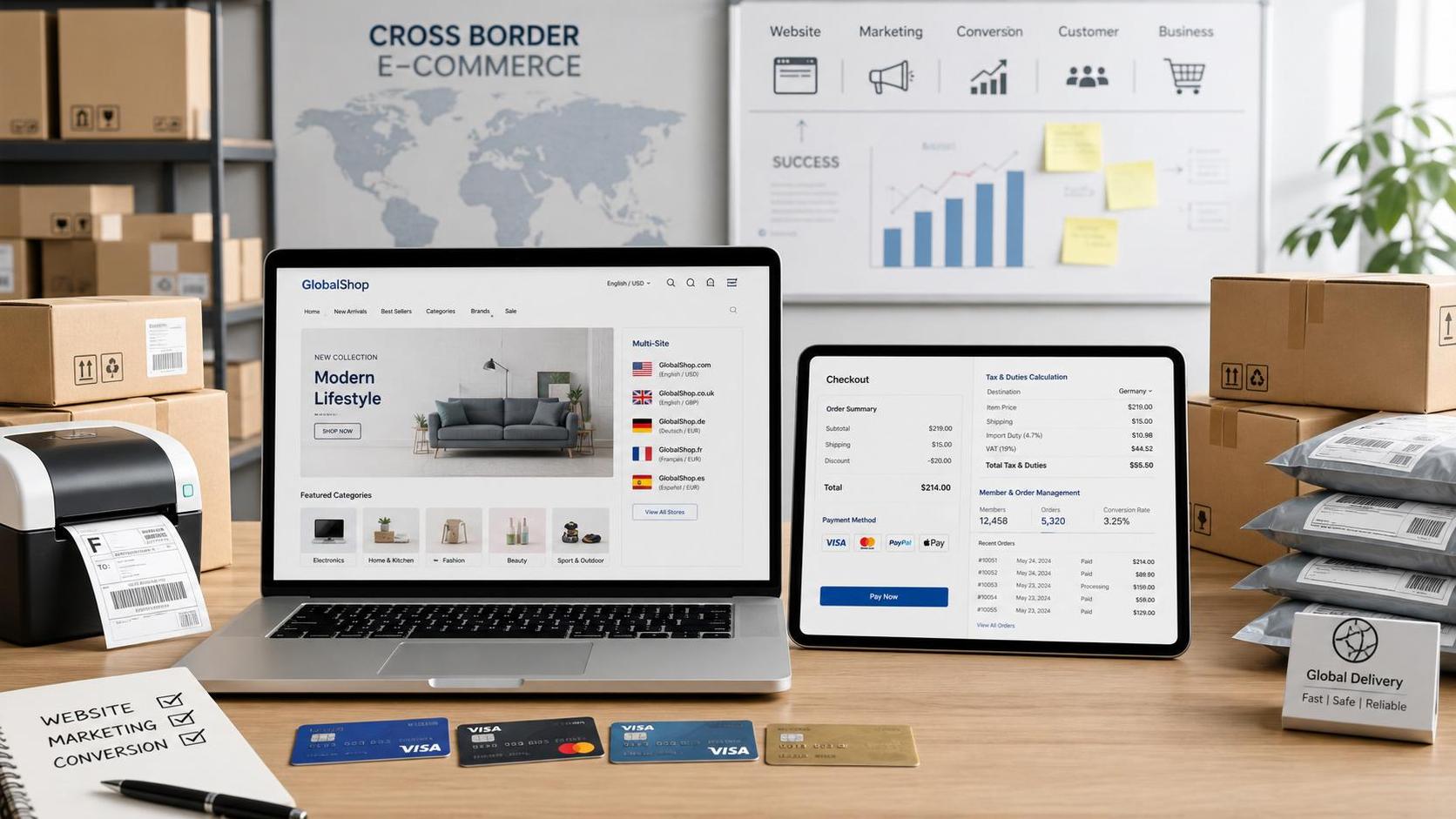
Cross-border e-commerce store development involves building an independent e-commerce system for selling products to overseas consumers or business buyers. It includes not only the homepage, category pages, and product detail pages, but also key business functions such as price display, inventory or specifications, shopping carts, checkout, inquiries, order notifications, and after-sales information.
Compared with marketplace storefronts, the core value of an independent store lies in enabling companies to accumulate brand content, user visit data, and marketing assets, while independently configuring page rules and conversion paths. However, an independent website does not inherently generate traffic. Its store architecture must be designed in parallel with content production, advertising conversion, and ongoing operations.
From the perspective of transaction models, cross-border e-commerce store development can support direct retail, as well as sample purchases, bulk quotation requests, and distributor recruitment. Manufacturing companies in particular need to distinguish between retail transactions and procurement inquiry scenarios, avoiding the simple application of fast-moving consumer goods checkout and page structures to complex industrial products.
II. Independent Website Architecture and Core Technical Principles
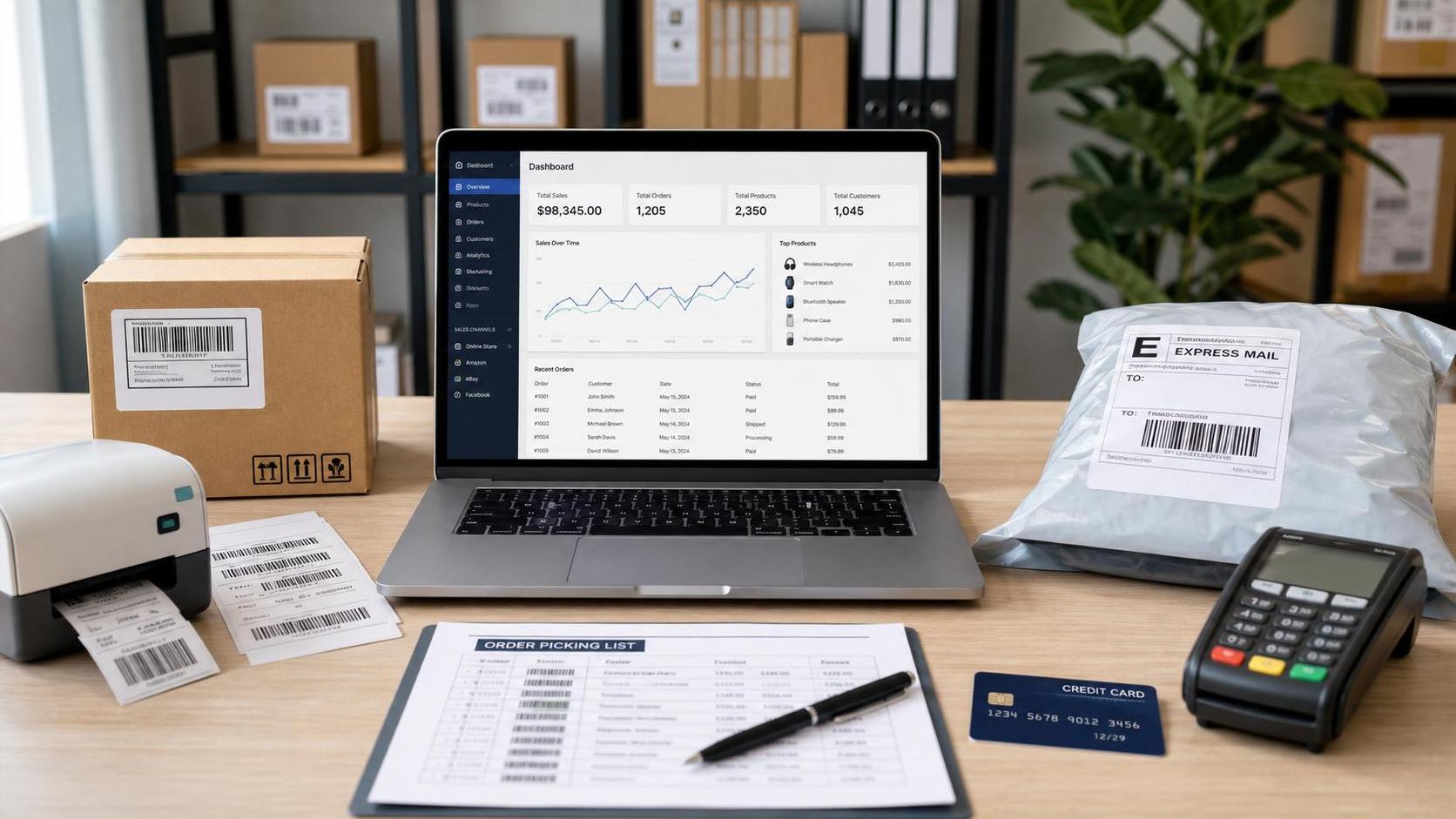
A mature online store typically consists of a presentation layer, a content and product management layer, a transaction or inquiry layer, and a data analytics layer. The presentation layer is responsible for the multi-device browsing experience; the management layer maintains products, articles, and pages; the transaction layer supports shopping carts, forms, and payments; and the data layer is used to identify channel performance and user behavior.
Responsive design is a fundamental requirement. The same set of content should adapt to both desktop and mobile devices, while images, scripts, and third-party components must also be kept within controlled sizes. Overseas access also requires consideration of server regions, content delivery networks, caching strategies, and security certificates to reduce page-loading delays and the risk of checkout interruptions.
Yingyingbao provides responsive intelligent website building, product management, and multi-device page capabilities, and treats global node deployment as a core service direction. When selecting a solution, companies should verify access performance in target markets, backup and recovery mechanisms, permission management, domain name resolution, and future scalability, rather than merely comparing the number of initial templates.
III. Main Types of Online Stores and Suitable Users
By business objective, cross-border e-commerce store development commonly includes brand retail, factory direct sales, hybrid inquiry, and regional market models. Brand retail emphasizes storytelling, reviews, and repeat purchases; factory direct sales emphasize specifications, production capacity, and certification documents; hybrid models allow small-value orders and large-value quotation requests to run in parallel.
DTC brands and cross-border sellers are better suited to prioritizing a complete product and payment closed loop. OEM and ODM companies, machinery and equipment suppliers, and building materials suppliers are better suited to focusing on catalogs, solution pages, downloadable materials, and multi-channel inquiries. For products with high unit prices and complex delivery schedules, forcing online payment may instead result in the loss of qualified leads.
Regional market models are suitable for companies with clearly defined country strategies. For example, the Japanese and South Korean markets often require close attention to language expression, currencies, payment habits, delivery instructions, and return and exchange policies. Before entering a new market, companies should first confirm whether product labeling, taxes, restricted or prohibited sales, and privacy regulations affect page commitments and fulfillment methods.
IV. Coordination of Multilingual Content, SEO, and Global Marketing
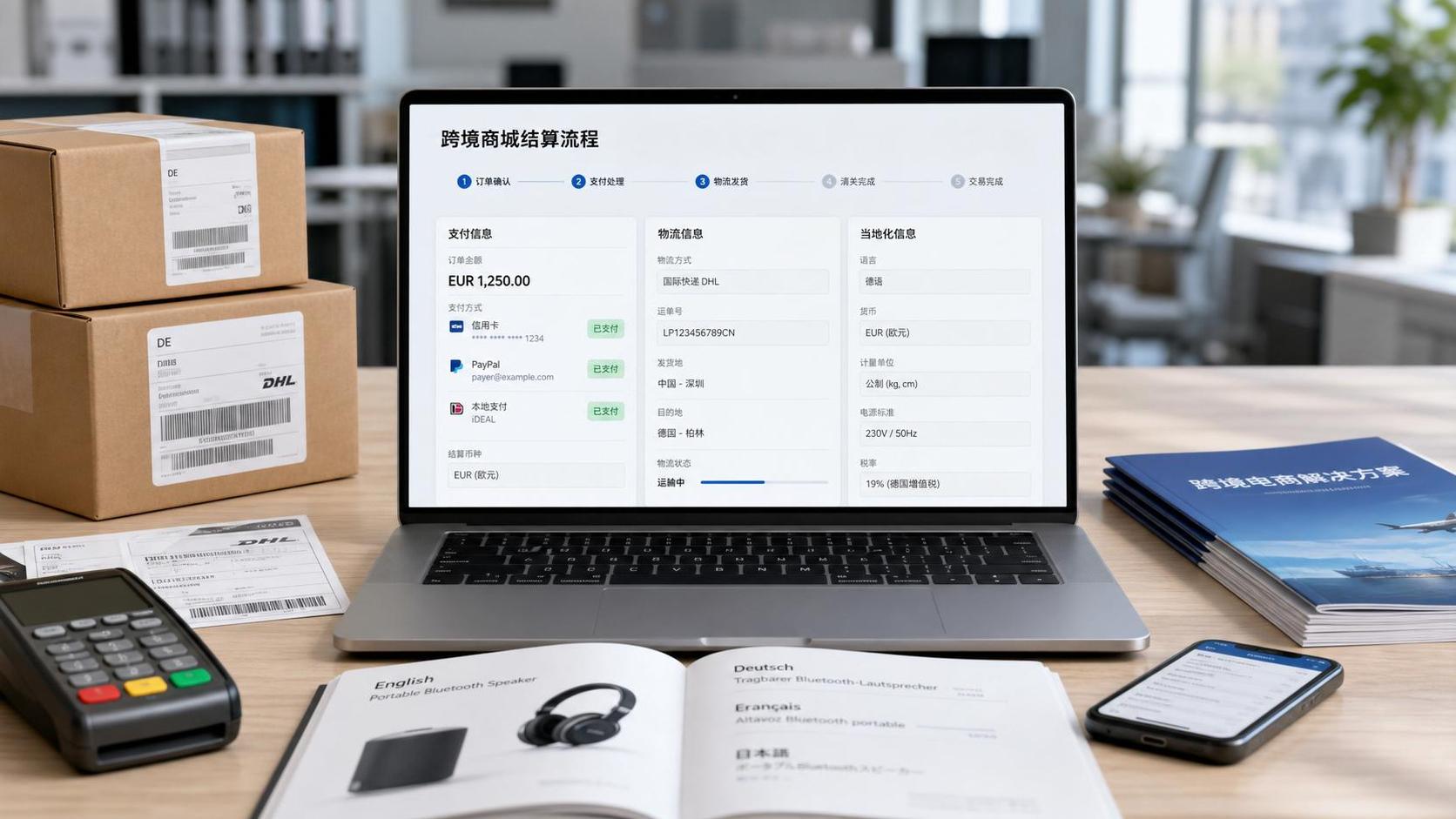
A multilingual online store is not simply a matter of sentence-by-sentence translation. Different markets focus differently on dimensions, units of measurement, delivery lead times, application scenarios, and reasons for purchase. Companies should prioritize localizing core product categories, key country pages, and frequently asked questions, then gradually expand content coverage to avoid generating low-quality pages in bulk.
Search optimization should begin with a crawlable architecture: clearly define category hierarchies, canonical links, breadcrumbs, sitemaps, and internal linking relationships. Product pages should provide identifiable titles, specifications, usage value, image descriptions, and frequently asked questions. Multilingual pages should also be configured with language and regional relationships to reduce search engine misinterpretation.
Yingyingbao's multilingual website building, AI-assisted content generation, keyword expansion, and page optimization capabilities can be used to improve content production efficiency. A more reliable approach is for business personnel to verify technical parameters, compliance wording, and target-market terminology before directing advertising and social media content to matching landing pages, thereby creating a traceable customer acquisition process.
V. Selection Criteria, Implementation Process, and Quality Control
When procuring cross-border e-commerce store development services, companies should first clarify their target countries, number of products, transaction models, language scope, team roles, and promotional budget. Key selection criteria include whether product specifications are easy to maintain, whether payment and logistics integrations are compatible, whether pages support marketing landing pages, whether data can be exported, and whether the provider can offer operational support after launch.
Implementation usually goes through six stages: requirements clarification, information architecture, visual and component configuration, product and content entry, functional integration testing, and testing and launch. Quality control should cover mobile display, form delivery, price and inventory logic, currency conversion, email notifications, link validity, page speed, and access performance across networks in different regions.
Yingyingbao provides a combination of services ranging from website development to SEO, advertising, social media, and operations for B2B marketing websites and B2C cross-border online stores, making it suitable for companies lacking dedicated technical and overseas marketing teams. Its public materials indicate that the team has long-term experience in SaaS and search-related fields. Companies should still confirm the delivery list, responsibility boundaries, and acceptance criteria according to the scope of their own projects.
VI. Total Cost of Ownership, Operating Rhythm, and Growth Trends
The total cost of ownership of a cross-border online store includes not only website development costs, but also domains, certificates, servers and acceleration, payment processing fees, translation and content, images and videos, plugins, advertising, data analytics, and daily maintenance. When there are many products, countries, or complex system integrations, subsequent content management and interface maintenance often have a greater impact on the budget than initial development.
When evaluating returns, companies should not focus only on visitor volume or the number of individual inquiries. They should continuously monitor the share of organic traffic, qualified inquiry rate, customer acquisition cost, shopping cart conversion, repeat visits, sales contribution from key countries, and sales follow-up cycles. After a new website goes live, content and advertising validation can first be built around core product categories and then replicated in other markets.
The industry is moving toward stronger automation, refined multilingual operations, and visibility in generative search. Companies need to regularly update product materials, case studies, Q&A, and policy pages so that content can both support customer decision-making and be accurately understood by search and question-answering systems. Yingyingbao's GEO, SEO, and operational services can serve as options for continuous optimization, but growth results still depend on product competitiveness, fulfillment capabilities, and the quality of data reviews.
 How to Find the Right Match with Google Keyword ExpansionHow to Find the Right Match with Google Keyword Expansion? This article covers search intent segmentation, competitor analysis, long-tail keyword mining, and page alignment to help you screen high-converting keywords and improve website traffic quality and inquiry conversion rates.
 What exactly is the difference between free and paid SSL certificates?What exactly is the difference between free and paid SSL certificates? This article explains their impact on security encryption, identity verification, brand trust, applicable scenarios, SEO, and marketing conversions, helping you quickly determine which option is right for your corporate website, international trade website, or standalone website.