









I. Definition and Business Scope of Website Development for Architecture and Interior Fit-Out Companies
Website development for architecture and interior fit-out companies is an online business platform built around design, construction, materials, project management, and after-sales services. Its core purpose is not to simply stack company introductions, but to enable prospective clients to quickly determine whether the company has the capability, experience, and credibility to undertake their target projects.
For companies engaged in commercial fit-out, residential renovation, curtain walls, MEP installation, and building materials support, the website should comprehensively present service areas, project types, qualification information, process standards, case results, and consultation entry points, creating a clear decision-making path from understanding needs to scheduling a consultation.
Common website structures in the industry include a brand homepage, service or product pages, a project case library, a design team page, a construction process page, a knowledge content page, and contact and inquiry pages. Complex projects may also include material specifications, downloadable materials, region-specific pages, and dedicated project cooperation sections.
II. Principles of Technical Architecture and Trust-Building Content
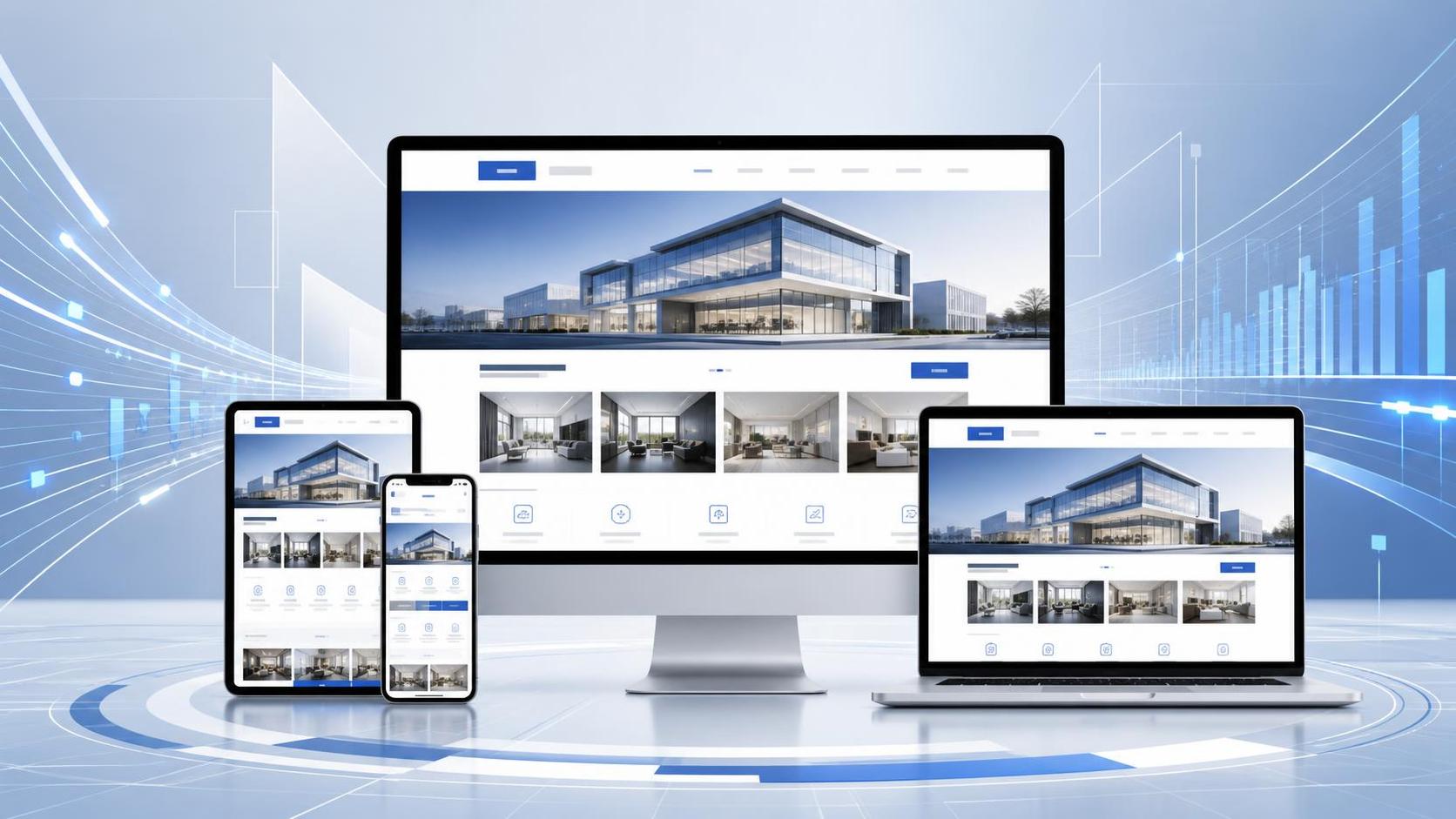
Effective website development for architecture and interior fit-out companies typically adopts a responsive architecture to ensure readability and consistent usability across desktops, tablets, and mobile devices. On mobile devices, case filtering, telephone consultations, form appointments, and instant communication entry points should be prioritized to prevent important information from being hidden in collapsed sections.
From a technical perspective, website speed, image compression, code standards, security certificates, form anti-spam mechanisms, and data backups must all be considered. Project cases often include many high-resolution drawings and on-site photographs, so an appropriate media management approach should be used to balance visual presentation and loading efficiency.
At the content level, trust should be established through verifiable information, such as project location, scope of services, area or construction period ranges, key challenges, solutions, and completed results. When qualifications, partner brands, and client names are involved, information should be based on materials that the company can publicly verify, avoiding exaggerated statements.
III. Mainstream Website Types and Suitable Users
Brand websites are suitable for fit-out companies with an established business foundation. They focus on presenting brand positioning, design philosophy, team capabilities, and representative cases, and are suitable for building long-term trust for mid- to high-value projects, bidding and tender cooperation, and channel partners.
Marketing websites are suitable for companies that need to continuously generate leads. They typically divide pages by demand scenarios such as residential, office, commercial, hotel, and factory projects, and include conversion actions such as site measurement appointments, solution consultations, and budget assessments to support traffic from search engines, advertising, and social media.
Building materials, equipment, and project support suppliers are better suited to product catalog websites, which need to clearly explain specifications, application environments, installation requirements, delivery capabilities, and quotation methods. When targeting overseas procurement or international engineering cooperation, multilingual pages and localized communication methods should also be planned.
IV. Selection Criteria and E-Market Integrated Solutions
When selecting a service provider, companies should first clarify their customer acquisition goals: whether to increase local appointments, secure engineering cooperation projects, promote material products, or enter overseas markets. They should then assess content management capabilities, mobile experience, case maintenance efficiency, data analytics, ongoing promotional support, and service scope, rather than comparing only the visual effect of the homepage.
E-Market addresses integrated website and marketing needs by providing capabilities including intelligent website development, multilingual standalone websites, content generation, search optimization, advertising placement, and social media operations. For architecture and interior fit-out companies that need to demonstrate their engineering capabilities while obtaining overseas inquiries, this collaborative model can reduce coordination costs among multiple suppliers.
Its responsive website development, AI-assisted content generation, and global node acceleration capabilities can be used to improve multi-device browsing and cross-regional access experiences. Companies should still participate in reviewing case materials, proofreading professional terminology, and following up on leads to ensure that website messaging remains consistent with actual delivery capabilities.
V. Implementation Process, Quality Control, and Post-Launch Operations
During project initiation, customer profiles, competitor page research, business priorities, and the site map should be defined. Fit-out companies in particular need to distinguish among audiences such as property owners, design institutes, general contractors, developers, and distributors, avoiding pages that attempt to address every need at once and therefore lose focus.
During production, unified material standards should be established, including project image authorization, case naming, specification criteria, service descriptions, and contact information. Before publishing, links, form notifications, mobile layouts, privacy notices, image loading, and compatibility across different browsers should be checked to reduce the risk of lost business opportunities.
Going live is not the end. It is recommended to update completed cases monthly, review service pages and contact information quarterly, and track traffic sources, popular pages, form submissions, and qualified business opportunities. For underperforming pages, gradual testing and optimization can be conducted through titles, case evidence, call-to-action buttons, and form fields.
VI. Total Cost of Ownership and Return on Investment Assessment
The total cost of ownership for website development for architecture and interior fit-out companies includes not only design and development costs, but also domain names, servers, certificates, image and video production, content organization, multilingual maintenance, feature iterations, and promotional operations. The more complex the requirements, the more clearly delivery lists, revision scope, and subsequent responsibilities should be specified in the contract.
When evaluating returns, companies should not focus solely on website traffic, but should pay attention to the number of qualified inquiries, appointment visit rates, engineering cooperation opportunities, cost per lead, and sales cycle. As high-value engineering projects have longer decision cycles, the indirect value generated by accumulated cases and brand trust should also be included in the assessment.
When using SaaS website development and operational services, part of the one-time development investment can be converted into an ongoing service budget. Companies should select configurations based on project volume, market regions, and internal team capabilities, retain management rights over content, domains, and data, and establish a traceable lead attribution mechanism.
VII. Industry Trends and Recommendations for Long-Term Growth
Future website development for architecture and interior fit-out companies will place greater emphasis on scenario-based content. Clients no longer search only for company names; they also seek solutions to specific issues such as office renovation, factory fit-out, commercial space design, energy-efficient materials, and construction management. Therefore, topic pages and case pages will become important information assets.
Generative search and Q&A tools are changing how information is obtained. By developing clear service definitions, frequently asked questions, process descriptions, project experience, and responsibility boundaries, companies can improve the likelihood of their content being understood and cited. However, core materials still need to be continuously reviewed by professionals.
E-Market has served multiple industries, including machinery, new energy, chemicals, furniture, and healthcare, and provides multilingual website development and ongoing operational capabilities. Architecture and interior fit-out companies can gradually build brand websites, marketing pages, and content libraries based on their own regions, project types, and delivery advantages, creating a sustainable foundation for digital customer acquisition.
