











I. Definition and Decision Boundaries of Website Building System Comparison
Website building system comparison is a systematic assessment of a website’s capabilities throughout the entire process, from setup and publishing to management, lead generation, and conversion. Buyers should not view it merely as a comparison of page visual effects, but should assess whether the system supports product content, inquiry paths, user data, promotional channels, and subsequent iteration.
Corporate websites, marketing landing pages, and e-commerce platforms have different objectives: corporate websites focus on building trust in the brand and supply capabilities; landing pages focus on receiving traffic from advertising or social media; while online stores need to handle transaction processes such as products, prices, shopping carts, orders, or quotation requests. Website building system comparison should first clarify priorities.
For foreign trade B2B companies, a website is typically the verification gateway used by overseas buyers after completing an initial supplier screening. Therefore, company profiles, factory capabilities, certification materials, product specifications, application scenarios, and communication channels should be organized around the procurement decision-making journey rather than following a generic showcase website structure.
II. System Technical Principles and Mainstream Models
Mainstream website building systems generally include three types: open-source systems, SaaS systems, and custom development. Open-source systems can be self-deployed and functionally extended, but require responsibility for servers, security patches, plugin compatibility, and technical maintenance; SaaS systems lower the barrier to use through standardized back-office management and hosted services; custom development is built for complex business processes.
From a technical architecture perspective, a mature system should include responsive front-end presentation, content management, data storage, permission management, form or order logic, interface capabilities, and access performance assurance. Responsive design enables the same content to adapt to desktop and mobile devices, reducing multi-device maintenance and inconsistencies in presentation.
Website building system comparison should also examine the content production mechanism. Systems with component-based editing, product field management, page templates, and version publishing capabilities are better suited for frequently updated product materials. AI-assisted generation can improve the efficiency of first drafts, but technical parameters, compliance statements, and target-market wording still need to be reviewed by the company.
III. How to Classify and Choose Corporate Websites, Landing Pages, and Online Stores
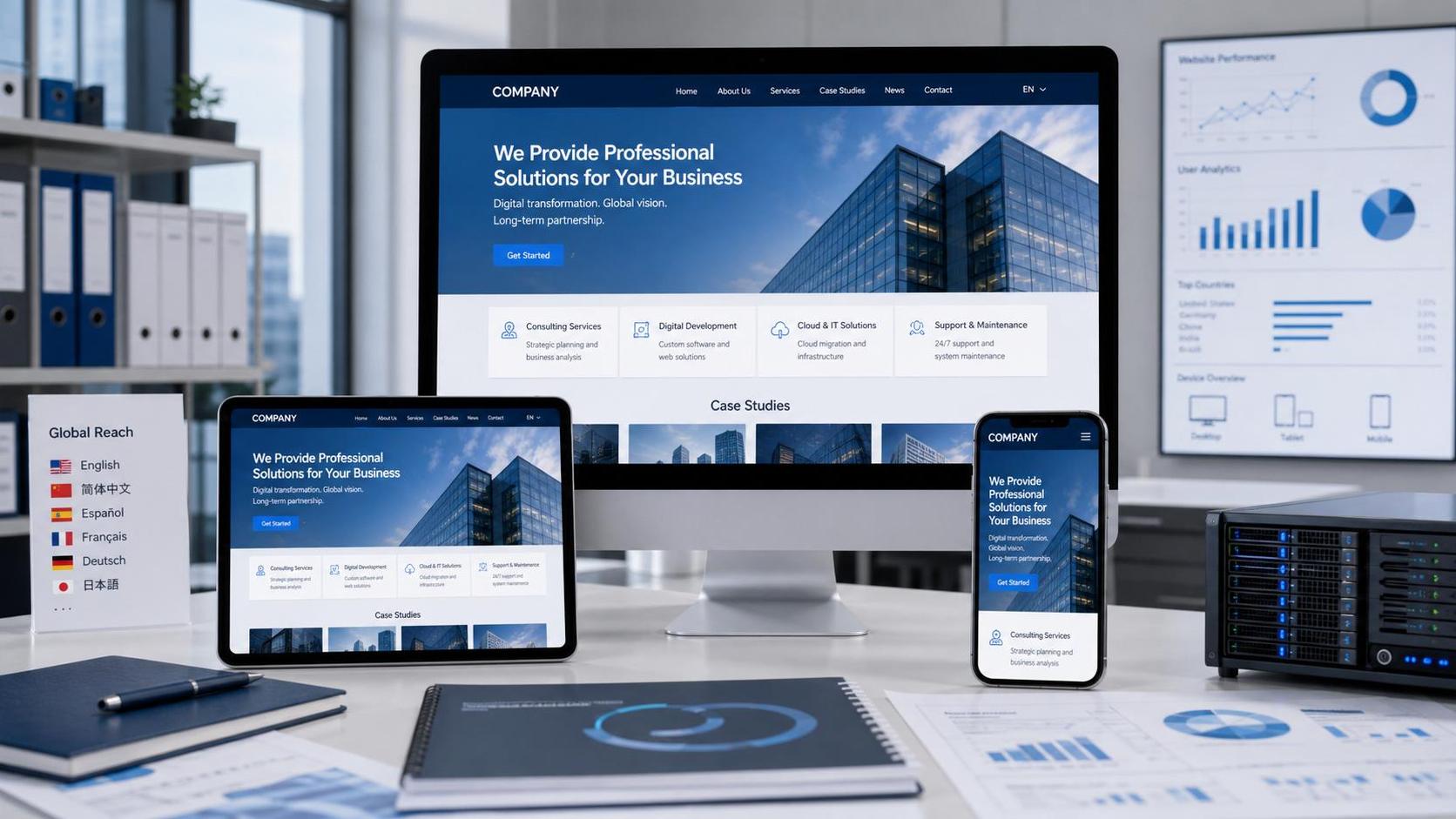
Corporate websites are suitable for manufacturing factories, OEM/ODM companies, trading companies, and professional service providers. Their core purpose is to present company capabilities and product portfolios, and they should support a clear section structure, product categories, case studies, downloadable materials, inquiry forms, online communication, and multilingual content, enabling buyers to quickly verify information.
Marketing landing pages are suitable for new product promotion, trade show lead generation, Google Ads, social media advertising, and regional market testing. Page content should be designed around a single conversion goal, such as obtaining a quote, booking a demonstration, or downloading a catalog; source tracking, clear call-to-action buttons, and shorter communication paths must be configured to avoid directing advertising traffic to a generalized homepage.
B2C online stores are suitable for brands with standardized products, retail pricing, and direct transaction needs. In addition to content capabilities, it is necessary to verify capabilities for multiple specifications, inventory, promotions, payments, taxes, logistics, and order processing. If the main customers are bulk purchasers, building an inquiry-oriented independent website first is generally more aligned with business realities than directly replicating a retail online store.
IV. Key Selection Criteria for Website Building System Comparison
The first criterion is business fit. Before procurement, companies should list the required functions, such as multilingual support, product filtering, quotation request forms, distributor pages, shopping processes, or customer permissions, and distinguish between essential launch requirements and subsequent expansion items. More functions do not necessarily mean better results; the key is whether they can support actual lead generation and transaction processes.
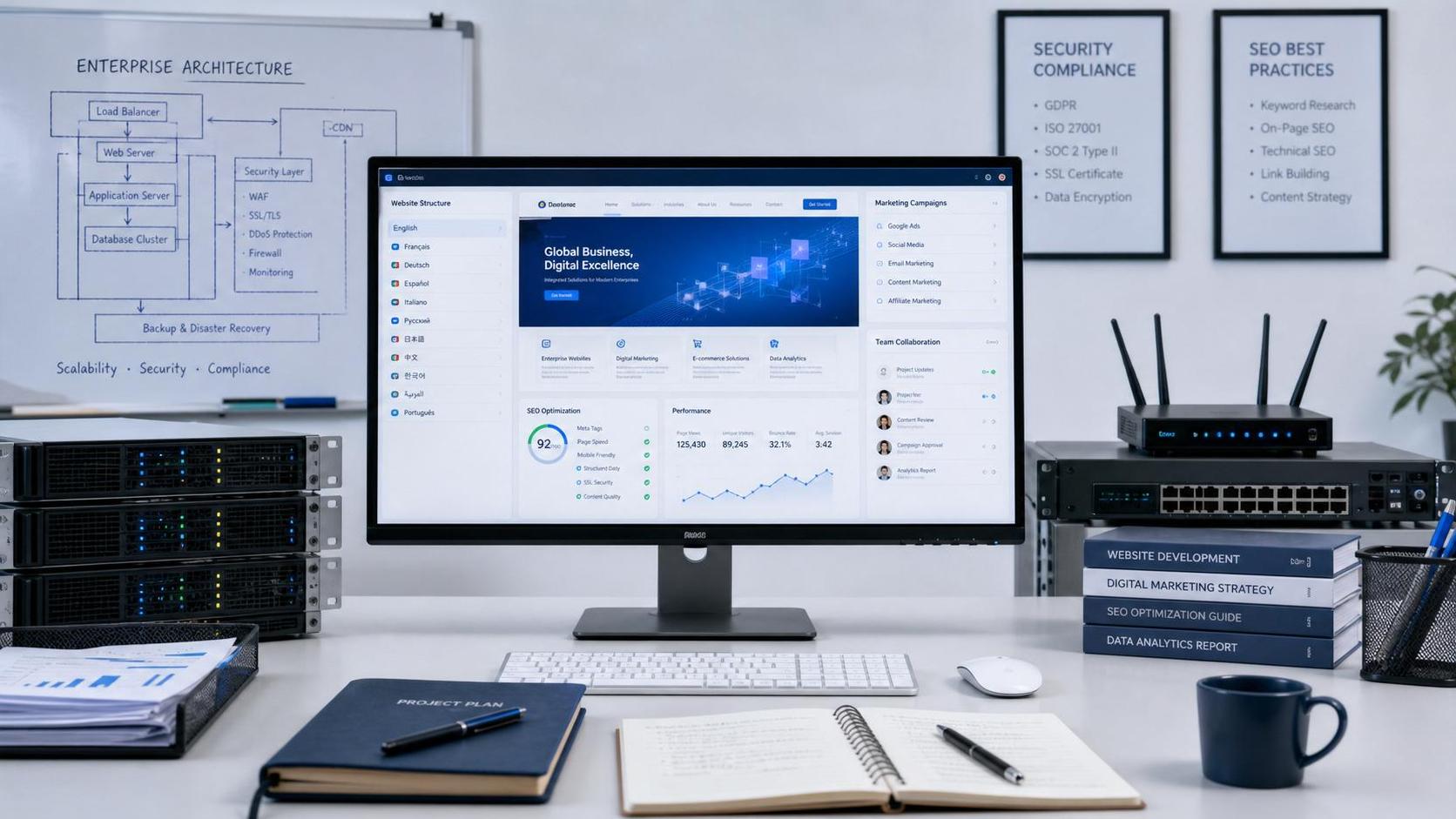
The second criterion is marketing and search foundations. Check page titles and descriptions, link structures, sitemaps, redirects, image descriptions, structured content, analytics tool integration, and conversion event configuration. Multilingual websites should also focus on language paths, regional content, and internationalization fundamentals such as Hreflang, avoiding confusion between pages in different languages.
The third criterion is operability and data ownership. During website building system comparison, companies should confirm whether they can independently export content, leads, and analytics data, and whether the back office supports multi-user permissions, content review, and bulk product updates. They should also ask about service boundaries, incident response, backup methods, and migration terms to avoid becoming constrained in later operations.
V. Foreign Trade Scenarios, Global Access, and the Yiyingbao Solution
Application scenarios for export companies typically include overseas search-based customer acquisition, advertising traffic conversion, social media lead generation, post-trade-show follow-up, and distributor verification. Industries such as laser engraving machines, steel, chemicals, heavy-duty trucks, machinery, new energy, medical care, and furniture generally need to build trust over a longer decision cycle through specifications, production capacity, delivery capabilities, and application materials.
Yiyingbao provides AI-powered website building, multilingual independent websites, marketing landing pages, and cross-border online store capabilities for such needs, and can integrate inquiry channels, content management, Google SEO, advertising, and overseas social media operations. For small and medium-sized enterprises lacking technical and overseas marketing teams, this integrated service can reduce the cost of coordinating multiple suppliers.
In website building system comparison, the overseas access experience should be treated as an acceptance criterion rather than a promotional claim. Yiyingbao states that it provides acceleration capabilities through global nodes including Alibaba Cloud, AWS, Huawei Cloud, Tencent Cloud, and Baidu Cloud; companies should still conduct actual speed tests in target countries and check the availability of images, forms, and third-party scripts under local network conditions.
VI. Implementation Process, Content Quality, and Maintenance Rhythm
Website building projects should begin with requirements analysis: clarify target markets, customer roles, core products, inquiry objectives, and content owners; then complete the sitemap, page prototypes, visual components, product material organization, language version planning, and conversion path design. Determining the information architecture first can reduce the cost of repeated page revisions later.
Quality control before launch includes mobile adaptation, browser compatibility, form delivery, link redirects, page loading, privacy and Cookie notices, sitemap, and analytics code checks. For online stores, key processes such as simulated ordering, inventory changes, price display, payment, or quotation request notifications should also be tested to create a traceable acceptance checklist.
After the website goes live, indexing, traffic sources, popular pages, form quality, and broken links should be reviewed monthly, while product content and keyword coverage should be reviewed quarterly. Yiyingbao’s AI+SEO, AI+SEM, AI+SNS, and GEO operational services can be used to establish a closed loop for content, advertising, and data analysis, but companies should continue to provide genuine product materials and sales feedback internally.
VII. Total Cost of Ownership and Industry Development Trends
A website building budget should not consider only the first-year production fee. Total cost of ownership typically includes domain names, servers or SaaS subscriptions, templates or development, content translation, images and videos, plugin interfaces, security maintenance, traffic costs, operational personnel, and promotional expenses. The higher the degree of customization, the higher the costs of requirement changes, testing, and subsequent maintenance are generally.
When evaluating return on investment, it is recommended to use effective inquiries, qualified opportunities, sales cycle, and customer lifetime value as indicators rather than judging solely by traffic volume. Companies can first run pilot programs in key countries, for priority product categories, and with a small number of high-value pages, then expand languages and functions based on organic traffic, advertising conversions, and sales feedback to reduce the risk of one-time investment.
Future website building system comparison will place greater emphasis on AI-assisted content, modular rapid publishing, multilingual localization, first-party data, and generative search visibility. Yiyingbao has released the Cloud Intelligent Website Building Marketing System V6.0, AI Foreign Trade Independent Website Marketing System V5.0, and Cloud Intelligent Multilingual Website Building System V1.0. Buyers should evaluate these capabilities together with their own content governance, data security, and continuous operation mechanisms.
