I. Definition and Scope of Integrated Website Development and Promotion
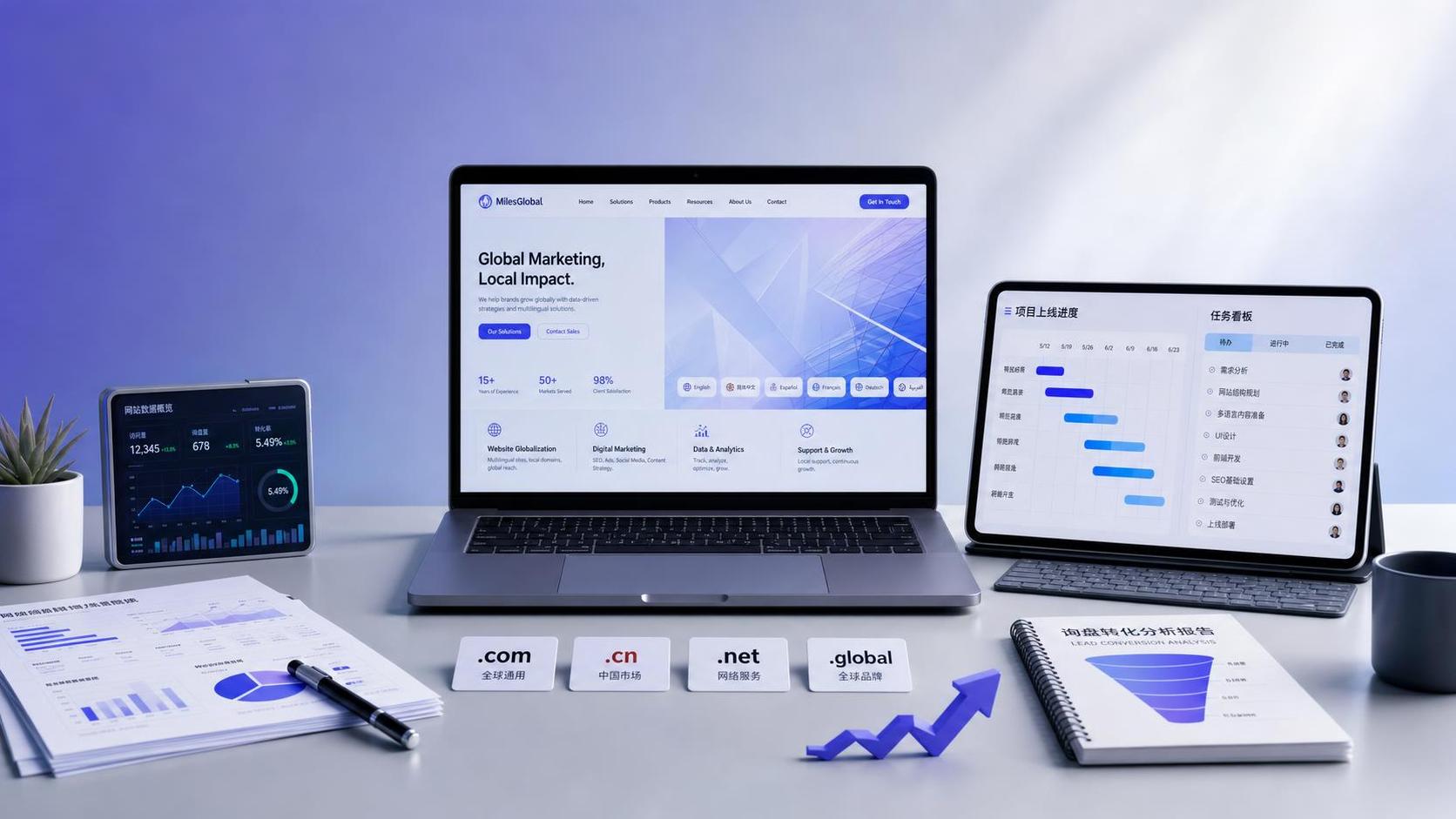
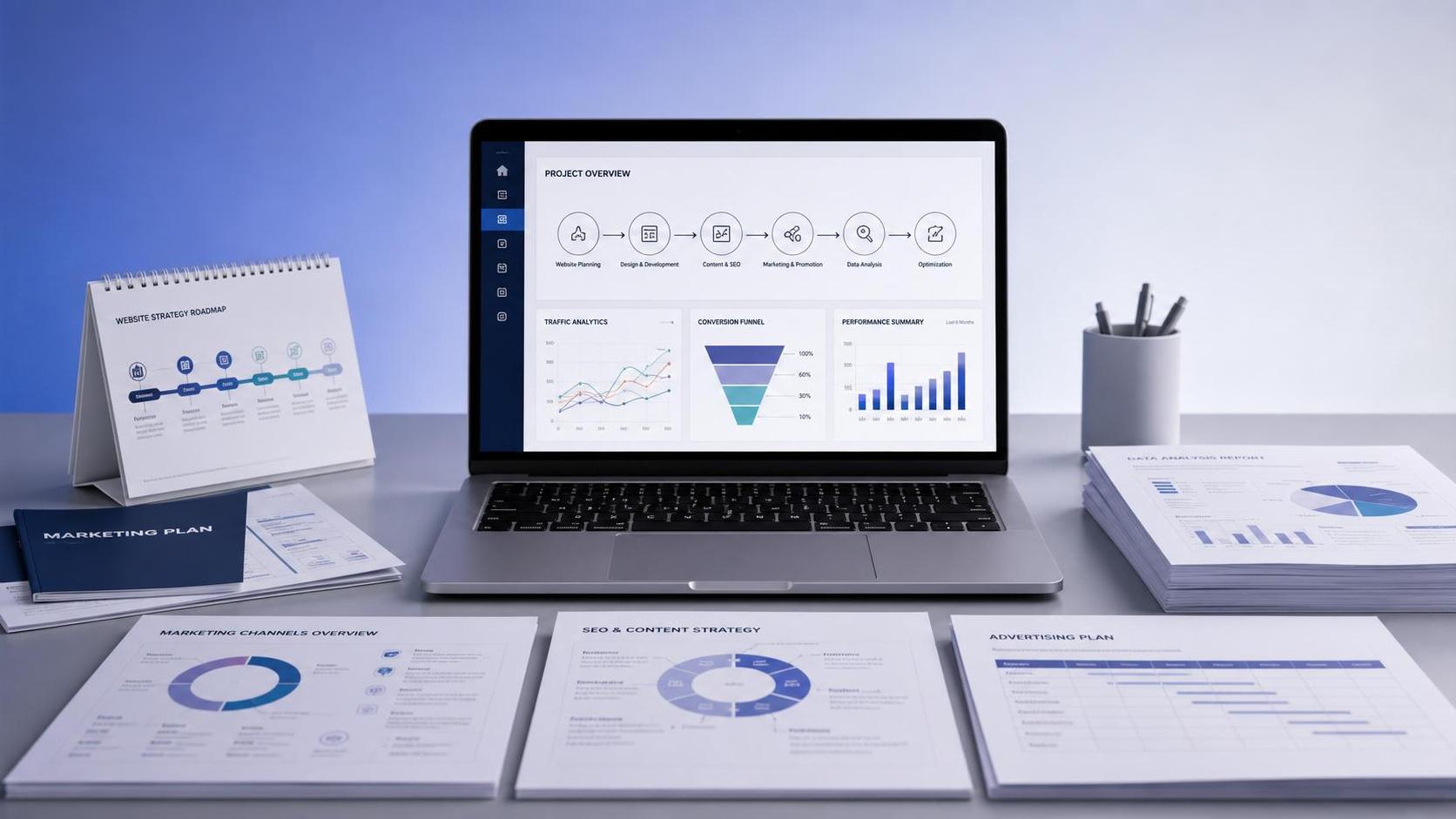
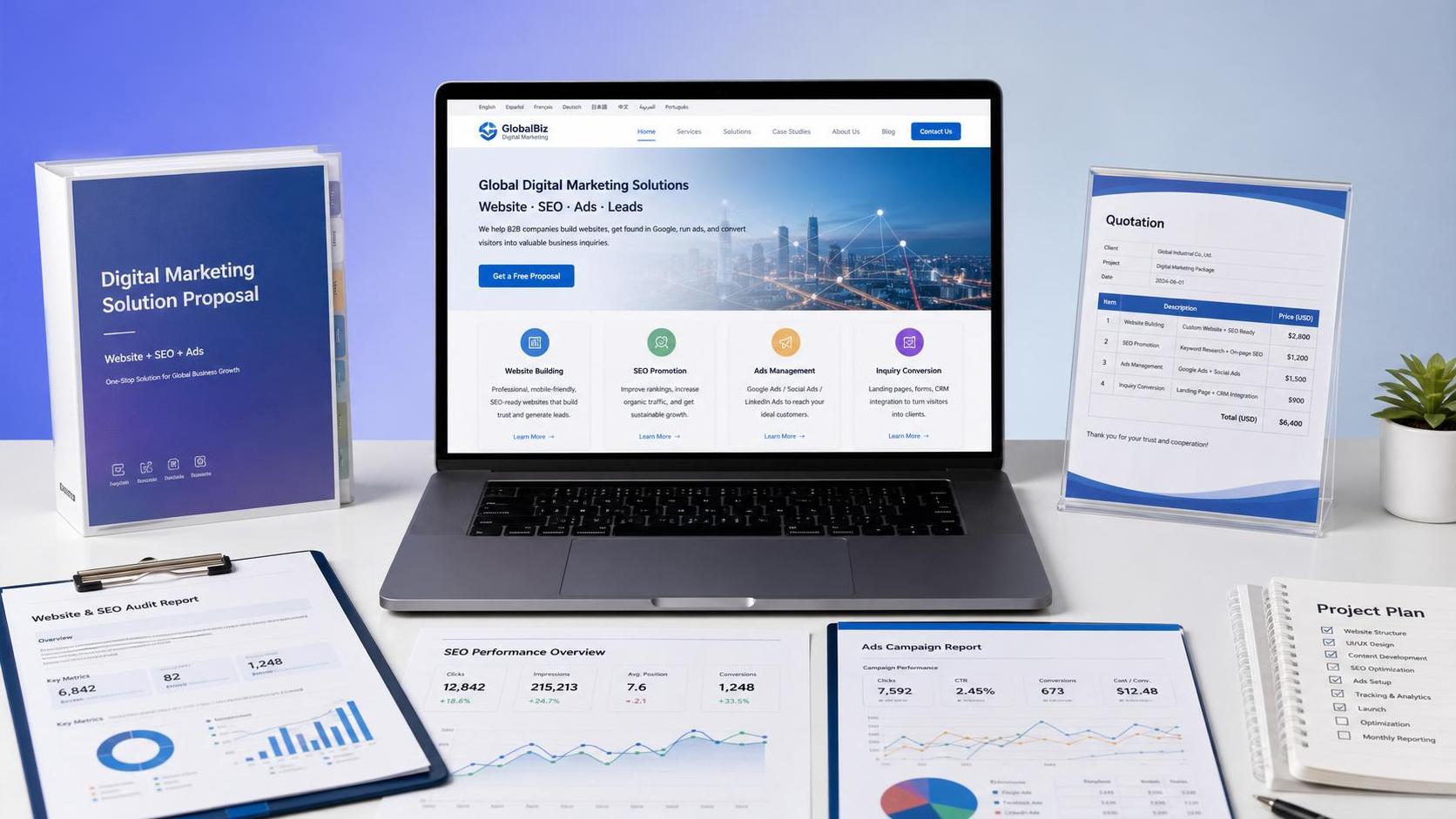
Integrated website development and promotion is a service model that treats a corporate website as a controllable digital asset, connecting website planning, page development, content production, search acquisition, paid traffic generation, social media outreach, lead management, and operational review. Its core is not to package and sell multiple services, but to design every stage in coordination around target customers, conversion paths, and business outcomes.
In foreign trade B2B scenarios, websites need to address the verification needs of overseas buyers arriving through search, advertising, or social media. Therefore, product specifications, application scenarios, factory capabilities, qualification materials, case studies, and inquiry entry points should form a complete information chain. Cross-border B2C scenarios place greater emphasis on product structure, brand presentation, shopping or quotation processes, and remarketing conversion.
To determine whether a solution is truly integrated, consider whether it covers “positioning and content before customer acquisition, channel placement during customer acquisition, and conversion and data attribution after customer acquisition.” Only when website development and promotion share keywords, audiences, landing pages, and data standards does integrated website development and promotion have a foundation for continuous optimization.
II. Technical Principles and Collaborative Operating Mechanisms
At the technical level, integrated website development and promotion typically relies on responsive websites, content management systems, forms and communication tools, traffic analytics, and ad conversion tracking. Responsive layouts should ensure that product pages, forms, and contact information remain readable and usable on both desktop and mobile devices; stable servers, certificates, and acceleration capabilities affect overseas user experience and search crawling efficiency.
At the content level, keyword research determines the thematic scope of categories, product pages, solution pages, and knowledge content. Page titles, descriptions, entity information in the main text, image descriptions, and internal links need to support user understanding rather than function as isolated keyword stuffing. Multilingual websites should also establish clear language paths, regional content, and corresponding relationships to prevent pages in different languages from interfering with one another.
At the operational level, advertising can validate immediate market and keyword demand, search content can accumulate long-term visibility, social media can expand brand touchpoints, and the website can centrally receive and convert traffic. By recording events such as traffic sources, visited pages, form submissions, email clicks, or instant messaging clicks, teams can identify high-value channels and refine budget, page, and content priorities.
III. Mainstream Models and Applicable Businesses
The first type is the foreign trade B2B inquiry generation model, suitable for manufacturing factories, trading companies, OEM/ODM enterprises, and industrial product suppliers. Its focus is on establishing clear product catalogs, specification materials, factory strengths, application solutions, and inquiry pathways, while acquiring overseas visitors with purchasing intent through search and advertising.
The second type is the overseas brand expansion and cross-border store model, suitable for brand owners with proprietary product lines, cross-border sellers, and factories undergoing transformation. Its key elements include product categories, multi-specification displays, shopping cart or quotation mechanisms, brand stories, reviews, logistics and payment-related pages, as well as dedicated landing pages configured for different channels.
The third type is the multilingual regional expansion model, suitable for companies whose customers are distributed across multiple countries, whose non-English markets account for a high proportion, or whose products require substantial explanation. English, Russian, Japanese, Korean, Arabic, French, German, Spanish, and other pages should not be created through mechanical translation alone; terminology, units, delivery instructions, and calls to action should also be adjusted according to local purchasing practices.
IV. Selection Criteria and Service Provider Evaluation
When purchasing integrated website development and promotion services, businesses should first clarify their objectives: whether to obtain inquiries, build a brand, test new markets, or reduce dependence on platforms. They should then identify target countries, primary product lines, average order value, sales follow-up capabilities, and annual marketing budgets. When objectives are unclear, website functions and promotion strategies can easily lose focus, and subsequent investment becomes difficult to measure.
When evaluating service providers, businesses should confirm whether the website supports independent updates of products and articles, multilingual management, mobile adaptation, form and instant communication entry points, data analytics, permission management, and basic security configuration. They should also understand whether keyword research, content review, advertising account management, campaign reports, and optimization cadence have clearly defined delivery boundaries.
For integrated website and marketing needs, Yiyingbao provides AI-powered website development, multilingual standalone websites, search optimization, advertising, social media operations, and website growth services. Its system adopts a responsive architecture and provides global nodes and infrastructure support. When selecting a solution, businesses should still require a verifiable implementation checklist based on their own industry, target markets, page quantity, and operational objectives.
V. Implementation Process, Quality Control, and Launch Essentials
Implementation typically begins with market research and website planning. Teams should identify core products, target customers, competitive differentiators, keyword themes, and conversion actions before producing a sitemap and page prototypes. For industries with longer decision cycles, such as machinery, chemicals, and new energy, it is advisable to collect specification sheets, testing materials, production processes, application images, and frequently asked questions in advance to reduce subsequent content rework.
During the website development stage, domains, servers, certificates, page components, product data, forms, and communication channels need to be configured. Quality checks should not focus solely on visual effects, but should also cover mobile layouts, link validity, form delivery, loading performance, language switching, image compression, privacy statements, and access conditions in different regions. Analytics and conversion events should be configured before launch to establish a baseline for subsequent review.
During the promotion stage, it is advisable to begin with limited testing: first validate the alignment of keywords, countries, and landing pages, then expand effective themes and budgets. Yiyingbao's AI-assisted capabilities can be used to generate page structures, product descriptions, ad copy, and initial content drafts; however, information involving technical specifications, compliance statements, delivery times, and corporate qualifications should be reviewed and confirmed by the company's business and technical personnel.
VI. Total Cost of Ownership and Return on Investment Assessment
The total cost of ownership for integrated website development and promotion includes not only initial design and development costs, but also domains, hosting or acceleration, certificates, multilingual content, asset production, search operations, advertising media spend, social media content, data tools, and internal follow-up resources. Low-cost website development without content, tracking, and ongoing operations often struggles to become a stable customer acquisition channel.
Key variables affecting costs include website type, number of pages and products, number of languages, complexity of customized features, target countries, degree of content specialization, advertising testing scale, and depth of service response. Purchasers should evaluate one-time setup fees separately from monthly operating fees and clearly define responsibility boundaries for asset provision, content modifications, technical maintenance, and account ownership.
Return should be assessed comprehensively based on the number of qualified inquiries, inquiry quality, sales follow-up rate, sample or quotation conversion rate, sales cycle, and customer lifetime value, rather than traffic alone. For high-value products with long decision cycles, the website can be regarded as a trust verification tool before sales; for standardized products, the focus can be on comparing the cost per qualified lead and changes in advertising budget trends.
VII. Operating Cycles, Case References, and Future Trends
A continuous update mechanism should be established after the website goes live. Product changes, trade show plans, entry into new markets, common customer questions, and industry trends can all be converted into additions to product pages, solution pages, case materials, or knowledge content. In general, indexing, traffic, forms, and advertising data can be reviewed monthly, while keyword structure, page conversion, and target market priorities can be reassessed quarterly.
Yiyingbao's publicly disclosed services cover industries including laser engraving machines, steel, chemicals, heavy-duty trucks, machinery, new energy, automobiles, agriculture, medical care, and furniture, and list service cases such as Haier, Aucma, Shandong Airlines, Yuanhe Power Station, Little Duck Group, and China National Heavy Duty Truck Group. Different companies have different market, budget, and performance conditions, so purchasers should focus on implementation experience similar to their own products and sales models.
In the future, integrated website development and promotion will further integrate generative content tools, automated advertising placement, first-party data operations, multilingual localization, and generative engine optimization. In response to AI question answering and search summaries, businesses need to continuously build verifiable product information, technical knowledge, Q&A content, and brand entity materials. Websites with genuine competitiveness will serve search engines, AI tools, purchasing decision-makers, and sales teams simultaneously.
 How long does it generally take for an international trade website to officially go live?How long does it generally take for an international trade website to go live? It usually takes 7–30 working days, while complex projects take approximately 4–8 weeks. The launch speed is affected by functionality, languages, content, and SEO configuration. Planning ahead can help the website go live sooner and improve inquiry conversion.
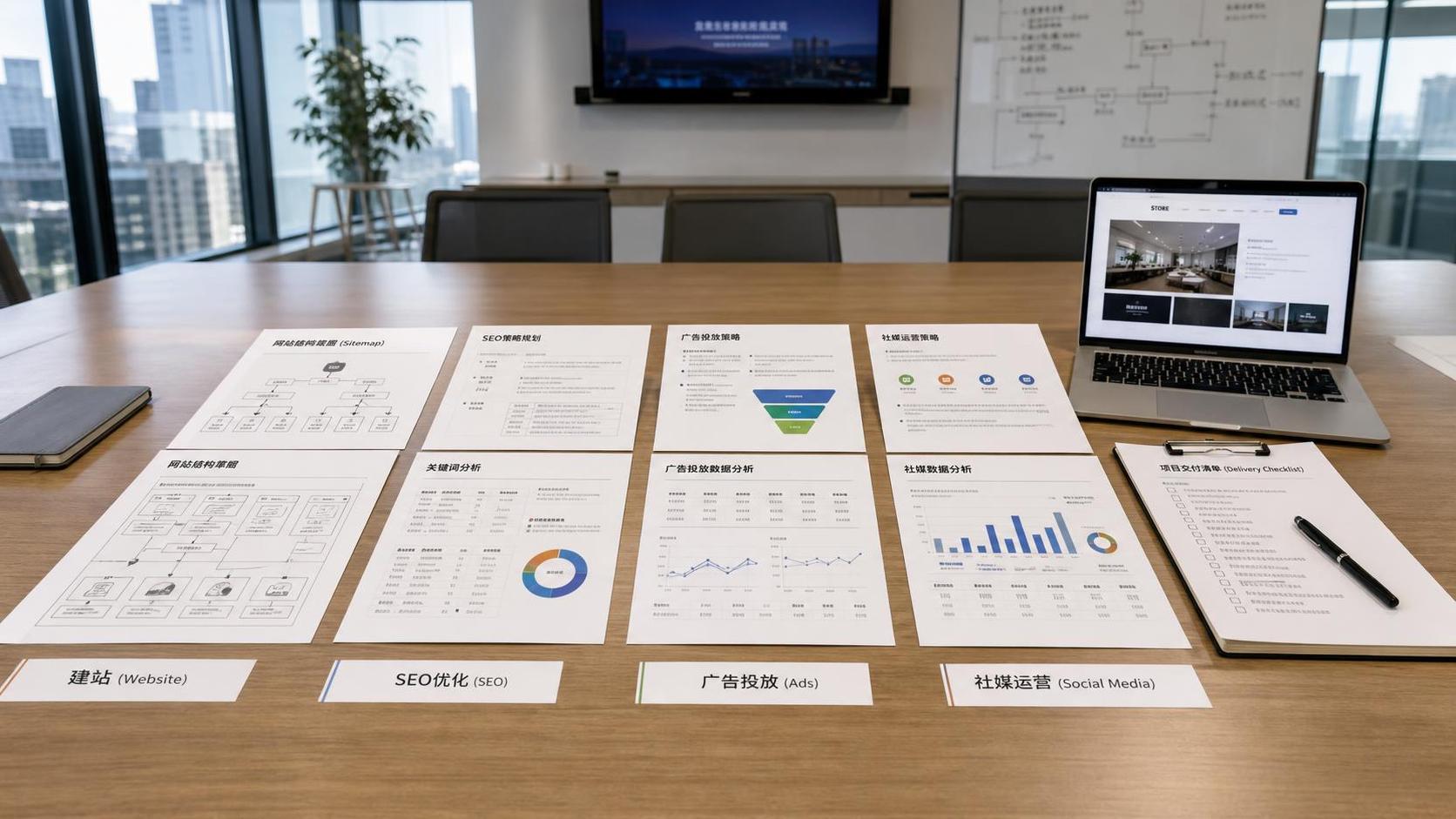
 How to Choose a Digital Marketing Service Provider? Start by Reviewing the Scope of DeliveryHow to choose a digital marketing service provider? Don’t compare prices first; review the scope of delivery first. This article breaks down differences in scope, responsibilities, and performance metrics across website development, SEO, advertising, social media, and data acceptance, helping you select a truly suitable integrated service provider more efficiently.