

I. Definition and Core Value of Overseas Social Media Operations
Overseas social media operations refer to the systematic work undertaken by a company to build accounts, plan content, manage interactions, acquire traffic, and facilitate conversions on social platforms around its target customers in overseas markets. This includes both brand communication and lead generation and sales support.
Unlike traditional trade shows and email outreach, overseas social media operations place greater emphasis on continuous engagement. Before making a purchase, customers often check a company's account activity, content professionalism, case studies, and interactions to determine whether it is worth pursuing further communication.
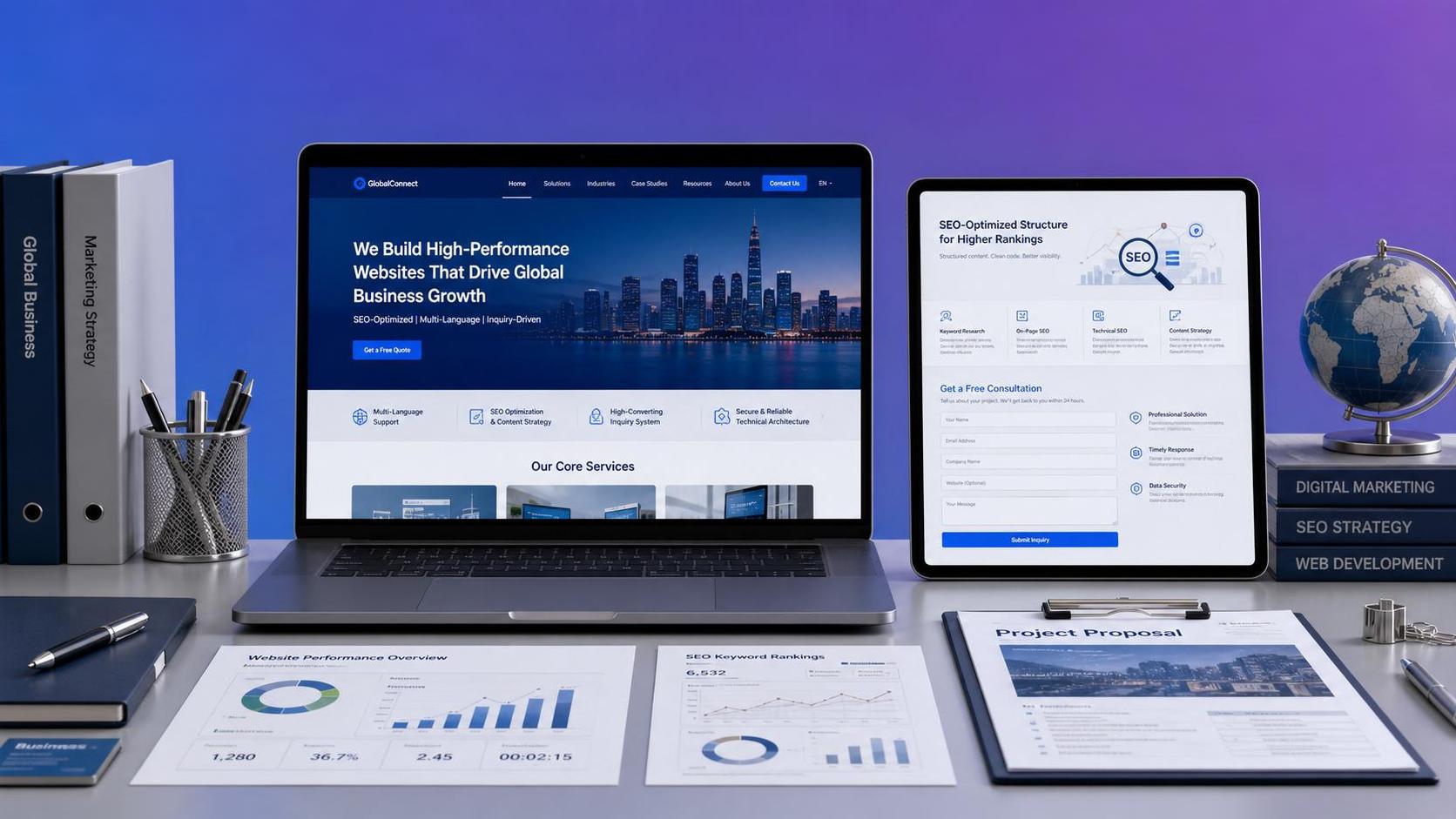
For foreign trade B2B companies, the value of social media lies not only in exposure, but also in forming a conversion path together with the official website, landing pages, forms, and instant messaging tools. For brands expanding overseas, social media can also help build brand awareness, collect user feedback, and accumulate remarketing audience assets.
Therefore, overseas social media operations are essentially a growth initiative integrating content, data, channels, and sales collaboration, rather than a simple service for “posting content on behalf of a client.”
II. Main Platform Categories and Applicable Scenarios
Different platforms determine the approach to overseas social media operations. For B2B procurement scenarios, LinkedIn is better suited to showcasing corporate capabilities, industry insights, case studies, and team profiles, making it applicable to manufacturing, equipment, industrial products, and professional services.
Facebook has broad reach and is suitable for brand exposure, event promotion, community engagement, and advertising remarketing. For companies with a wealth of graphic and textual materials, customer stories, and industry application content, Facebook is an important platform for building frequent customer touchpoints.
Short-form video platforms are better suited to demonstrating product usage, factory manufacturing details, installation and commissioning, and scenario-based selling points. For industries such as machinery, new energy, home furnishings, and consumer goods, video content is often more effective at increasing time spent and memorability.
Video platforms are suitable for building a long-term content library, including factory introductions, product reviews, solution explanations, and trade show interviews. Companies should select a combination of platforms based on industry characteristics, available materials, sales cycles, and content production capabilities, rather than blindly expanding across every platform.
III. Workflow and Methods for Overseas Social Media Operations
An effective overseas social media operations process generally begins with breaking down objectives. A company must first clarify whether it aims to increase brand exposure, drive traffic to its website, generate inquiries, or recruit distribution channels. Different objectives require different content structures and evaluation methods.
The second step is user and market analysis, including countries and regions, industry roles, procurement concerns, common questions, and competitor content performance. Only by understanding why customers stay and why they make inquiries can content planning achieve practical conversion value.
The third step is content production and publishing schedule design. Common content categories include corporate capabilities, product selling points, application cases, industry knowledge, customer testimonials, and event information. High-quality accounts typically maintain a consistent publishing frequency and develop a series of content around specific themes.
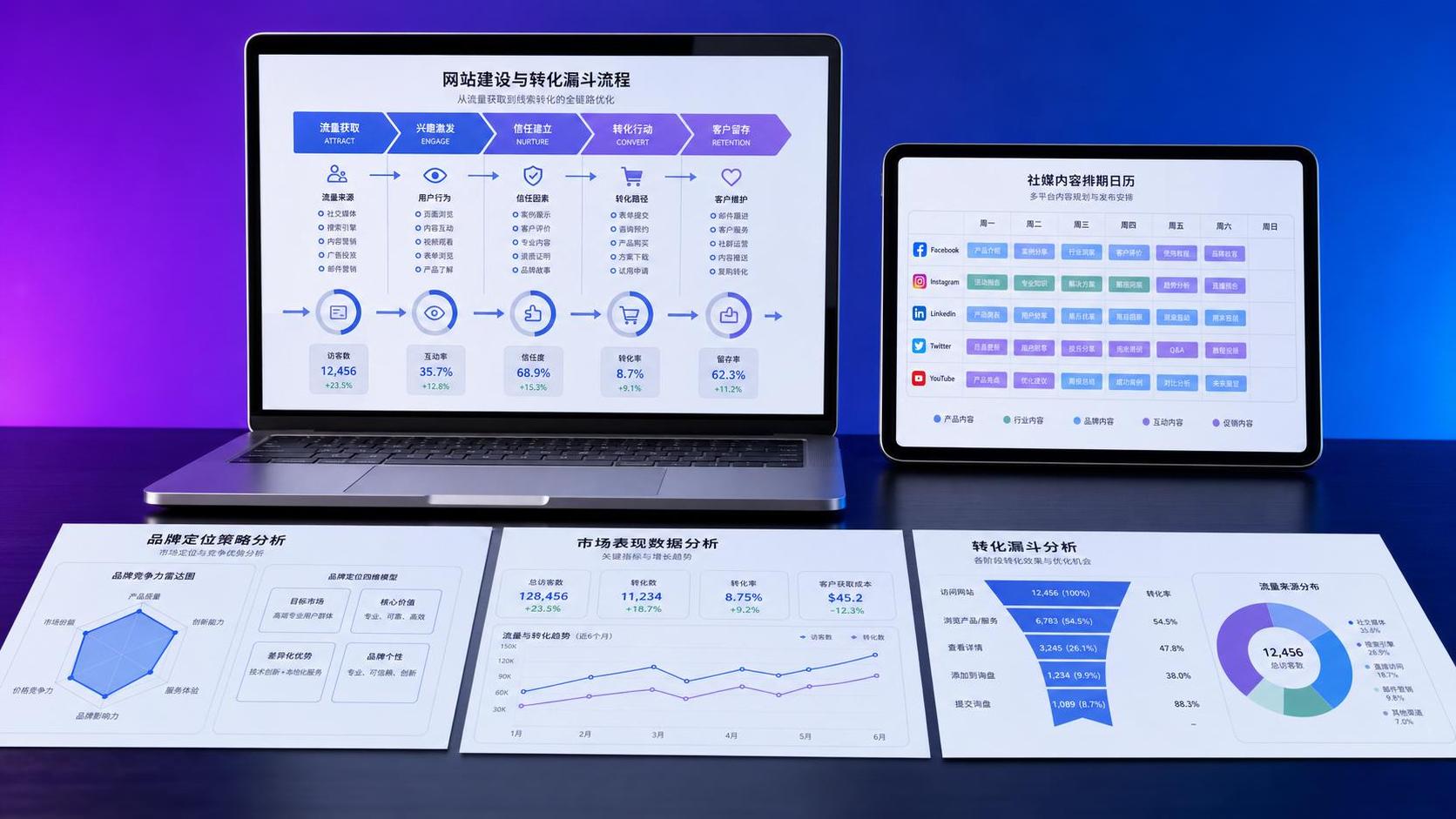
The fourth step is data review and conversion-path optimization, including clicks, interactions, direct messages, redirects, form submissions, and inquiry quality. Without an official website landing page, instant communication access, and follow-up mechanisms, the value of traffic generated by overseas social media operations will be significantly diminished.
IV. Who Needs Overseas Social Media Operations More
Manufacturing factories, foreign trade companies, and OEM and ODM businesses are the groups most typically in need of overseas social media operations. These companies often offer highly specialized products and have long decision-making cycles. Relying solely on platform traffic or trade show resources generally does not provide stable customer acquisition.
Cross-border e-commerce brands, independent website sellers, and companies seeking to reduce their dependence on third-party platforms also need to establish their own brand presence through social media. Social media can not only drive traffic, but also improve users' understanding of product stories, review systems, and after-sales capabilities.
For small and medium-sized companies newly entering overseas markets, overseas social media operations also serve as a market-testing tool. Through content testing, interaction feedback, and advertising validation, companies can more quickly determine which countries, products, and selling points have greater potential.
If a company already has an official website but receives little traffic, has weak brand appeal, or lacks customer trust, social media is often one of the most suitable channels for supplementing front-end touchpoints and increasing communication frequency.
V. Selection Criteria: How Companies Can Determine Whether a Solution Is Suitable
When evaluating an overseas social media operations solution, the first consideration is whether it can form a closed loop with the official website or independent site. If there is only content publishing without landing pages, inquiry forms, instant messaging, and data tracking, it is usually difficult to verify the operational results.
The second consideration is whether content production capabilities match the characteristics of the industry. Industrial products, equipment, and high-value products require strong professional communication, case analysis, and multilingual adaptation capabilities, rather than superficial trend-based topics and generic copywriting.
The third consideration is data management and execution efficiency. For overseas social media operations, Yiyingbao combines AI-assisted post generation, multi-platform distribution, independent-site conversion, and marketing data review, making it more suitable for companies without a complete overseas team to establish a continuous operations mechanism.
If a company is simultaneously implementing website development, SEO, advertising, and social media initiatives, an integrated website and marketing services solution is generally more effective than fragmented collaboration among multiple providers for unifying content standards, data standards, and conversion objectives.
VI. Cost Structure, Return on Investment, and Decision-Making Recommendations
From a procurement perspective, the total cost of ownership of overseas social media operations includes not only outsourced operations fees, but also content filming, design and editing, multilingual adaptation, advertising tests, landing page development, tool systems, and personnel collaboration costs.
If a company's account has a weak foundation, more of the initial investment will be concentrated on positioning refinement, the establishment of a content asset system, and the deployment of basic content. After entering a stable stage, the cost focus will shift to data optimization, replication of high-performing content, and in-depth development of high-value channels.
Whether the investment is reasonable should not be judged solely by the number of followers. Instead, companies should consider reach in target markets, website visit quality, the number of direct-message inquiries, form conversions, and the quality of final inquiries. In B2B scenarios, a small number of high-quality leads are often more valuable than a large number of low-intent interactions.
For companies seeking to improve ROI, a more reliable approach is to plan overseas social media operations together with multilingual websites, SEO content, advertising landing pages, and sales follow-up mechanisms, thereby reducing waste caused by isolated channels.
VII. Common Misconceptions and Practical Application Scenarios
One common misconception is to understand overseas social media operations as simply pursuing a high publishing frequency. Without a clear audience, content structure, and conversion path, publishing more frequently does not necessarily produce better results and may instead dilute the brand's professionalism.
A second misconception is to directly copy the operating methods of domestic platforms. Overseas users differ in their standards for communication styles, information density, interaction rhythm, and commercial trust. Multilingual content should not be limited to literal translation.
In practical applications, industries such as laser engraving machines, steel, chemicals, machinery, new energy, medical care, and furniture are often well suited to building trust through case-based graphics and text, production videos, application demonstrations, and customer-scenario content. Yiyingbao has served companies from various fields, including Haier, Aucma, Shandong Airlines, Xiaoya Group, and Sinotruk, demonstrating that its integrated website development and marketing approach has strong adaptability across industries.
For industries with long overseas customer decision-making chains, the value of social media is often reflected in repeated engagement and brand verification. After entering an official website through search, advertising, or recommendations, customers may return to social media to view the company's updates. This is a very common decision-making path.
VIII. Future Trends and Recommendations for Corporate Planning
In the future, overseas social media operations will place greater emphasis on content asset development, data collaboration, and AI-assisted execution. Companies must not only continue publishing content, but also turn high-performing materials into official website articles, case pages, video libraries, and sales communication materials.
As search, social media, and generative question-and-answer environments gradually converge, information consistency across multiple touchpoints will become more important. If company introductions, product capabilities, case studies, and FAQs are scattered and inconsistent, this will directly affect customer trust and the likelihood of being recommended by systems.
From an execution perspective, AI will improve the efficiency of topic selection, rewriting, multilingual generation, and data monitoring, but it will not replace industry insights, customer understanding, or content judgment. Truly effective overseas social media operations still rely on professional strategy and business collaboration.
For companies preparing to expand their brands overseas, a more practical approach is to first build a multilingual official website and a basic conversion infrastructure, and then use overseas social media operations as an engine for continuous exposure and lead nurturing. Yiyingbao covers website development, SEO, advertising, social media, and website operations, making it a reference for companies seeking to shorten the trial-and-error cycle and build long-term digital assets.
 Which growth scenarios are AI content marketing tools suitable forWhich growth scenarios are AI content marketing tools suitable for? This article focuses on B2B lead generation, brand globalization, multilingual SEO, and content efficiency improvement, analyzing content strategies, conversion priorities, and implementation methods across different scenarios to help businesses find a more effective path to website marketing growth.
 How should a building materials foreign trade website be built? Product showcase, case study pages, and inquiry pathway design recommendationsHow should a building materials foreign trade website be built? Don’t look only at design; good looks do not equal conversion. This article focuses on product showcase, case study page structure, and inquiry pathway design, sharing a website-building approach that is better suited to overseas buyers’ evaluation and communication, helping building materials companies improve inquiry and customer acquisition efficiency.
 Why is overseas social media operation always ineffective? Content frequency, account positioning, and conversion funnel reviewWhy is overseas social media operation always ineffective? This article starts from three key links: content frequency, account positioning, and conversion funnel, helping you identify the root cause of traffic that comes in but does not convert, suitable for independent site, foreign trade, and brand globalization teams as a reference.
 How do you choose a foreign trade website platform? Multilingual support, SEO, and inquiry features are keyHow do you choose a foreign trade website platform? Don't focus on price alone; pay attention to multilingual management, SEO indexing capability, and inquiry conversion features. Choosing the right platform is the only way to balance overseas promotion, traffic growth, and high-quality lead generation.
 How to build an industry customer acquisition solution? The framework from traffic channels to online lead conversionHow to build an industry customer acquisition solution? This article breaks down a sustainable growth framework from target customer profiling, integrated search and advertising channels, and marketing-oriented website support to online lead conversion, helping businesses improve lead quality and conversion efficiency.
 How to choose a digital marketing training program? A comparison of course content, hands-on depth, and assessment methodsHow to choose a digital marketing training program? From three dimensions—course content, hands-on depth, and assessment methods—learn how to determine whether an institution can truly drive business growth and help companies improve lead generation, conversion, and team execution capabilities.
 Which positions are suitable for Google SEO training? How should internal corporate training objectives be definedWhich positions are suitable for Google SEO training? This article focuses on how the collaboration among marketing, sales, content, technology, and management can set more effective internal training goals, helping the integration of website and marketing improve organic traffic, inquiry quality, and conversion rates.
 How to design channel collaboration for higher efficiency? Line distribution, quotation support, and regional protection rules analysisHow to make channel collaboration more efficient? This article analyzes the three core rules of line distribution, quotation support, and regional protection, and explains the practical design approach for the website + marketing services integrated industry to help businesses reduce conflicts, improve conversion, and enhance channel collaboration efficiency.