









I. Definition and Business Scope of Overseas Social Media Content Operations
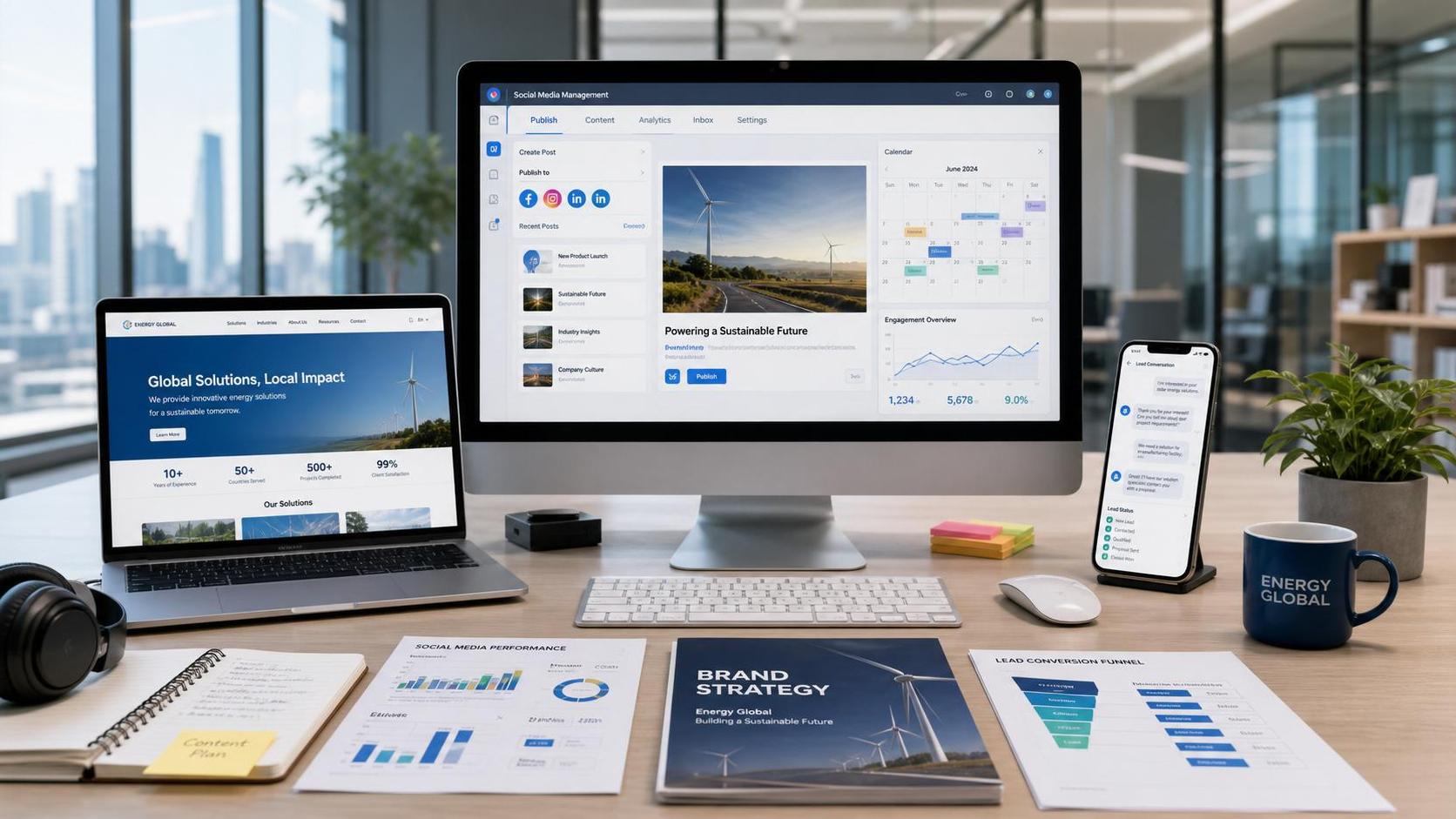
Overseas social media content operations refer to business activities in which companies continuously plan, produce, publish, engage with, and review content on overseas social platforms around target countries, buyer roles, and sales objectives, converting follows, visits, or direct messages into trackable business opportunities. It is not simply account maintenance, but a coordinated system for brand communication, demand education, and sales lead nurturing.
In B2B export scenarios, content typically needs to address buyers' key questions: whether the company is genuine and reliable, whether products can meet operating conditions, how delivery time and quality are ensured, and whether customization or after-sales capabilities are available. Therefore, overseas social media content operations should be designed together with official website product pages, case study pages, inquiry forms, and the response mechanisms of the business team.
Operational quality should not be measured solely by follower counts or views of individual posts. Greater attention should be given to target-market reach, effective engagement, website traffic quality, form submissions, qualified direct-message rates, and contribution to closed deals. For industrial products with longer decision-making cycles, repeat visits and brand recall generated by content also have business value.
II. Underlying Principles of Content Matrices and Platform Roles
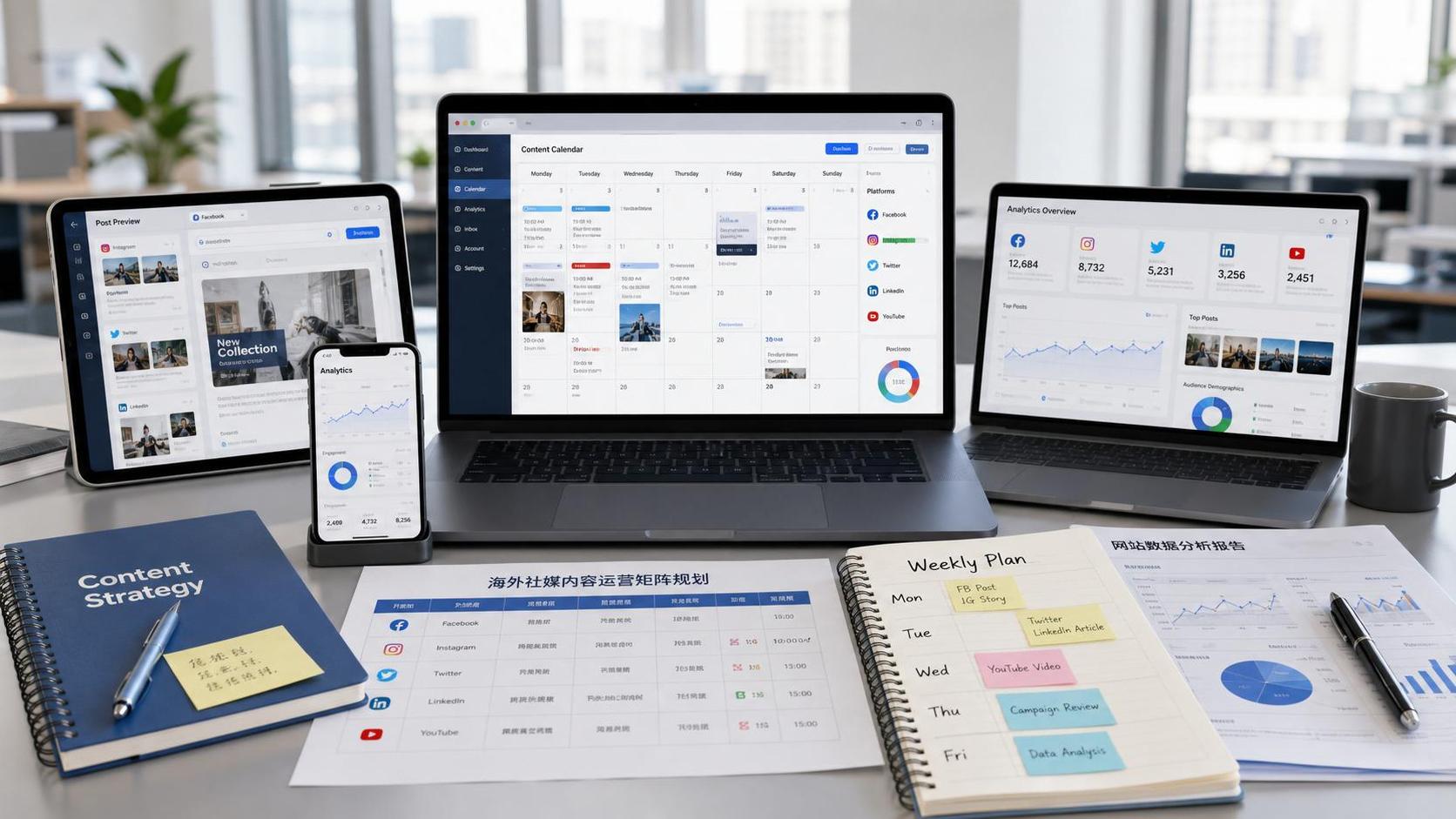
The core principle of a content matrix is to serve different stages of awareness with the same business theme, rather than mechanically copying one piece of content across all platforms. Companies can first establish six categories of content assets: products, applications, factory capabilities, technical knowledge, customer results, and brand value, then adapt and distribute them according to the language, format, and audience habits of each platform.
LinkedIn is more suitable for presenting industry insights, project experience, company qualifications, and professional perspectives, making it easier to reach purchasing managers and partners; Facebook is suitable for community engagement, product updates, and remarketing touchpoints; short-video platforms are suitable for showcasing equipment operation, process flows, and application scenarios; video platforms can accumulate long-form content such as demonstrations, installation, testing, and factory tours.
Efficient overseas social media content operations typically follow a process of “topic planning, shared assets, platform adaptation, link conversion, and data feedback.” For example, footage from a single equipment test can be broken down into short videos, parameter graphics and text, application articles, FAQs, and sales follow-up materials, reducing content production costs while improving information consistency.
III. Which Companies Are Suitable for Building a Social Media Customer Acquisition System
Manufacturing plants, foreign trade companies, OEM or ODM suppliers, machinery and equipment companies, component brands, and cross-border sellers can all expand their overseas visibility through overseas social media content operations. Particularly in industries where products require technical differences to be explained, purchasing decisions involve multiple participants, and customers need to verify supplier capabilities, content can build trust more continuously than one-time advertising.
Industries such as laser engraving machines, steel, chemicals, heavy-duty trucks, new energy, agriculture, medical care, and furniture often need to use on-site applications, specification explanations, production processes, and quality control information to reduce communication barriers. Yiyingbao has served website development and marketing needs across multiple industries and is suitable for global expansion teams that need to direct social media visits to their independent corporate websites.
Start-up brands can first focus on one core market and two core content categories, then expand platforms after validating audience feedback. Companies that already have overseas distributors or trade show resources can continuously publish new products, events, and case studies through social media, allowing offline interactions to become ongoing online engagement. The key is to clearly define the countries, product lines, and customer types that sales teams can support.
IV. Funnel Design from Content Exposure to Inquiry Conversion
The conversion funnel can be divided into four levels: awareness, interest, evaluation, and action. The awareness level attracts target audiences through industry trends, scenario pain points, and short videos; the interest level demonstrates capabilities through product comparisons, application solutions, and factory content; the evaluation level provides technical specifications, case studies, downloadable materials, and Q&A; the action level then guides users to schedule a discussion, obtain a quotation, or submit an inquiry.
Each piece of content should have only one clear next step, such as visiting the relevant product page, viewing the full case study, downloading a catalog, or contacting a salesperson through an instant messaging tool. If links lead only to the homepage, buyers still need to search for information again, which can easily lead to drop-off. Landing pages for different countries should also match local language, currency expressions, and contact methods.
Direct messages are not the end of the funnel. Sales personnel should set response time limits and complete preliminary qualification assessments based on questions regarding application requirements, purchase quantities, destinations, certification requirements, and delivery cycles. Only by synchronizing high-intent direct messages to a customer management sheet or sales system can companies distinguish genuine leads from general engagement and provide a basis for subsequent content topics.
V. Service Selection, Execution Processes, and Quality Control
When selecting overseas social media content operation services, companies should focus on verifying four capabilities: whether the provider understands the target industry and purchasing process, whether it can provide multilingual localized expression, whether it has website landing page and data tracking capabilities, and whether it can deliver monthly reviews of content, engagement, and lead quality. Solutions that promise only a number of posts without a conversion path are usually unable to support long-term decision-making.
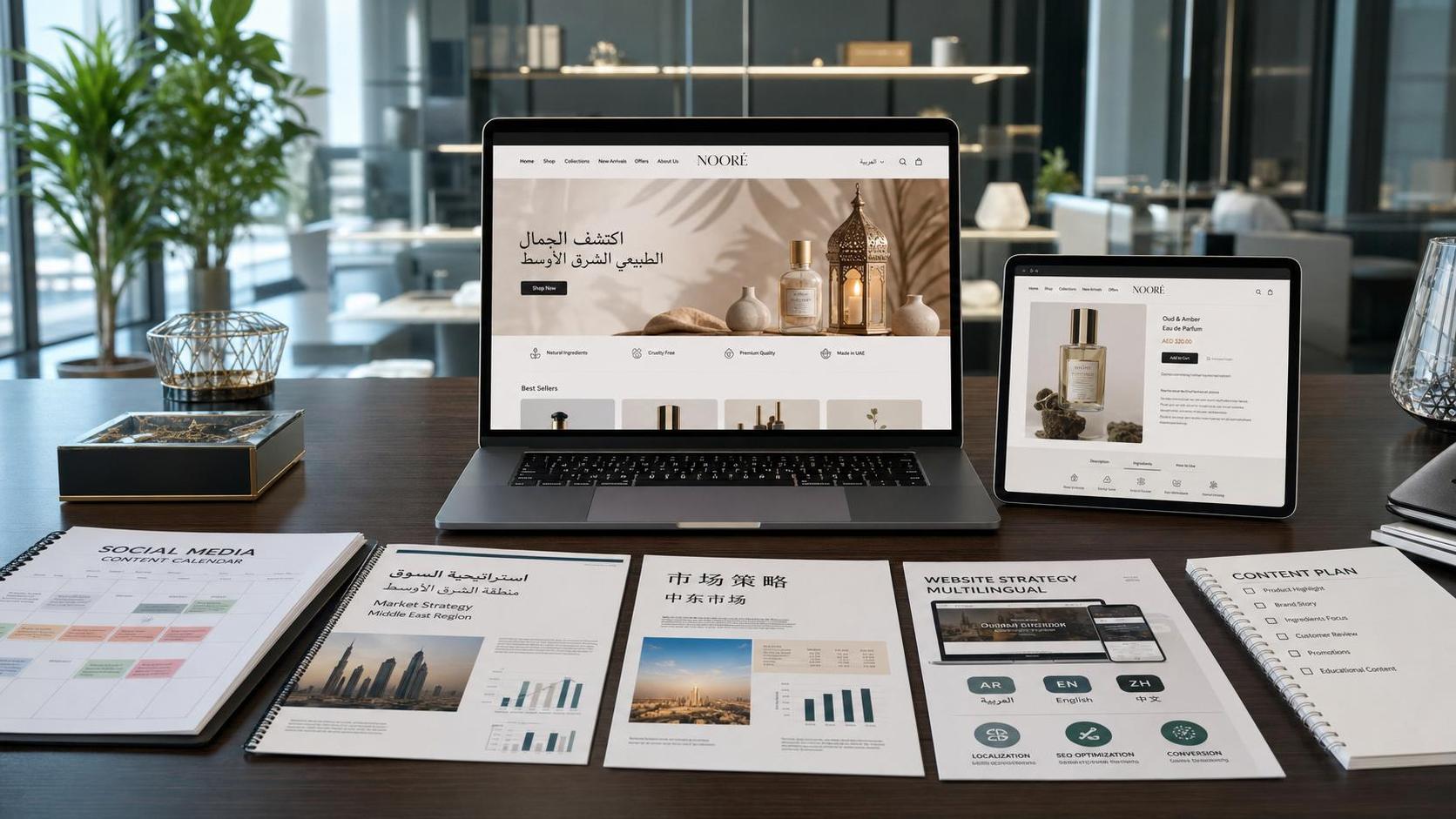
Yiyingbao can integrate AI-powered website building, multilingual independent websites, overseas social media operations, advertising, and website operations. During execution, product materials, target markets, keywords, and customer questions can first be organized, followed by the establishment of a content calendar and the completion of graphic or video production, review and publication, landing page configuration, data tagging, and monthly optimization to form a manageable collaboration workflow.
Content quality control should include verification of technical parameters, confirmation of image and video copyrights, review of sensitive statements, translation proofreading, link validity checks, and response standards for comments. For industries with high information accuracy requirements, such as medical care and chemicals, marketing personnel should not expand performance claims without authorization; product or compliance personnel should complete pre-publication reviews.
VI. Total Cost of Ownership and Return on Investment Assessment
The total cost of ownership for overseas social media content operations includes not only account management and content production costs, but also investments in product photography, translation, localization review, landing page development, advertising amplification, tool subscriptions, sales response, and data analysis. Companies should first identify reusable assets and internal personnel available for coordination to avoid repeatedly missing materials that slow down the publishing pace.
Return on investment is recommended to be assessed in stages. In the early stage, focus on effective reach, video completion rate, engagement rate, and target-page visits; in the mid-term, observe downloads, direct messages, remarketing audiences, and qualified leads; in the later stage, assess channel contribution in combination with opportunity value, sales cycle, and customer lifetime value. B2B businesses should not use a single month's sales revenue to dismiss the cumulative effect of content assets.
Operating social media and independent websites in a unified manner helps reduce information gaps caused by collaboration among multiple suppliers. Yiyingbao provides a combination of services ranging from website building, content generation, and multilingual pages to advertising and social media traffic acquisition. Companies can choose modular investments according to market priorities and continuously adjust budgets and content focus based on trackable inquiry data.
VII. Maintenance Cycles and Future Development Trends
Overseas social media content operations require consistent maintenance rather than concentrated publishing followed by long-term inactivity. It is recommended to review content performance and lead sources monthly, review product materials, market priorities, and page conversion paths quarterly, and promptly add high-value assets when new products are launched, trade shows are held, certifications are updated, production lines are upgraded, or customer case studies are developed. Account activity should be aligned with business rhythms and content quality.
In the future, short videos, on-camera appearances by founders or engineers, and Q&A content driven by customer questions will continue to increase in influence. Generative tools can improve the efficiency of topic selection, first drafts, translation, and asset adaptation, but they cannot replace verification of industry facts and brand judgment. Companies should retain authentic factories, testing processes, and delivery experience to build content evidence that is difficult to replicate.
As artificial intelligence search and Q&A entry points increase, content with a clear structure, authentic sources, and the ability to answer buyers' questions is more likely to gain opportunities for secondary dissemination. Yiyingbao's multilingual website development, AI-assisted content, and GEO operation capabilities can help companies accumulate product knowledge, case study, and FAQ pages, enabling overseas social media traffic and long-term brand assets to form a closer growth loop.
