I. Definition and Core Value of Overseas Independent Website Development
Overseas independent website development refers to building a self-owned and controllable website system for overseas markets, designed to receive search traffic, advertising traffic, social media traffic, and repeat-purchase demand from existing customers. It can be a foreign trade official website, a brand website, a product showcase website, or a cross-border e-commerce store.
Unlike joining a third-party platform, overseas independent website development emphasizes that the domain name, content, data, customer leads, and page structure are all controlled by the enterprise itself. It is more suitable for companies expanding globally that need to accumulate inquiry assets, brand awareness, and organic traffic over the long term.
For B2B enterprises, the core objective of a website is usually not online transactions, but helping overseas buyers quickly understand the company’s capabilities, product specifications, delivery experience, and cooperation methods, and then generate qualified inquiries. For B2C brands, the focus is more on product conversion and repeat-purchase operations.
Therefore, when evaluating whether overseas independent website development is effective, companies should not only look at visual design. They should also assess whether the website has a clear information architecture, stable access speed, credible content expression, and sustainable marketing reception capabilities.
II. Choosing Mainstream Models: Showcase, Inquiry-Based, and E-Commerce
There are currently three common models for overseas independent website development. The first is the corporate showcase model, which focuses on presenting the company profile, qualifications, factory, case studies, and contact information. It is suitable for companies expanding overseas that mainly aim to increase brand exposure and build customer trust.
The second is the B2B inquiry-based website, which is also the most common choice for manufacturers, factories, and foreign trade companies. Its focus is on the configuration of product catalogs, specification pages, application scenarios, FAQ, forms, email, and instant communication tools, with the goal of improving inquiry quality.
The third is the B2C e-commerce independent website. In addition to brand presentation, it also requires product management, specification attributes, shopping cart, order process, payment or quotation functions. It is more suitable for cross-border sellers, DTC brands, and factory-owned brands expanding overseas.
When choosing a model, enterprises should first consider business goals and then the customer decision-making journey. Products with high unit prices and long decision cycles usually prioritize an inquiry-based structure; standardized products and categories with obvious repeat-purchase demand are more suitable for e-commerce-oriented overseas independent website development.
III. How to Choose a Technical Architecture: System, Performance, and Global Access
The technical architecture determines the website’s launch efficiency, subsequent maintenance costs, and marketing scalability. Common paths for overseas independent website development include template-based SaaS website building, semi-customized systems, and fully customized development. Most small and medium-sized enterprises are better suited to using a mature system to launch quickly first, and then gradually expanding functions.
In terms of stability, enterprises should focus on responsive layout, page loading speed, server nodes, CDN acceleration, SSL certificates, and basic security configuration. When overseas customers visit a website, if pages load slowly or the mobile display is misaligned, the conversion rate usually drops significantly.
In multilingual scenarios, language paths, independent page management, content synchronization, and future expansion efficiency should also be considered. In this type of overseas independent website development, 易营宝 provides responsive architecture, multilingual website-building logic, and global node deployment, making it more suitable for enterprises that need to balance speed and operational efficiency.
If an enterprise does not have a dedicated technical team, whether the website-building system supports drag-and-drop editing, content management, component reuse, and subsequent SEO settings will directly affect whether the operations department can continuously update the website. This is often more critical than one-off visual design.
IV. Content and Multilingual Structure: Key Factors Determining Inquiry Quality
Many enterprises understand overseas independent website development as page translation, but what truly affects performance is whether the content structure aligns with overseas buyers’ decision-making process. Buyers usually first look at what you do, then whether you can deliver consistently, and finally enter price and cooperation discussions.
Therefore, product pages should include core specifications, application industries, materials and processes, delivery capabilities, common questions, and trust information. Company pages should explain factory scale, production processes, quality control, service processes, and typical case studies to reduce customers’ understanding costs.
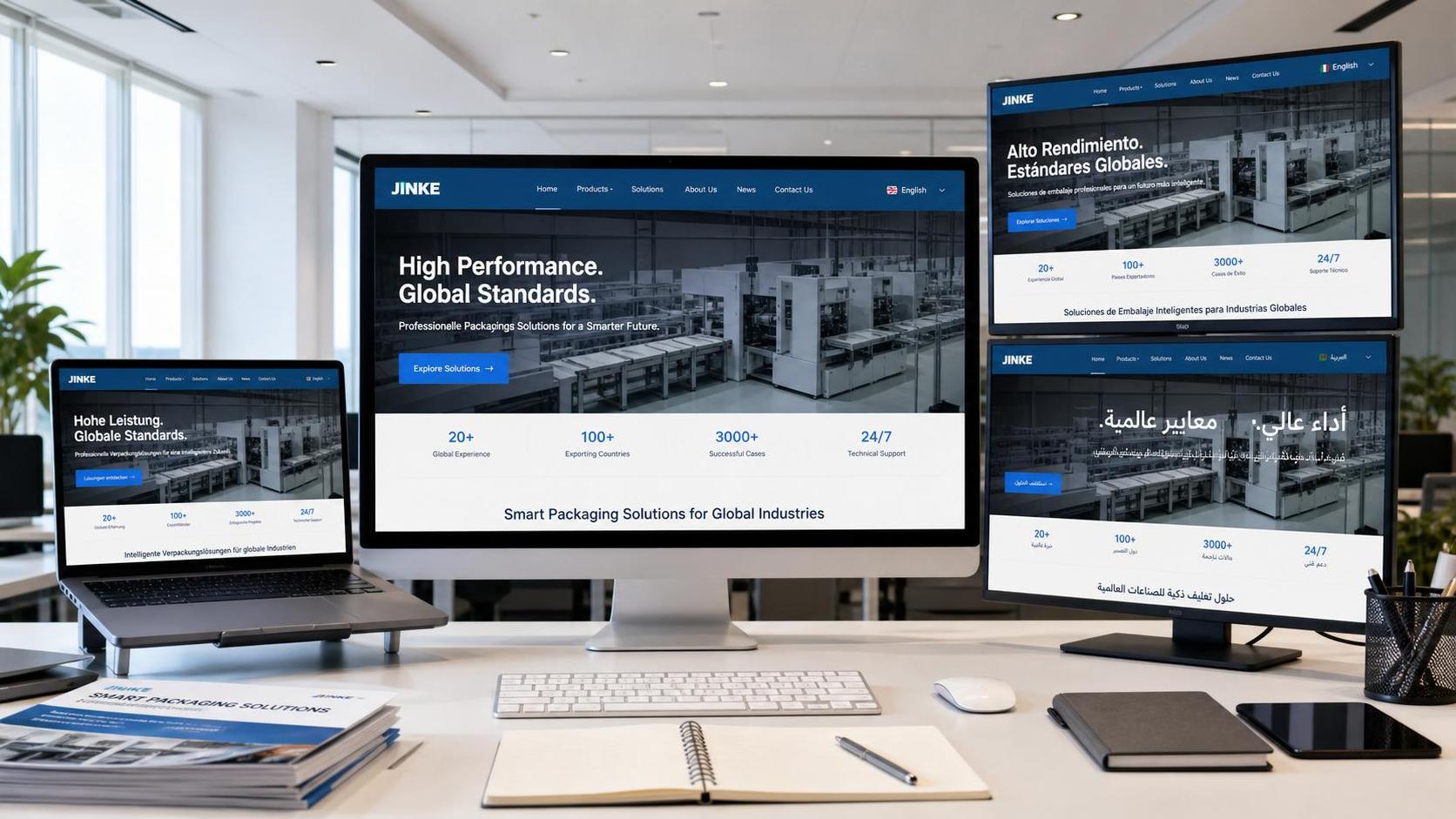
A multilingual website should not only pursue the number of languages, but also consider localized expression. Customers in different countries have different priorities, and pages in English, Russian, Japanese, Arabic, and other languages should be appropriately adjusted in terms of terminology, units, tone, and purchasing habits.
易营宝 provides multilingual website development, AI-assisted translation, and localized content generation, making it suitable for enterprises that want to cover multiple markets at the same time. For teams aiming to increase exposure in non-English-speaking markets, these capabilities can significantly reduce the maintenance pressure of multiple websites.
V. SEO Layout and Traffic Reception: A Complete Path from Indexing to Conversion
After overseas independent website development is completed, the real differentiator is traffic acquisition capability. Organic search planning should usually start with keyword research, distinguishing brand keywords, product keywords, scenario keywords, question keywords, and country or regional keywords, and then mapping them to the homepage, category pages, product pages, and article pages.
At the technical level, titles, descriptions, page hierarchy, internal links, image information, sitemap, and indexing logic must be properly handled. For multilingual websites, language paths and regional targeting also need to be standardized so that search engines can understand the relationships between different page versions.
At the content level, companies should not simply pile up product introductions. High-value content usually includes application guides, answers to procurement questions, industry knowledge, comparison pages, and solution pages. This content not only helps acquire search traffic, but also increases trust before inquiries are submitted.
If an enterprise also needs short-term customer acquisition, overseas independent website development should also coordinate with advertising, social media content, and landing pages. 易营宝 covers AI website building, SEO, advertising, and social media operations, making it more suitable for enterprises that want to manage traffic acquisition and inquiry conversion within the same system.
VI. Who Is Suitable for Overseas Independent Website Development and Typical Application Scenarios
Enterprises suitable for overseas independent website development mainly include manufacturing factories, OEM and ODM enterprises, foreign trade companies, industrial product suppliers, machinery and equipment companies, as well as cross-border sellers and brand owners that want to reduce dependence on platforms.
For industries with high decision-making costs, such as laser engraving machines, steel, chemicals, heavy trucks, machinery, and new energy, customers often need to repeatedly compare supplier qualifications, technical solutions, and delivery experience. An independent website is well suited to professional presentation and long-term lead collection.
Based on publicly available service industries, 易营宝 covers multiple fields including agriculture, healthcare, furniture, education, tourism, catering, and the Internet, and has also served enterprises such as 海尔, 奥柯玛, 山东航空, 小鸭集团, and 中国重汽, indicating that its solutions have cross-industry adaptability.
If an enterprise is currently facing problems such as an outdated website, high bounce rates after ad clicks, difficulty updating content, or unstable inquiry quality, it is usually time to re-evaluate the architecture and operating strategy of its overseas independent website development.
VII. Selection Criteria, Cost Structure, and ROI Evaluation
When purchasing overseas independent website development services, enterprises should not only compare homepage quotations. A more reasonable approach is to evaluate system capabilities, number of pages, number of languages, content production, SEO foundation, server deployment, security configuration, training support, and subsequent operational integration at the same time.
Total cost of ownership usually consists of website development fees, domain names and certificates, servers and acceleration, content creation, multilingual maintenance, SEO optimization, advertising landing pages, functional iterations, and operational labor. Solutions that are inexpensive in the early stage but difficult to maintain later often have higher long-term costs.
ROI should not be evaluated only by short-term traffic after launch, but by whether indexing growth, the number of qualified inquiries, customer source structure, and lead acquisition costs have improved. For B2B enterprises, a high-quality website often gradually demonstrates the accumulated value of organic traffic and inquiries within 6 to 12 months.
If an enterprise wants to reduce the communication costs caused by coordinating multiple suppliers, choosing an integrated service like 易营宝 that covers website development, SEO, advertising, social media, and operational growth is usually more conducive to forming unified data standards and execution rhythms.
VIII. Future Trends: From Website-Building Tools to an Intelligent Growth Foundation
Future overseas independent website development will no longer be limited to building pages. Instead, it will be deeply integrated with AI content generation, search visibility optimization, advertising automation, and social media distribution systems to form a more complete digital asset system for global expansion.
On the one hand, multilingual and localization requirements will continue to rise, and enterprises will need more refined country-specific market content strategies. On the other hand, search entry points are also changing. In addition to traditional search results, generative Q&A and summary recommendations are becoming new scenarios for brand exposure.
This means that enterprise website content should not only be readable for people, but also easy for search systems and generative engines to understand. Building around brand entities, Q&A content, structured pages, and highly credible materials will become an important capability in the next stage.
For enterprises planning to operate in overseas markets over the long term, the earlier they systematize the planning of overseas independent website development, the easier it will be to create compounding effects in subsequent SEO, advertising, social media, and AI search environments. Website building is not the end point, but the infrastructure for an enterprise’s global operations.
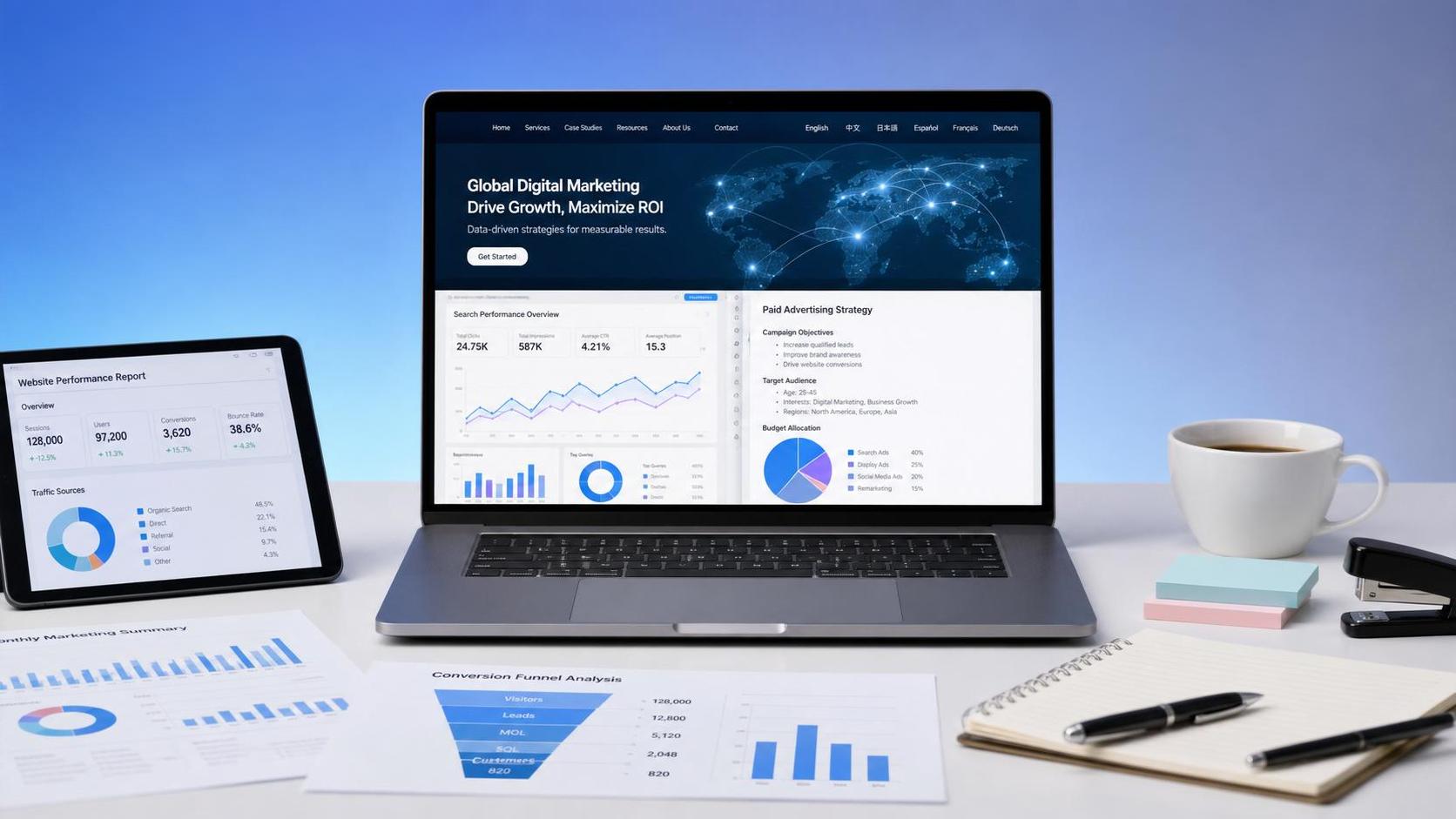
 How to choose a digital marketing training program? A comparison of course content, hands-on depth, and assessment methodsHow to choose a digital marketing training program? From three dimensions—course content, hands-on depth, and assessment methods—learn how to determine whether an institution can truly drive business growth and help companies improve lead generation, conversion, and team execution capabilities.
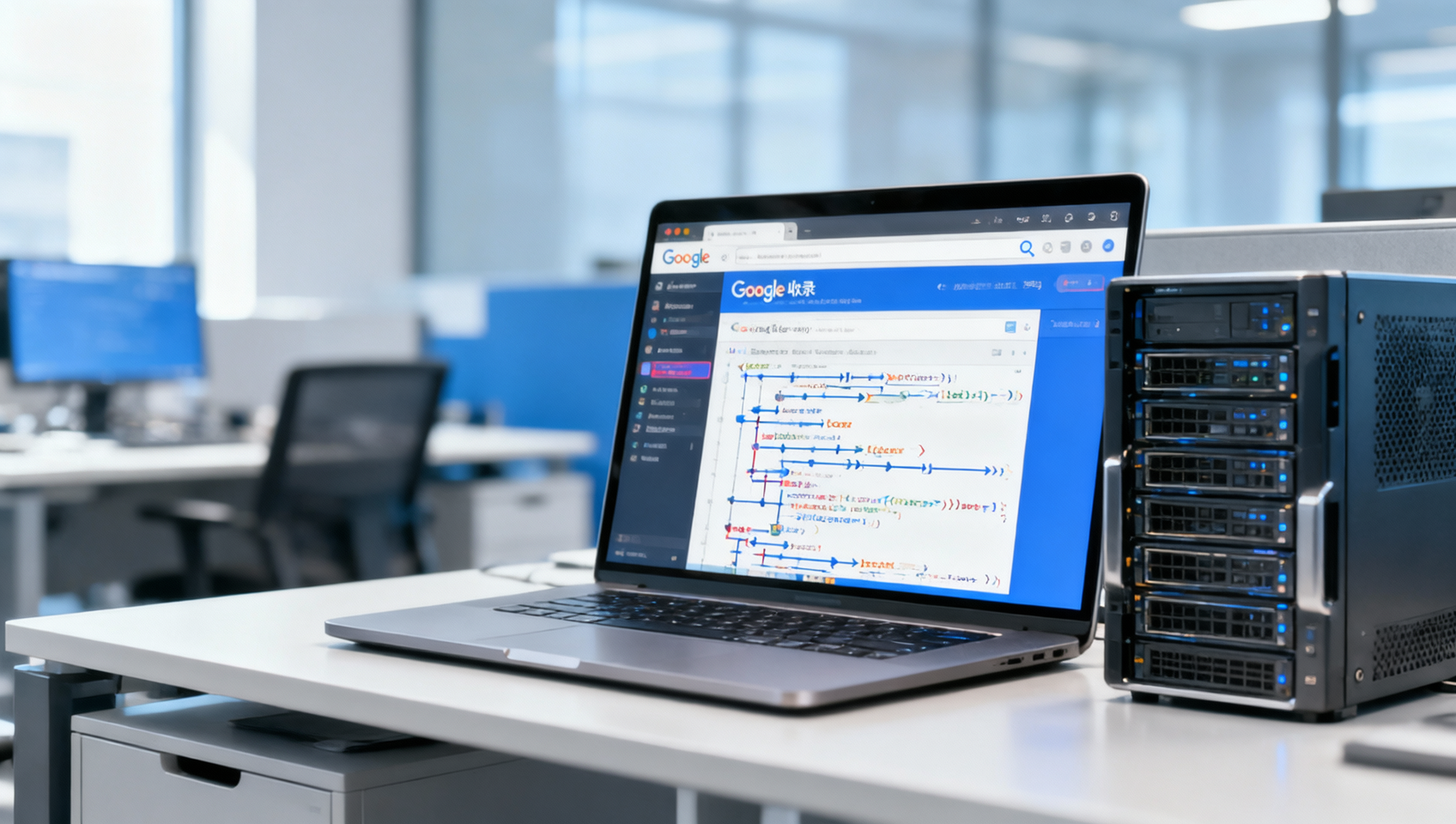
 Why isn’t a website indexed by Google? Common causes and troubleshooting methodsWhy isn’t a website indexed by Google? This article explains common causes and troubleshooting methods in detail, covering key issues such as crawl restrictions, duplicate pages, content quality, and multilingual optimization, helping businesses quickly identify problems and improve indexing efficiency and overseas lead generation results.
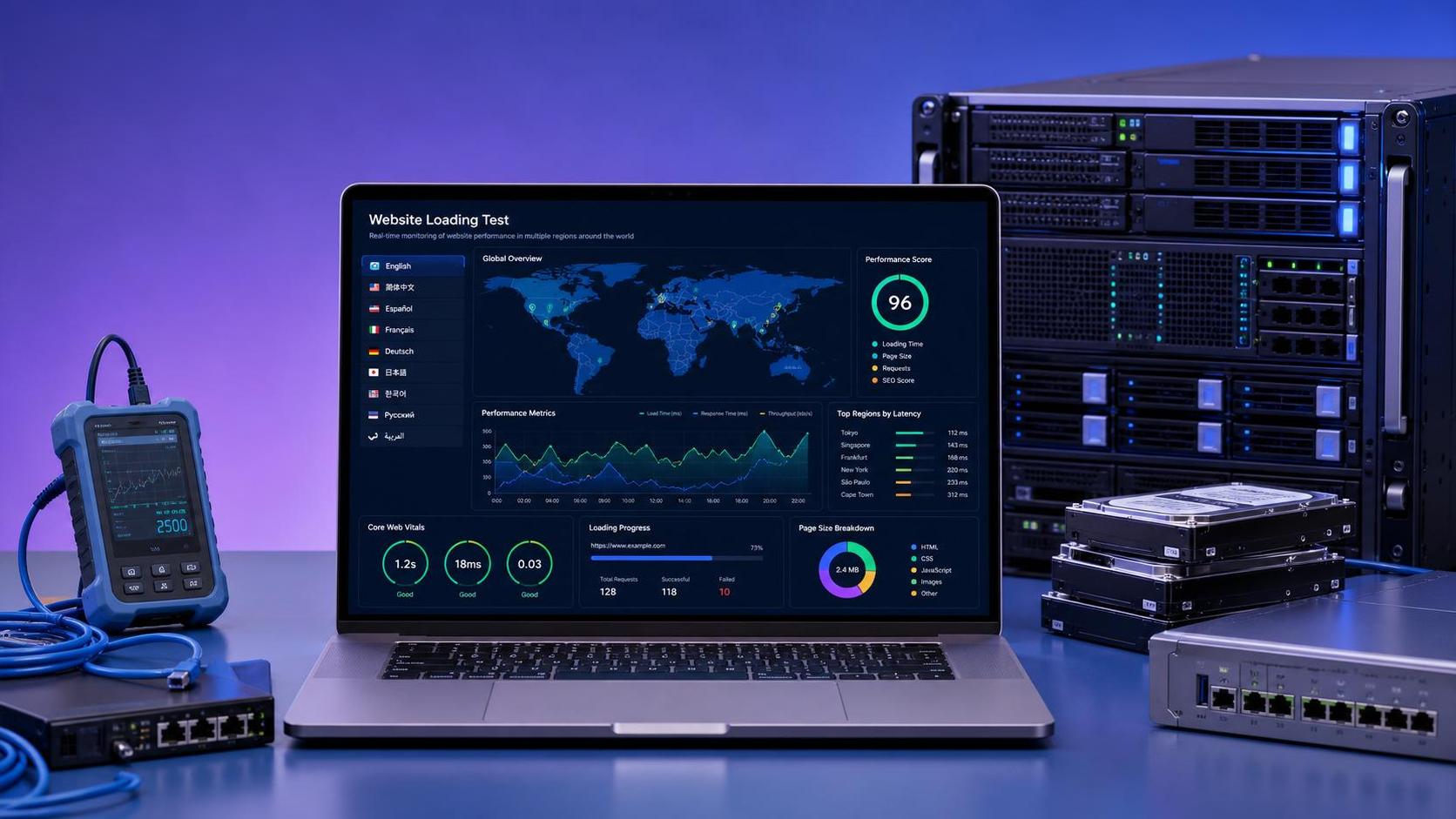
 How to test global access latency for a multilingual websiteHow to test global access latency for a multilingual website? This article explains global node speed testing, TTFB, and above-the-fold loading analysis methods to help foreign trade and global expansion companies quickly identify website bottlenecks and improve SEO performance, ad conversions, and overseas user experience.
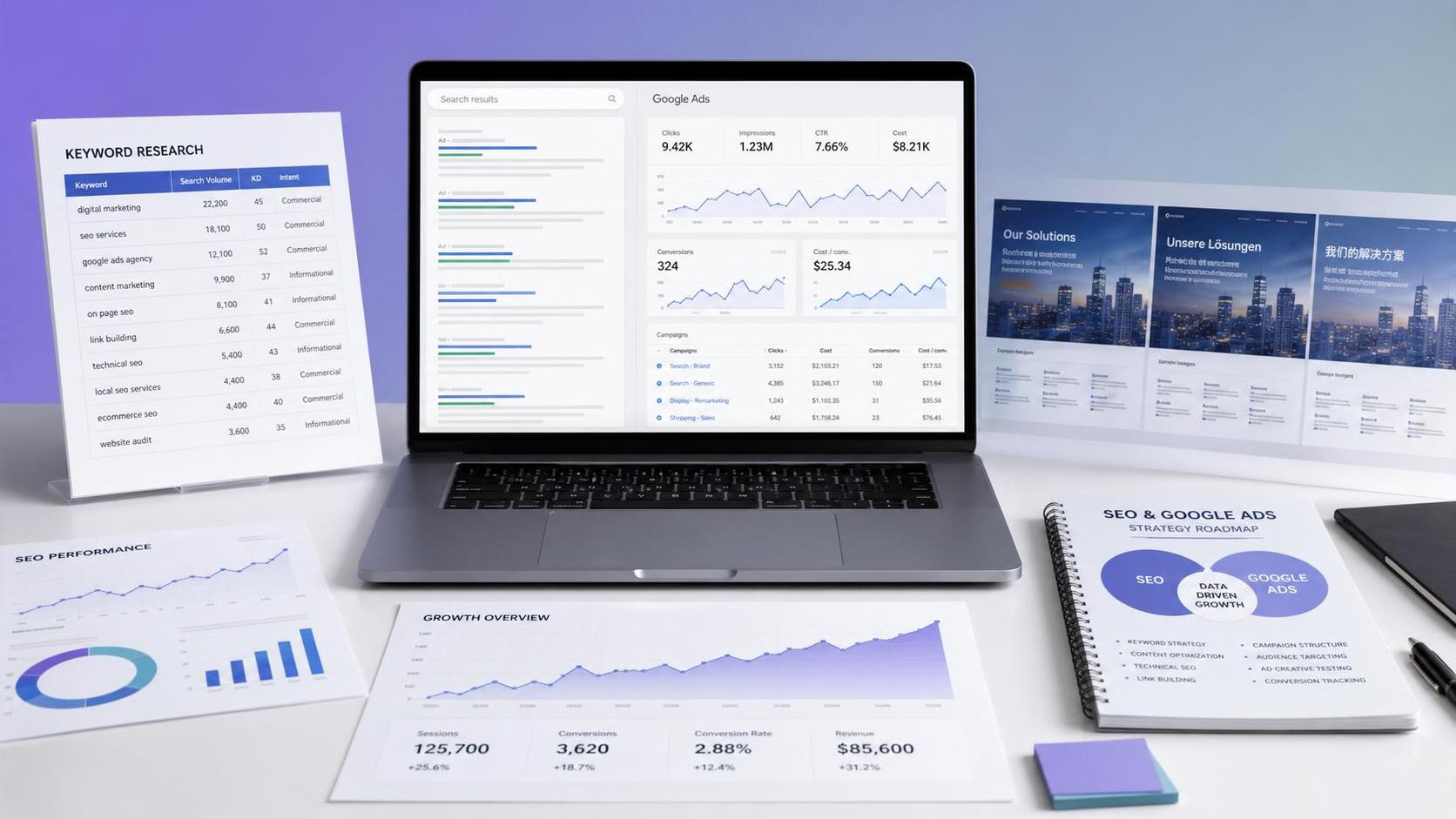
 How Should Foreign Trade Companies Choose Between SEO and Google AdsCan European inquiries recover and grow after a website redesign? This article focuses on how foreign trade companies should choose between SEO and Google Ads, analyzing strategies for traffic recovery, inquiry growth, budget allocation, and conversion improvement after a redesign to help you find a more reliable customer acquisition solution.
 How to choose an AI website building service provider?Template capabilities、SEO foundation or future scalabilityHow to choose an AI website building service provider?Don’t just look at whether the templates look good,but also evaluate the SEO foundation、future scalability and marketing collaboration capabilities。This article takes you through the core evaluation dimensions quickly,helping enterprises choose the right growth-oriented platform that can continuously acquire customers。
 What are the solutions for whole-site translation of foreign trade websites?Comparison of machine translation、human translation and hybrid modelsWhat are the solutions for whole-site translation of foreign trade websites?This article compares the advantages and disadvantages of machine translation、human translation and hybrid models,and analyzes how to balance SEO indexing、content readability and inquiry conversion,helping enterprises find more suitable overseas marketing solutions。
 How to compare foreign trade marketing solution providers?Evaluation of website building、SEO、advertising and CRM capabilitiesHow to compare foreign trade marketing solution providers?Focus on whether website building、SEO、advertising and CRM can form a growth closed loop。This article teaches you to efficiently evaluate from three aspects: system capabilities、customer acquisition efficiency and data accumulation,helping globalizing enterprises choose the right service provider。
 How to choose a PPC outsourcing provider? Check account ownership, optimization frequency, and KPIs firstHow to choose a PPC outsourcing provider? Don’t just look at the price—first check account ownership, optimization frequency, data transparency, and KPI approach. This article helps you quickly identify a reliable provider, avoid outsourcing pitfalls, and improve lead quality and advertising ROI.