



1. Definition and Core Functions of an Advertising Landing Page
An advertising landing page is the first page users enter after clicking an advertisement. Its core task is not to present all of a company's information, but to achieve information matching, communicate value, and guide conversions within a limited attention span. For foreign trade and cross-border companies, it often directly determines whether advertising budgets can generate qualified inquiries.
Compared with a corporate website homepage, an advertising landing page places greater emphasis on a single objective. This objective may be submitting a form, sending an inquiry, scheduling a demo, downloading materials, adding a communication channel, or completing a purchase. The more focused the page, the shorter the traffic path and the lower the user's decision-making resistance generally are.
In terms of industry applications, advertising landing pages are commonly used for Google Ads, social media advertising, short-video promotion, EDM email marketing, and secondary outreach after trade show lead generation. Essentially, it is both a traffic destination page and a sales lead filter, handling the critical step before conversion.
If the advertising copy, keywords, and page content are inconsistent, users may quickly leave even when the number of clicks is high. Therefore, the value of an advertising landing page lies not only in receiving traffic, but also in creating a continuous closed loop between visitor intent, page content, and the conversion action.
2. Technical Principles and Conversion Structure of an Advertising Landing Page
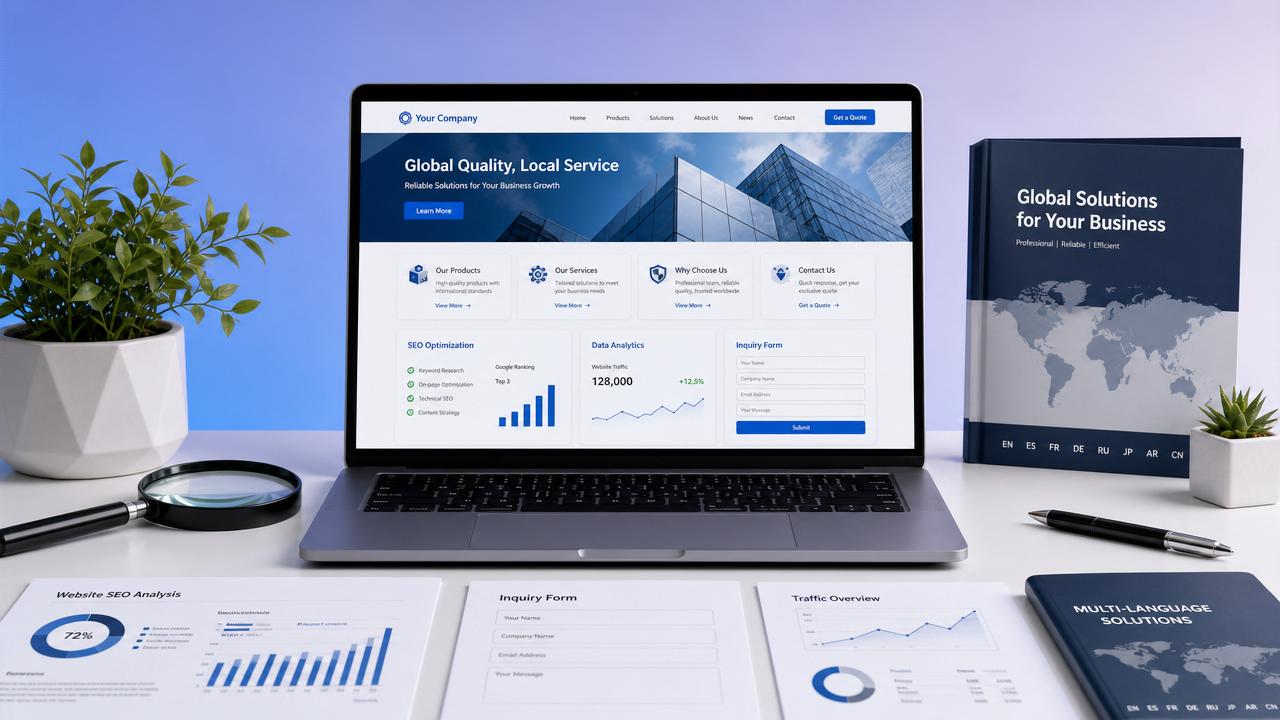
An effective advertising landing page usually follows a clear conversion logic: first answer who you are and what problems you can solve, then explain why you are trustworthy, and finally encourage users to take action. The headline, above-the-fold selling points, proof, form, and call-to-action button make up the basic page framework.
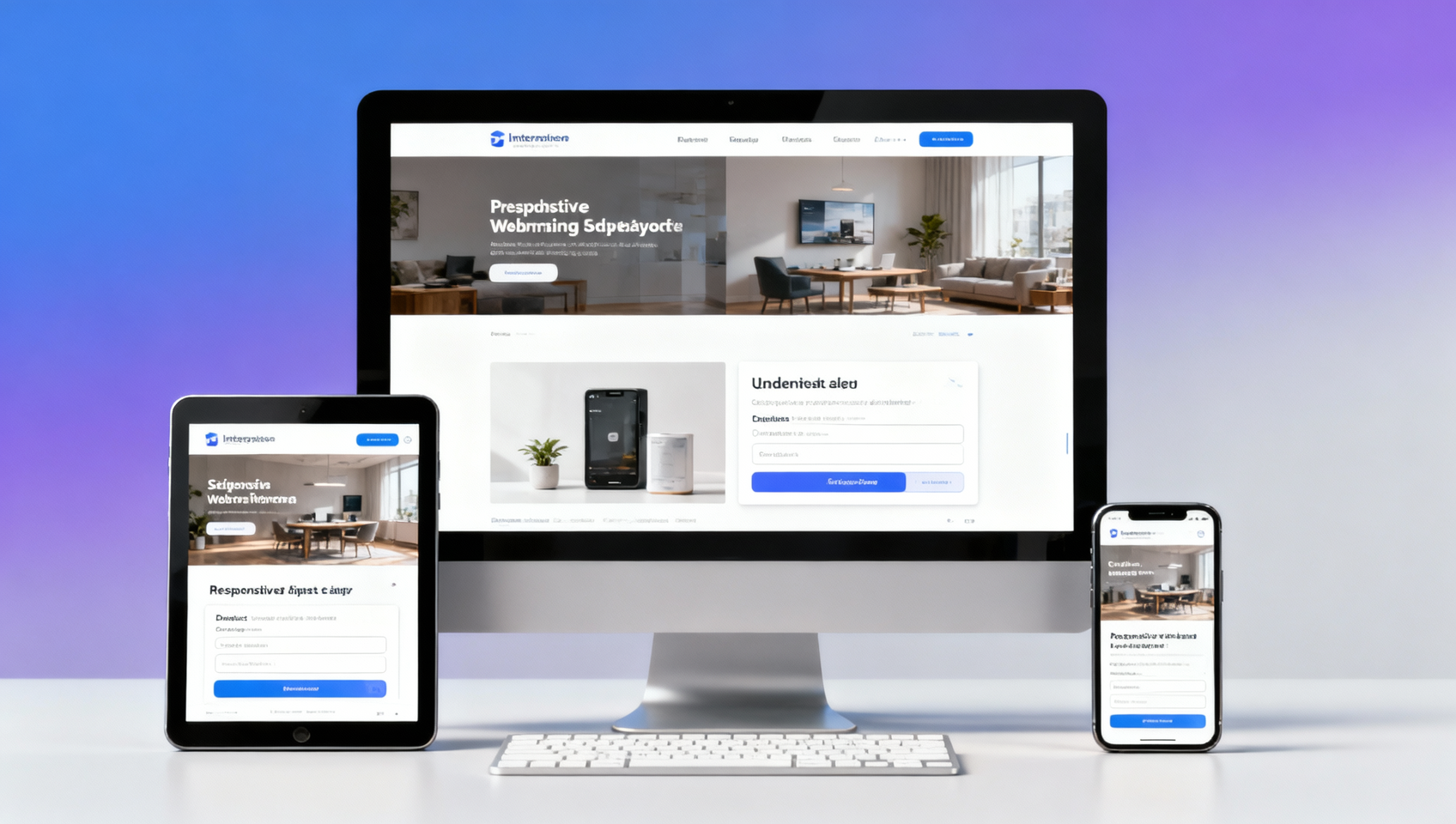
At the technical level, page loading speed, mobile responsiveness, form stability, event tracking, and server response are fundamental variables that affect advertising performance. If the page loads slowly, buttons do not work, or tracking is missing, it is difficult for companies to accurately assess the actual performance of advertising channels, keywords, and pages.
In B2B scenarios, an advertising landing page must also present qualifications, explain application scenarios, organize product specifications, and integrate communication channels. Users may not complete a purchase immediately, but they will judge from the page whether the supplier is professional, trustworthy, and worth contacting further.
For this type of page development, Yiyingbao combines responsive architecture, multi-device adaptation, modularized content, and form conversion configuration. It is suitable for companies that need to launch quickly and continuously optimize their pages. For companies without a technical team, this approach facilitates advertising testing, page iteration, and data accumulation.
3. Main Categories: Different Objectives Require Different Page Models
Based on conversion objectives, advertising landing pages can generally be divided into lead capture pages, inquiry pages, product purchase pages, demo booking pages, and content download pages. Lead capture pages are suitable for education, software, and consulting businesses, while inquiry pages are more common in foreign trade B2B, industrial products, and customized product promotion.
Based on traffic sources, search advertising landing pages place greater emphasis on keyword matching and clearly expressing user needs. Social media advertising landing pages focus more on visual appeal, scenario-based engagement, and quickly communicating selling points. Pages receiving traffic from email or private-domain channels place greater emphasis on providing supplementary information and shortening the communication path.
Based on page depth, there are short-form and long-form pages. Short-form pages are suitable for products with low decision barriers, concentrated selling points, and clear actions. Long-form pages are more suitable for equipment, raw materials, solutions, and B2B services with higher prices, longer procurement cycles, and a greater need to establish trust.
When creating advertising landing pages, companies should not simply copy their corporate website pages. A more reasonable approach is to divide pages according to country, product line, audience role, and advertising channel to create more specific conversion scenarios. Although this increases the number of pages, it generally helps improve lead quality and advertising efficiency.
4. Who It Serves: Target Audiences and Typical Application Scenarios
Advertising landing pages are not limited to Internet products. Foreign trade companies, manufacturing plants, machinery and equipment suppliers, chemical material suppliers, cross-border brands, SaaS providers, education and training institutions, and even local service providers all need clear traffic-conversion capabilities if they rely on online advertising to generate business opportunities.
For B2B companies, common audiences include purchasing managers, business owners, engineers, brand managers, and distributors. Different roles have different priorities. Some first examine qualifications and case studies, while others care more about delivery time, technical specifications, MOQ, or localized services. Therefore, the hierarchy of page information must be targeted.
In terms of application scenarios, new product promotion, development of key markets, traffic generation before and after trade shows, best-selling product testing, advertising in multilingual country sites, and traffic generation from social media campaigns are all frequent occasions for using advertising landing pages. A page is not static promotional material, but an execution interface within a marketing activity.
Yiyingbao serves multiple industries, including laser engraving machines, steel, chemicals, machinery, new energy, medical care, and furniture. These industries generally involve long decision-making cycles and high requirements for professional page content, making advertising landing page solutions that balance presentation, communication efficiency, and data tracking particularly important.
5. How to Choose: Key Criteria for Evaluating Advertising Landing Page Solutions
When choosing an advertising landing page solution, companies should first determine whether it supports rapid development and frequent modifications. Advertising optimization usually depends on continuous testing of headlines, forms, buttons, section order, and proof content. If every revision depends on a development schedule, marketing response speed will be significantly limited.
Next, companies should assess whether the solution supports multilingual, multi-device, and multi-channel adaptation. For advertising landing pages targeting overseas markets, translation alone is not enough. Companies must also consider language paths, regional content expression, mobile reading order, and access speeds in different countries, all of which affect user engagement and conversion results.
Third, companies should evaluate data capabilities, including form tracking, conversion event recording, source identification, page testing, and subsequent analysis. Without a closed-loop data system, companies cannot determine which keywords, countries, or page versions generate high-quality inquiries, making it difficult to continuously reduce customer acquisition costs.
Finally, companies should assess whether the service system is comprehensive. Yiyingbao combines AI-powered website building, multilingual independent websites, advertising, SEO, social media operations, and subsequent growth services. It is suitable for companies that want to incorporate advertising landing pages into an overall customer acquisition process rather than simply create a single page.
6. How: Development Process, Quality Control, and Optimization Methods
A high-quality advertising landing page usually begins with requirements analysis. Companies first need to clarify their advertising objectives, target countries, core products, audience roles, and primary conversion actions before deciding on the page structure. If the positioning is unclear, even an attractive design may result in many clicks but few inquiries.
During the production stage, priority should be given to configuring above-the-fold value messaging, selling-point modules, trust signals, case information, FAQs, forms, and instant communication channels. For foreign trade inquiry pages, WhatsApp, email, online customer service, and concise forms are usually more practical than complex interactions.
Key quality control areas include page loading speed, mobile compatibility, form submission processes, thank-you page redirects, tracking accuracy, privacy and SSL configuration, image compression, and content consistency. Supported by a multi-cloud node infrastructure and global acceleration network, Yiyingbao is suitable for overseas business scenarios that are sensitive to international access stability.
Optimization should not stop after launch. Companies should continuously monitor bounce rate, time on page, submission rate, country distribution, invalid lead ratio, and keyword performance. They can then use A/B testing to adjust headlines, button copy, proof placement, and form fields, gradually improving the actual conversion efficiency of the advertising landing page.
7. How Much: Total Cost of Ownership and ROI Evaluation
From a procurement perspective, the cost of an advertising landing page cannot be assessed solely by its one-time production fee. A more complete total cost of ownership includes page development, copywriting, design and development, translation and localization, servers and acceleration, data tracking, advertising integration, ongoing optimization, and personnel coordination.
With traditional customized development, the initial page may appear complete, but every subsequent modification can increase communication and technical costs. For companies that need to frequently create country pages, product pages, and campaign pages, iteration costs often have a greater impact on long-term return on investment than the cost of the initial version.
When evaluating ROI, companies should not focus only on the cost of acquiring a single lead. They should also examine inquiry quality, sales follow-up efficiency, sales cycle length, and reuse value. A well-structured advertising landing page can often serve multiple ad groups, country markets, and even marketing campaigns at different stages, giving it greater long-term value.
For small and medium-sized enterprises, an integrated solution that combines website development, advertising, content, and operations is generally more effective in reducing the costs caused by fragmented tools and supplier changes. Especially during the cold-start phase of a new website, building the advertising landing page and website assets simultaneously makes it easier to establish a sustainable customer acquisition foundation.
8. Future Trends: From Single-Page Conversion to Intelligent and Multilingual Growth
In the future, advertising landing pages will no longer be merely static pages. They will increasingly emphasize dynamic content matching, AI-assisted generation, automated testing, and multilingual localization. The page content displayed to users in different countries, using different keywords, and belonging to different audience groups will become more segmented and scenario-specific.
As search results pages, social media platforms, and generative question-and-answer environments continue to change, advertising landing pages will also need to accommodate search understanding, advertising traffic reception, and the development of brand credibility. Pages that rely solely on exaggerated selling points and templated expressions will become increasingly unstable in terms of conversion performance.
For companies expanding overseas, multilingual pages, structured content, trackable conversions, and continuous operational capabilities will become basic requirements. Yiyingbao's combined capabilities in AI-powered website building, multilingual content, advertising optimization, SEO, and GEO are more suitable for companies that need to establish reusable page assets for long-term overseas market development.
If advertising is viewed as purchasing traffic, an advertising landing page is the key interface that converts traffic into results. The earlier a company establishes standardized page methodologies, data evaluation mechanisms, and continuous iteration capabilities, the more likely it is to achieve stable inquiries and growth returns in subsequent advertising campaigns.
 How to combine overseas digital marketing channels? Which target is Google, social media, and email each suitable forHow can overseas digital marketing be combined more efficiently? This article analyzes the customer acquisition, awareness building, and lead nurturing goals suitable for Google, social media, and email, helping you clarify the coordinated path between website and marketing integration, and improve conversion and return on investment.
 What Is a Foreign Trade Marketing Website? An Analysis of the Core Differences from a Showcase WebsiteWhat Is a Foreign Trade Marketing Website? This article analyzes its core differences from a showcase website from four dimensions: structure, SEO, content organization, and inquiry conversion, helping businesses determine whether to upgrade their website or rebuild it as an independent lead-generation site.
 What should be prepared before opening a Google Ads account? Qualifications, budget and conversion objectivesWhat should be prepared before opening a Google Ads account? This article starts from qualification review, budget allocation, conversion objective setting and website landing capability, helping you avoid the misconception of focusing only on the account opening price, and improve customer acquisition efficiency and conversion quality after the ads go live.
 Which businesses is website and marketing integration suitable for? A comparative analysis with decentralized procurement solutionsWhich businesses is website and marketing integration suitable for? This article compares decentralized procurement solutions and analyzes the advantages of integration in launch efficiency, data feedback loop, lead conversion and long-term ROI, helping foreign trade, manufacturing and brands going global make faster decisions on the best investment path.
 How to make a TDK template compliant? A comparison of homepage, category page, and product page copywritingHow to make a TDK template compliant? This article compares the copywriting for homepage, category page, and product page, explains the responsibilities of title, description, and keywords, and helps website and marketing service integrated projects improve indexing, relevance, and conversion rates, making it a must-read reference right away.
 What are the differences between AI website building platforms? Template capabilities, SEO permissions, and content generation comparedHow to choose an AI website building platform? Don’t just look at generation speed; focus on comparing template capabilities, SEO permissions, and content generation quality. This article helps you quickly understand the differences between platforms and filter out the solutions that are truly suitable for long-term customer acquisition, indexing, and conversion growth.
 What Should You Pay Attention to in Responsive Website Development? Page Adaptation, Speed and SEO Key PointsWhat Should You Pay Attention to in Responsive Website Development? This article focuses on page adaptation, loading speed and SEO key points, and explains the multi-device display, multilingual support and conversion optimization approach to help enterprise websites balance search visibility, user experience and lead generation results.
 Does a responsive corporate website need to be built? Applicable scenarios, advantages and upgrade criteriaDoes a responsive corporate website need to be built? This article starts from applicable scenarios, core advantages, and upgrade criteria, analyzing how it improves mobile experience, SEO performance, and inquiry conversion to help businesses determine whether their website should be upgraded.