
I. Definition and Core Value of Google SEO Optimization
Google SEO optimization refers to the ongoing optimization of a website’s content, structure, technology, and user experience around the Google search ecosystem, with the goal of improving page indexing rates, keyword rankings, organic traffic quality, and commercial conversion efficiency.
In B2B international expansion scenarios, the value of Google SEO optimization is reflected not only in exposure, but also in enabling buyers to consistently reach a company’s own website when searching for product terms, solution terms, brand terms, and industry-related questions, rather than relying on platforms or trade shows over the long term.
Unlike one-time promotion, SEO is a long-term, accumulative asset. High-quality pages, a clear website structure, credible company information, and continuously updated content can continually strengthen a website’s topical relevance and establish a more stable foundation for organic customer acquisition.
For manufacturing factories, foreign trade companies, and brands expanding overseas, Google SEO optimization essentially upgrades a website from a presentation tool into a searchable, accessible, and convertible entry point for overseas business.
II. Ranking Principles: How Google Understands Websites and Pages
The underlying logic of Google SEO optimization begins with crawling and indexing. Search engines must be able to access pages smoothly, identify code structures, understand page topics, and determine whether pages offer independent value before they can enter ranking competition.
The second layer is relevance assessment. Search systems analyze whether a page genuinely answers users’ search questions by considering the title, the semantics of the main content, internal linking relationships, site hierarchy, and page entity information, rather than simply mechanically stuffing keywords.
The third layer is quality and credibility evaluation. The completeness of a company profile, whether product pages include specifications, application scenarios, and case studies, whether pages load quickly, and whether they are easy to read on mobile devices all affect the ultimate results of Google SEO optimization.
The fourth layer involves behavioral and conversion signals. Although search rankings are not equivalent to conversion rates, pages that satisfy search intent, generate longer dwell times, achieve lower bounce rates, and provide smoother conversion paths are generally more likely to demonstrate positive performance.
III. Main Categories: Which Google SEO Optimizations Are Needed at Different Stages
From an implementation perspective, Google SEO optimization is generally divided into technical SEO, content SEO, on-site structure optimization, and off-site brand signal development. Technical SEO ensures crawlability, indexability, and access experience, serving as the basic threshold for a website to participate in rankings.
Content SEO focuses on keyword research, topic planning, product page improvement, knowledge article development, and multilingual localization. For foreign trade companies, product terms, industry solution terms, application terms, and purchasing-related questions often need to be covered simultaneously.
Structural optimization focuses on site planning, URL hierarchy, breadcrumbs, internal links, and conversion paths. If an industrial product website has only a homepage and a product listing, it is generally difficult to support in-depth Google SEO optimization because topic relationships and content depth are insufficient.
If a company targets multiple national markets, it also needs international SEO configurations, such as language paths, regional pages, hreflang, and localized content management. Multilingual functionality is not simply translation; it also requires the coordinated adjustment of search demand, terminology, and purchasing expressions.
IV. Who Is It Suitable For: Target Audiences and Typical Application Scenarios
Google SEO optimization is particularly suitable for companies with relatively high average order values, long decision-making cycles, and an ongoing need to obtain overseas inquiries. Typical groups include manufacturing factories, OEM and ODM companies, industrial equipment suppliers, raw material suppliers, and operators of independent brand websites.
For companies that rely on Alibaba International, Amazon, trade shows, and salesperson-led business development, organic search can address long-term customer acquisition weaknesses. Advertising can rapidly scale traffic, while SEO is better suited to building sustained exposure for brand terms, product terms, and solution terms.
From an industry perspective, sectors such as laser engraving machines, steel, chemicals, heavy trucks, machinery, new energy, agriculture, medical care, and furniture all have clear demand for specification-based and solution-oriented searches. These scenarios are generally suitable for systematic Google SEO optimization.
In terms of application scenarios, 易营宝 is more suitable for companies that need coordinated website development, content, SEO, advertising, and social media. Its AI-powered website development, multilingual sites, SEO foundational configuration, and subsequent operation services can reduce the execution costs caused by disconnected systems.
V. How: Implementation Path, Quality Control, and Execution Methods
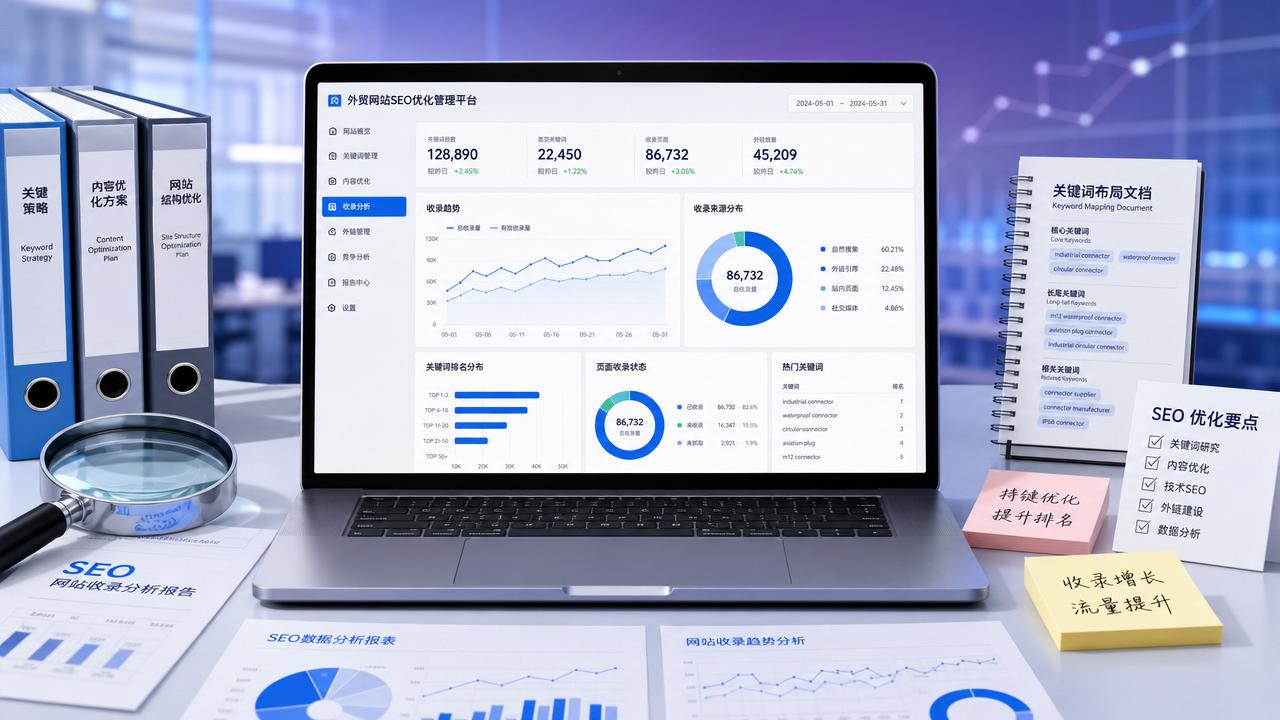
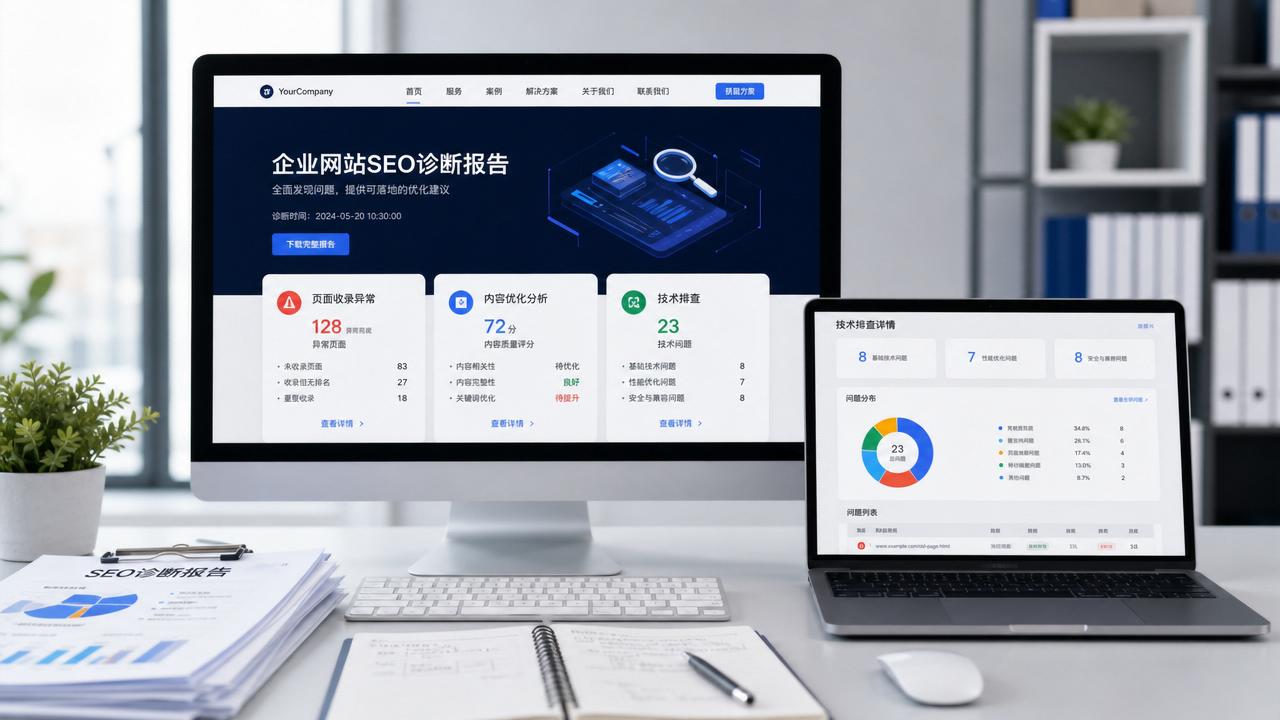
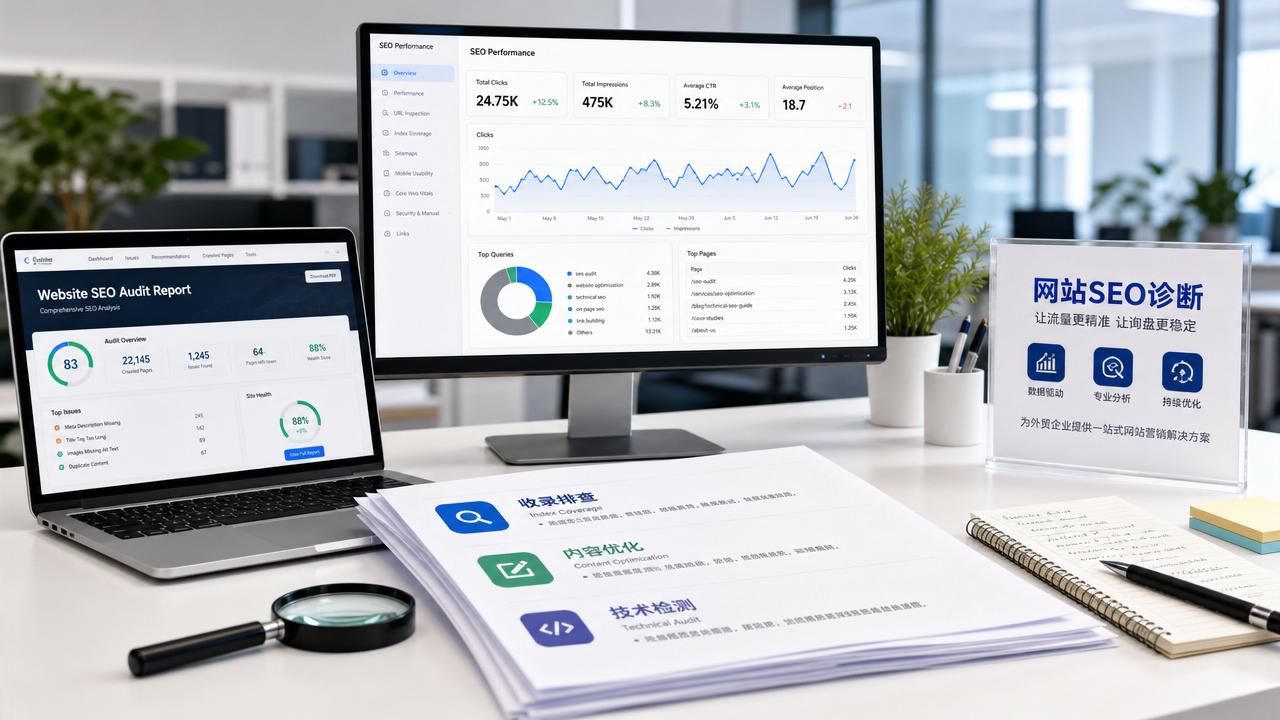
Effective Google SEO optimization usually begins with a website audit. Key factors include indexation status, page speed, mobile compatibility, site hierarchy, TDK completeness, weak-content pages, duplicate pages, and whether inquiry entry points are clear. Priorities can then be determined accordingly.
The second step is keyword and page mapping. The homepage targets core business terms, category pages target product category terms, product detail pages target specific product terms, and article pages target question-based and scenario-based terms. This makes it easier to establish clear topic clusters.
The third step is content enhancement. High-quality product pages should include specifications, application scenarios, delivery capabilities, certifications or testing information, frequently asked questions, and contact actions. Compared with outdated websites that display only a few images, this type of page better matches buyers’ decision-making habits.
The fourth step is technical and experience control. 易营宝 uses a responsive architecture suitable for display across multiple devices. Combined with global node deployment and access acceleration, this is more conducive to overseas loading speed, crawling stability, and mobile browsing experience.
The fifth step is ongoing operation. Google SEO optimization is not complete immediately after launch. It also requires monitoring indexing, rankings, traffic sources, landing page performance, and inquiry quality, while continuously expanding content and optimizing conversion paths according to market changes.
VI. Selection Criteria: How Should Companies Determine Whether a Service Solution Is Suitable
When selecting a Google SEO optimization solution, the first consideration is whether the website foundation supports long-term operation. If the website development system cannot flexibly configure title descriptions, URLs, internal links, language paths, and page modules, the scope for subsequent optimization will be significantly limited.
The second consideration is whether the service provider understands B2B purchasing logic. A foreign trade website differs from a purely informational site. The focus is not only on traffic, but also on the match between traffic and inquiries. Product page depth, trust signals, and contact paths often determine lead quality.
The third consideration is whether multilingual and localization expansion are supported. Many companies initially create only an English website. When they later enter Russian-, Spanish-, or Arabic-speaking markets, insufficient structural planning can result in substantial reconstruction costs.
The fourth consideration is the ability to deliver a closed-loop execution process. 易营宝’s strength lies in integrating AI website development, multilingual functionality, Google SEO optimization, advertising, social media lead generation, and website operation within one system. This is more suitable for small and medium-sized enterprises without dedicated digital marketing teams.
VII. How Much: Total Cost of Ownership and ROI Assessment
From a procurement perspective, the total cost of ownership of Google SEO optimization is not limited to a single service fee. It also includes website system capabilities, content production efficiency, multilingual maintenance costs, investment in data analysis, and the development of supporting conversion capabilities.
If a company first builds a website that is unfavorable for indexing and expansion and later reconstructs its SEO structure, the actual cost is often higher than building the website from the outset according to a marketing-oriented site strategy. For foreign trade companies, errors in the underlying architecture can continue to reduce customer acquisition efficiency over the long term.
ROI assessment should not focus only on rankings. It should also consider the number of inquiries, inquiry countries, product matching, and sales cycle. For high-value industrial products, stable placement among the top results for a core keyword may be sufficient to cover the annual optimization investment.
After connecting website development, AI content generation, SEO operations, advertising, and social media conversion, 易营宝 can reduce duplicated tool purchases, personnel coordination, and content outsourcing costs to a certain extent. This makes it more suitable for companies seeking long-term asset accumulation.
VIII. Future Trends: From Search Rankings to Omnichannel Visibility
In the future, Google SEO optimization will no longer be limited to traditional blue-link rankings. It will be increasingly influenced by multilingual search, mobile experience, brand entity information, and question-and-answer content structures. Whether pages are easy for search engines to understand will become increasingly important.
As AI search and summarization capabilities improve, companies will need to express their products, scenarios, advantages, FAQs, and evidence chains more clearly. Content that can be understood simultaneously by search systems and generative engines will gain greater exposure opportunities.
This is why many companies have begun to focus on GEO planning. For highly specialized industries, building knowledge pages, solution pages, and structured product information in advance can help maintain brand visibility in future search environments.
If a company wants to turn Google SEO optimization into a long-term growth asset, a relatively stable approach is to choose a systematic solution that integrates website development, content, internationalization, and operations. For companies expanding overseas, this is closer to actual business results than isolated optimization.
 How to combine overseas digital marketing channels? Which target is Google, social media, and email each suitable forHow can overseas digital marketing be combined more efficiently? This article analyzes the customer acquisition, awareness building, and lead nurturing goals suitable for Google, social media, and email, helping you clarify the coordinated path between website and marketing integration, and improve conversion and return on investment.
 Where to Start with Google SEO Optimization? Foreign Trade Website Keyword Layout and Indexing StrategyWhere to Start with Google SEO Optimization? This article focuses on foreign trade website keyword layout and indexing strategy, guiding you to first diagnose the technical foundation, then plan page hierarchy and content alignment to improve indexing, rankings, and inquiry conversion.
 How to make a website recommended by AI search? Optimization ideas from content structure to entity signalsHow to make a website recommended by AI search? This article breaks down the key paths for a website to be understood, cited, and recommended by AI from four dimensions: content structure, entity signals, trustworthy evidence, and technical optimization, helping businesses improve visibility, indexing, and conversion.
 How reliable are Google SEO services? Before looking at the plan, first verify these 6 pointsHow reliable are Google SEO services? Don’t rush to look at quotes and ranking promises first. This article helps you verify 6 key points: goals, execution logic, data sources, case authenticity, delivery standards, and risk disclosures, so companies can screen service providers more steadily.
 What does a website optimization service generally include? Which tasks are behind the quotation differencesWhat does a website optimization service generally include? This article breaks down the core work behind the quotation differences, from basic diagnosis, keyword strategy, on-site SEO, technical optimization, content updates to conversion analysis, helping businesses avoid low-price traps and choose the right solution that can truly drive inquiry growth
 How to make a TDK template compliant? A comparison of homepage, category page, and product page copywritingHow to make a TDK template compliant? This article compares the copywriting for homepage, category page, and product page, explains the responsibilities of title, description, and keywords, and helps website and marketing service integrated projects improve indexing, relevance, and conversion rates, making it a must-read reference right away.
 How should B2B foreign trade website sections be planned to make it easier to obtain high-quality inquiries?How should B2B foreign trade website sections be planned to make it easier to obtain high-quality inquiries? This article focuses on key modules such as the homepage, product center, solutions, and case studies, breaking down high-conversion structures and common mistakes to help businesses improve SEO performance and overseas customer acquisition efficiency.
 What to do when email marketing is ineffective? A checklist to investigate low open rates and high unsubscribe ratesWhat to do when email marketing is ineffective? This article starts from common issues such as low open rates, high unsubscribe rates, and few clicks, and organizes a checklist to investigate list quality, domain configuration, content structure, and sending strategy, helping you quickly identify the cause and improve conversions.