











I. Definition and Industry Positioning of Google AMP Mobile Websites
A Google AMP mobile website is a type of web page built using the Accelerated Mobile Pages specification. Through restricted page code, dedicated components, and cache distribution mechanisms, it reduces rendering burdens in mobile network environments and was primarily used for news, information, and content-oriented search landing pages.
From the perspective of commercial websites, AMP is not an independent marketing channel but a front-end implementation solution. Its core purpose is to shorten above-the-fold rendering time, reduce user waiting time, and enable search visitors to access product information, solutions, or inquiry paths more quickly.
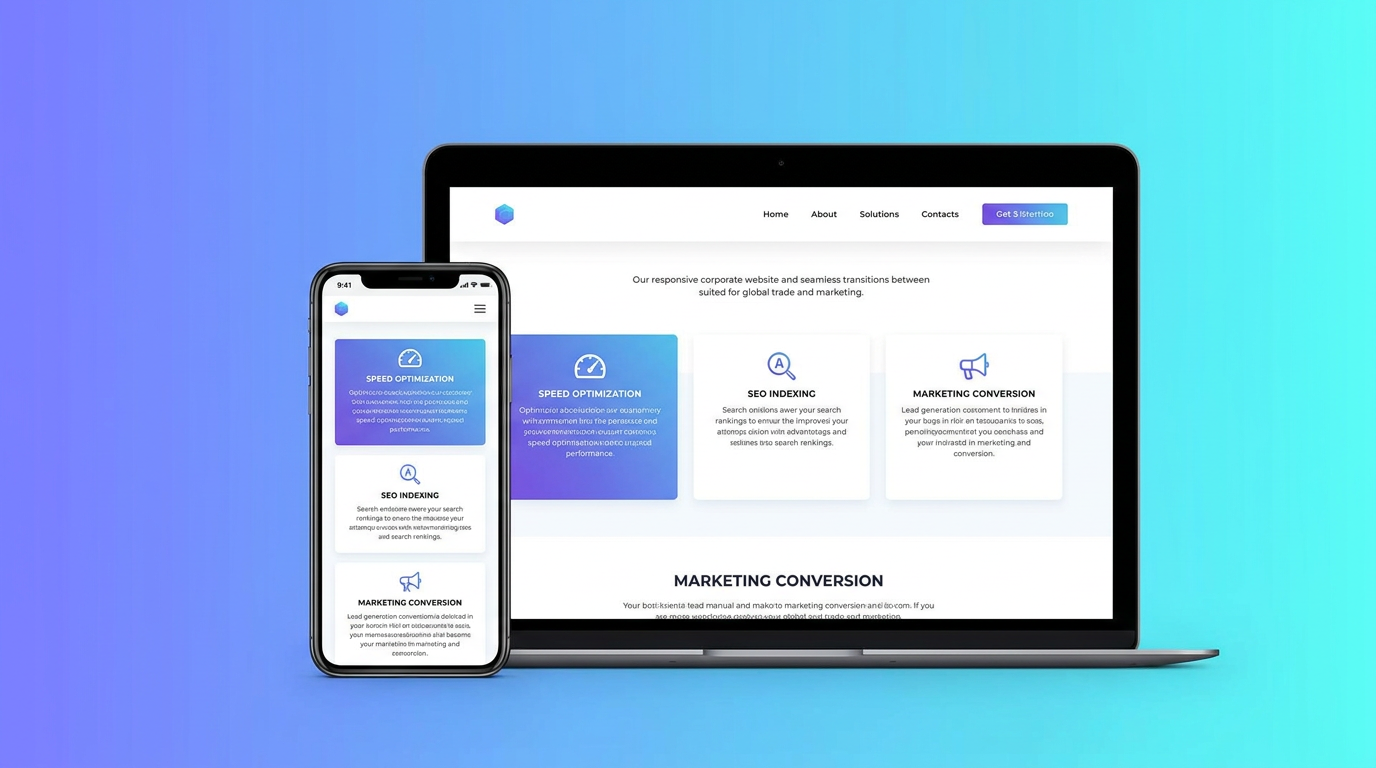
It is important to distinguish that a Google AMP mobile website is not the same as a responsive mobile website. Responsive design adapts the same set of pages to different screens, while AMP imposes additional restrictions on tags, scripts, and interactive capabilities. The two can coexist or be deployed separately.
II. Technical Principles and Key Points for Page Development
Google AMP mobile websites typically consist of AMP HTML, component-based scripts, and cache services. Pages may use only tags and components permitted by the specification. Resources such as images and videos use lazy loading, while key styles are subject to capacity and syntax restrictions to control page complexity.
During development, the relationship between canonical pages and standard pages should first be clarified, and canonical links and AMP links should be configured to prevent search engines from misidentifying similar pages as duplicate content. Titles, body text, product parameters, image alt text, and structured data should remain complete and consistent.
For B2B websites, the technical focus is not only on code compression, but also on whether form submission, phone and email entry points, instant messaging redirects, tracking analytics, and privacy notices can function reliably. Any function that affects inquiry collection should be verified on actual mobile devices and in target network environments.
III. Main Types and Applicable Businesses
By content format, Google AMP mobile websites are commonly used for industry articles, news and information, knowledge bases, campaign landing pages, and certain product introduction pages. Pages primarily featuring text and images with relatively simple interactions are more likely to strike a balance between performance gains and development constraints.
Manufacturing plants, foreign trade companies, industrial product suppliers, and businesses expanding overseas can use them as an alternative solution for high-frequency knowledge content or advertising pre-launch pages. Industries with longer procurement cycles should particularly emphasize trust-building information such as case studies, qualifications, specifications, and delivery capabilities, rather than pursuing page speed alone.
For B2C stores that rely on complex filtering, real-time inventory, dynamic pricing, multi-specification shopping carts, or highly customized interactions, AMP conversion costs may be high. In such scenarios, it is generally more suitable to first optimize images, scripts, caching, and server response on responsive pages, and then assess whether to retain an AMP version.
IV. Selection Criteria and Yiyingbao's Mobile Solution
Whether to build a Google AMP mobile website should be assessed across four dimensions: traffic sources, page types, conversion paths, and maintenance capabilities. If organic search primarily leads to article pages and network conditions in the target market are complex, AMP can be used as a dedicated testing solution; if inquiries depend on complex interactions, the standard mobile page experience should be prioritized.
Yiyingbao uses a responsive architecture to provide unified content management and adaptive display for desktop and mobile devices, making it suitable for foreign trade corporate websites, product showcase sites, multilingual standalone websites, and marketing landing pages. Businesses can manage products, articles, sections, and inquiry entry points within a unified website, reducing content inconsistencies across multiple versions.
In industry applications, Yiyingbao can combine AI content generation, technical optimization, overseas access acceleration, and conversion component configuration to help businesses build a more maintainable mobile foundation. For pages with genuine AMP requirements, AMP should be incorporated into the overall content and data strategy rather than built in isolation.
V. Application Scenarios, Launch Process, and Quality Control
A typical implementation process includes keyword and page inventory, visitor device analysis, prototype design, content compression, component development, specification validation, data tracking, and post-launch review. Product pages should retain key specifications, application scenarios, certification or testing materials, delivery information, and clear inquiry actions, avoiding excessive information reduction.
Quality control should cover loading speed, link availability, image display, form delivery, language switching, tracking data, and search indexing status. Multilingual websites must also verify the correspondence between pages in different languages to ensure that country markets, product terminology, and contact details are consistent with actual business operations.
Yiyingbao has served industries including laser engraving machines, steel, chemicals, machinery, new energy, and healthcare, as well as companies such as Haier, Aucma, Shandong Airlines, Yuanhe Power Station, Little Duck Group, and SINOTRUK. The focus of each project should be formulated around the customer's actual visitor paths, content assets, and customer acquisition goals; a single template cannot replace needs analysis.
VI. Total Cost of Ownership and Marketing Return Assessment
The total cost of ownership of a Google AMP mobile website includes not only development costs, but also page redesign, maintenance of two content versions, component compatibility, data tracking, functional testing, and subsequent troubleshooting. The greater the number of pages and languages, and the more complex the interactions, the more necessary it is to estimate long-term maintenance investment in advance.
Procurement decisions should not compare only initial website development quotations; they should also calculate customer acquisition costs, qualified inquiry rates, sales follow-up efficiency, and content reuse rates. For export businesses, measurable returns may be achieved only if faster mobile access can reduce bounce rates, improve form completion rates, or enhance advertising landing page quality.
Yiyingbao's one-stop services cover website development, SEO, advertising, social media, and website operations, which can reduce the communication costs of coordinating multiple suppliers separately. It is recommended to first test high-traffic or high-value pages and use conversion data to determine the scope of expansion, rather than converting the entire website at once.
VII. Maintenance Cycles and Future Industry Trends
AMP's advantage in special displays within Google Search has weakened, and mobile page experience is no longer determined solely by whether AMP is used. Therefore, businesses should focus more on the real user experience, including page stability, above-the-fold content, interaction responsiveness, information credibility, and the completeness of the inquiry process.
It is recommended to check the performance of core pages, indexing status, form leads, and abnormal traffic monthly, and update product content, case studies, and keyword strategies quarterly. When facing a redesign, increased advertising spend, entry into a new country market, or rising mobile bounce rates, the necessity of a Google AMP mobile website should be reassessed promptly.
Future mobile website development will place greater emphasis on responsive performance optimization, edge acceleration, multilingual localization, structured content, and AI search visibility. Yiyingbao has launched systems related to cloud intelligent website building, multilingual website development, and AI foreign trade standalone websites. Businesses can regard AMP as an optional technical component and place their long-term focus on sustainably operated website assets and a complete conversion loop.
