
What Is Google Ads Managed Service? — Definition, Nature, and Core Categories
Google Ads managed service is not simply account hosting; it is a professional digital marketing service focused on customer acquisition outcomes. Its essence lies in leveraging platform algorithm expertise, insights into industry purchasing behavior, and data-driven decision-making capabilities to manage the full lifecycle of advertising accounts: from account structure design and multilingual keyword matrix development to smart bidding strategy configuration, ad copy A/B testing, coordinated landing-page optimization, and conversion-path tracking verification.
Mainstream categories include basic media buying management (pay-per-click management), performance-based management (tied to lead/order conversion targets), and full-funnel management (integrating independent websites + SEO + social media + GEO). The latter is becoming the preferred option for manufacturing companies and brands expanding overseas. Yiyingbao's AI+SEM intelligent advertising system is developed based on full-funnel logic. It supports coordinated campaigns across Google Ads and Facebook and includes modules for multilingual ad-copy generation, intelligent country-level budget allocation, and weekly ROI attribution analysis.
Unlike conventional outsourcing teams, next-generation Google Ads managed service emphasizes technological reusability—using AI engines to accumulate industry keyword databases, buyer search-intent models, and high-converting landing-page templates, enabling transferable, iterative, and verifiable industrial-grade service delivery.
Today, Google Ads managed service has evolved from a “traffic purchasing tool” into a key component of digital infrastructure for foreign trade companies, particularly for SMEs and transforming manufacturing factories that lack overseas digital marketing teams and urgently need to validate market response quickly.
Why Choose Professional Google Ads Managed Service? — Solving Three Major Foreign Trade Customer-Acquisition Challenges
When foreign trade companies manage Google Ads independently, they often face three challenges: first, limited keyword coverage—relying only on directly translated product terms while missing B2B long-tail purchasing contexts such as “CNC machining supplier” and “OEM stainless steel parts”; second, mismatched landing pages—ad clicks lead to static homepages without multilingual forms, real factory visuals, or certification credentials, resulting in bounce rates exceeding 85%; third, uncontrollable ROI—budgets are dispersed across low-intent countries or broad terms, with lead costs reaching $30+/lead while actual transactions remain difficult to track.
Yiyingbao's Google Ads managed service directly addresses these pain points: its AI keyword engine automatically expands 200+ location + industry keyword combinations, simultaneously deploying precise purchasing terms such as “laser engraving machine Germany” and “CO2 laser cutter for metal suppliers” for laser engraving machine clients; ad landing pages are deeply integrated with B2B foreign trade websites and include one-click WhatsApp inquiries, multilingual factory-video access, and floating ISO certificate windows; and UTM+GA4+CRM three-end attribution clearly distinguishes conversion paths from trade-show traffic, advertising inquiries, and organic search.
More importantly, Yiyingbao embeds Google Ads managed service into a “website-content-advertising-conversion” closed loop, preventing traffic from dropping to zero as soon as ads stop. For example, after building a multilingual independent website for a Shandong heavy industry client, it simultaneously launched targeted Google Ads campaigns in Germany, Türkiye, and Vietnam. Within 3 months, organic search traffic increased by 47%, creating a dual-engine model in which ads drive the cold start and SEO captures long-term traffic.
This underlying “integrated website and marketing service” architecture makes Google Ads managed service no longer an isolated activity, but an accelerator for the continuous appreciation of a company's digital assets.
Who Needs Google Ads Managed Service? — Precisely Identifying Suitable Business Profiles
The core target groups for Google Ads managed service share distinct characteristics: they have clear export products but weak online customer-acquisition capabilities overseas; they have a certain advertising budget (starting from $1000 per month) but lack specialized campaign talent; their website is live but has not formed a closed inquiry-conversion loop; or they are at key stages such as entering new markets, launching new products, or supplementing traffic during trade-show off-seasons.
Typical clients include manufacturing factories (such as heavy truck parts manufacturers needing to reach Middle Eastern buyers), OEM/ODM companies (needing to demonstrate production capacity and response speed to European and American brands), cross-border e-commerce sellers (reducing platform dependency by using independent websites to receive TikTok traffic), and industries with long decision cycles such as new energy and medical devices—where buyer search behavior is highly specialized and requires ad content to be closely linked to technical specifications, certification documents, and case-study videos.
Cases served by Yiyingbao, including Haier, Sinotruk, and Yuanhe Power Station, show that when a corporate website supports multiple languages, has structured product-detail-page data, and embeds real-time online customer service, the inquiry conversion rate of Google Ads managed service can increase by 3.2 times. In contrast, for companies relying only on a one-page introductory website, even if ad click volumes meet targets, the effective inquiry rate remains below 1.8%.
Therefore, whether to adopt Google Ads managed service is essentially a judgment of whether a company has completed the fundamental preparation for digital infrastructure—your website is not the end point of advertising, but the starting point of conversion.
Where and When Should It Be Used? — Global Market Access and Dynamic Operating Rhythm
The geographic applicability of Google Ads managed service depends on the maturity of digital infrastructure in the target market. In Europe, North America, Southeast Asia, the Middle East, and other regions, Google search penetration exceeds 75%, and buyers are accustomed to proactively searching using “supplier+product+country” keyword combinations, making them priority markets for managed-service deployment. In markets such as Russia and Brazil, local platforms including Yandex and Mercado Libre must also be adapted, reflecting the positioning of Google Ads managed service as a core—but not the only—capability.
From a timing perspective, there are three optimal launch periods: the first month after a new website goes live (to capture the prime period for search-engine crawler indexing), 90 days before peak season (such as launching ad tests in Q3 before the Christmas season), and 30 days after a trade show (to convert offline contacts into ongoing online engagement). Yiyingbao launched Google Ads managed service for the German market the day after the Canton Fair ended for an Aokema laser equipment client, combining remarketing with the email list collected at the exhibition. It generated 17 valid technical inquiries within 3 weeks, while average response time was shortened to 4.2 hours.
For maintenance cycles, professional managed service follows a “weekly optimization + monthly review + quarterly iteration” rhythm: negative keywords and bids are optimized weekly; geographic conversion costs and inquiry quality are analyzed monthly; and ad materials are updated quarterly while GEO content is calibrated (such as adding AI search Q&A pages), ensuring continued alignment with Google algorithm updates and changing buyer behavior.
This dynamic operating capability is precisely the core logic reinforced in Yiyingbao's AI foreign trade independent website marketing system V5.0 released in 2025—incorporating Google Ads managed service into an automated marketing hub rather than treating it as an isolated execution item.
How Can High ROI Be Achieved? — Yiyingbao AI+SEM's Process-Level Execution Workflow
Yiyingbao's Google Ads managed service is not experience-driven, but follows a process-level standardized workflow: Step 1, multidimensional account diagnosis—scanning the rationality of existing account structures, historical keyword match types, landing-page loading speed (measured below 100ms), and completeness of conversion-event tracking; Step 2, AI strategy modeling—inputting product manuals, buyer profiles in target countries, and competitor ad materials so that algorithms generate keyword grouping strategies, geographic budget weighting, and an ad-copy style matrix; Step 3, dual-channel landing-page coordination—ad clicks lead directly to AI-generated multilingual product pages equipped with structured data, localized trust elements (such as floating German TÜV certification badges), and inquiry components directly connected to the WhatsApp Business API.
Quality control is reflected in three hard indicators: all ad groups are required to enable target cost per action (tCPA) smart bidding; landing-page LCP (Largest Contentful Paint) is controlled within 1.8 seconds; and inquiry-form fields are streamlined to no more than 4 items (company name, email, product requirements, and budget range), reducing user abandonment. Service cases in 2024 show that clients using this workflow reduced average cost per inquiry by 34%, while inquiry response rates increased to 68.5%.
More critically, the closed-loop verification mechanism: Yiyingbao configures a dedicated BI dashboard for every client, displaying in real time “ad spend → website dwell time → product-page scroll depth → inquiry submission → CRM follow-up status → final transaction,” making ROI calculations granular down to individual countries, single product lines, and even individual ad creatives.
This measurable, attributable, and optimizable execution process makes Google Ads managed service a truly reliable growth lever for foreign trade companies.
Total Cost of Ownership (TCO) and Return-on-Investment Recommendations — Rationally Assessing Managed-Service Value
Three rigid costs influence the TCO of Google Ads managed service: advertising media spend (accounting for 65–80%), service fees (typically 15–25% of media spend or a fixed monthly fee), and hidden costs (such as internal coordination time, trial-and-error losses, and opportunity costs). Yiyingbao uses an “performance-based tiered pricing” model—the basic service fee includes account setup and first-month strategy deployment, followed by tiered billing based on the actual number of valid inquiries achieved, significantly reducing the upfront decision-making threshold for SMEs.
ROI evaluation should go beyond click-through rates and form counts: focus on “qualified inquiry rate” (the proportion of inquiries containing company name, product model, and purchase quantity), “inquiry response time” (the time until the salesperson's first response), and “lead-to-deal cycle.” Data shows that clients managed by Yiyingbao achieve an average qualified inquiry rate of 41.3%, 2.7 times higher than self-managed campaigns; the average period from inquiry to sample-order conversion is shortened by 11.4 days.
Return-on-investment recommendations are divided into three stages: the first month focuses on account health and verification of the basic conversion path; months 2–3 focus on optimizing the ROI balance across regions and product lines; from month 4 onward, GEO content coordination begins (such as generating AI Q&A pages for the term “industrial conveyor belt supplier”) to build long-term search assets. For companies with annual export revenue exceeding $5 million, the break-even point for Google Ads managed service typically occurs in the third month. Thereafter, the share of organic traffic and branded searches continues to rise, creating a sustainable growth flywheel.
Ultimately, a professional Google Ads managed service purchase provides not only traffic, but also reliable access to the global digital procurement ecosystem and the capacity for continuous evolution for foreign trade companies.
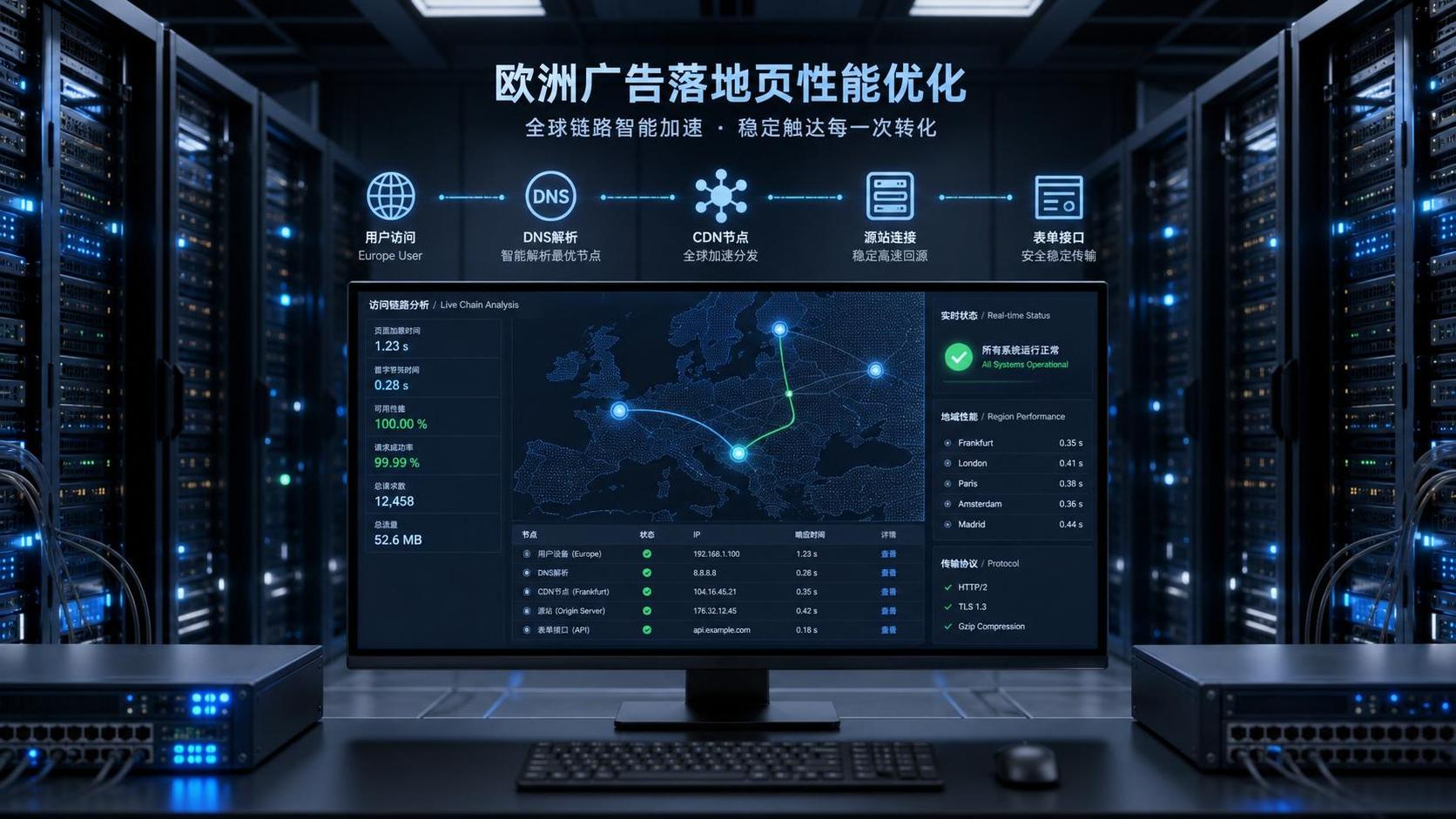
 How to keep access latency across global nodes within 100msHow can access latency across global nodes be kept within 100ms? This article approaches the topic from server deployment, CDN scheduling, multilingual architecture, front-end load reduction, and SEO coordination, helping globalizing companies improve indexing, ad conversions, and overseas inquiry efficiency.
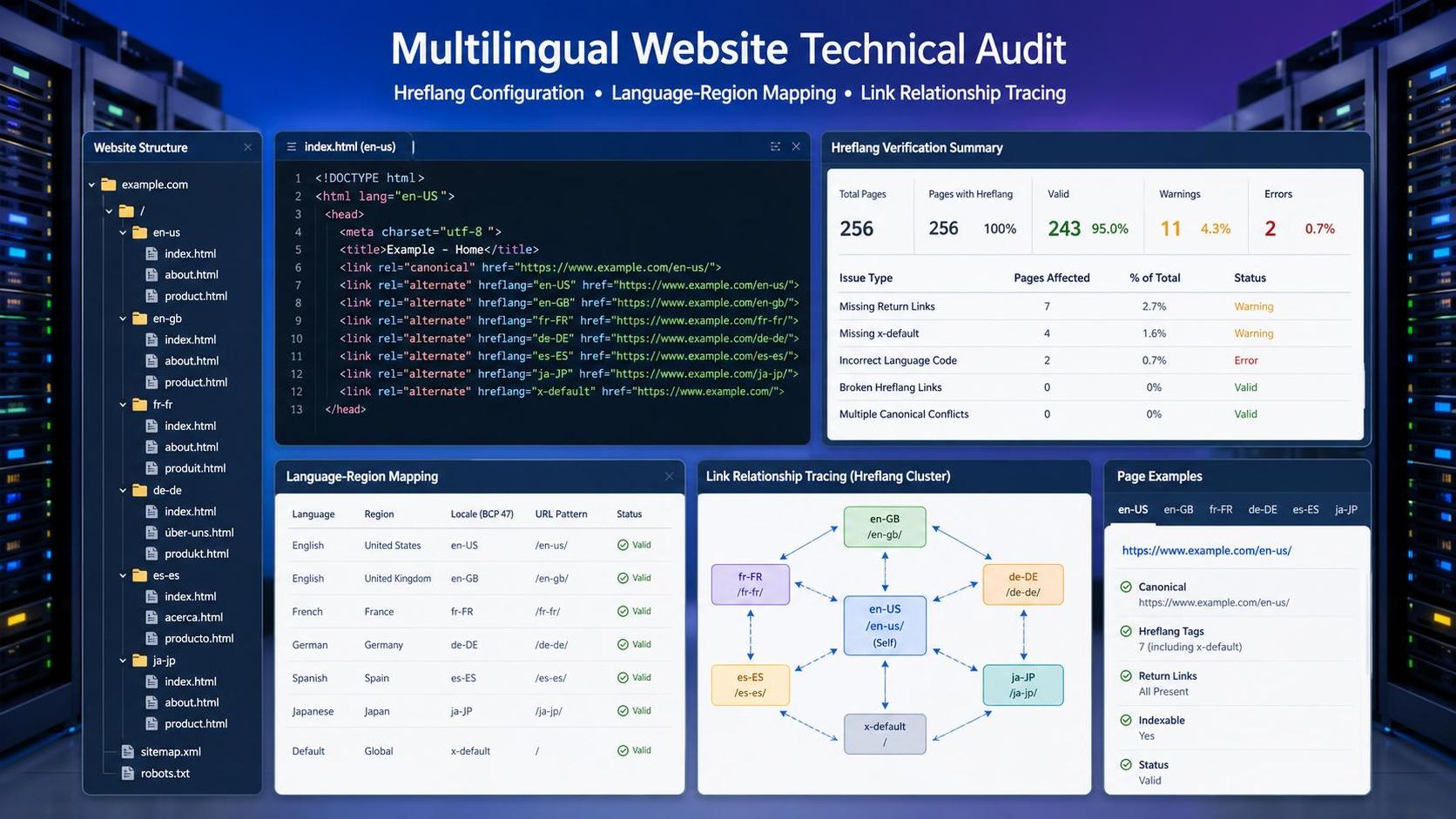
 What are the most common issues technical teams encounter when handling hreflang errorsHow can the hreflang error rate of a multilingual site be reduced? This article focuses on the 5 most common issues faced by technical teams, analyzing redesign omissions, canonical conflicts, and multilingual collaboration challenges to help foreign trade companies improve indexing, traffic distribution, and overseas inquiry conversion.