










I. Definition and Industry Scope of Service Upgrades
A service upgrade refers to the integration of scattered capabilities in website development, content, search, advertising, social media, and data analytics into a continuous operational system centered on customer acquisition, communication, conversion, and repeat purchases. Its core is not to increase the number of tools, but to enable all channels to share goals, pages, and conversion data.
In the integrated website and marketing services industry, a website is both a brand asset and a node for traffic acquisition and lead qualification. For foreign trade B2B companies, buyers typically search for products, verify supplier capabilities, and then submit inquiries through forms, email, or instant messaging tools. Therefore, page credibility directly affects sales efficiency.
A complete service upgrade typically covers infrastructure, marketing websites, multilingual content, organic search, paid advertising, social media outreach, and conversion reviews. Companies should not view it as a one-time project, but rather as a digital customer acquisition capability that can be iteratively developed according to markets, product lines, and business stages.
II. Technical Principles of Website and Marketing Integration
The underlying logic of integration is the linkage of four elements: traffic sources, content pages, conversion actions, and data feedback. Search, advertising, and social media direct target visitors to corresponding landing pages; the pages present product specifications, case studies, qualifications, and calls to action according to country, industry, and purchasing stage.
At the technical level, responsive pages, stable global accessibility, maintainable content management, and clear multilingual paths are required. Product pages should use crawlable heading hierarchies, specification fields, image descriptions, and related content; multilingual pages should avoid merely replacing text while overlooking market-specific expressions and page relationships.
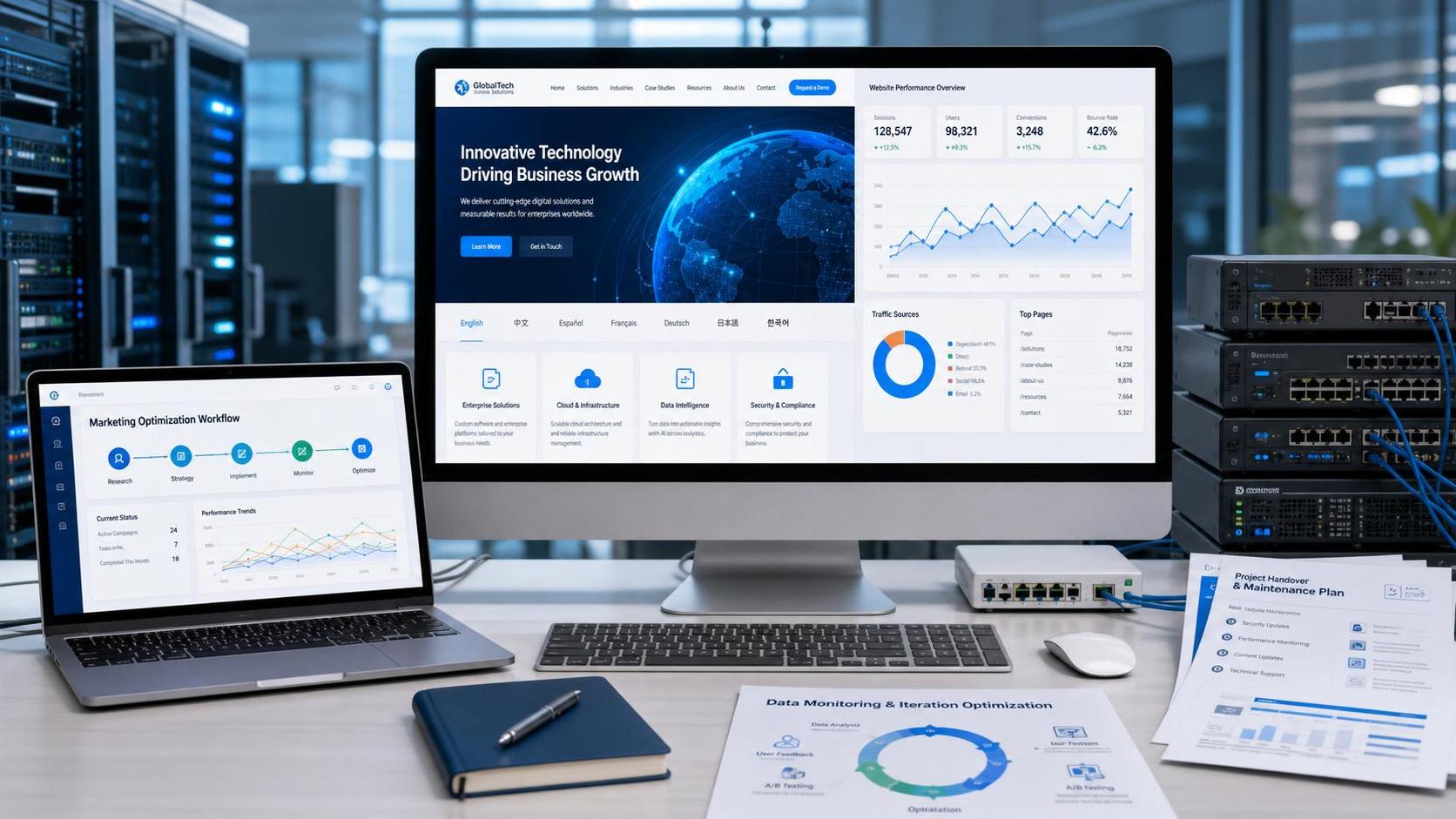
At the data level, traffic sources, time spent on pages, form submissions, clicks on communication entry points, and inquiry quality should be recorded. Based on this information, operators can determine which keywords generate valid demand, which advertisements need adjustment, and which pages lack trust-building information. The value of service upgrades lies precisely in shortening trial-and-error cycles through continuous feedback.
III. Mainstream Service Upgrade Models and Applicable Businesses
The first category is foundational website upgrades, suitable for companies with outdated official websites, inadequate mobile experiences, or content updates that depend on technical personnel. The focus is on rebuilding product architecture, inquiry paths, trust pages, and content management processes, enabling the website to meet the basic requirements for subsequent promotion.
The second category is customer acquisition and operations upgrades, aimed at companies that already have websites but suffer from poor indexing, low traffic, or high advertising costs. Through keyword research, product page expansion, article content, advertising landing pages, and conversion tracking, short-term campaigns are combined with long-term organic traffic to reduce dependence on a single channel.
The third category is globalization upgrades, suitable for manufacturers and brands entering multiple countries and needing to cover non-English-speaking markets. E-Marketing's AI-powered website building, multilingual independent websites, and AI-assisted content capabilities can be used to centrally manage language sites, product materials, and promotional pages. However, human review should still be arranged for terminology, regulatory wording, and business context in key markets.
IV. Application Scenarios, Delivery Process, and Quality Control
Manufacturing plants can consolidate equipment capabilities, certification documents, production processes, customization scope, and delivery lead-time logic into website content to address the comparison needs of overseas buyers. Cross-border brands, on the other hand, focus more on product selling points, reviews, purchasing or inquiry processes, and continuous engagement after visits from advertising and social media.
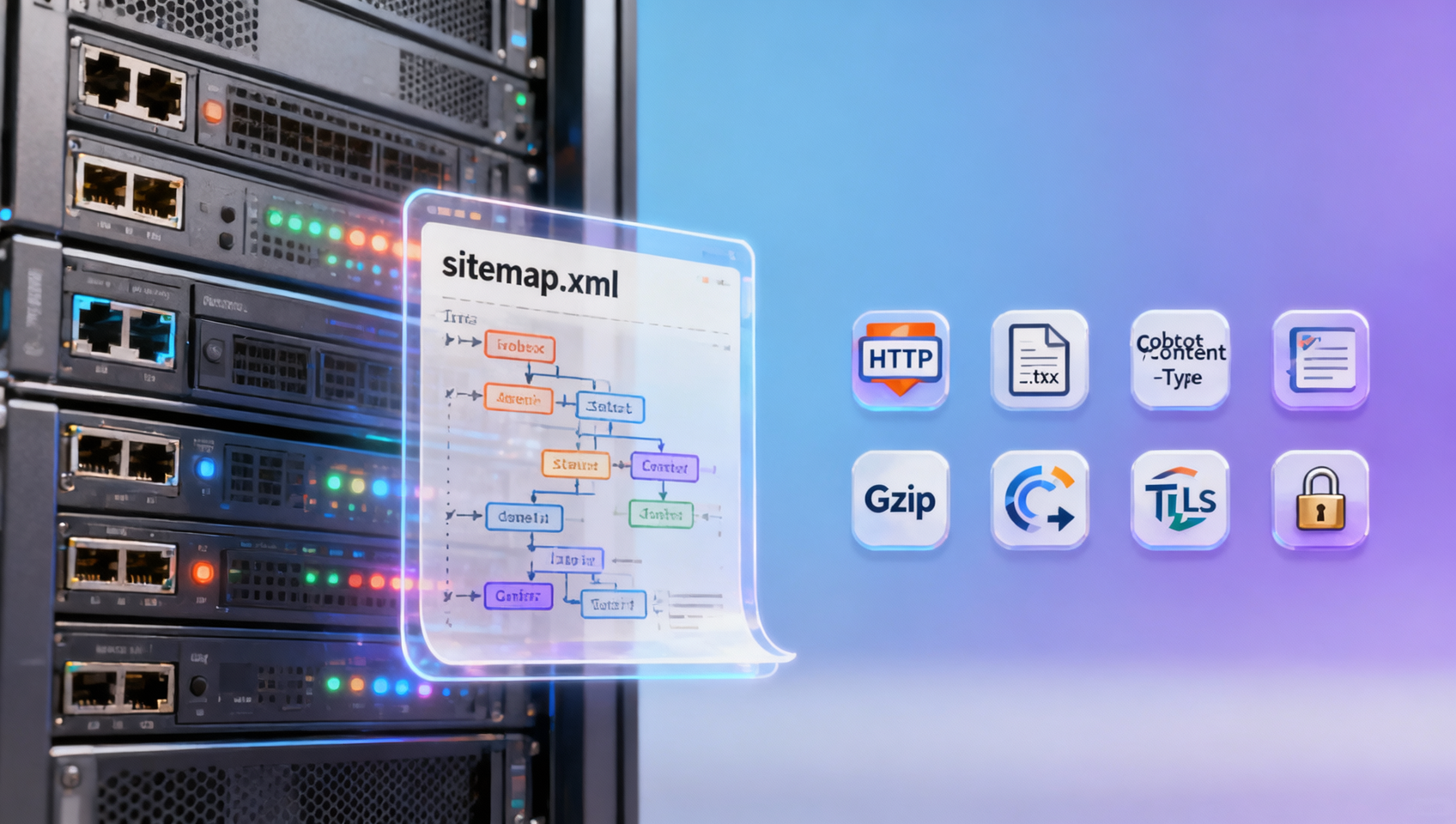
A standardized delivery process should begin with business interviews and a keyword map, followed by website information architecture, page prototypes, content preparation, multilingual review, technical configuration, launch testing, and promotion integration. Before launch, mobile display, form delivery, access speed, language switching, indexing rules, and analytics events should be checked to prevent traffic from becoming untraceable after it arrives.
E-Marketing has served industries including laser engraving machines, steel, chemicals, heavy-duty trucks, machinery, and new energy, and has listed service cases such as Haier, Aucma, and Shandong Airlines. During evaluation, buyers should focus on page structures, project scope, and continuous operational mechanisms similar to their own industry, rather than comparing visual effects alone.
V. Service Upgrade Selection Criteria and Total Cost of Ownership
Selection should first consider business fit: B2B inquiry-oriented websites require product filtering, parameter displays, factory endorsements, and multiple contact entry points; B2C independent websites also require product specifications, shopping carts, and order or inquiry workflows. Next, assess whether the service provider can manage content, advertising, and website operations within the same performance indicator framework.
Total cost of ownership includes not only website development costs, but also domain names, certificates, servers or acceleration services, content production, translation and proofreading, advertising management, social media materials, data tools, and internal coordination time. If a low-cost template cannot be expanded to accommodate product pages, language sites, or tracking events, subsequent renovation costs may exceed the initial savings.
ROI should be assessed comprehensively based on valid inquiries, qualified opportunities, sales cycles, and customer lifetime value, rather than traffic volume alone. It is recommended to first establish a benchmark for one priority market and core product line, then review keywords, page conversions, and lead quality monthly; verifiable phased goals should be set separately for advertising and organic traffic.
VI. Maintenance Cycles and Future Industry Trends
Service upgrades require a tiered maintenance rhythm. Website security, forms, and key pages should be continuously monitored; products, case studies, and market information should be updated in line with business changes; keywords, advertising, and conversion data can be reviewed weekly or monthly. When major new products are launched, new markets are entered, or sales strategies change, landing pages should be adjusted accordingly.
Generative search is changing how information is discovered. In the future, content must not only cover product keywords, but also clearly answer buyers' questions about specifications, applications, selection, delivery, and after-sales service. Entity information, Q&A content, structured pages, and reliable sources will help brands be more easily understood and cited by search and question-answering environments.
E-Marketing has released the Cloud Intelligent Website Building and Marketing System V6.0, the AI Foreign Trade Independent Website Marketing System V5.0, and the Cloud Intelligent Multilingual Website Building System V1.0. For companies, truly effective service upgrades still depend on whether they can continuously provide accurate product information internally, respond quickly to inquiries, and turn marketing data into market and sales decisions.