I. Industry Definition and Core Value
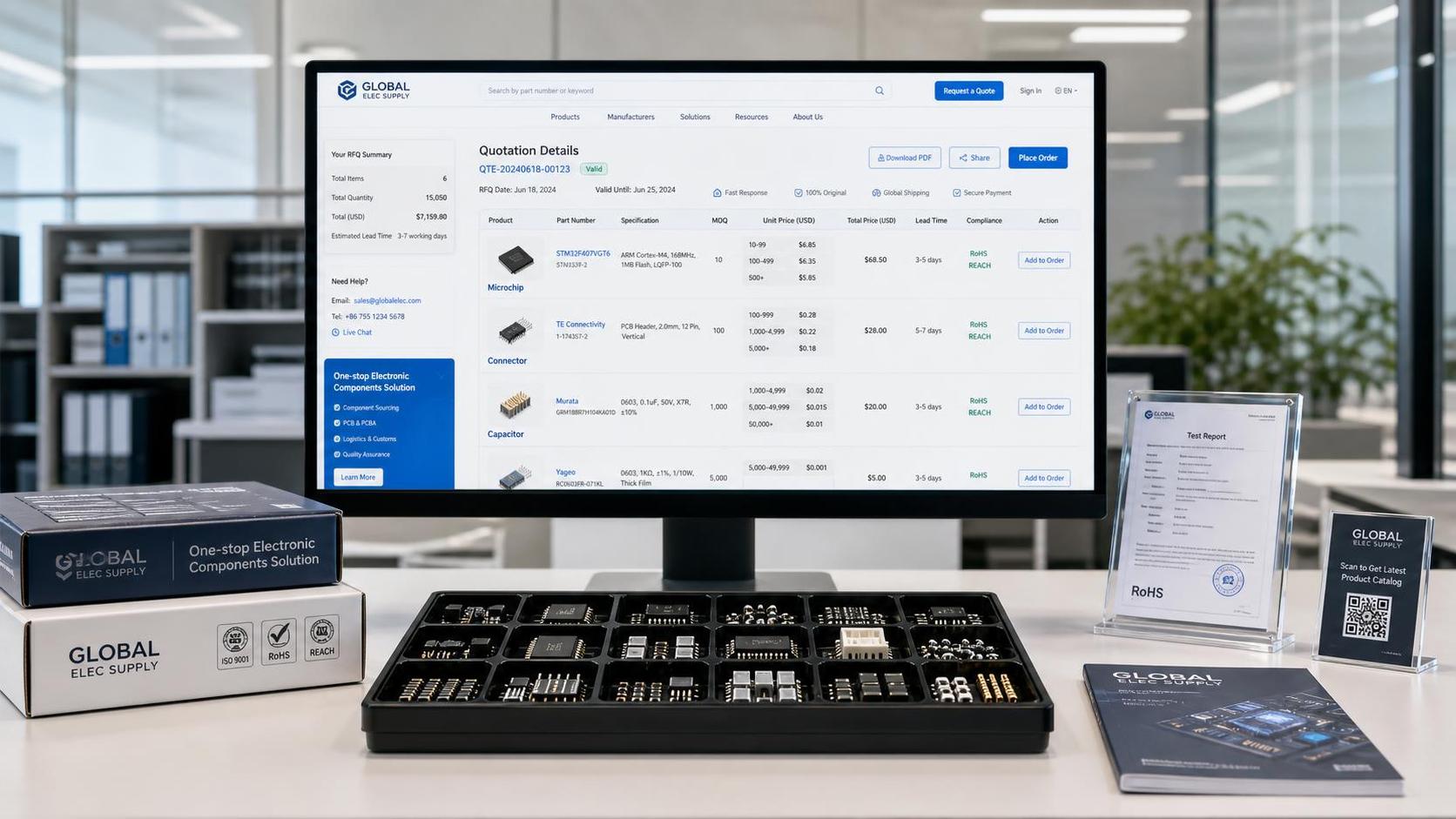
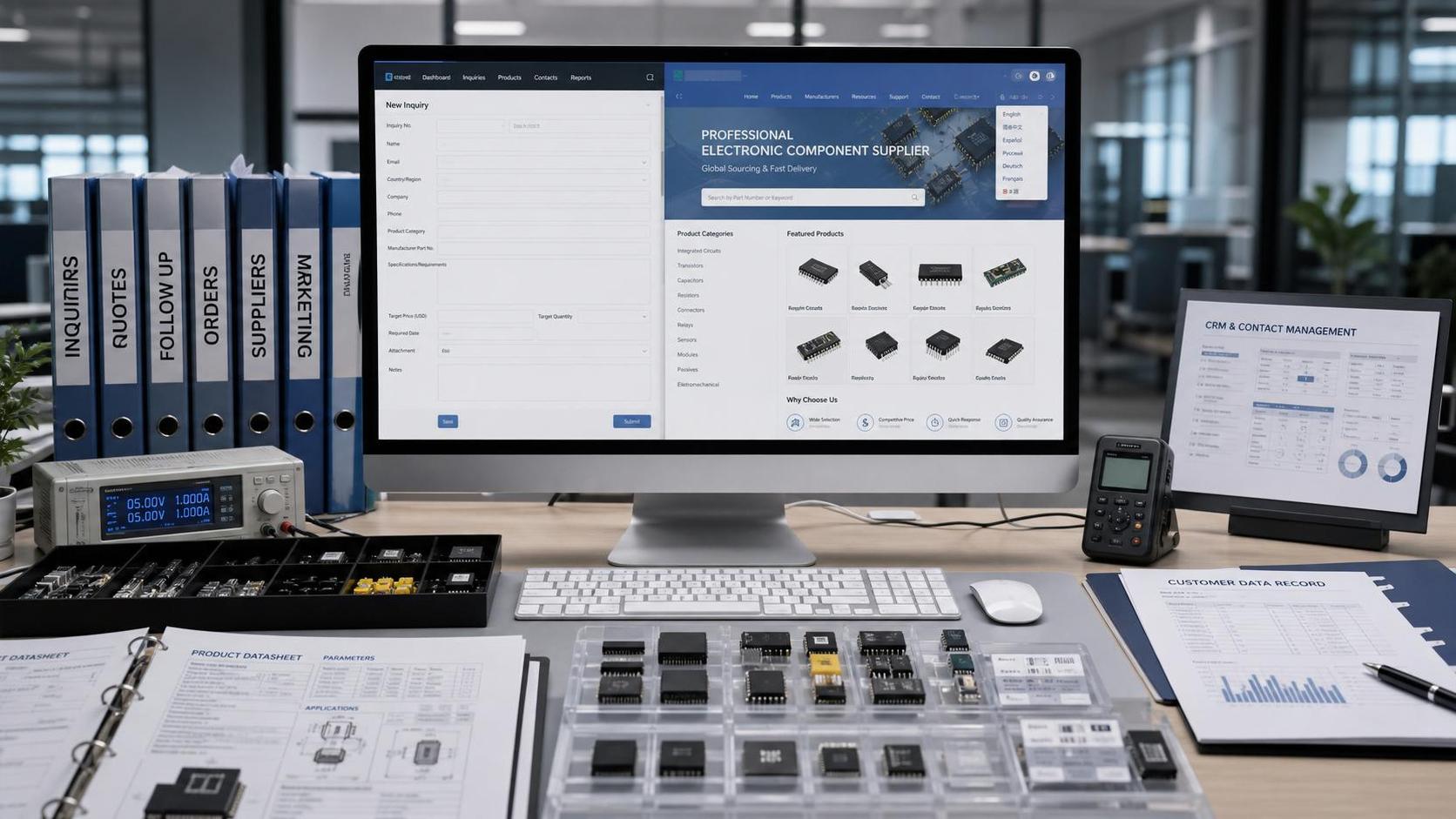
An electronics components foreign trade website is a digital business platform serving overseas B2B procurement, connecting manufacturers, authorized distributors, traders, and engineering procurement personnel. Its value lies not only in presenting the corporate image, but also in enabling buyers to quickly confirm part numbers, specifications, supply capabilities, the scope of technical support, and communication channels.
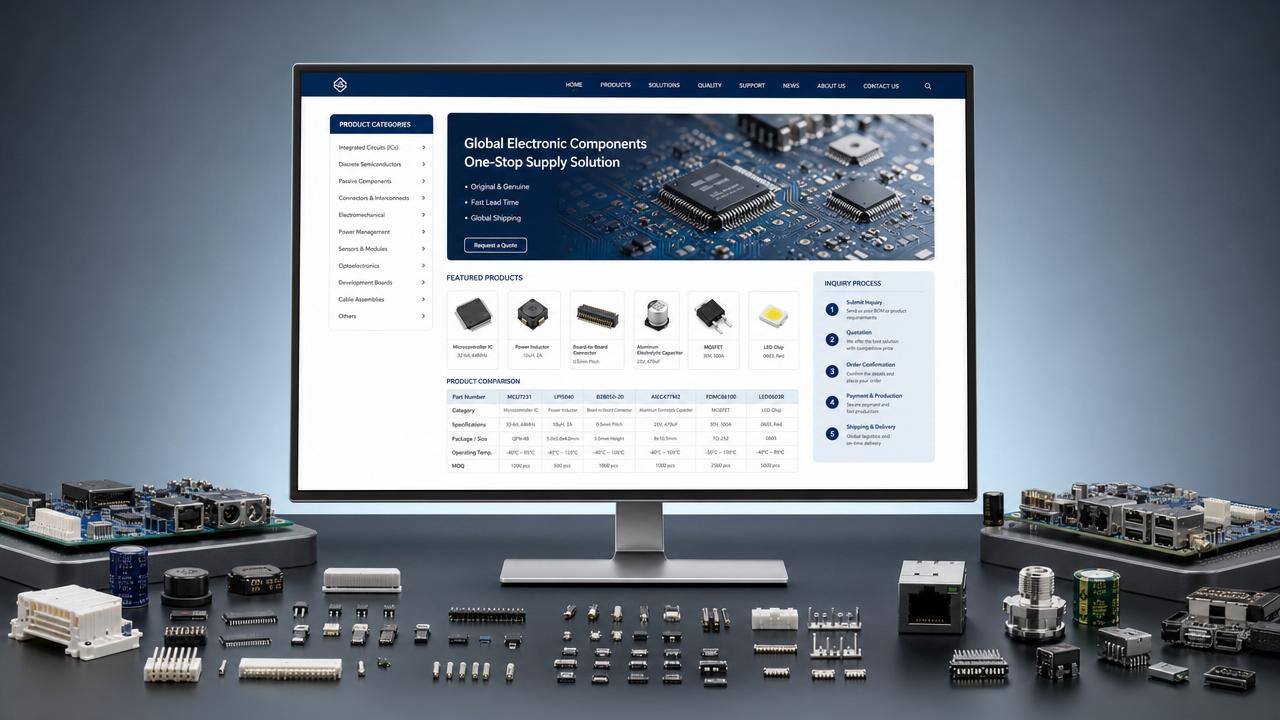
Compared with general foreign trade corporate websites, such websites should build their content structure around part numbers and applications. Connectors, sensors, relays, chips, capacitors, resistors, modules, power supplies, and supporting components all require clear categories, filtering dimensions, substitution relationships, and access points to documentation, reducing the information verification cost before procurement.
High-quality electronics components foreign trade websites typically perform customer acquisition, pre-qualification, and sales support functions at the same time. Once buyers have completed their initial technical assessment before submitting an inquiry, the sales team can obtain more complete information on quantities, target markets, application scenarios, and delivery requirements, reducing repeated follow-up questions.
II. Information Architecture and Principles of Technical Implementation
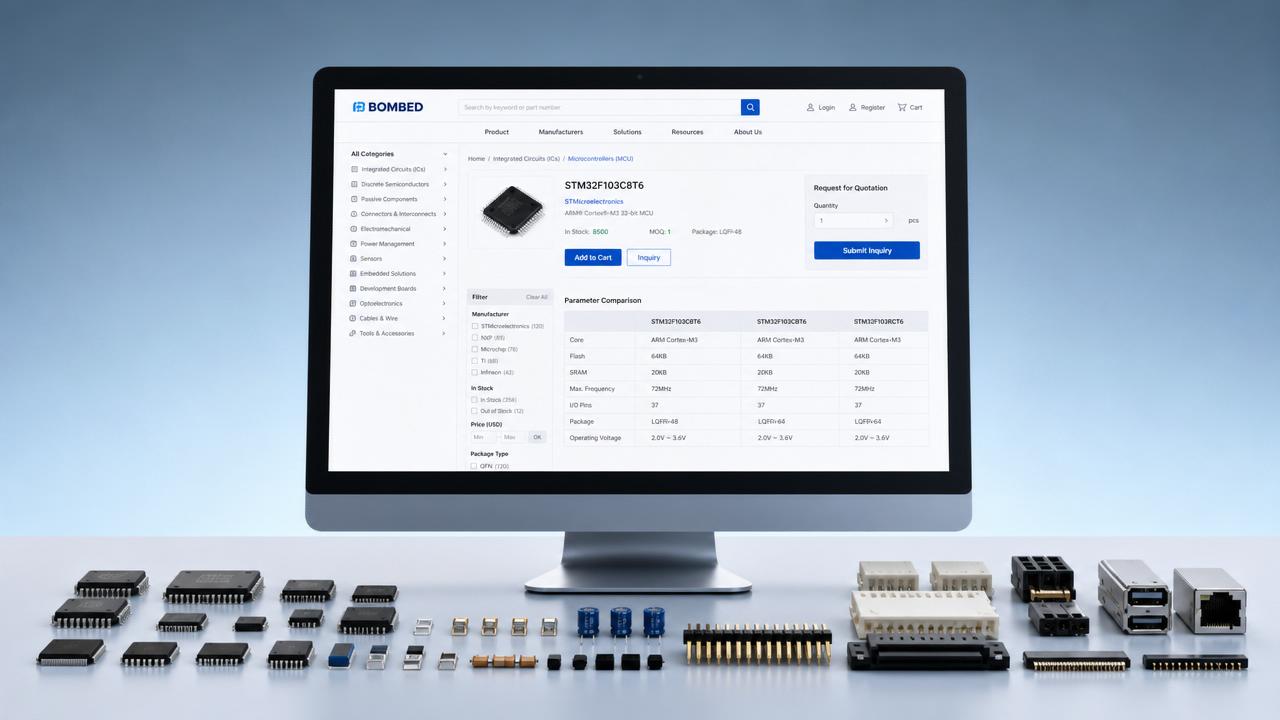
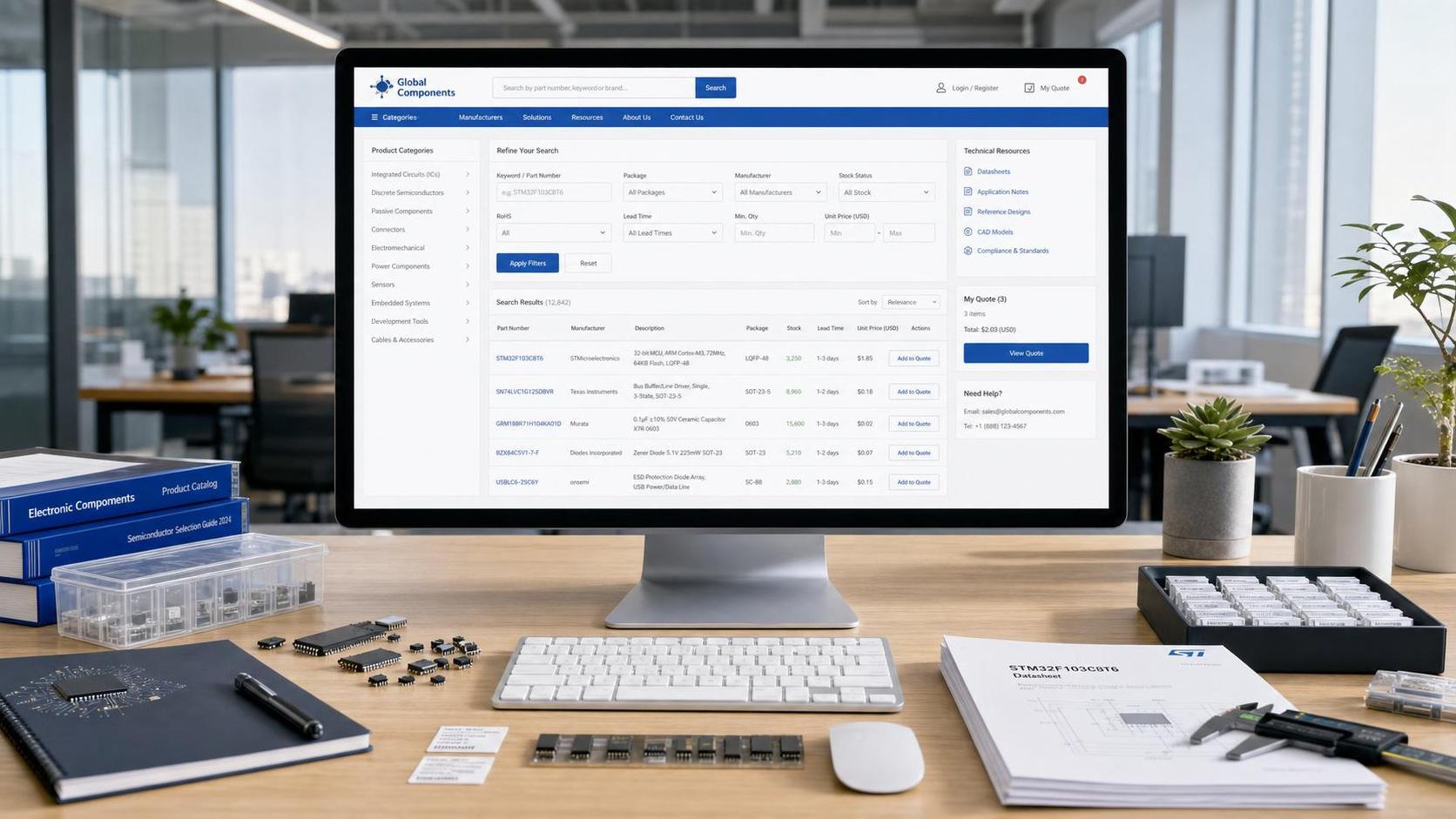
The underlying website system should structure product master data, including manufacturer part numbers, series, package or dimensions, rated specifications, interfaces, operating environments, compliance documentation, and downloadable files. Front-end pages use these fields through category navigation, on-site search, and conditional filtering, enabling users to access product details through either part numbers or performance specifications.
The key to part number search is not merely the search box, but compatibility with hyphens, spaces, letter case, legacy part numbers, and common spelling variations. For product series, the detail page should present key specification tables, available options, and related part numbers, preventing buyers from leaving the page to conduct separate comparisons due to fragmented information.
Technical documentation should be linked to specific part numbers or series and may include datasheets, specification sheets, dimensional drawings, test instructions, and inquiry entry points. File names, page titles, and specification details in the body text should remain consistent, helping users determine the applicable scope of documents and enabling subsequent maintenance personnel to trace versions.
III. Main Types and Applicable Users
By business model, electronics components foreign trade websites can be divided into manufacturer brand websites, product catalog inquiry websites, in-stock distribution websites, and solution presentation websites. Manufacturers focus on R&D, production lines, quality, and customization capabilities; distributors need more information on inventory status, lead times, minimum order quantities, and brand coverage.
By procurement stage, they can be divided into brand awareness pages, series selection pages, part number detail pages, and project inquiry pages. First-time visitors need to understand company capabilities; engineers focus on electrical and mechanical specifications; while procurement personnel focus on packaging, delivery, payment, samples, and bulk purchasing terms. These page purposes should not be mixed together.
Typical applicable groups include component manufacturers, OEM or ODM suppliers, regional trading companies, supporting solution providers, and export-oriented inventory suppliers. Companies with many product SKUs, a high proportion of non-standard parts, or long procurement decision chains particularly need to use their websites to accumulate specification documents and application knowledge.
IV. Selection Criteria and International Market Access Information
Before development, target countries, target customers, and key product lines should first be verified, followed by the determination of languages, currencies, inquiry fields, and the depth of documentation presentation. Pages targeting engineering procurement should highlight specifications, reliability, application limitations, and document versions; pages targeting trade procurement should additionally provide supply methods, packaging, lead times, and bulk inquiry instructions.
When market access is involved, the website should accurately display compliance documents that the company already possesses or can provide, rather than using vague statements in place of document verification. Requirements for environmental protection, materials, transportation, and industry standards vary by product and destination. Buyers should make final confirmation based on the ordered product, batch, and local regulations.
Yiyingbao can configure multilingual catalogs, product details, inquiry forms, and internationalized infrastructure for electronics components companies, and combine responsive pages with overseas access acceleration capabilities to serve both mobile and desktop traffic. For companies requiring ongoing customer acquisition, website development, content, advertising, and operations can also be incorporated into the same service chain.
V. Inquiry Conversion Process and Operational Methods
An effective inquiry page should enable buyers to submit necessary information at one time, such as target part numbers, substitution requirements, estimated quantities, annual usage, destination country, target lead time, and application industry. Too few fields increase the time required for sales verification, while too many fields increase submission friction, so fields should be configured in tiers according to product complexity.
Product detail pages can provide inquiry entry points in the specification table, document download section, and at the end of the page, while offering email, online forms, or instant communication methods. Each entry point should clearly identify the relevant product context to prevent sales personnel from receiving low-quality leads with no part number, quantity, or intended use.
Operationally, search terms, popular part number pages, document downloads, form completion rates, and inquiry sources should be checked regularly. For pages with high visits but low inquiry volume, key specifications, application cases, lead time descriptions, or alternative part numbers can be added; for channels that generate inquiries but convert poorly, market positioning and response efficiency should be reviewed.
VI. Development Process, Quality Control, and Case References
Implementation typically begins with a product data inventory: defining category hierarchies, standardizing part number rules, organizing images and technical files, then building page templates, importing content, configuring language versions and inquiry processes. Before launch, search, filtering, downloads, form submissions, email notifications, and redirect logic should be tested across different devices.
Key quality control areas include consistency between specifications and original documents, broken links, image clarity, language accuracy, page loading performance, and form data security. Multilingual content should not be translated word for word directly; information that must not be mistranslated, such as part numbers, units, and technical conditions, should be retained, and key wording should be reviewed by business personnel.
Yiyingbao's publicly disclosed service scope covers industries including machinery, new energy, automotive, medical, and chemicals, and lists service cases such as Haier, Aucma, Shandong Airlines, and Little Duck Group. Electronics components companies can draw on its integrated website-and-marketing approach and configure their content production, traffic generation, and data review cadence based on the complexity of their own products.
VII. Total Cost of Ownership and Future Trends
The total cost of ownership of an electronics components foreign trade website should not be limited to initial development costs. It should also include product data organization, multilingual maintenance, material production, servers and security, content updates, traffic acquisition, sales response, and system integration costs. The number of SKUs, languages, the complexity of documentation, and the number of countries targeted for promotion will directly affect investment.
When evaluating return on investment, companies can track the number of qualified inquiries, inquiry-to-quotation conversion rate, quotation-to-order cycle, share of organic traffic, and cost per valid lead. Selecting product lines with high margins, high repurchase rates, or clear technical advantages for an initial trial, then expanding the catalog and advertising scope based on data, is generally more conducive to risk control.
In the future, websites will place greater emphasis on structured product data, instant search, multilingual localization, content automation, and knowledge pages designed for generative search. The AI website development, multilingual, SEO, advertising, and GEO operational capabilities provided by Yiyingbao can help companies improve update efficiency and gradually build sustainable overseas digital assets while ensuring documentation accuracy.