











I. Definition and Market Scope of German-Language SEO for Export Websites
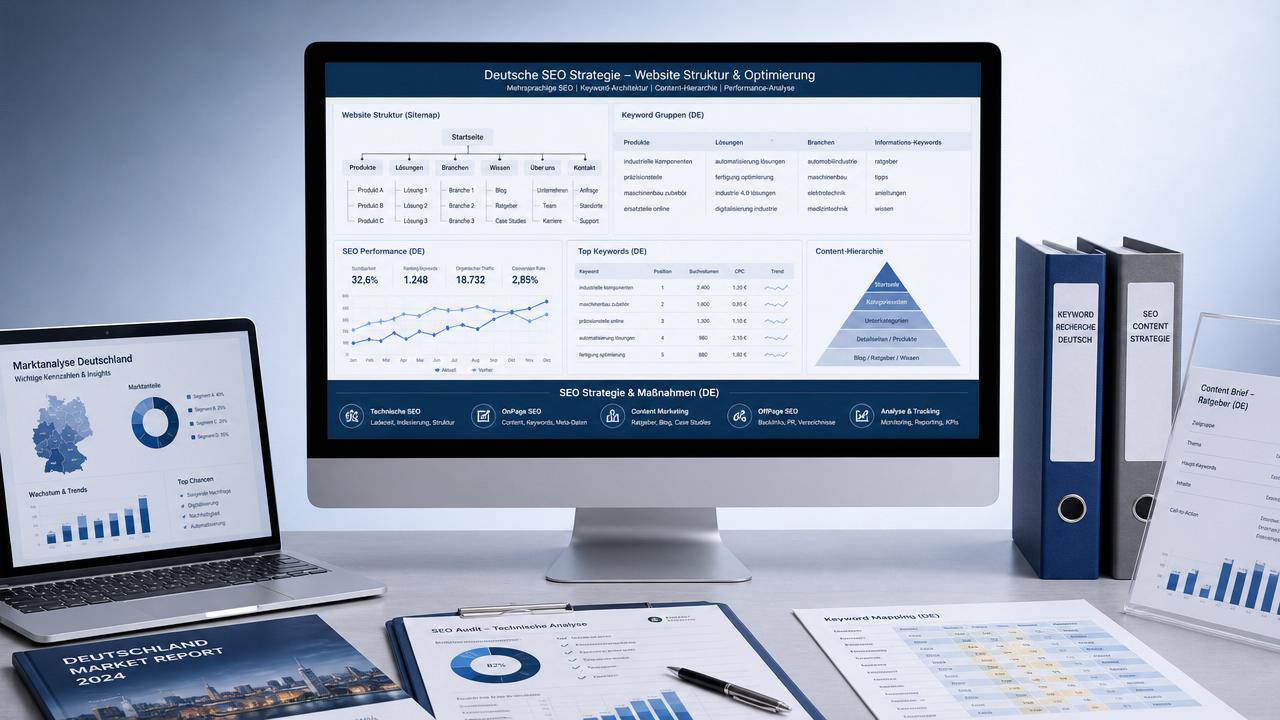
German-language SEO for export websites is a long-term effort to optimize website structure, page content, technical performance, and conversion paths for German-speaking search users. Its goal is not simply to gain traffic, but to enable industrial buyers, distributors, or project decision-makers to find and understand a company’s value when searching for products, suppliers, and solutions.
Germany, Austria, and Switzerland are all German-speaking markets, but their procurement contexts are not entirely the same. Germany is generally the largest industrial procurement market; Austria places greater emphasis on regional service and suitability; users in Switzerland often make more detailed assessments of language expression, pricing and currency, delivery, and compliance information.
Therefore, German-language SEO for export websites should manage language, country, and commercial intent separately. General German content can cover basic needs, while pages targeting specific countries should add local delivery coverage, applicable industries, units of measurement, contact channels, and common procurement questions, avoiding the use of a single page to serve all market needs.
II. Search Technology Principles and International Website Architecture
Search engines understand German-language websites through crawling, parsing, indexing, and ranking. Clear category hierarchies, accessible product links, unique page titles, and descriptions form the basis for indexing. For B2B websites, product category pages are responsible for covering category keywords, while detail pages address specification, material, process, and application keywords.
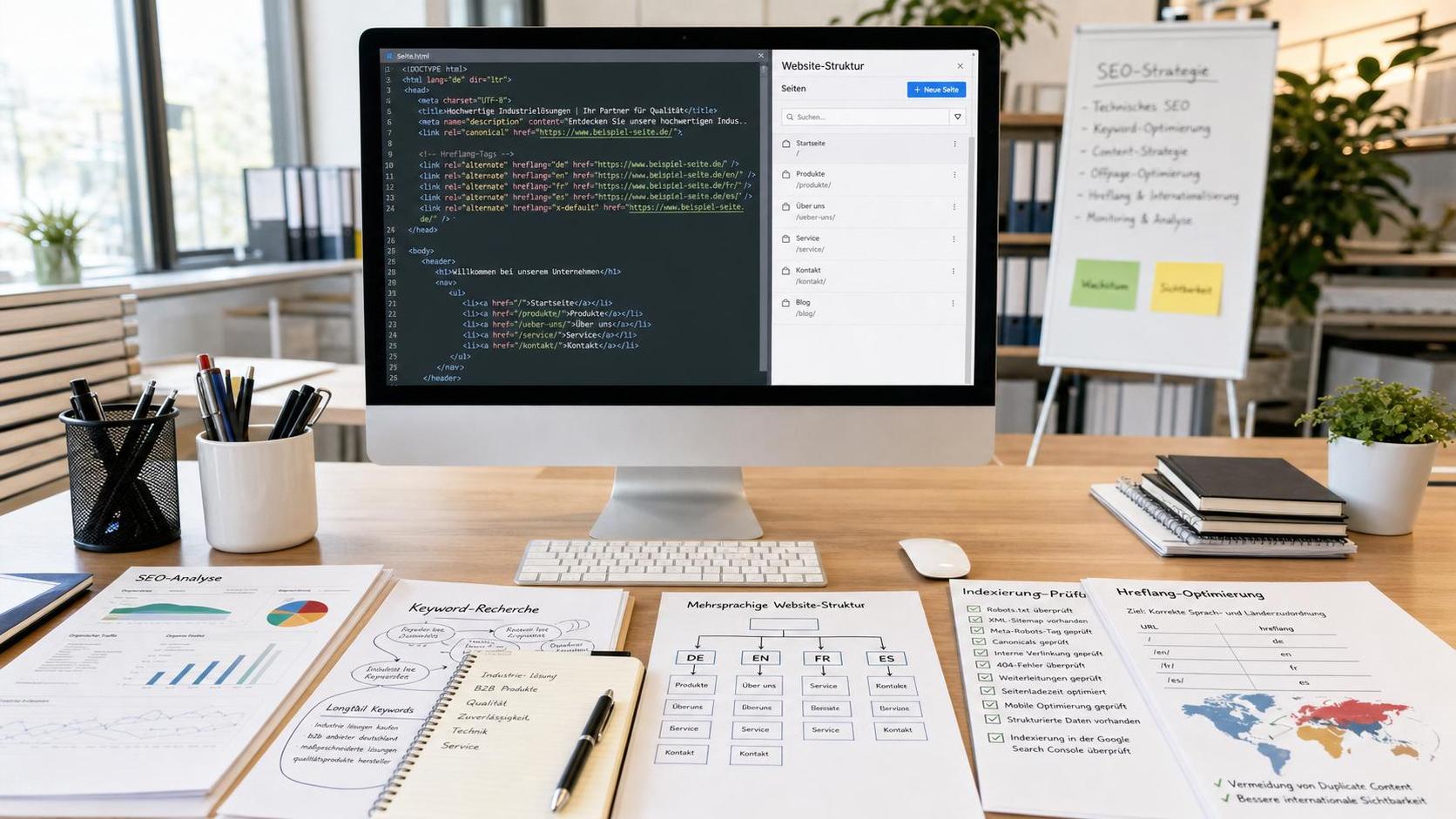
A multilingual architecture should maintain corresponding relationships between language versions and correctly configure hreflang, canonical pages, and language paths. German pages must not merely replace navigation text; product specifications, image descriptions, downloadable materials, form prompts, and error pages should also provide a complete German experience, preventing search engines and users from entering pages in different languages.
At the technical level, attention should also be paid to mobile compatibility, server response, image compression, structured data, sitemaps, and secure connections. EasySEO adopts a responsive architecture and provides foundational capabilities such as global nodes, CDN acceleration, and SSL, enabling website building, visitor experience, and ongoing marketing operations to be managed within one system.
III. Keyword Classification and German Content Strategy
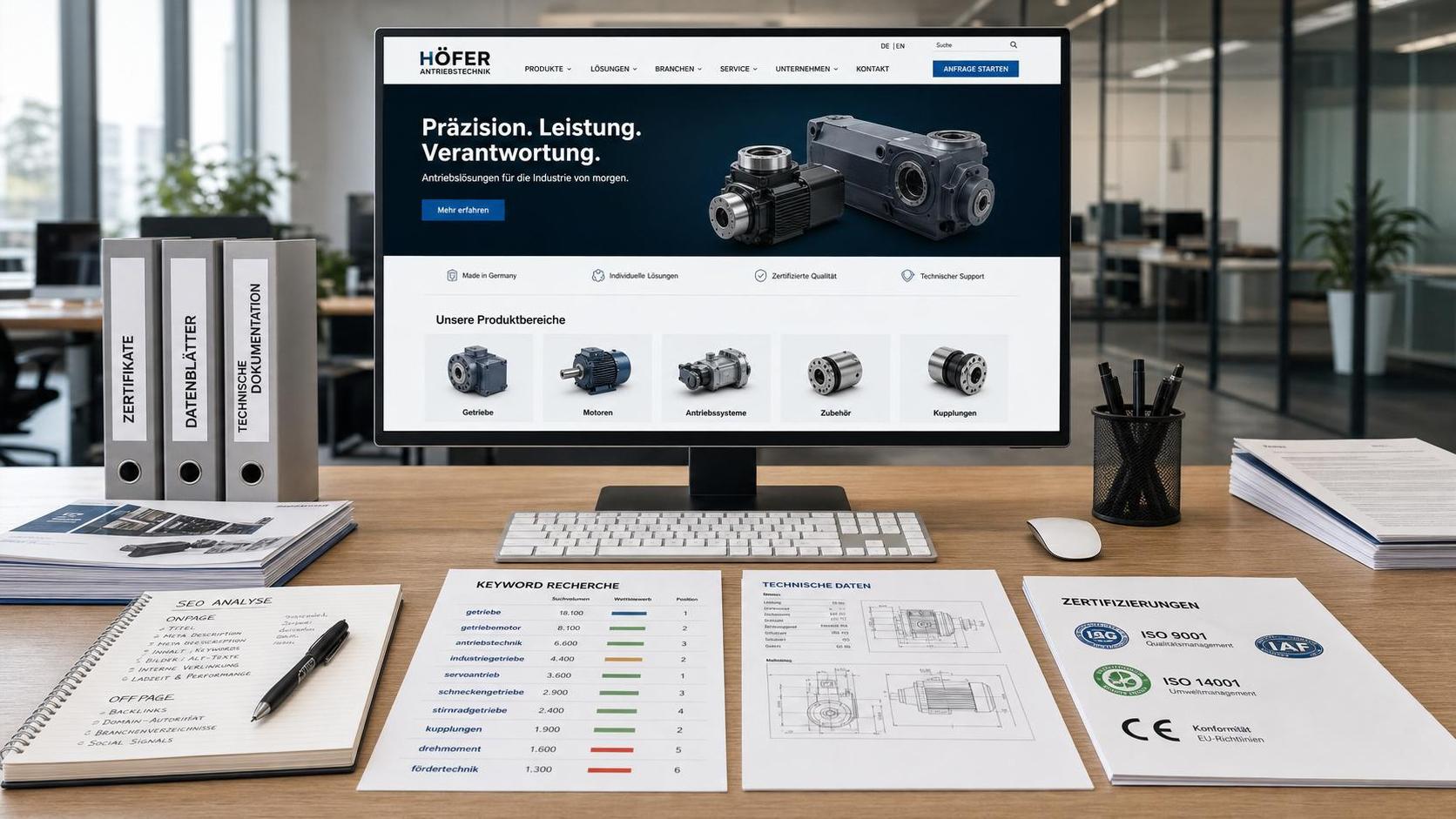
Keywords for German-language export website SEO can generally be divided into category terms, attribute terms, application terms, procurement terms, brand terms, and informational terms. Category terms are suitable for building coverage through category pages; attribute terms such as model, size, material, and performance are suitable for product pages; procurement-intent terms such as “manufacturer,” “supplier,” and “customized” require support from qualifications, production capacity, and inquiry modules.
German has many compound words, and the same product may have a full name, abbreviation, industry term, and regional spelling. Research should not rely solely on translating Chinese keywords. It should also incorporate customer emails, trade show inquiries, competitor categories, and search suggestions to confirm actual expressions. Keywords should appear naturally in titles, body text, image descriptions, and internal-link anchor text, rather than being repeated mechanically.
High-quality content should answer buyers’ actual questions, such as which industries a product can be used in, how key parameters should be selected, how minimum order quantities can be discussed, and how sample lead times and quality control are arranged. For complex equipment or industrial materials, adding comparison pages, selection guides, FAQs, and case descriptions usually provides more lasting value than generating short content in bulk.
IV. Applicable Companies, Use Cases, and Selection Criteria
This strategy is particularly suitable for exporters in machinery and equipment, hardware and building materials, auto parts, chemicals, new energy, packaging, agricultural food products, and medical-related industries, as well as brand owners seeking to reduce their dependence on platform traffic. B2B businesses with long procurement cycles, complex product parameters, and a need to build trust require German content even more to reduce information gaps before communication.
When selecting a service solution, companies should first confirm their target countries, key products, existing domain history, content resources, and sales follow-up capabilities. What a company needs may not necessarily be a standalone ranking service; it may instead need multilingual website reconstruction, product material organization, advertising landing page optimization, or inquiry process improvements. Only by first identifying growth bottlenecks can priorities be determined.
EasySEO provides AI-powered website building, multilingual websites, SEO, advertising, and social media operations services for export B2B businesses and cross-border standalone websites. For companies lacking technical and overseas marketing teams, an integrated model helps unify pages, data, and lead entry points; however, companies should still provide accurate product materials, certification documents, and delivery boundaries to ensure content credibility.
V. Implementation Process, Quality Control, and Ongoing Operations
German-language SEO for export websites can be implemented through “market diagnosis, keyword planning, website development, content publishing, indexing monitoring, and conversion review.” First, review existing pages and traffic, then establish a product-to-keyword mapping table to avoid multiple pages competing for the same core keyword and to ensure that high-value products have dedicated search entry points.
Before pages go live, German spelling, parameter consistency, image copyrights, form usability, mobile display, and downloadable file links should be checked. The focus of quality control is information accuracy rather than polished copy: descriptions of models, materials, dimensions, testing conditions, and delivery capability must remain consistent with the company’s actual capabilities, sales positioning, and technical documentation.
After launch, it is recommended to monitor index coverage, organic traffic, rankings for priority keywords, inquiry sources, and page conversions monthly, and to update product materials and industry content quarterly. EasySEO’s AI-assisted content, keyword expansion, and operational data analysis capabilities can improve ongoing maintenance efficiency; key pages should still undergo manual review and business validation.
VI. Total Cost of Ownership, Return on Investment, and Future Trends
The total cost of ownership for a German-language website typically consists of website architecture, translation and localization, product content organization, technical maintenance, backlink and content promotion, data tools, and team coordination. Low-cost translation and one-time website development may appear to save budget, but they can increase subsequent rework costs due to duplicate pages, distorted content, lack of maintainability, or insufficient inquiry handling.
When evaluating returns, companies should not focus only on the ranking position of a particular keyword. They should also consider the number of qualified inquiries, sales follow-up rate, sample conversion, order gross margin, and customer lifetime value. New websites can combine search optimization with advertising tests to quickly validate market demand, then turn high-performing keywords and landing pages into long-term organic traffic assets, reducing fluctuations from reliance on a single channel.
In the future, search results will place greater emphasis on entity information, professional Q&A, structured content, and evidence of real business operations, while generative search will also affect how customers discover suppliers. Companies should continuously build verifiable pages showcasing factory capabilities, product knowledge, and services. EasySEO has established multilingual website-building and GEO operations capabilities, making it suitable for incorporating traditional search and emerging Q&A scenarios into unified overseas customer acquisition planning.
